 Wondershare EdrawMind
MindMap Gallery Single gene disease genetics mind map
- 46
Single gene disease genetics mind map
This is a genetic thinking map about single-gene diseases, including the inheritance of autosomal dominant diseases, factors affecting the analysis of single-gene genetic diseases, the inheritance of Y-linked genetic diseases, etc.
Edited at 2023-11-03 00:06:31
- bacteria
This is a mind map about bacteria, and its main contents include: overview, morphology, types, structure, reproduction, distribution, application, and expansion. The summary is comprehensive and meticulous, suitable as review materials.
- Plant asexual reproduction
This is a mind map about plant asexual reproduction, and its main contents include: concept, spore reproduction, vegetative reproduction, tissue culture, and buds. The summary is comprehensive and meticulous, suitable as review materials.
- Reproductive development of animals
This is a mind map about the reproductive development of animals, and its main contents include: insects, frogs, birds, sexual reproduction, and asexual reproduction. The summary is comprehensive and meticulous, suitable as review materials.
Single gene disease genetics mind map
- bacteria
This is a mind map about bacteria, and its main contents include: overview, morphology, types, structure, reproduction, distribution, application, and expansion. The summary is comprehensive and meticulous, suitable as review materials.
- Plant asexual reproduction
This is a mind map about plant asexual reproduction, and its main contents include: concept, spore reproduction, vegetative reproduction, tissue culture, and buds. The summary is comprehensive and meticulous, suitable as review materials.
- Reproductive development of animals
This is a mind map about the reproductive development of animals, and its main contents include: insects, frogs, birds, sexual reproduction, and asexual reproduction. The summary is comprehensive and meticulous, suitable as review materials.
- Recommended to you
- Outline
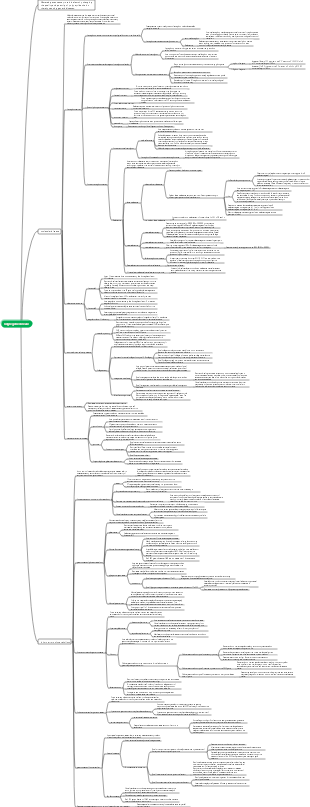
Inheritance of single gene diseases
Single-gene genetic disease, referred to as single-gene disease, is a hereditary disease controlled by a pair of alleles. This pair of alleles is called a major gene.
The inheritance of single-gene genetic diseases can be divided into nuclear gene inheritance and mitochondrial gene inheritance.
According to the different dominant and recessive relationships between the chromosomes and alleles of the disease-causing main gene, it can be divided into
autosomal dominant inheritance
autosomal recessive inheritance
X-linked dominant inheritance
X-linked recessive inheritance
Y-linked inheritance
Genealogy and Genealogy Analysis
Pedigree analysis: observing family members with a certain trait and analyzing how the trait segregates or is passed on to the descendants of the family.
The so-called pedigree starts from the proband or index case.
The proband is the first member of the family to be diagnosed or diagnosed with the disease.
A complete system must include at least three generations of relevant information about family members, including both individuals with a certain disease in the family and normal members of the family.
Inheritance of autosomal dominant diseases
If the causative gene of a genetic disease is located on autosomal chromosomes 1 to 22, it can cause individual disease in the case of heterozygotes. That is, the causative gene determines dominant traits. This genetic disease is called autosomal dominant. sex
Brachydactyly type A1
This is the first recorded Mendelian dominant disease
Clinical manifestations: The stature becomes significantly shorter, the hands become wider, and all phalanges are proportionally shorter than normal people. The middle phalanx is missing or fused with the distal phalanx, and the proximal phalanx of the thumb and big toe is shortened. Whether the middle phalanx is shortened or missing, the distal phalanx remains unchanged
Causative gene: IHH gene located on 2q35
In addition to regulating the proliferation and differentiation of chondrocytes, this gene is also necessary for the development of distal limb bones and joint formation.
Types of marriage and risk of disease in offspring
The most common family lineage for autosomal dominant disease is a marriage between an affected person and a normal person
1/2 of their offspring are patients
Characteristics of completely autosomal dominant inheritance
1 Since the disease-causing gene is located on an autosomal chromosome, the inheritance of the disease-causing gene has nothing to do with gender, that is, men and women have equal chances of getting the disease.
2. One of the patient's parents must have the disease-causing gene, which is passed on from the affected parent. At this time, the patient's siblings have a 1/2 chance of developing the disease; when both parents are disease-free, children generally will not be affected.
3 The patient’s offspring have a 1/2 chance of developing the disease
4 Patients can usually be seen in several consecutive generations in a pedigree, that is, there is a phenomenon of continuous transmission.
Clinically, the risk of autosomal dominant genetic diseases can be estimated
Inheritance of autosomal recessive diseases
The causative gene of a hereditary disease is located on an autosomal chromosome, and its inheritance mode is recessive. Only homozygotes of the recessive disease gene will develop the disease, which is called an autosomal recessive disease.
Heterozygotes with recessive disease-causing genes do not develop the disease themselves, but can pass the recessive disease-causing genes to their offspring and are called carriers.
Oculocutaneous albinism type IA
It is an inherited metabolic disease and one of the more common autosomal recessive diseases.
It is due to a mutation in the tyrosinase gene in the patient's body, resulting in a loss of enzyme activity and the inability to effectively catalyze the conversion of tyrosine into dopa, which in turn cannot form melanin, leading to albinism.
Types of marriage and risk of disease in offspring
The most common is a marriage between two heterozygous carriers, with a 1/4 risk per birth
In fact, the most common type of marriage in the population is the marriage between heterozygous carriers and normal people.
Characteristics of euchromatic and recessive inheritance
1 Since the disease-causing gene is located on an autosomal chromosome, the inheritance of the disease-causing gene has nothing to do with gender, that is, men and women have equal chances of getting the disease.
2 The parents of patients are often phenotypically normal, but both are carriers of the disease gene.
3 The patient's sibling has a 1/4 risk of developing the disease, and 2/3 of the patient's phenotypically normal sibs are likely to be carriers. The patient's children generally do not develop the disease, but they are definitely carriers.
4 The distribution of patients in a pedigree is often sporadic, and continuous transmission is usually not seen. Sometimes there is even only one patient in the entire system, the proband.
5. In consanguineous marriage, the risk of disease in offspring is significantly higher than that of random assignment.
Two issues that should be paid attention to when analyzing autosomal recessive genetic diseases
Clinical statistics on the risk of disease in patients' siblings are often higher than 1/4 of the expected
This is due to selection bias
A ratio close to 1:1 is called full confirmation
Families without sick children will be missed, which is called incomplete confirmation or truncated confirmation.
The correction formula is: C=Σa(r-1)/Σa(s-1)
C is the corrected proportion, a is the number of probands, r is the number of affected siblings, and s is the number of siblings.
The basic principle is to remove the proband from the statistics and only calculate the frequency of the disease in the proband's sibs
Inbreeding significantly increases the risk of autosomal recessive genetic diseases
Close relatives are relationships between individuals who share a common ancestor within 3 to 4 generations. Intermarriage between them is called consanguineous marriage.
The probability that two closely related individuals have the same gene at a certain locus is called the relatedness coefficient
Serum can be divided into different kinship levels according to the size of the kinship coefficient.
Factors affecting the analysis of single-gene genetic diseases
Pseudo-autosomal inheritance
During the meiosis process of male spermatogenesis, genes located in the pseudoautosomal regions of the X and Y chromosomes can recombine, resulting in the exchange of genes from the X chromosome to the homologous segments of the Y chromosome, and may be passed on to male offspring, resulting in Similar to the autosomal dominant male-to-male phenomenon, this inheritance method is called pseudo-autosomal inheritance.
Leir-Weill chondroosteogenesis disorder is a dominantly inherited skeletal developmental abnormality characterized by short stature and forearm deformities, and is an X-linked dominant inheritance.
Genetic effects of parental imprinting
Certain homologous chromosomes or alleles from both parents have functional differences. That is, when the same chromosome or allele passed from parents of different genders to their offspring changes, it can cause different phenotypes. This phenomenon is called parental imprinting, also known as genomic imprinting.
Prader-Willi syndrome and Angelman syndrome are both genetic diseases caused by imprinting abnormalities. The former is characterized by obesity, low muscle tone, mental retardation, short stature, gonadal insufficiency, small hands and feet and other characteristic symptoms, while the latter is characterized by growth spurts. Developmental delay, intellectual disability, severe language impairment, ataxia and other symptoms
Parental imprinting occurs during gametogenesis in mammals and continues to affect the next generation throughout life.
Genotype-phenotype correlation
genetic heterogeneity
is a genetic trait that can be caused by several different genetic changes
Genetic heterogeneity can be further divided into
Genetic locus heterogeneity means that the same genetic disease is caused by gene mutations at different loci
Allelic heterogeneity means that a genetic disease is caused by different mutations at the same locus
gene pleiotropy
A gene can determine or affect multiple traits
The role of genes is to affect the way individuals develop by controlling a series of biochemical reactions in metabolism, thereby determining the formation of traits.
Marafan syndrome is a systemic connective tissue disease
Clinical manifestations: tall and thin body, slender limbs, lax joints of hands and feet, skeletal system abnormalities such as slender spider toe fingers, lens dislocation, myopia and other symptoms, as well as mitral valve dysfunction, aortic dilation, aortic aneurysm, etc. Cardiovascular system malformations
Visibility and expressivity
It is the percentage of individuals of a certain genotype in a population that exhibits the corresponding phenotype under certain environmental conditions.
When the penetrance is equal to 100%, it is called complete penetrance; when it is less than 100%, it is incomplete penetrance, or incomplete penetrance.
Expression refers to the difference in the expression of traits or diseases between individuals of the same genotype under the influence of different genetic backgrounds and environmental factors. For example, osteogenesis imperfecta type I
Penetrance and expressivity are two different concepts. The fundamental difference is that penetrance clarifies whether a gene is expressed or not, which is a "qualitative" issue, while expressivity explains the degree of expression under the premise of gene expression. How, is a question of "quantity"
co-dominance
Co-dominance means that there is no difference between dominant and recessive between a pair of alleles, and the effects of both genes can be expressed in heterozygous individuals, such as the human ABO blood group system, MN blood group system and histocompatibility antigen
delayed dominance
Some heterozygotes with dominant disease-causing genes do not cause obvious clinical manifestations in early life because the disease-causing genes are not expressed or under-expressed. They only show corresponding clinical symptoms of the disease after reaching a certain age, which is called delayed dominance
For example: Huntington, patients usually develop the disease between the ages of 30 and 40, but there are also cases before the age of 10 and after the age of 60.
Sex-dependent inheritance and sex-restricted inheritance
Sexual inheritance is a gene located on an autosomal chromosome, which shows differences in the distribution ratio of male and female phenotypes or differences in gene expression levels due to the influence of gender.
Sex-limited inheritance refers to genes located on autosomal chromosomes. Due to gender restrictions in gene expression, they are only expressed in one gender and not at all in the other gender. However, these genes can be passed on to the next generation.
Phenotype
Due to the effect of environmental factors, the phenotype produced by an individual is exactly the same or similar to the phenotype produced by a specific gene. This phenotype caused by environmental factors is called a phenotypic, or phenotypic simulation.
Genotype refers to the genetic structure or composition of an individual, generally referring to the formation of alleles at a specific locus. Phenotype refers to the expression of traits at all levels, from molecules to morphology, produced by an organism's genotype and its interaction with the environment.
gonadal mosaicism
Gonad mosaicism is an individual’s gonad cells that are not homozygous but are made up of cell lines with different genetic compositions.
A common cause is heteromosaicism, which can also be caused by de novo mutations in gonad cells.
genetic early onset
Premature genetic manifestations are some genetic diseases. In the inheritance process of consecutive generations, the age of onset of patients will advance from generation to generation, and the severity of the disease will gradually worsen. Dynamic mutations are the molecular basis of early manifestations of genetic manifestations.
Spinocerebellar ataxia type I is an autosomal dominant disease
Clinical manifestations: Unsteady gait, difficulty walking, slurred speech, difficulty swallowing, upper limb ataxia, head shaking and dance-like movements, etc.
X chromosome inactivation
Lyon hypothesis states that one of the two X chromosomes in women is randomly inactivated during early embryonic development, which is called X chromosome inactivation.
In X-linked recessive genetic diseases, some female heterozygous carriers will show some mild clinical symptoms. This phenomenon is called dominant heterozygosity.
Inheritance of Y-linked genetic diseases
If the gene that determines a certain trait or disease is located on the Y chromosome and is passed along with the Y chromosome from one generation to the next, it is called Y-linked inheritance.
The transmission rule of Y-linked inheritance is relatively simple. People with Y-linked genes are all males. These genes will be passed along the Y chromosome from father to child, and then to grandchildren, so it is also called all-male inheritance.
The main ones include the testis determinant gene and the external auditory canal hirsutism gene.
Inheritance of X-linked recessive diseases
If the causative gene that determines a genetic disease is located on the X chromosome and is a recessive gene, that is, a female heterozygote with the causative gene will develop the disease, it is called
Hemophilia A
It is an X-linked recessive coagulation disorder and is the most common clinical hemophilia.
Clinical manifestations: Due to the lack of coagulation factor VIII in the plasma, coagulation dysfunction results in symptoms such as gum bleeding and subcutaneous congestion. After minor trauma or minor surgery, bleeding will not stop for a long time, and bleeding in the joint cavity can lead to joint swelling or even deformity.
The disease-causing gene F8 is located on Xq28
Types of marriage and risk of disease in offspring
The most common is the marriage between a phenotypically normal female heterozygous carrier and a normal male
Among the offspring, sons will have a 50% chance of getting the disease, and daughters will not get the disease, but 50% will be carriers.
Characteristics of X-linked recessive inheritance
1 There are far more male patients than female patients in the population. In some rare XR genetic diseases, only male patients are often seen.
2. When both parents are disease-free, the son has a 1/2 chance of developing the disease, but the daughter will not develop the disease. This indicates that the disease-causing gene is transmitted from the mother. If the mother is not a carrier, it is derived from a de novo mutation.
3 Due to cross inheritance, male patients’ brothers, uncles, aunts, cousins, nephews, and grandchildren may also be patients. The patient's maternal grandfather may also be the patient. In this case, the patient's uncle generally does not develop the disease.
4 In pedigrees, it is often seen that the disease is transmitted through several generations of female carriers and the disease occurs in males. If there is a female patient, her father must be a patient and her mother must be a carrier.
Inheritance of X-linked dominant diseases
Obvious gender differences in population distribution of traits determined by genes on sex chromosomes. If the causative gene that determines a genetic disease is located on the X chromosome, female heterozygotes with the causative gene will develop the disease, which is called an X-linked dominant genetic disease.
The male x chromosome and its linked genes can only be passed on from the mother, and can only be passed on to the daughter in the future. Therefore, there is generally no male-to-male transmission. This method of transmission is called cross-X inheritance.
Therefore, the incidence rate in women is about twice that of men.
Hypophosphatemic rickets
Also known as vitamin D-resistant rickets
Clinical manifestations: rickets symptoms and signs such as skeletal deformities and growth retardation. Unlike general rickets, children do not show myopathy, convulsions and hypocalcemia.
The causative gene is PHEX
Point mutations and deletions are major causes of disease
Types of marriage and risk of disease in offspring
The dominant causative gene for X-linked dominant genetic diseases is on the X chromosome. As long as there is a mutated gene on one X chromosome, the disease can be caused.
Therefore, due to cross inheritance, in the marriage between a male hemizygous patient and a normal female, all daughters will be patients and all sons will be normal.
Characteristics of X-linked dominant inheritance
1 There are more female patients than male patients in the population. In the rare XD genetic disease, the number of female patients is about twice that of male patients, but the disease in female patients is usually milder.
2 One of the patient's parents has the disease. If both parents are disease-free, it is due to a de novo mutation.
3 Due to cross inheritance, all daughters of male patients are affected and all sons are normal. Children of female heterozygous patients each have a 50% chance of developing the disease.
4. Continuous transmission is often seen in pedigrees, which is consistent with autosomal dominant inheritance.