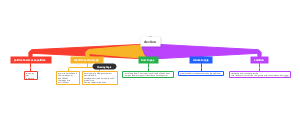
MindMap Gallery Topic 3 Democracy
UOL PS1172 Introduction to Political Science LecturesDemocracy refers to the right enjoyed by the people to participate in the management of state affairs and social affairs or to express opinions freely on state affairs.
Edited at 2024-03-04 15:29:55This is a mind map about bacteria, and its main contents include: overview, morphology, types, structure, reproduction, distribution, application, and expansion. The summary is comprehensive and meticulous, suitable as review materials.

This is a mind map about plant asexual reproduction, and its main contents include: concept, spore reproduction, vegetative reproduction, tissue culture, and buds. The summary is comprehensive and meticulous, suitable as review materials.
This is a mind map about the reproductive development of animals, and its main contents include: insects, frogs, birds, sexual reproduction, and asexual reproduction. The summary is comprehensive and meticulous, suitable as review materials.
This is a mind map about bacteria, and its main contents include: overview, morphology, types, structure, reproduction, distribution, application, and expansion. The summary is comprehensive and meticulous, suitable as review materials.
This is a mind map about plant asexual reproduction, and its main contents include: concept, spore reproduction, vegetative reproduction, tissue culture, and buds. The summary is comprehensive and meticulous, suitable as review materials.
This is a mind map about the reproductive development of animals, and its main contents include: insects, frogs, birds, sexual reproduction, and asexual reproduction. The summary is comprehensive and meticulous, suitable as review materials.
Topic 3: Democracy
3.1 What is Democracy?
“Of / For / By the People” ——Lincoln
People elect representatives to represent their ideas / interests
Decisions made by the elected representatives and not others
Democracy must promote the interests of the people and NOT private interests
3.2 Why do we need Democracy?
Basic idea:
citizens should have political equality as opposed to concentrating political power in the hands of the elites
Procedural Democracy:
Characteristics:
certain procedures and institutions must be in place (also know as minimalist democracy)
Contestation:
extent to which citizens are free to organize themselves into competing blocs
stakeholders negotiating for what policies they want effected; i.e procedures of democratic competition
Inclusion:
the extent of which who gets to participate in the democratic process
Substantive:
Substantive: dependent on the outcomes – what did democracy hope to achieve?
Limitations of Procedural & Substantive
Procedural:
Only takes into account the procedures and institutions but does not measure whether democracy actually exists
Virtually every country has held some form of election in its history – does that mean ALL countries are democratic?
Substantive:
Outcomes of democracy may vary from case to case – what might be an accurate measure?
How do you measure “economic justice”?
Difficulty in finding empirical examples of such regimes
3.3 How to measure Democracy?
Varieties of Democracy (V-Dem) Project
Unique approach:
historical, multidimensional, nuanced, and disaggregated employs state-of-the-art methodology
Big dataset:
produces the largest global dataset on democracy with over 30 million data points for 202 countries from 1789 to 2021
Advantage:
V-Dem allows political scientists to take into account how much country experts differ in their assessment of a country’s regime
The V-Dem project also provides indexes of regime type based upon alternative procedural and substantive conceptions of democracy
Conceptualisation:
What is conceptualisation?
comparison of how the same country can be classified differently depending on the measurements used
Advantages of procedural conceptualization:
The minimalist view helps to more easily isolate variables
Recognizes that a democracy can be organized in many different ways
Substantive definitions that attach value can be more difficult to quantify and measure as it varies from country to country (culture, history, economy, demographics may impact)
Huntington — the importance of “how”
3.4 History of Democracy
Uneven:
rise and fall in the number of democracies in the world
3 Waves of democratization:
1900-1939:
roots in American and French revolutions, social progress, establishment of at least minimally democratic institutions (suffrage, elections, establishment of executive etc)
Reverse wave WW2:
rise of Fascism, military coups/rules, authoritarian dictatorships
Post WW2
movement towards democratization (limited democracy) but unstable given militaristic interferences
1950/1960s: End of colonialism in many former colonies and negotiations with militaristic rulers
Late 1960/1970s onwards: Final phase of European decolonization and liberation of authoritarian regimes and movements promoting democracy gaining strength in Asia, Latin America.
3.5 Explaining democracy
Democraticisation:
End of non-democratic rule (autocracy, dictatorship, authoritarian)
Installation of a democratic regime
Consolidation of democratic regime
Why countries become democratic? Ec, Culture, Strategic Bargaining
Lipset (1959) — Economic and social modernization — Modernization theory
modernization creates changes in economic and social structure
Economic development leads to demand and emergence of democratic political institutions
Critics:
Too linear and ideal – does modernization ALWAYS create progress? (Huntington, Political Order in Changing Societies, 1968)
Economic development and urbanization in some developing/Third World countries lead to bureaucratic-authoritarianism instead (O'Donnell, Modernization and Bureaucratic-Authoritarianism, 1973)
Economic development actually helps more with consolidation of democratic rule as opposed to creating it – survival story (Przeworski, several publications)
Ingelheart provides 4 reasons why modernization theory is problematic
Examples of critics:
Middle East:
Several countries gained wealth but did not become democracies
Cultural factors
Reason:
Inherent culture of a society contributes to embedding and acceptance of institutions in a society
Quotations:
Lipset (1994): democracy “requires a supportive culture, the acceptance by the citizenry and political elites, of principles underlying freedom of speech, media, assembly, religion, of the rights of opposition parties, of the rule of law, of human rights , and the like”
Inglehart and Welzel - Revised modernization theory
Key point:
Modernisation does not automatically bring democracy, industrialisation can lead to racism, communism, and theocracy of democracy.
Democracy & CatholicismCatholicism
Cultural Connections:
Bible contains basis on which society to be organized;
it was God’s words and cannot be disputed/debated;
Catholicism is a highly hierarchical institution and incompatible with political equality
Realistic impact:
the Catholic Church remained a political force into the twentieth century (as opposed to the decline of the Protestant Church’s political presence)
Democracy & Non-Western cultures:
Huntington - Clash of civilisations
Western society:
Individualism
Liberalism
Constitutionalism
Human Rights
Equality
Liberty
The rule of Law
Democracy
Free Markets
The separation of church and state
4 elements of cultural influence
Believe that individuals can influence political decisions
High support for existing political system
High levels of interpersonal trust
Preference for gradual societal change
Conclusion:
Democracy is more common in some cultures (Western cultures) that support democratic values (individual liberties, freedom of expression, equality) than in others (Islam, Confucianism)
Economic development does not directly cause democracy, but rather economic development leads to cultural change and the emergence of civic culture, which in turn leads to democracy
more evidence for H2, that civic culture is central to creating and sustaining democracy as opposed to the belief that some cultures are inherently anti-democratic
Strategic bargains between political elites and citizens
What are strategic bargains?
Agreements between elites and masses to establish democratic institutions via transferring political power to the majority (i.e democratization)
Case studies: Britain — gradual development
English civil war, Glorious Revolution: resultant restriction of power of monarchy and increasing the power of the parliament
1800s: Period of sustained growth
1832: First Reform Act and introduction of basic voting based on property and income
1867: Second Reform Act with the working class forming the majority
Democracy in Britain:
strategic concessions made by wealthy elites to prevent social revolution in environment if increasing economic development, industrialization, urbanization, economic inequality
Case studies: Argentina — more abrupt and political instability
initial claims of democratic reform post-independence in 1800s was a sham
Rising discontent and unrest led to universal male suffrage in 1912 via the Saenz Pena Law (low inclusion)
Emergence/dominance of Radical Party and failure of the elites’ Conservative Party
Military coup in 1930 to suppress Radicals and return of power to traditional elites
Military coup in 1943 leading to a more redistributive government led by Peron
Military coup in 1955, 1966 à social mobilization leading to proper democratic election in 1973
Military coup in 1976 à eventual defeat of military as a political actor in the Falklands War
1983 and onwards: democracy entrenched
Democracy in Argentina:
credible commitment problem arising from increased political equality and level of redistribution led to several coups to protect economic and political interests of the elites (reneging on all promises)
Case studies: Singapore — small changes
Desire for independence —— 1940s/50s characterized by strikes/labour unrest
1959 critical: win by PAP and the subsequent suppression of labor and the Barisan Sosialis
1968: Barisan Sosialis resigned seats, leaving PAP unchallenged till 1980s
Structure of society: lack of traditional elites, weak industrial class and co-opting of media among others, limited demands for greater independence
Democracy in Singapore:
modernization and economic rise has not created conditions where there is a high level of pressure for political change/revolution.
Case studies: Tunisia — Sudden change
Threats of repression failed and the bargain offered by ruling elite were perceived as too little too late by the protesting masses
Transition to democracy more sudden less stable (as opposed to what is seen in a strategic bargaining model) and can have a possibly destabilizing effect on democracy in Tunisia
Summary:
Scholars: Acemoglu and Robinson —— combination of the level of economic inequality and the cost of repression explain motivations for:
why people mobilize
whether traditional elites will seek to strike a bargain leading to democracy
whether elites will resist because the cost of redistribution of wealth as a result of democracy in a highly unequal society is too high
4 contexts of democratization
Britain — the gradual and steady democratization through a strategic bargain
Argentina — the uneven and unstable democracy of Argentina where there were constant tussles between the elites and the masses and no bargains were struck
Singapore — the masses never demanded democracy (till today?) due to low levels of economic inequality and the political domination of a single party
Tunisia — threats of repression failed and the subsequent bargain offered by the ruling elite was seen as coming too late by the protesting masses and therefore it did not stave off a revolution