 Wondershare EdrawMind
MindMap Gallery PMP Mind Map-Introduction Full Version
- 20
PMP Mind Map-Introduction Full Version
PMP exam chapter knowledge review, including project definition and characteristics, project creation of commercial value, project success criteria, project startup background, importance of project management, etc.
Edited at 2022-08-24 12:21:53
- Recommended to you
- Outline
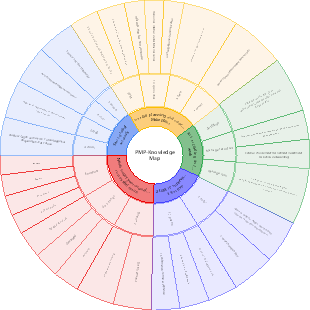
PMP exam chapters
1. Introduction
1.1 Project Definition and Characteristics
1.1.1 Activities conducted to create unique products or services
1.1.1.1 Progressive clarity
A. The project scope, plan, and goals are gradually detailed B. Gradually refined and measurable
1.1.1.2 Temporary
A. Clear starting point and end point B. It doesn’t necessarily take a short time C. The results or effects last for a long time
1.1.1.3 Uniqueness
A.Products B.Service C.Research results D. A combination of products, services and results
1.1.2 End of project
1.1.2.1 Normal end
Project goal has been achieved
1.1.2.2 Early ending
A. The goal cannot be achieved B. The demand no longer exists C. Lack of project funds D. Resources cannot be obtained E. Termination required by law or for the convenience of one party
1.2 Project-driven organizational change
A. Initiate change: identify and clarify needs, assess readiness, and describe the scope of change B. Plan for change: define approach, plan for stakeholders, plan for transition and integration C. Implement changes: Prepare the organization, mobilize stakeholders, and deliver project outputs D. Manage transitional change: hand over operations, measure benefits, adjust plans to resolve differences E. Maintain the effect of change: measure the effectiveness of benefit realization, carry out meaning construction, and maintain communication with stakeholders
1.2.1 Current status (project not started)
1.2.2 Transition state (project in progress)
1.2.3 Future state (after obtaining the desired result)
1.3 Projects create business value
1.3.1 Tangible value
Monetary assets, market share, fixed facilities, stockholders' equity, public utilities
1.3.2 Intangible value
Brand awareness, strategic alignment, goodwill, reputation, trademark, public interest
1.4 Five stages of systematic deployment
1.4.1 Project preparation
1.4.2 Overall design
1.4.3 System deployment
1.4.4 System online
1.4.5 Ongoing support
1.5 Criteria for project success
1.5.1 Achieve financial indicators and measure benefits
1.5.2 Achieve non-financial indicators in the business case
1.5.3 Help the organization transition from the current state to the future state
1.5.4 Achieve organizational strategic goals
1.5.5 Satisfy relevant parties
1.5.6 Customer Acceptance
1.5.7 Project results can be used in operations
1.5.8 Meet the agreed delivery quality
1.5.9 Follow governance rules
1.5.10 Meet other agreed success criteria
1.6 Project startup background
1.6.1 Comply with laws, regulations and social requirements
1.6.2 Meet the requirements and needs of relevant parties
1.6.3 Create, improve or repair products, processes and services
1.6.4 Implement and change business or technical strategies
1.7 Importance of project management
1.7.1 Effective project management
1.7.1.1 Achieve business goals;
1.7.1.2 Meet the expectations of relevant parties;
1.7.1.3 Improve predictability;
1.7.1.4 Increase the probability of success;
1.7.1.5 Deliver the right product at the right time;
1.7.1.6 Resolve problems and disputes;
1.7.1.7 Respond to risks in a timely manner;
1.7.1.8 Optimize the use of organizational resources;
1.7.1.9 Identify, rescue or terminate failed projects;
1.7.1.10 Management constraints (such as scope, quality, schedule, cost, resources);
1.7.1.11 Balance the impact of constraints on the project (for example, scope expansion may increase costs or extend schedule);
1.7.1.12 Manage change in a better way
1.7.2 Poor management or lack of management
1.7.2.1 Exceeding the time limit;
1.7.2.2 Cost overruns;
1.7.2.3 Poor quality;
1.7.2.4 Rework;
1.7.2.5 The project scope expands out of control;
1.7.2.6 Damage to the organization’s reputation;
1.7.2.7 Relevant parties are not satisfied;
1.7.2.8 The project being implemented cannot achieve its goals.
1.7.3 Effective and efficient project management
organizational strategic capabilities
1.7.3.1 Link project results to business goals;
1.7.3.2 Launch market competition more effectively;
1.7.3.3 Support organizational development;
1.7.3.4 Respond to the impact of changes in the business environment on the project by appropriately adjusting the project management plan
1.8 Constraints on project management
Quality is extremely important and projects with quality problems cannot be delivered to customers.
1.8.1 Triple constraints
Time, cost, and scope jointly restrict project quality
1.8.2 Multiple constraints
Time, cost, scope, resources, risks, and stakeholder satisfaction jointly restrict project quality
1.9 Projects, programs, portfolios, operations management
are not necessarily dependent on or related to each other
1.9.1 Organizational strategy
1.9.2 Project Portfolio
Need to prioritize
1.9.2.1 Definition: Programs, projects, portfolios, operations organized together to achieve strategic objectives
1.9.2.2 Scope: changes with changes in strategic goals
1.9.2.3 Change: The project manager continuously monitors internal and external changes
1.9.2.4 Planning: Establish and maintain necessary processes and communications
1.9.2.5 Management: manage and coordinate relevant personnel
1.9.2.6 Oversight: Oversee changes to strategic objectives, resource allocation, performance results and portfolio risks
1.9.2.7 Success: overall investment effects and benefits
1.9.8 Project Portfolio Management
1.9.8.1 Guide the organization’s investment decisions.
1.9.8.2 Select the best combination of program sets and projects to achieve strategic goals.
1.9.8.3 Provide transparency in decision-making.
1.9.8.4 Prioritize team and physical resource allocation.
1.9.8.5 Increase the likelihood of achieving expected return on investment.
1.9.8.6 Achieve centralized management of comprehensive risk forecasts for all components.
1.9.8.7 Project portfolio management also determines whether the project portfolio is consistent with the organization’s strategy
1.9.3 Sub-item combination
1.9.4 Project Set
A series of portfolios with dependencies, obtaining additional benefits through portfolio management
1.9.4.1 Definition: A group of interrelated and coordinated projects, programs, to obtain benefits that cannot be obtained by independent management
1.9.4.2 Scope: includes the scope of the program components. The results of the components are coordinated and complementary to bring benefits to the organization.
1.9.4.3 Change: As delivery and output progress, make changes when necessary to optimize benefits.
1.9.4.4 Planning: Track project dependencies and progress and guide planning components
1.9.4.5 Management: Coordinate the activities of components to ensure the realization of benefits
1.9.4.6 Supervision: Supervise the progress of the project set to ensure the realization of the overall goals, schedule, budget and benefits
1.9.4.7 Success: The expected benefits, efficiency and effectiveness that the program delivers to the organization
1.9.7 Program management
1.9.7.1 Align organizational or strategic directions that impact program and project goals and objectives;
1.9.7.2 Assign program scope to program components;
1.9.7.3 Manage dependencies between program components to implement the program in the best possible way;
1.9.7.4 Manage program risks that may affect multiple projects within the program;
1.9.7.5 Resolve constraints and conflicts affecting multiple projects in the program set;
1.9.7.6 Solve problems between projects and programs as components;
1.9.7.7 Manage change requests within the same governance framework;
1.9.7.8 Allocate budget to multiple projects within the project set;
1.9.7.9 Ensure that the program and the projects it contains can achieve benefits
1.9.5 Project
1.9.5.1 Definition: Creative temporary work
1.9.5.2 Scope: clear progressively detailed goals
1.9.5.3 Change: Make expectations for changes and implementation processes, and achieve change management and control
1.9.5.4 Planning: Gradually clarify high-level information and transform it into detailed plans
1.9.5.5 Management: Manage the project team to achieve project goals
1.9.5.6 Supervision: The project manager monitors the products, services, and results during the production process
1.9.5.7 Success: measured by product and project quality, time, satisfaction, and budget
1.9.6 Operation
Support daily business and achieve target strategies Continuous production operations
1.9.6.1 Continuity
1.9.6.2 Similarity
1.9.6.3 Standardized production
1.9.9 Intersection time between operations and projects
1.9.9.1 When developing new products, upgrading products or increasing production;
1.9.9.2 When improving operations or product development processes;
1.9.9.3 At the end of the product life cycle;
1.9.9.4 During each closing phase.
1.9.10 Organizational-level project management and strategy
1.9.10.1 Project portfolios, programs and projects all need to be consistent with the organizational strategy, or driven by the organizational strategy, and serve in different ways to achieve strategic goals.
1.9.10.2 Organizational project management can be applied to systematically manage project portfolios, programs, and projects in order to align projects with the organization's strategic business objectives.
1.9.10.3OPM refers to the framework that integrates portfolio, program and project management and organizational drivers to achieve strategic objectives
1.9.10.4OPM is designed to ensure that the organization is undertaking the right projects and allocating key resources appropriately.
1.9.10.5OPM helps ensure that all levels of the organization understand the organization's strategic vision, the initiatives, goals, and deliverables that support the vision.
1.10 Project life cycle
Including the four processes of starting, organizing preparation, execution, and ending
1.10.1 Predictive: Determine project scope, time and cost in the early stages of the life cycle. Any scope changes must be carefully managed. The predictive life cycle is also called the waterfall life cycle.
1.10.2 Iterative: The project scope is usually determined early in the project life cycle, but the time and cost estimates will be revised regularly as the project team's understanding of the product continues to deepen. An iterative approach develops a product through a series of repetitive cyclical activities, whereas an incremental approach progressively increases the functionality of the product
1.10.3 Incremental: Deliverables are produced through a series of iterations that gradually increase product functionality within a predetermined time interval. Only after the last iteration has the deliverable achieved the necessary and sufficient capabilities can it be considered complete
1.10.4 Adaptive type: Agile, iterative or incremental. The detailed scope is defined and approved before the iteration begins. Adaptive life cycle is also called agile or change-driven life cycle
1.10.5 Hybrid: A combination of predictive life cycle and adaptive life cycle. Project elements that are fully understood or have defined needs follow the predictive development life cycle, while elements that are still under development follow the adaptive development life cycle
1.10.6 Achieve project cycle flexibility:
1.10.6.1 Determine one or more processes that need to be implemented at each stage;
1.10.6.2 Implement the identified process or processes at the appropriate stage;
1.10.6.3 Various attributes of the adjustment phase (such as name, duration, exit criteria and entry criteria).
1.11 Five process groups
1.11.1 Startup
1.11.1.1 Develop project charter (integration)
1.11.1.2 Identify relevant parties (interested parties)
1.11.2 Planning
1.11.2.1 Develop project management plan (integration)
1.11.2.2 Planning scope management (scope)
1.11.2.3 Gathering requirements (scope)
1.11.2.4 Define Scope (Scope)
1.11.2.5 Create WBS (scope)
1.11.2.6 Planning progress management (progress)
1.11.2.7 Define activities (progress)
1.11.2.8 Sequencing activities (progress)
1.11.2.9 Estimate activity duration (progress)
1.11.2.10 Develop a progress plan (progress)
1.11.2.11 Planning cost management (cost)
1.11.2.12 Estimated costs (costs)
1.11.2.13 Develop budget (cost)
1.11.2.14 Planning quality management (quality)
1.11.2.15 Planning Resource Management (Resources)
1.11.2.16 Estimating activity resources (resources)
1.11.2.17 Planning and communication management (communication)
1.11.2.18 Planning Risk Management (Risk)
1.11.2.19 Identify risks (risks)
1.11.2.20 Implement Qualitative Risk Analysis (Risk)
1.11.2.21 Implement quantitative risk analysis (risk)
1.11.2.22 Planning risk response (risk)
1.11.2.23 Planning and Procurement Management (Procurement)
1.11.2.24 Planning stakeholder participation (stakeholder)
1.11.3 Execution
1.11.3.1 Direct and manage project work (integration)
1.11.3.2 Managing project knowledge (integration)
1.11.3.3 Management quality (quality)
1.11.3.4 Obtain resources (resources)
1.11.3.5 Building the team (resources)
1.11.3.6 Management Team (Resources)
1.11.3.7 Management Communication (Communication)
1.11.3.8 Implement risk response (risk)
1.11.3.9 Implement procurement (procurement)
1.11.3.10 Manage stakeholder participation (stakeholders)
1.11.4 Monitoring
1.11.4.1 Monitor project work
1.11.4.2 Implement overall change control
1.11.4.3 Confirmation scope
1.11.4.4 Control range
1.11.4.5 Control progress
1.11.4.6 Control costs
1.11.4.7 Control quality
1.11.4.8 Control resources
1.11.4.9 Supervisory communication
1.11.4.10 Supervision risks
1.11.4.11 Control procurement
1.11.4.12 Supervise the participation of relevant parties
1.11.5 Ending
1.11.5.1 End the project or phase
1.12Top Ten Knowledge Areas
1.12.1 Project integration management
Including the processes and activities carried out to identify, define, combine, unify and coordinate the various processes and activities of various project management process groups.
1.12.2 Project scope management
Includes the processes involved in ensuring that a project does, and only does, all the work required to successfully complete the project.
1.12.3 Project progress management
Includes various processes required to manage projects to completion on time.
1.12.4 Project cost management
Including the various processes for planning, estimating, budgeting, financing, financing, managing and controlling costs to complete the project within the approved budget.
1.12.5 Project quality management
Including the various processes that apply the organization's quality policy to plan, manage, and control project and product quality requirements to meet the expectations of interested parties.
1.12.6 Project resource management
Includes the process of identifying, acquiring, and managing the resources needed to successfully complete a project.
1.12.7 Project communication management
Includes the processes required to ensure the timely and appropriate planning, collection, generation, dissemination, storage, retrieval, management, control, supervision, and final disposition of project information.
1.12.8 Project risk management
It includes the processes of planning risk management, identifying risks, conducting risk analysis, planning risk responses, implementing risk responses and monitoring risks.
1.12.9 Project Procurement Management
Includes the various processes involved in procuring or obtaining required products, services, or results from outside the project team.
1.12.10 Project Stakeholder Management
Includes processes for: identifying people, teams, or organizations that affect or are affected by the project, analyzing stakeholder expectations and impacts on the project, and developing appropriate management strategies to effectively mobilize stakeholder participation in project decision-making and execution.
1.13 Product life cycle
1.13.1 The project life cycle and the product life cycle are independent of each other, and the latter may be generated by the project.
1.13.2 Product life cycle refers to a series of stages in the entire evolution process of a product from concept, delivery, growth, maturity to decline.
1.14 Project Phase
1.14.1Project phase attributes
1.14.1.1 Name (e.g. Phase A, Phase B, Phase 1, Phase 2, Proposal Phase);
1.14.1.2 Quantity (for example, three phases of the project, five phases of the project);
1.14.1.3 Duration (such as one week, one month, one quarter);
1.14.1.4 Resource requirements (such as manpower, buildings, equipment);
1.14.1.5 The admission criteria for the project to enter a certain stage (for example, specific approval documents have been obtained, specific documents have been completed);
1.14.1.6 Exit criteria for project completion at a certain stage (such as approved documents, completed documents, deliverables achieved)
1.14.2 Project phase name
1.14.2.1 Concept development;
1.14.2.2 Feasibility study;
1.14.2.3 Customer requirements;
1.14.2.4 Solution development;
1.14.2.5 Design;
1.14.2.6 Prototype method;
1.14.2.7 Construction;
1.14.2.8 Testing;
1.14.2.9 Conversion;
1.14.2.10 Trial operation;
1.14.2.11 Milestone review;
1.14.2.12 Lessons learned.
1.14.3 Factors influencing the establishment of project stages
1.14.3.1 Management requirements;
1.14.3.2 Nature of the project;
1.14.3.3 Uniqueness of the organization, industry or technology;
1.14.3.4 The components of the project, including but not limited to technology, engineering, business, process or law;
1.14.3.5 Decision points (e.g. funding, continue/terminate project, milestone review)
1.14.4 Project stage gate
Stage gates may be called stage reviews, stage gates, key decision points, and stages. Segment entrance or stage exit
1.14.4.1 Compare projected project performance and progress with actual conditions
1.14.4.1.1 Project business case
1.14.4.1.2 Project Charter
1.14.4.1.3 Project management plan
1.14.4.1.4 Benefit management plan
1.14.4.2 Actions to be taken after comparing stage gates
1.14.4.2.1 Enter the next stage;
1.14.4.2.2 Enter the next stage after rectification;
1.14.4.2.3 End the project;
1.14.4.2.4 Stay at the current stage;
1.14.4.2.5 Repeat a stage or an element.
1.15Project management process
Including input, tools and techniques, output
1.15.1 A process that is carried out only once or only at predefined points in the project. Examples include developing a project charter and closing a project or phase.
1.15.2 A process that is carried out regularly as needed. Obtain resources when they are needed. Execute implementation procurement before procurement is required.
1.15.3 The process that runs throughout the project. Process definition activities that may be performed throughout the project life cycle, particularly when the project uses rolling planning or adaptive development methods. There are many monitoring processes that need to be carried out on an ongoing basis from the beginning to the end of the project.
1.16 Data and information for project management
1.16.1 Job performance data
Raw observations and measurements collected from each activity being performed. Examples include work completion percentage, quality and technical performance measurements, start and end dates of schedule activities, number of change requests, number of defects, actual cost and actual duration, etc.
1.16.2 Job performance information
Performance data collected from each control process and integrated and analyzed based on relevant context and cross-domain relationships. Examples of performance information include the status of deliverables, implementation status of change requests, and forecasted estimates to completion.
1.16.3 Work performance report
A physical or electronic project document that compiles work performance information for the purpose of making decisions, asking questions, taking action, or raising concerns. Examples include status reports, memos, justification reports, information notes, electronic dashboards, recommendations and status updates
1.17 Project tailoring
Appropriate project management processes, inputs, tools, techniques, outputs and life cycle phases should be selected to manage the project. This selection activity is project management tailored to the project.
1.18 Project business documents
1.18.1 Needs assessment
A needs assessment is usually conducted before a business case and involves understanding business goals and objectives, problems and opportunities, and making recommendations for how to deal with them. The results of the needs assessment may be summarized in a business case document
1.18.2 Project business case
Project business case refers to a documented economic feasibility study report, which is used to demonstrate the effectiveness of the benefits of the selected solution that lacks sufficient definition, and is the basis for initiating subsequent project management activities. The business case sets out the objectives and rationale for starting the project. It helps measure the success of the project against the project objectives at the end of the project.
1.18.2.1 Business needs
1.18.2.1.1 Identify motivations that drive action
1.18.2.1.2 Situation description, recording the business issues or opportunities to be addressed, including the value that can be created for the organization;
1.18.2.1.3 Identify affected parties
1.18.2.1.4 Determine the scope
1.18.2.2 Situation analysis
1.18.2.2.1 Determine organizational strategy, goals and objectives;
1.18.2.2.2 Determine root causes of problems or triggers of opportunities;
1.18.2.2.3 Analyze the gap between the capabilities required by the project and the organization’s existing capabilities;
1.18.2.2.4 Identify known risks;
1.18.2.2.5 Identify key factors for success;
1.18.2.2.6 Identify decision criteria that may be used to evaluate various actions
1.18.2.2.6.1 Required. Principles that must be followed to deal with a problem or opportunity.
1.18.2.2.6.2 Expected. Principles you wish to practice to address problems or opportunities.
1.18.2.2.6.3 Optional. Non-essential guidelines. How well this code is followed may be a differentiating factor between alternative courses of action
1.18.2.2.7 Identify a set of options to address business problems or opportunities
1.18.2.2.7.1 Take no action. Also known as the "business as usual" scenario. Choosing this option will result in the project not being authorized
1.18.2.2.7.2 Use minimal effort to address problems or opportunities. Minimal effort may refer to identifying a set of established guidelines that are critical to dealing with a problem or opportunity.
1.18.2.2.7.3 Address a problem or opportunity with more than minimum effort. This option may satisfy the de minimis criteria as well as some or all of the other documented criteria. The business case may offer more than one of the above options
1.18.2.3 Recommended
1.18.2.3.1 A description giving a proposed solution for the project;
1.18.2.3.2 The contents of the instruction manual may include (but are not limited to)
1.18.2.3.2.1 Analysis results of potential solutions;
1.18.2.3.2.2 Constraints, assumptions, risks and dependencies of potential solutions;
1.18.2.3.2.3 Success Criteria
1.18.2.3.3 An implementation method, which may include (but is not limited to)
1.18.2.3.3.1 Milestones;
1.18.2.3.3.2 Dependencies;
1.18.2.3.3.3 Roles and Responsibilities
1.18.2.4 Evaluation
A statement describing a plan to measure the benefits of project delivery, including any ongoing operational options after initial implementation
1.18.2.4.1 The business case document measures success and progress laid the foundation
1.18.3 Project benefit management plan
The project benefits management plan describes how and when the project will achieve benefits, as well as the benefit measurement mechanisms that should be developed. Project benefits are the results of actions, behaviors, products, services or results that create value for the sponsoring organization and the project's intended beneficiaries. Target benefits should be determined early in the project life cycle and a benefit management plan should be developed accordingly. It describes the key elements of effectiveness
1. Developing a benefit management plan requires the use of data and information from the business case and needs assessment, for example, cost-benefit analysis data, in which the cost estimate has been compared with the benefits intended to be achieved by the project. 2. The development and maintenance of the project benefit management plan is an iterative activity. It is a complementary document to the business case, project charter and project management plan. The project manager works with the sponsor to ensure that the project charter, project management plan, and benefits management plan remain consistent throughout the project life cycle.
1.18.3.1 Target benefits (such as the tangible value and intangible value expected to be created through project implementation; financial value is reflected in net present value);
1.18.3.2 Strategic alignment (such as the degree to which project benefits are consistent with the organization’s business strategy);
1.18.3.3 Time limit for realizing benefits (such as stage benefits, short-term benefits, long-term benefits and continuous benefits);
1.18.3.4 Benefits owner (e.g. the person responsible for monitoring, recording and reporting on the benefits achieved throughout the time frame determined by the plan);
1.18.3.5 Measurement indicators (such as direct and indirect measurements used to show realized benefits);
1.18.3.6 Assumptions (such as factors that are expected to exist or are obvious);
1.18.3.7 Risks (e.g. risks of realizing benefits).
1.18.4 Project Charter and Project Management Plan
1.18.4.1 The project charter is a document issued by the project sponsor that formally approves the establishment of the project and authorizes the project manager to use organizational resources to carry out project activities.
1.18.4.2 A project management plan is a document that describes how a project will be executed, monitored and controlled.
1.18.5 Project success criteria
1.18.5.1 Definition of project success and the most important factors
1.18.5.1.1What makes a project successful?
1.18.5.1.2 How to evaluate project success?
1.18.5.1.3 What factors will affect project success?
1.18.5.2 Involves other standards related to organizational strategy and delivery of business results
1.18.5.2.1 Complete the project benefit management plan;
1.18.5.2.2 Achieve agreed financial measures documented in the business case
1.18.5.2.2.1 Net present value (NPV);
1.18.5.2.2.2Return on investment (ROI);
1.18.5.2.2.3 Internal rate of return (IRR);
1.18.5.2.2.4 Payback Period (PBP);
1.18.5.2.2.5 Benefit-Cost Ratio (BCR).
1.18.5.2.2.6 Achieve the non-financial objectives of the business case;
1.18.5.2.2.7 Complete the transition of the organization from "current state" to "future state";
1.18.5.2.2.8 Fulfill the terms and conditions of the contract;
1.18.5.2.2.9 Achieve organizational strategies, goals and objectives;
1.18.5.2.2.10 Satisfy relevant parties;
1.18.5.2.2.11 Acceptable customer/end-user adoption;
1.18.5.2.2.12 Integrate deliverables into the organization’s operating environment;
1.18.5.2.2.13 Meet the agreed delivery quality;
1.18.5.2.2.14 Follow governance rules;
1.18.5.2.2.15 Meet other agreed success criteria or criteria (e.g. process yield).
Organizational process asset updates