MindMap Gallery Elementary mathematics
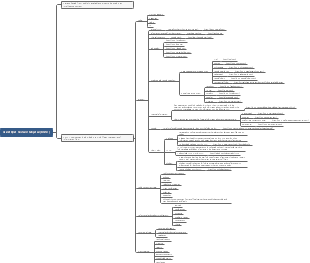
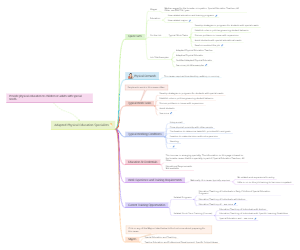
This is a mind map of elementary mathematics for weeks 7-15 by Annabelle Hawkins. Elementary mathematics provides a strong foundation for students to build upon as they progress to more advanced mathematical concepts in middle school and beyond. The mind map involves a plan for elementary education in mathematics, which can used as an reference for teachers.
Edited at 2021-04-01 03:03:36Elementary Mathematics - Annabelle Hawkins Mindmap going over what we learned through weeks 7-15.

This is a mind map of elementary mathematics for weeks 7-15 by Annabelle Hawkins. Elementary mathematics provides a strong foundation for students to build upon as they progress to more advanced mathematical concepts in middle school and beyond. The mind map involves a plan for elementary education in mathematics, which can used as an reference for teachers.
Elementary Mathematics - Annabelle Hawkins Mindmap going over what we learned through weeks 7-15.
This is a mind map of elementary mathematics for weeks 7-15 by Annabelle Hawkins. Elementary mathematics provides a strong foundation for students to build upon as they progress to more advanced mathematical concepts in middle school and beyond. The mind map involves a plan for elementary education in mathematics, which can used as an reference for teachers.
Elementary Mathematics
Week 9
Integers: Build, Sub, Multiply
1. Building Subtraction: eg. 8-3=? *** Students should say the problem as "8 take away 3". Step 2: Place 8 postive counters on the table, then take away 3 of them. Final answer= 5 For negative numbers: eg. -5- (-3)=? Step 1: Add five negative tiles to the board. - - - - - Step2: take away three of the negative tiles. - - Final answer= -2 When you can't take away enough tiles: eg. 4-7=? Step 1: Add four positive tiles to the board. ++++ Step 2: create a zero bank that is big enough for us to take away 7. ++++ +++++ - - - - - Step 3: Now take away 7 ++ - - - - - The two positives and negatives cancel out, leaving us with -3.
Build multiplication
Build multiplication: eg. 4(3) *** say the problem as "4 groups of three positives". Students should put four groups of three yellow tiles onto the table. For negative numbers: eg. -4(3) Step1: Start with the number 0, change problem to 0-4(3). Step 2: Create a zero bank that is big enough to take away four groups of postive three. Step 3: Left over numbers cancel out, leaving you with -12.
Integers: Solving sub and Division
Integers: Solve Subtraction 1. If two answers come up as the same, that means they are equivalant. 2. Subtraction is the same thing as adding the opposite. 3. "Keep change change"-- Keep the first number the same, change the symbol, and change the sign of the second number. eg. 38- (-41)=? K C C 38+(+41)=? =79 Integers: Multip/ Div rules 1. neg x neg= positive 2. Neg x pos= negative 3. neg x pos= negative 4. pos x pos= positive ***Never use the word "and" when talking about these rules.. Simpler rules: 1. Same signs= positive 2. Opposite signs= negative
Week 10
Intro to Fractions
1. Context is important when talking about fractions. 6 cars will be bigger than 10 plants. 2. Know how big each number is. 3.The numerator is the number of things we have, the denominator is the total amount possible. 4. The denominator will tell you the size of the piece. 5. The bigger the denominator, the smaller the piece (numerator).
Solving fractions: add/subtract
Solving fractions with understanding: 1. Always add and subtract whole numbers first. 2. Instead of "common denominators, say "same size piece". 3. When subtracting a fraction from a whole number, you can give the number a "common denominator" by taking away one of the pieces from the whole number and writing it as a fraction with the same denominator. eg. 8- 4/7=? 7 7/7- 4/7 = 7 3/7 Adding subtracting fractions with different denominators: eg. 7/18- 1/6=? Step 1: We need the denominators to be the same, so we need to figure out what their greatest common factor is. Step 2. 18 can be broken down into 3 groups of 6, so we multiply 1/6 by 3 (both the top and bottom). This gives us 7/18- 6/18. Final answer= 1/18
Comparing Fractions
Determining which fraction is bigger: 1.Multiply both numerators by 2 to see which one makes it closer to 1/2 (anchor fraction). Whichever is closest is the bigger number. 2. If the numerator is the same, the one with the smaller denominator is the bigger number. 3. If they are both missing the same amount, the one with the bigger denominator is the biggest because it is only missing one small piece. 4. If they have whole numbers, the one with the bigger whole number will always be the biggest. 5. If the numbers have common factors, you can multiply them to make the denominators the same. This will make it easier to see which is bigger.
Week 8
Divisibility Rules
Divisibility Rules: 2: All even numbers, end in 0, 2, 4, 6, 8 3: The sum of digits is divisible by 3 4: If the last two digits are divisible by 4, then yes. 5: Last digit is a 5 or 0. 6. If 2 and 3 both work, then 6 works. 8: If the last digit is divisible by 8, then yes. 9: the sum of the digits is divisible by 9. 10. if the last digit is 0, then yes.
Intro to integers: Build and Show
1. Build integers using two color counters: *** Red= negative, yellow= positive. Negative numbers go on the bottom, positive numbers go on the top. eg. Build 3 using 5 tiles. Step 1: Place three positive (yellow) color counters on the table. +++ Step 2: Create a "zero bank" using positive and negative counters. You can add one positive and one negative counter, giving you 5 counters in totoal. The positive and negative will cancel out, giving you 3. +++ + - 2. Showing integers using + and - eg. -3 + 4= ? *** Positives still go on top, negatives on the bottom. ++++ - The positive and negative cancel out, leaving us with 3.
Solving and Adding Integers
Adding Integers Algorithm: Use + and - symbols to figure out whether we add or subtract. eg. 25+ (-12)=? Step 1: Write two positives above the 25 and one negative above the -12. This reminds us that we would have more positive tiles since 25 is a bigger pile, and less negative tiles since -12 is a smaller pile. Step 2: Since we have two postives and one negative, this means we subtract because we have one of each sign. 25 -12 =13 *** If you have all negatives, you would add the numbers together. If you have two negatives and a positive, you would subtract.
Week 7
Subtraction Using Expanded Form
To subtract using expanded form, break the numbers into separate place values using addition and then subtract them one at a time. Then, add what you have together. eg. 426-234= ? 400+20+6 200+30+4 =100+10+2 Final answer= 112
Subtraction Using Equal Addends
If you do not want to use borrowing, the equal addends method for subtraction can be used to make the bottom number smaller than the top. To use equal addends, add any number to the bottom that will make the last digit of the bottom number smaller than the top digit.. Then, add that same number to the top. eg. 36- 28=? 36 -28 We can add 2 to 28 to make it an even 30. Then, we'll add 2 to 36 as well. 36+2 -28+2 = 38 -30= 8
Spiraling Content
Spiraling content is going back and revisiting previously learned content throughtout the semester. This way, it's harder to forget.
Multiplication Facts
1. Time tests are ineffective because they put students under too much pressure, leading them to do poorly on the test. 2. Progress charts that show improvement can encourage students to keep working. 3. Flash cards are a great way to memorize the multiplication table. 4. Multiplication tricks are terrible because students don't atually learn anything about multiplication and they don't work for all numbers.
Multiplication Alt algorithms
1. Expanded form: Break each number apart by place value using addition. Multiply each number by each other once, then add what you have together at the end. eg. 35 x 23=? 30+5 x 20+3 600+100 +240+40 =840+140 Final answer=980 2. Left to right: Instead of putting numbers into expanded form, write them normally and solve the same way. Keep in mind their actual place value. eg. 47x53 47 x 53 2000 350 21 120 =2441 3. Lattice: Draw the lattice box, making diagnol cuts for however many place values there are. Then, put one number on the top and one number on the right. Multiply across from right to left.
Division: Long,repeated subtraction. and upwards
1. Long division (or traditional division): This method is tricky for students because they have a hard time remembering which number goes on the inside. The small number does not always go on the outside. Remainders in fractions are too confusing. eg. 218 / 4 218 is the number being split, so it would go on the inside. We say "218 divided into four groups." 2. repeated subtraction: Use the highest factor that the students know and then write it on the side. Then, subtract and keep repeating until that number doesn't work anymore. The remainder is written as a fraction, with the remainder as the numerator and the outside number as the denominator. Pros: This method is simpler than long division. Cons: The remainder can be confusing. 3.Upwards division: Write the equation vertically, or as a fraction. Make sure the top numbers are spaced apart so that you can write other numbers in between. Figure out how many times the denominator goes into each top number, then write that number in the answer spot. Multiply these two numbers so it can be subtracted from the first digit, then repeat the process again for the next numbers. The remainder will be the numerator and the denominator will stay the same.