MindMap Gallery Gender Inequality in the Workforce
Gender inequality in the workforce refers to the unfair treatment of women and men in terms of career opportunities, pay, and other employment-related areas within the workplace. This inequality exists in many industries and companies worldwide, regardless of their size, type, or location.
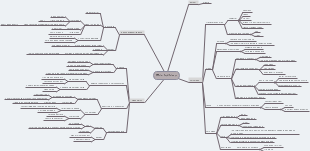
Edited at 2021-07-13 20:07:47GENDER INEQUALITY IN THEWORKPLACE
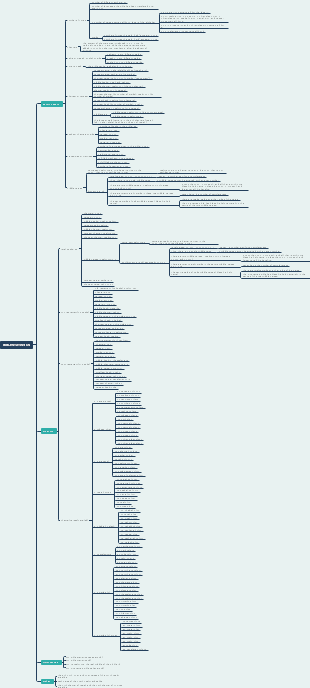
THESIS: The workplace can often be aprejudicial environment thatdemonstrates gender inequality andthis concept arises from the perceptionof gender roles, gender bias, andsexism.
GENDER ROLES: cultural norms thatdetermine a role or position for agender.
Females continue to be primarycaregivers but cannot do so and give 16hours a day 7 days a week to maintain afull time job as well
Men on average get 1.5more vacation days thanwomen yet women usemore of the vacation daysthan men
GENDER BIAS: cultural norms thatcreate a prejudicial attitudes towards acertain gender
Effective leaders are displayed as strong,powerful individuals. If a womendisplays these traits they are portrayedas aggressive and abrasive but if theyare sympathetic and nurturing they areconsidered weak.
Women are told to be modest andself-effacing team players that arehappy to do office housework. If notthey are shown to not be a team player
To naturally reproduce a population thefertility rate has to be 2.1, but in mostfirst world countries, the rate is between1.3 and 1.9.
SEXISM: stereotyping or beingdiscriminatory towards a gender;typically females.
Women often do a "second-shift" ofhousework and childcare when theyreturn home. This results in themwaiting longer for partnership.
If a man stayed late his favourabilitywas enhanced by 14% but if both maleand female workers declined to staylate only the women's favourabilitydecreased by 12%.
Majority of women saw themselves asEQUALLY CAPABLE as their colleaguebut majority of men consideredthemselves MORE CAPABLE than theircounterpart.
OBJECTIVES: To find out the implication of gender bias at workplaceTo discuss role of gender at workplaceTo identify stereotypic assignment of duties at workplaces
Research questions: 1. What do you think created thesestereotypes in the workforce?2. Do you think these statistics andthis treatment of women will change inthe future? 3. Why do you think this still occurseven if this topic is brought up on a dayto day basis? 4. Do you agree with the way womenare perceived in the workplace? Why? 5. Do you think this applies to everywomen in the workforce? 6. Could gender inequality in theworkplace apply to men as well? How? 7. What solutions do you proposethat can change this ordeal?
conclusion:
Although women have made important inroads in science and engineering since the early 1970s, their progress in these fields has stalled over the past several years. This study looks at women in science and engineering careers in the 1970s and 1980s, documenting differences in career outcomes between men and women and between women of different races and ethnic backgrounds.
The workforce needs to ensure females receive equal opportunities as men and inyears to come society must work towards the belief of feminism to secure the samerights for all who have earned it.
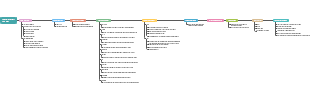
Methodoloy
Focus groups interviews
questionaires
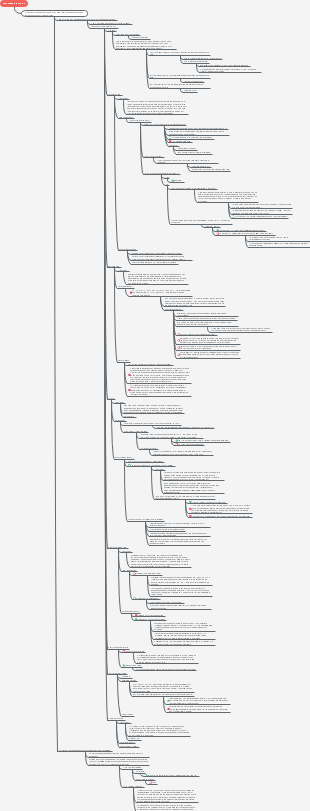
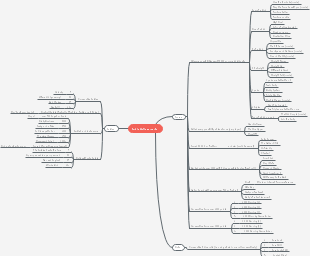
FACTORS THAT IMPACT ON GAMBLING BEHAVIOURS
cover page
abstract
body
Introduction
TOPIC STATEMENT: Factors influencing individual gambler’s decision making may differ because of different countries, races, religion,s and cultures of residents.
THESIS: marketing activities tend to influence individuals’ gambling behavior, unlike the psychological aspect. This study suggested that marketers should focus more on marketing activities
LITERATURE REVIEW
OVERVIEW:Gambling is getting popular as personal leisure activity across many regions, countries, and cultures. Many governments are aware of the economic benefits of the gambling industry such as tourist expenditures, citizen employments, personal income and tax revenues toward their countries.
CONTRIBUTORS:Basically, external factors are the attributions that come from outsides and beyond the control of individual.nternal Factors - PsychologicalPsychological field are refer to the inner qualities of the consumer. Marketers have highly concern on consumer psychological reseach since it may provided the valuable marketing tools that helps to identify the market segment
HYPOTHESES: Marketing activities positively affect an individual's gambling behaviors, Psychological field positively affect individual's gambling behaviors,
Methodology
PARTICIPANTS: A sample group of 19 years old youths that visit Casinos in malaysia
INSTRUMENTS
Basically, the questionnaire is written in English and back-to back translated into Mandarin. It is believed that there is a high probability that the target respondents may be Chinese.
The Likert scale is chosen because it allows the researcher to perform certain statistical operations on the data collected from the respondents
Results
TABLES
Table 1: overall variance explanation of the gambling behavior
Table 2: Overall variance expectation for marketing activities for gambling behavior
CHARTS
Chart 1: overall variance explanation of the gambling behavior
Chart 2: Overall variance expectation for marketing activities for gambling behavior
GRAPHS
Graph 1: Overall variance expectation for marketing activities for gambling behavior
Graph 2: overall variance explanation of the gambling behavior
ORAL PRESENTATION
This findings are consistent with research being conducted in Singapore (Singapore National Council on Problem Gambling, 2006) that indicated gambling once in a while are acceptable.
However, the findings did not support those by previous researchers (Lin & Chen, 2009) that the higher the psychological risk, the greater the negatively effect between purchase decisions.
Discusion
FINDINGS:
Through the analysis, it is believed that the psychological field factor did not effectively influence the gamblers in Malaysia. Additionally, it showed that people are aware of how to manage their finance and they treat gambling as common activities
Majority of the respondents are Malaysian (71.5%), male (52.5%), age group between 41- 60 years old (55%), Buddhist (70.5%) and claimed that primary and secondary education as their highest qualification (69%)
RECOMENDATION
CONCLUSION
Although the respondents know that gambling habits bring psychological risk, they continue with their gambling activity. It is believed that the self-emotion and self-efficacy of respondents are high with gambling.
As conclusion, marketing activities tend to influence individuals’ gambling behavior unlike psychological aspect
notes
reference
Sutton, R., & Griffiths, M. D. (2008). The Casino Attitudes Scale: The Development of a New Brief Psychometric Instrument. International Journal Menagement Health Addiction, 6 , 244-248
Tudin, & Yei. (2012). Factors influencing individuals’ gambling behavior _ a case study in Malaysia. Scribd. https://www.scribd.com/document/182971261/FACTORS-INFLUENCING-INDIVIDUALS-GAMBLING-behavior-a-case-study-in-Malaysia
appendices