MindMap Gallery Three Approaches of Gender
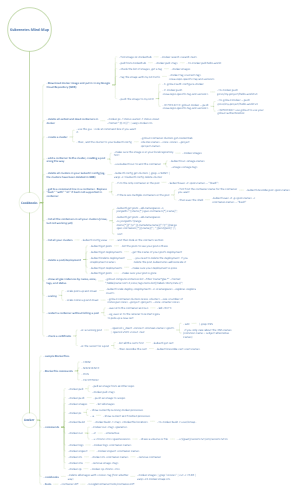
This is a mind map introducing three approaches about gender. The three approaches introduced on the mind map are the interactionist approach, institutional approach, and individualist approach. For instance, the interactionist approach means focusing less on the individual and more social context within which the individual interacts. More detailed information can be learned from the mind map above. You can find this template on EdrawMind and draw a mind map like this easily.
Edited at 2021-10-28 08:28:48Three Approaches of Gender

Interactionist Approach
Focus less on the individual and more social context within which individual interact,
Social Context - participants in a setting and features of the environment where the interaction takes place.
Social Categorization- refers to the processes through which individuals classify others and themselves where the interaction takes place.
Three types of Interactionist Approach
Ethnomethological Views: "doing gender"
❑ Argues that social interaction is the vehicle through which people present themselves to others as women or men. ❑ Gender or, rather, the belief that the world is divided into two, mutually exclusive categories – is understood as an “accomplishment” – a product of human effort. ❑ Believes that sex categorization is a habitual, virtually automatic, and rarely questioned aspect of social interaction. ❑ Claim that because sex categories are always present, they are always available as a basis for interpreting others’ behavior.
Status Characteristics Theory
❑ Emphasize the ways in which sex categories become the basis for people’s expectations about others’ competence. ❑ Interaction requires that people orient themselves to one another, it is necessary to have some basis for categorizing others vis-vis oneself (Ridgeway 1997) ❑ To explain why and how categorizing others by sex produces gender expectations and stereotypes, these theorists introduce the idea of a status characteristic ❑ Once a characteristic like sex category has status value, it begins to shape expectations and form the basis for stereotypes ❑ Gender is not the only basis on which people differentially assign power and status, age is also a status characteristic; adults are generally ascribed more status and power than children.
Homophily Approach
❑Emphasizes the consequences of people classifying others as similar or different from themselves. ❑Term used to describe people’s preference for sameness, a preference that is expressed in their interpersonal relations. When sociologists say that similarity attracts, they mean that people are drawn to those whose attitudes, values, and beliefs are similar to their own. People who share our views affirm us, thus positively reinforcing who we are and how we live. ❑Assumes that being different from or similar to others is more important in shaping interaction than how one differs or is similar.
Homophily Approach "skewed groups"
• One social type is numerically dominant and the other is a very small numerical minority • (e . g . , 15 % or less) • This is likely to be the situation experienced by “newcomers” to a social setting • Members of the numerical minority in skewed groups are called tokens
Kenter three perceptual tendencies are:
Visibility
First tokens- easily noticed and they different, represent their entire social category
Contrast
is the second perceptual tendency, it is the presence of a token or two makes dominants more aware of what they have in common at the same time that is threatens that commonality(1977: 221-2.
Assimilation
the third perceptual tendency, it token less as individuals and more as representative members of their social category.
Institutional Approach
➢ It is “an organized, established pattern” or even more simply, “the rules of the game” (Jepperson 1991: 143). ➢ Each major social institution is organized according to what Friedland and Alford call “a central logic – a set of material practices and symbolic constructions” (1991: 248). These logics thus include structures, patterns, and routines, an they include the belief systems that supply these with meaning.
An institution is gendered when…
1. Gender is present in the processes, practices, images and ideologies, and distributions of power in the various sectors of social life.
2. Historically developed by men, currently dominated by men, and symbolically interpreted from the standpoint of men in leading positions, both in the present and historically (1992:567).
3. From this perspective, aspects of social life that are conventionally treated as “genderless” or gender-neutral are, in fact, expressions of gender
Important aspects of institutions are:
1. Institutions are an important source of cultural beliefs about the social world, including beliefs about gender. Institutions provide scripts that become guides for action. Beliefs about gender also feed back into these institutions, shaping their organization and practices.
2. Institutions revealed in the examples of sport and education, is that they tend to be self-perpetuating, almost taking on a life of their own.
3. Because institutions are taken for granted, they produce a socially shared “account” of their existence and purpose.
MULTILAYERED CONCEPTION OF GENDER
Gender is a multilayered system of practices and relations that operates at all levels of the social world (Ridgeway and SmithLovin 1999; Risman 1998).
As a multilevel system affecting individuals’ identities and characteristics, patterns of social interaction, and social institutions, the gender system shapes social life in crucial ways
Gender is a multilevel system affecting individuals’ identities and characteristics, patterns of social interaction, and social institutions, the gender system shapes social life in crucial ways
Individualist Approach
-It views gender as a set of individual traits, abilities, or behavioral dispositions and attempts to understand how women and men differ in those areas.
Gender Role Socialization
The two sided process
-newborn who encounter social world
- Individual, groups and organizations who pass on cultural information
Agents of Gender Role Socialization
FAMILY
Manipulation
Channeling/ Canalization
Verbal Appellation
Activity Exposure
SCHOOL
Textbook
Education
MEDIA
Media portray different images of women that often have negative connotations.
Examples: Youtube, facebook, twitter, instagra and etc.
PEERS
Children tend to play with same-gender peers.
observes same and other gendered peers' behavior over time.
Theories of Gender Role Socialization
Kohlberg's Cognitive Theory - Based on the claim that gender learning can be explained using the principles of cognitive development. Learning about gender occurs as part of a more general psychological process of cognitive maturation.
Gender learning can be explained using the principles of cognitive development.
Learning about gender occurs as part of a more general psychological process of cognitive maturation.
Bem's Gender Schema Theory In cultures gender distinctions it is strongly reinforced, children learn to use gender to make sense of their experience and process new information.
Gender Polarization - The belief that what is acceptable or appropriate for females is not acceptable or appropriate for males (and vice versa) and that anyone who deviates from these standards of appropriate femaleness and maleness is unnatural or immoral.
Androcentric- Refers to a belief that males and masculinity are superior to females and femininity, and that males and masculinity are the standard or the norm
Identification Theory(Psychoanalytic Perspective) - argue that gender identity will have a different significance for women and men.
Formation of Ego Boundaries- the sense of separation between “me” and “not me” – infants become aware of themselves and others as separate beings with an ability to influence their surroundings.
Formation of Gender Identity- refers to people’s own sense of themselves as males or females. This awareness is helped by – perhaps even dependent upon – another kind of attachment: identification with a same sex parent or adult.
Sociological Theories of Gender Role Socialization
George Herbert Mead's Development of the Self
Stage 3 ( Game Stage) After age 6 or 7 -Assumes social roles, anticipate action of significant and generalized others.
Stage 2 ( Play Stage) Age 3 to 6 - anticipatory socialization and pretends to fill social roles.
Stage 1 ( Imitative Stage) Under age 3 - Imitate significant others and awareness of self apart.
Charles Horton Cooley
Believed that we form of our self-images through with other people
interested in how significant others shape us as individuals
Looking-glass self refers to a self-image that is based on how we think others see us.
1. Our Imagination on how we appear to others.
2. Our imagination on their judgments of the appearance
3.Self-feeling