 Wondershare EdrawMind
MindMap Gallery Auditor's tenure
- 55
Auditor's tenure
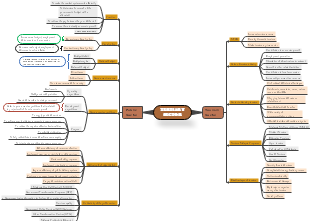
Centered on "Auditor Tenure," this mind map analyzes factors related to tenure predictions, choice of audit firms, and delves into various elements affecting the tenure period under each branch.
Edited at 2022-03-04 13:46:10
- Recommended to you
- Outline



Understanding Financial Systems: Components, Functions, and Regulatory Bodies
- 160



H1: The longer the auditor tenure, the lower the percipient credibility by the investors
Vanstraelen (2000)
Article: Impact of renewable long-term audit mandates on audit quality
analyze whether renewable long-term audit mandates have an impact on the auditor's reporting behaviour and on auditor independence
The results of the study suggest that long-term auditor client relationships significantly increase the likelihood of an unqualified opinion or significantly reduce the auditor's willingness to qualify audit reports. Or, long tenure significantly reduces the auditor’s willingness to qualify audit reports
The policy implications of these findings could be in favour of mandatory auditor rotation to maintain the value of an audit for the external users.
Period:1992-1996/ n=796
Long-term audit-client relationship reduces audit market competition. Thus reduces audit quality
‘‘close ties’’ developed over time between auditor and client may impair the auditor’s professional skepticism. Thus auditor is less likely to introduce more creative audit programs that can better detect errors and fraud risks.
economic incentives to retain a client may compromise the auditor’s independence. Thus greater auditor tolerance of management misrepresenting the financial statements
managers could strategically increase misstatements over time knowing that auditors are less likely to report the misstatement in later years to protect the auditor’s reputation. Thus The bonding effect decreases audit quality over time
Ghosh and Moon (2005)
Article: Auditor Tenure and Perceptions of Audit Quality
analyze how investors and informationin termediaries perceive auditor tenure. Using earnings response coefficients from returns-earnings regressions as a proxy for investor perceptions of earnings quality
They document a positive association between investor perceptions of earnings quality and tenure
They find that the influence of reported earnings on stock rankings becomes larger with extended tenure,although the association between debt ratings and reported earnings does not varywith tenure
They find that the influence of past earnings on one-year-ahead earnings forecasts becomes greater as tenure increases. In general, the results are consistent with the hypothesis that investors and information intermediaries perceive auditor tenure as improving audit quality
imposing mandatory limits on the duration of the auditor-client relationship might impose unintended costs on capital market participant
If auditor tenure is perceived as enhancing earnings quality then the influence of reported earnings on rankins/ratings and earnings forecast is expected to become larger with longer auditor tenure because reported earnings are viewed as more informative about future earnings.
A positive relationship between the proxies for perceptions of earnings quality and auditor tenure is consistent with the hypothesis that longer tenure is perceived as improving independence and audit quality
Period: 1990-2000/ n=35826 firm years
Mansi, Maxwell, and Miller (2004)
Article: Does auditor quality and tenure matter to investors? Evidence from the bond market.
We examine the relation between auditor characteristics (quality and tenure) and the cost of debt financing. we examine whether auditor quality and tenure influence capital market participants using firm-level bond price data. Thus investigate the relationship between auditor tenure and capital market perceptions as measured by the cost of debt and eamings response coefficients (ERCs).
our results suggest that in addition to the information effect of audits, investors value the insurance role of auditors.
the finding that investors require lower rates of return as the length of tenure increases provides direct evidence regarding the value investors attach to audit tenure and suggests that mandatory auditor rotation may not be uniformly beneficial and could be viewed negatively by the capital market for riskier firms.
Using a sample of 8,529 firm-year observations from 1974 to 1998, we find a negative relation between auditor quality and tenure and the return investors require on corporate bonds.
results indicate that bond yields decrease and ERCs increase with tenure, and they interpret these results as evidence that eamings quality increases with tenure.
Lennox, C. (2014).
Book: Auditor tenure and rotation.
Mandatory audit firm rotation required for all types of publicly traded companies in the: Bangladesh, Bolivia, Bosnia Herzegovina, Costa Rica, Indonesia, Italy, Mongolia, Oman, Paraguay, Serbia, Tunisia, and Uzbekistan. In most countries that require audit firm rotation, the maximum permissible length of audit firm tenure is set at around five years.
Arguments in favor of mandatory rotation
A reduced threat of economic dependence: By reducing the expected length of auditor–client tenure, it is argued that mandatory rotation can strengthen an auditor’s economic incentives to remain independent of the client.
A “fresh eyes” benefit: change of auditor can improve audit quality by bringing a fresh perspective to the audit. fresh perspective can reveal problems that were not apparent to the previous partner.
Avoidance of close personal relationships and misplaced trust: When an auditor audits the same client for many years, the auditor may become overly trusting of the management or complacent in conducting the audit. Thus, mandatory audit firm rotation may be necessary to prevent close personal relationships and misplaced trust at all levels of the audit team.
Greater competition: Mandatory audit firm rotation would increase the frequency of auditor–client terminations and therefore lead to more situations in which audit firms submit bids for new clients.Numan and Willekens (2011) find that greater competition results in downward pressure on audit fees and may motivate audit firms to reduce the extent of testing. Not obvious that increase in competition would in fact result in higher quality audits as the EC has claimed.
Arguments against mandatory rotation
Diminished incentives to acquire client-specific knowledge: Much of the time and effort that an auditor invests in getting to know a client’s business cannot easily be transferred to a different engagement. Mandatory rotation reduces the auditor’s expected period of incumbency and therefore reduces the time horizon over which an auditor can recoup the benefits from acquiring clientspecific knowledge.
Costly auditor switching: it is costly for companies to change auditor. many companies would find it costly to change auditors on a frequent basis.
A “lame duck” effect during the final year of tenure prior to mandatory rotation: Mandatory rotation may have perverse effects on audit quality as the scheduled date for rotation approaches. This may mean that the audit team has less incentive to exert effort during the final year. It could result in audit firms re-allocating their most knowledgeable and experienced staff as the end of tenure approaches in order to attract or retain other clients where the expected period of incumbency is longer. On contrary there may be a beneficial final year effect if the departing auditor works harder during his/her final year of tenure because s/he knows that his/her work will be scrutinized by a new incoming auditor.
Audit firm rotation is not required in most developed economies, including Australia, Canada, most of Europe, and the US. Among the countries that do not impose mandatory audit firm rotation, most require rotation of the audit partners.
Bell, T. B., Causholli, M., & Knechel, W. R. (2015).
Article: Audit Firm Tenure, Non-Audit Services, and Internal Assessments of Audit Quality
We use data from internal assessments of audit process quality in a Big 4 accounting firm to investigate the impact of audit firm tenure and auditor provided NAS on audit quality.
We find that first-year audits are more likely to receive a lower assessment of audit quality, but audit quality improves significantly thereafter.
We also find evidence of a decline in audit quality when tenure is very long.
Partitioning our sample between SEC registrants and private clients, we find that the decline in audit quality in the long tenure range is attributable to audits of private clients. For audits of SEC registrants, the probability of a high quality audit reaches its maximum with very long tenure.
perceived threats to auditor independence and audit quality: (1) social bonding—becoming personally friendly with, or increasingly trusting of, client management, and (2) economic bonding—becoming financially dependent on multiperiod fees from audits and non-audit services (NAS) provided to the client.
Regulators have argued that social bonding from long tenure erodes professional skepticism and induces auditor complacency, while economic bonding from non-audit fees prompts auditor concessions or shirking in response to management’s financial reporting demands.
Davis et al. (2009)
Auditor Tenure & the Ability to Meet or Beat Earnings Forecasts
investigates the relation between auditor tenure and earnings management.
Our sample includes 23,748 I/B/E/S firm-years encompassing the period 1988-2006. In the pre-SOX period (1988-2001),post-SOX period (i.e., 2002-6),
analysis indicates that both short- and long-term auditor tenure are associated with increased use of discretionary accruals to meet or beat eamings forecasts in the pre-SOX period, but the results disappear following SOX.
find evidence of increased eamings management in the earlier years of the auditor-client relationship. also find evidence in the pre-SOX period that long-term auditor-client relationships were associated with greater auditor tolerance for eamings management, albeit only after the auditor-client relation extends beyond 15 years or more.
Further, our results indicate that the relation between auditor tenure and earnings management has not persisted into the post-SOX period. Increased scrutiny and the threat of legal sanctions likely led to a reduction in both managers' use of accruals to manage eamings and auditors' tolerance for eamings management.
They do not directly observe whether the increased use of accruals to meet or beat forecasts in the earlier or later years of the auditor-client relationship is attributable to a lack of client-specific knowledge or decreased auditor objectivity.
through our assertion that both short-term and long-term auditor-client relations result in impaired audit and financial reporting quality.
Carcello & Nagy, 2004
Audit Firm Tenure and Fraudulent Financial Reporting.
Christensen et al. 2016
Understanding Audit Quality:Insights from Audit Professionals and Investors
To provide additional perspective on audit quality, they investigates auditors’ and investors’ views, definitions, and indicators of audit quality. This study examines audit quality in the current regulatory and legal environment.
They find that both auditors and investors consider the inputs to the audit quality framework important and that investors, more than auditors, emphasize an audit performed by well-trained, competent individual auditors (e.g., who is on the team and whether the team has the right experience and expertise).
Considering the audit firm as a key input, they find that both groups associate audit firm size with higher audit quality and that investors view frequent audit firm change as an impediment to audit quality.
Both groups define audit quality in terms of planning adequacy, suggesting that disclosure of information regarding the planning stage and its timely completion, either by the firms or by the PCAOB, may provide valuable information to investors about audit quality.
Both groups view financial statement restatements as the most readily available indicator of low audit quality.
With regard to the audit opinion itself, both groups, but in particular investors, associate offering an unqualified opinion to a client that subsequently declares bankruptcy with lower audit quality, but associate adding a going-concern paragraph to the audit report of a client that does not declare bankruptcy with higher audit quality.
Period: 2012/ n=93 audit professional & n=102 investors
Li Z. Brooks, C. S. Agnes Cheng, Joseph A. Johnston, and Kenneth J. Reichelt (2016)
Estimates of Optimal Audit Firm Tenure Across Different Legal Regimes
The arguments for and against mandatory audit firm rotation can be summarized in two factors that influence the relation between audit quality and audit firm tenure: the learning effect, dominant in the early years of the audit firm’s tenure; and the bonding effect, dominant in later years
when audit tenure becomes longer, the auditor and the client may form a bond impairing the auditor’s independence and their ability to detect and report errors and biased financial reporting. Nevertheless, a decrease in audit quality does not necessarily warrant mandatory audit firm rotation, because the decline in audit quality may not be sufficient to justify the costs of switching audit firms.
sample of 19,247 firm-year observations from 22 countries covering 14 years from 1996 to 2009. This sample excludes U.S. firms and firms with multiple auditors.
mandatory audit firm rotation is not warranted
because switching costs are too high for both the client and the auditor. These costs potentially include tendering a new auditor, resources invested by the auditor in learning about the business and accounting systems, initial client costs related to auditor learning and new audit procedures, and reduced auditor effectiveness in detecting material errors.
opponents insist that mandatory partner rotation, which is mandated in Australia, China, Taiwan, the United Kingdom, and the United States, is an acceptable alternative to balance ‘‘the need to bring a ‘fresh look’ to the audit engagement with the need to maintain continuity and audit quality’’ (Securities and Exchange Commission, 2003, Section C).
proponents of mandatory auditor rotation argue that an extended auditor–client relationship negatively affects audit quality for several reasons
1) the economic incentives to retain a client may compromise the auditor’s independence, leading to greater auditor tolerance of management misrepresenting the financial statements. 2) the ‘‘close ties’’ that develop over time between the auditor and the client may impair the auditor’s professional skepticism. Consequently, the auditor is less likely to introduce more creative audit programs that can better detect errors and fraud risks. Instead, the auditor overrelies on management’s honesty or on the prior year’s working papers as the tasks become more routine for older clients. 3) a long-term auditor–client relationship reduces audit market competition, and hence lowers audit quality. Thus, a term limit under mandatory rotation can increase audit market competition, and the auditor has a ‘‘fresh set of eyes’’ to better resist management’s pressure to tolerate earnings management. 4) a long-term auditor–client relationship creates a slippery slope for the auditor because managers could strategically increase misstatements over time knowing that auditors are less likely to report the misstatement in later years to protect the auditor’s reputation.
The learning effect increases audit quality in the initial years as the auditor acquires new knowledge of the client’s industry, business, and internal controls, and as such the auditor’s ability to detect and report client errors increases. The bonding effect decreases audit quality over time, because of a growing economic bond between the auditor and the client that deteriorates the auditor’s independence. Because the marginal rate of gaining new knowledge is diminishing (i.e., the ‘‘learning curve,’’ Chen & Manes, 1985; Yelle, 1979), the learning effect eventually plateaus, while the bonding effect increases over time (Corona & Randhawa, 2010). The combined effect is that audit quality increases in the early years and decreases in the later years.
They investigate how country-level investor protection, proxied by the strength of the legal liability regime, affects the reference point. We predict that the reference point is greater for strong legal liability regimes than for weak legal liability regimes, because auditors will prolong their independence when a country’s legal liability requirements are stronger.
Their findings suggest that a longer auditor rotation term should be set for countries with stronger investor protection. on the basis of past data, we find that firms in the high (low) legal liability regime have longer (shorter) reference points. Moreover, we find that a minority of firms have tenure exceeding the 24-year (14-year) reference point for high (low) legal liability regimes, suggesting that mandatory auditor rotation may not be necessary, especially for countries with stronger investor protection.
A loss of knowledge at the time of rotation: Because of learning-by-doing, a newly appointed auditor starts off with less client-specific knowledge and is therefore less able to determine whether the company’s accounting and reporting choices are proper.an auditor who has audited the same company for an extended period is better placed to judge the appropriateness of the company’s accounting choices.mandatory rotation increases the risk that the new auditor will know less about the client than the former auditor
H3: The relationship between the auditor tenure and the investors' decision making is mitigated or strengthened by the information about auditor independence in the transparency reports
Deumes et al. (2012)
Audit firm governance: do transparency reports reveal audit quality?
In this study they test whether the conjecture holds that transparency on audit firm governance reveals audit quality. Their focus was inparticular on policies and procedures relating to auditor continuos education, auditor independence and audit firms' internal audit quality control systems
The results show that there is variation in the extent and type of disclosures across audit firms. suggesting that transparency reports are not merely a fulfillment of minimum legal disclosure requirements. In general they found that audit firm governance disclosure contained in audit firm transparency reports is not associated with actual audit quality.
transparency reports of 103 audit firms has been examined in various EU countries
They developed a Transparency Report Disclosure Score (TRDS) to study the relationship between disclosures in the transparency report and audit quality. In developing TRDS they focused on those information items that they consider to be most likely to be informative about audit quality. They focused on information on policies and procedures relating to (1) continuous education (item (h)), (2) independence (item (g)), and (3) internal quality control systems (item (d)) stipulated in Article 40 of the EU Directive.
Koninklijke Nederlandse Beroepsorganisatie van accountants (2016)
NBA Practice note 1135 Disclosure of Audit Quality Factors
This NBA practice note is applicable to all audit firms with a PIE licence. Audit firms with a Public Interest Entity (PIE) licence must publicly disclose in their transparency reports their legal structure, governance structure, quality control system and a statement on the effectiveness of functioning. The NBA expects these audit firms to report on the factors listed in this practice note in their transparency reports for the accounting years beginning on or after December 15, 2015,
an audit firm must have formulated a number of quantifiable objectives with regard to the investments (input) in quality, the embedding of quality within the process of conducting the audit (process) and the desired results (output).
The annual transparency report shall include at least the following:
a description of the legal structure and ownership of the audit firm;
where the statutory auditor or the audit firm is a member of a network:
a description of the governance structure of the audit firm;
a description of the internal quality control system of the statutory auditor or of the audit firm and a statement by the administrative or management body on the effectiveness of its functioning;
an indication of when the last quality assurance review referred to in Article 26 was carried out;
a list of public-interest entities for which the statutory auditor or the audit firm carried out statutory audits during the preceding financial year;
a statement concerning the statutory auditor's or the audit firm's independence practices which also confirms that an internal review of independence compliance has been conducted;
a statement on the policy followed by the statutory auditor or the audit firm concerning the continuing education of statutory auditors referred to in Article 13 of Directive 2006/43/EC;
information concerning the basis for the partners' remuneration in audit firms;
a description of the statutory auditor's or the audit firm's policy concerning the rotation of key audit partners and staff in accordance with Article 17(7);
where not disclosed in its financial statements within the meaning of Article 4(2) of Directive 2013/34/EU, information about the total turnover of the statutory auditor or the audit firm, divided into the following categories:
J. van Buuren & C. Koch (2014)
An Investigation of Audit Firm’s Use of Transparency Reports as a Communication Channel
They investigate whether and how audit firms use transparency reports as a means to communicate the quality of their work to their stakeholders.
The results suggest that audit firms principally provide information about control structures and no information about audit performance. They find that the primary determinants for the overall level of disclosure are the size of the audit firm and country-specific factors.
They collected 219 transparency reports of 2008 from Germany, France, the United Kingdom, the Netherlands, Belgium and Austria. We developed a disclosure index based on the requirements of the 8th directive of the EU4
They find that audit firms in Germany disclose up to 25% more than those of other countries.
They find mixed results regarding independence threats.
Their results suggest that if regulators wish to increase information on the performance of audit firms, they should prescribe strict detailed information requirements.
In conclusion they predicted and found that the audit firms, being providers of services with credence goods properties, are in general reluctant to provide information about their functioning.