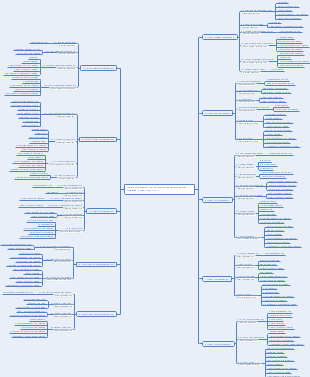
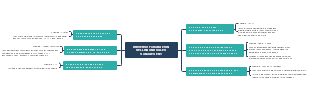
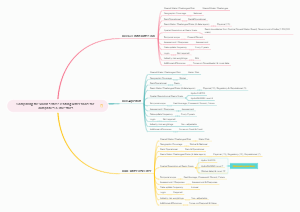
Technology Architecture Views - deals with the preoccupations of buying the commercial off-the-shelf parts that could diminish the cost for development the software further
Applications Architecture Views - shows the base architecture, it contains architectural segments along with their interrelationships that suits the organization’s business processes
Data Architecture Views - depicts the data management capacities arranged to logical and physical assets helping application accomplishment
Business Architecture Views - deals with the problems of the system users and depicts the transfer of information between people and business processes
The technology model - recognizes artefacts from technical perspective for the previously defined structures:
engineering mechanisms, computational, information and enterprise structures
The engineering viewpoint - indicates overall organization of the objects recognized and their contribution in different interaction patterns in order for a service to be fulfilled
The computational viewpoint - handles the definition of application components, their interfaces and the connections established between them
The information viewpoint - puts the accent on the structure and flow of information, logical and physical organization of information with information modification tracing
The enterprise viewpoint - shows the enterprise requirements and policies on high level and it targets the needs of the information system users
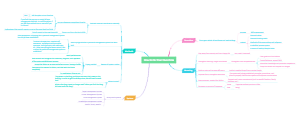
Why? – motivation and formulating the business goals and strategies
When? – time and effects of time on the organization
Who? – people who are involved in the business processes and into implementing the new architecture
Where? – network or where the business activities are taking place or will be distributed in the future
How? – function or how the process of changing the aim of the enterprise into a more detailed description of its operations
What? – data that needs to be understood and worked with
Security Reference Model (SRM)
Infrastructure Reference Model (IRM)
Technical Reference Model (TRM)
Data Reference Model (DRM)
Business Reference Model (BRM)
Performance Reference Model (PRM)
Extended Enterprise Architecture Framework (EEAF or E2AF)
Zachman Enterprise Framework (ZEF)
Service-Oriented Architecture (SOA)
The NATO Architecture Framework (NAF)
The British Ministry of Defence Architecture Framework (MODAF)
The Department of Defence Architecture Framework (DoDAF)
The Federal Enterprise Architecture Framework (FEAF)
The Open Group Architecture Framework (TOGAF)
Generalized Enterprise Reference Architecture & Methodology (GERAM)
Reference Model for Open Distributed Processing (RM-ODP)
Model Driven Architecture (MDA)
Enterprise Architecture Frameworks (EAFs)
Enterprise Architecture Framework Design in IT Management
 Wondershare EdrawMind