MindMap Gallery Marketing-Chapter 10 Price Strategy
Marketing-Chapter 10 Price Strategy Course Code 00058
Edited at 2020-09-29 12:34:25Price Strategy
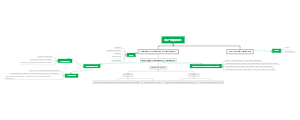
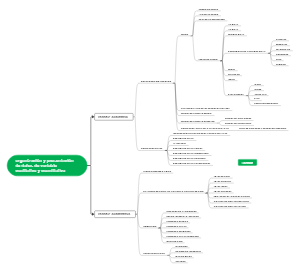
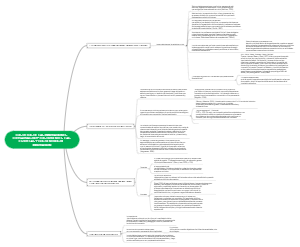
Pricing process
Pricing concept
The easiest element of the marketing mix to adjust and the only element that shows up as revenue is price
Price is the monetary expression of the value of a commodity, the economic cost that customers are willing to pay to purchase the commodity.
The level of marketing market demand determines the level of corporate profitability and is an indicator of product quality.
Factors affecting pricing
internal cause
marketing objectives
When companies face different marketing goals, they adopt different pricing strategies.
Other marketing mix elements
The other 3 elements of the marketing mix all have an impact on pricing
cost
Chen Ben is the basis for pricing and determines the lower limit of product price. In extreme cases, the price only needs to be able to compensate for the variable costs.
external factors
Market demand
It is the upper line for companies to set prices, and also indicates the highest cost that buyers are willing to pay.
competitor
government policy
Mainly reflected in various laws and regulations, such as prohibiting price monopoly, safeguarding consumer rights, etc.
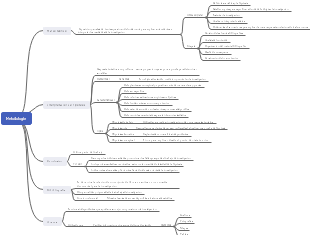
pricing process
Select pricing target
Maintain basic production
Maximize current profit
Maximize market share
Maximizing market skimming
Leading product quality
Other goals
Analyze requirements
price sensitivity
The demand curve reflects the possible demand in the market at different price levels.
price elasticity of demand
concept
It refers to the degree of response of demand to price changes. Different price levels will trigger different demand; =% change in quantity demanded/% change in price
type
=1, unit elasticity means that the price does not increase or decrease by 1%, and the demand decreases or increases by 1%.
>1, flexible
<1
lack of elasticity
=, completely elastic
=0, completely inelastic
determining factors
Product use
The more uses, the greater the flexibility
The number of substitutes and the degree of approximation of substitution. The more substitutes, the greater the elasticity.
The proportion of consumption expenditure in total expenditure. The greater the proportion, the greater the elasticity.
How easy it is to change buying and consumption habits, the easier it is, the greater
The orientation of cultural values, the more consistent it is, the smaller the
estimated cost
Fixed cost, variable cost and total cost
fixed cost
Within a certain business volume range and time range, the total cost does not change with changes in business volume, and is divided into two types: binding and discretionary
Variable costs
Costs that change with changes in output or business volume, that is, marginal cost integration, are the lowest wiring for pricing
total cost
The sum of fixed costs and variable costs under a certain output or business volume
experience curve
Also known as the experience learning curve and improvement curve, it is a relationship curve that expresses the relationship between the production unit cost and the continuous production unit, indicating that the average total cost decreases with the accumulation of production experience.
Analyze competitors
Choose pricing method
Cost-oriented pricing, demand-oriented pricing and competition-oriented pricing
final price
Pricing method
cost oriented pricing
cost plus pricing
concept
Based on the unit cost of the product, a certain proportion of expected profit is added to formulate the sales price pricing method of the product.
Formula: unit product price = unit product cost * (1 markup rate)
category
Full cost mark-up, variable cost mark-up, standard cost mark-up
advantage
Simple, flexible and controllable
It has a direct effect on compensating enterprise costs
Ease price competition. If adopted by peers, it will effectively reduce competition and price wars.
Both buyers and sellers feel fair
insufficient
Buyer-oriented pricing, ignoring market demand
Failure to consider market competition factors and unable to respond sensitively to competition
The bonus rate is an estimate and lacks scientific basis.
target revenue pricing
concept
Also known as the investment rate of return pricing method, it is a pricing method that calculates the price based on the target rate of return on the basis of the total investment.
Pricing steps
Determine target rate of return
Target rate of return = (1/investment payback period) * 100%
Investment rate of return = profit/investment amount
Determine target profit amount per unit product
Target profit per unit product = (total investment * target rate of return) / expected sales volume
Calculate unit product price
Unit product price = unit product cost Unit product target profit
Scope of application
It is used in products with stable demand, short supply and low price elasticity of demand, as well as some public utilities and labor engineering projects.
demand-based pricing
perceived value pricing
meaning
Refers to a company setting prices based on buyers’ perceived value of a product or service
step
Determine perceived value, position and conceptualize, quantify perceived value, promote, and set prices based on other factors
value pricing
Set low prices while still providing high-quality products or services
demand differential pricing
According to consumers’ different purchasing power levels, needs, and aesthetic preferences, different prices and charging methods are formulated for different demand intensities for the same product or service.
Competition Oriented Pricing
Market-following pricing
Prevailing price pricing method, pricing based on the prices of major competitors
auction pricing method
English auction, Dutch auction
sealed bid pricing
A pricing method in which buyers guide competition among buyers to obtain the lowest price for similar products
It is widely used in bulk procurement of government and public utilities, bidding and procurement of construction projects and large-scale industrial equipment.
Pricing Strategy
psychological pricing strategies
concept
Prices are set based on consumers' purchasing psychology and are mainly used in the retail industry. Mantissa/integer/prestige/custom/solicitation pricing
Geographic pricing strategy
Pricing takes into account geographic differences in commodity transactions. FOB origin/unified delivery/zoning/basis point/freight-free pricing
differential pricing strategy
An enterprise sells a product or provides a service at two or more prices that do not reflect the cost difference.
Customer segmentation pricing/product specification and image differential pricing/location differential pricing/time differential pricing/channel differential pricing
Product life cycle pricing strategy
The pricing strategy adopted by the enterprise is based on the characteristics of the product's life cycle stage and combined with the characteristics and performance of the product itself.
category
Introduction period pricing strategy
High price/low price/medium price strategy
Growth stage pricing strategy
Focus on market penetration
Mature pricing strategies
The main job is to lower the price
Pricing strategy during recession
Maintain original price/reduce price/follow other companies’ prices
promotional pricing strategy
meaning
Companies use a variety of pricing strategies to stimulate consumers' purchasing intentions.
category
Special event pricing strategy/Cash rebate pricing strategy/Low-interest loans/Guarantees and service contracts
Discount pricing and subsidy strategies
Cash discount/quantity discount/functional discount/seasonal discount/subsidy
New product pricing strategy
Market Skimming Pricing Strategy
The initial launch price of the product is set high to maximize profits. Target the consumer class with higher paying ability in the market.
Applicable situations: There are enough buyers in the market, small batch production increases unit costs but does not offset the benefits brought by high prices, exclusive operation, high prices should be compatible with high quality
market penetration pricing strategy
low price strategy
Applicable situations: The market size of the product is large, the price elasticity of demand is large, mass production can significantly reduce costs, and low prices can prevent or delay competition.
Product portfolio pricing strategy
Starting from the overall interests of the enterprise, the price is determined according to the characteristics of the product portfolio.
Product line pricing strategy/complementary product pricing strategy/by-product pricing strategy/substitute product pricing strategy/bundling pricing strategy
price change strategy
concept
Enterprises make adjustments and changes based on actual market competition conditions after pricing products or services.
price reduction strategy
Profit reduction and price reduction
Increase discount ratio or relax discount conditions
psychological price reduction
Increase payment deferral time
Pricing based on variable cost
price increase strategy
Increase prices using automatic price adjustment terms
List price increase
Disguised price increase strategy