MindMap Gallery Plato's Philosophical Thoughts
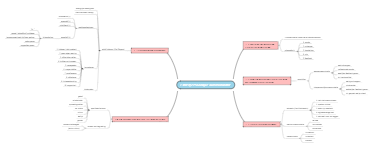
This is a mind map about Plato's philosophical thought, the main contents include: educational thought, cosmology, political philosophy, ethics, dialectics, and conceptualism.
Edited at 2025-02-11 16:55:56In order to help everyone use DeepSeek more efficiently, a collection of DeepSeek guide mind map was specially compiled! This mind map summarizes the main contents: Yitu related links, DS profile analysis, comparison of DeepSeek and ChatGPT technology routes, DeepSeek and Qwen model deployment guide, how to make more money with DeepSeek, how to play DeepSeek, DeepSeek scientific research Application, how to import text from DeepSeek into MindMaster, the official recommendation of DeepSeek Wait, allowing you to quickly grasp the essence of AI interaction. Whether it is content creation, plan planning, code generation, or learning improvement, DeepSeek can help you achieve twice the result with half the effort!
This is a mind map about DeepSeek's 30 feeding-level instructions. The main contents include: professional field enhancement instructions, interaction enhancement instructions, content production instructions, decision support instructions, information processing instructions, and basic instructions.
This is a mind map about a commercial solution for task speech recognition. The main content includes: text file content format:, providing text files according to the same file name as the voice file.
In order to help everyone use DeepSeek more efficiently, a collection of DeepSeek guide mind map was specially compiled! This mind map summarizes the main contents: Yitu related links, DS profile analysis, comparison of DeepSeek and ChatGPT technology routes, DeepSeek and Qwen model deployment guide, how to make more money with DeepSeek, how to play DeepSeek, DeepSeek scientific research Application, how to import text from DeepSeek into MindMaster, the official recommendation of DeepSeek Wait, allowing you to quickly grasp the essence of AI interaction. Whether it is content creation, plan planning, code generation, or learning improvement, DeepSeek can help you achieve twice the result with half the effort!
This is a mind map about DeepSeek's 30 feeding-level instructions. The main contents include: professional field enhancement instructions, interaction enhancement instructions, content production instructions, decision support instructions, information processing instructions, and basic instructions.
This is a mind map about a commercial solution for task speech recognition. The main content includes: text file content format:, providing text files according to the same file name as the voice file.
Plato's Philosophical Thoughts
Ideological theory
Concept of concept
Ideas are the eternal essence and prototype of things, and are an abstract existence that transcends time and space and is independent of the real world. It is the "real existence" of things and the root and model of things in the real world. For example, various circular objects in the real world, whether they are plates, wheels, or other circular objects, are imitations of the concept of "circular". The concept of circle has perfect geometric properties, and in reality, circular objects will always have some imperfections, such as subtle flaws at the edges.
Ideas are the real object of knowledge and can only be grasped through rational thinking. The real world that the senses come into contact with is impermanent and cannot provide truly reliable knowledge, while the world of ideas is stable and eternal, and is the source of knowledge.
The relationship between concept and the real world
The real world is the imitation and division of the concept world. Real things gain their characteristics because they have corresponding ideas. For example, the reason why a beautiful flower is considered beautiful is because it has the concept of "beauty". But this kind of division is incomplete. In reality, flowers will wither wither withering over time and their beauty will disappear, while the concept of "beauty" itself is eternal.
Things in the real world are the shadows of the world of ideas, just like in the cave metaphor, the shadows on the walls seen by people in the cave are just projections of real things, while real things represent ideas in the sunlight outside the cave. world.
The hierarchy of concepts
From the concepts of low-level concrete things, such as the concepts of daily objects such as tables and chairs, to the concepts of high-level abstract ideas, such as beauty, goodness, justice, etc., to form a hierarchical system. Low-level ideas exist on higher-level ideas, and together they form an organic whole.
The highest concept is "good", which is the source and purpose of all concepts, and other concepts are valuable because of the concept of "good". The concept of "good" is like the sun, illuminating the entire world of ideas and allowing other ideas to be recognized and understood. For example, an act is considered just because it conforms to the concept of "good" and embodies the principle of good.
dialectics
The meaning of dialectics
Through dialogue and reasoning, the essence and laws of things are revealed, from specific things to ideas, and the understanding of truth is realized. Dialectics is a method of thinking and a process of philosophical inquiry. It emphasizes breaking through superficial phenomena and exploring the inner essence of things through continuous thinking and debate.
Dialectics is not only a tool for logical reasoning, but also a way to guide the soul from the phenomenon world to the concept world, helping people get rid of the shackles of the senses and gain true wisdom.
Dialectical method
Including assumptions and rebuttals, induction and deduction, etc. In the dialogue, by proposing hypotheses and then refuting and testing them, the assumptions are constantly corrected and refined, thus approaching the truth. For example, when discussing "what is justice", first propose a hypothetical definition of justice, and then test whether this definition is reasonable by analyzing various specific behaviors of justice and injustice. If it is unreasonable, a new hypothesis is proposed. , continue the discussion.
Induction is to summarize general concepts and principles from specific examples, while deduction is to deduce specific conclusions from general principles. Through the combination of induction and deduction, we promote the deepening of thinking, and elevate the understanding of specific things to grasping the concept.
Purpose of dialectics
Guide the soul to rise from the understanding of phenomena to the grasp of ideas and gain real knowledge. Through the application of dialectics, people can gradually get rid of one-sided and wrong understanding of the real world and move towards a correct understanding of the concept world.
The ultimate goal of dialectics is to achieve the purification and sublimation of the soul, so that people can understand the essence and truth of the universe, and reach a state of wisdom that transcends the world.
Ethics and morality
The concept of goodness and morality
Goodness is the highest concept and the ultimate goal of morality. People achieve moral perfection by pursuing the concept of goodness. The concept of good is the norm and basis of all moral behaviors. Whether an action is moral depends on whether it conforms to the concept of good.
Moral behavior is not only about following social customs and norms, but more importantly, it is about understanding the essence of goodness and internalizing it into one's own behavior. For example, helping others is not only because society believes that this is a virtue, but also because this behavior embodies the concept of goodness and is a concrete manifestation of the pursuit of goodness.
Three points and virtues of the soul
The soul is divided into three parts: reason, passion and desire. Reason is located on the head, the noblest part of the soul, it pursues truth and wisdom; passion is located on the chest, the brave part of the soul, it can assist reason to control desires; desire is located on the belly, the lowest part of the soul, it Pursuing material enjoyment and sensory happiness.
These three parts correspond to the three virtues of wisdom, courage and temperance. When reason can correctly guide passion and desire and make the three harmonious and unified, the virtue of justice is realized. For example, a brave person must not only have the courage to face difficulties (the manifestation of passion), but also have rational judgments, know when, where and how to show courage, and be able to control his desires and not be afraid. Or greed can truly realize the virtue of courage.
Moral Education
Through education, people's pursuit of goodness and practice of virtue are cultivated. Educational content includes music, sports, philosophy, etc. Music education can cultivate people's sentiments, cultivate people's harmonious beauty and good morals; physical education can exercise people's physique and cultivate people's tenacity and courage; Philosophy education is the highest level of education, which can guide people to think about goodness. The concept of cultivation of rational thinking and wisdom.
Moral education does not simply instill moral norms, but through inspiration, guidance and practice, people can understand the concept of goodness deep in their hearts, and thus consciously practice virtues. For example, by telling the stories of heroes, people are inspired to their passion and pursuit of justice; through philosophical dialogue, people are guided to think about the essence and meaning of morality.
Political Philosophy
The construction of an ideal country
The ideal country consists of three classes: ruler, guard and producer. Rulers are people with the highest wisdom and virtues. They master philosophical knowledge and are the kings of philosophy. They are responsible for governing the country, formulating policies, and guiding the country towards goodness.
The guardians are brave soldiers, who are responsible for defending the security of the country and maintaining social order. They need to have good physical fitness and combat skills, and also receive strict moral and military training, and be loyal to the country and rulers.
Producers are people engaged in production activities such as agriculture, handicrafts, and commerce, and they provide a material foundation for society. They need to have the corresponding production skills and hard work, work hard in their respective positions, and meet the material needs of society.
Social division of labor and justice
According to people's talents and talents, each person performs his duties in his position to achieve social justice and harmony. When the three classes of rulers, guards and producers can each perform their duties and do not overestimate each other, society will achieve justice. For example, if the ruler does not focus on governing the country but pursues material wealth, it will destroy the order of society; if the guardian does not perform his duties of defending the country, but abuses force, it will also lead to social chaos.
The purpose of social division of labor is to realize the overall interests of society. Everyone plays a role in the field they are best at, thereby improving the productivity and overall welfare of society. At the same time, this division of labor also reflects a natural order and conforms to the principle of justice.
Criticism of real politics
Criticizing the democratic system at that time, believing that it is prone to abuse of power and social chaos. Under democratic institutions, people often make decisions based on their own selfish interests and emotions, rather than on reason and justice. For example, at the citizen assembly, some people may propose short-sighted policies to cater to the public's emotions and ignore the long-term interests of the country.
It is emphasized that rulers should have wisdom and virtues. Only the King of Philosophy can truly understand the concept of goodness, make correct decisions, and guide the country towards prosperity and justice. Politics in reality are often swayed by power and interests, and lack the pursuit of truth and justice, which is criticized by Plato. He believes that only through the education and cultivation of philosophy can truly competent and moral rulers be selected and the ideal political order can be achieved.
Cosmology
Generation of the universe
The universe is made by the Creator (also known as "Demuge") shaping chaotic matter into an orderly world based on the model of the concept world. The Creator is a power of reason. It is guided by the idea of goodness and gives disordered matter form and order, creating a colorful universe.
This process is like a craftsman creating objects according to the drawings. The Creator combines and arranges matters based on the perfect model of the concept world, making the universe present a kind of harmony and order. For example, the movement of celestial bodies and the growth of organisms all reflect this orderly creation.
Four elements
The universe is composed of four basic elements: fire, air, water and earth. They interact with each other and form a colorful material world. Fire has the characteristics of heat and dryness, gas has the characteristics of heat and wetness, water has the characteristics of cold and wetness, and soil has the characteristics of cold and dryness. These four elements form various substances in different proportions and combinations.
For example, metals may contain more soil elements, which are hard and heavy; while plants may contain more water and gas elements, which are characterized by growth and vitality. The mutual transformation and effect between elements promotes the change and development of the material world.
Teleology of the Universe
The existence and development of the universe is purposeful, in order to realize the concept of goodness, reflecting a kind of harmony and order. Everything in the universe has its purpose and meaning of existence. They are related to each other and together form an organic whole.
For example, the various organs and functions of organisms are designed to adapt to their needs for survival and development, and this adaptability reflects the purpose of the universe. The movement of celestial bodies also follows certain laws. Their harmonious movement shows the order and perfection of the universe, both for the purpose of realizing the concept of goodness.
Educational Thoughts
Purpose of education
Cultivate people with virtue and wisdom so that they can understand the world of ideas and realize the sublimation of their souls. Education is not only about imparting knowledge and skills, but more importantly, it is about shaping people's character and soul and guiding people to pursue truth and kindness.
Through education, people can get rid of the constraints of the sensory world, improve their rational thinking ability, and gain insight into the mystery of the conceptual world, thereby realizing the purification and sublimation of the soul and becoming truly moral and wise people.
The stage of education
It is divided into primary education, secondary education and higher education. Primary education is mainly aimed at children. Through music and physical education, they cultivate their basic qualities and good morals, such as cultivating their sentiments through music and exercising their bodies and will through physical exercise.
Secondary education targets young people. In addition to continuing to strengthen music and physical education, it also increases the study of subjects such as mathematics, geometry, and astronomy to cultivate their rational thinking ability and logical reasoning ability.
Higher education is mainly aimed at adults, focusing on philosophical education, guiding them to think deeply about the concept of goodness and the essence of the universe, and cultivating them to become rulers or philosophers with the highest wisdom and virtues.
Educational methods
Use dialogue, debate, heuristic teaching and other methods to stimulate students' thinking and exploration spirit. During the dialogue, teachers and students communicate equally, and through questions and answers, students are guided to think about problems and discover the truth. For example, Socrates-style dialogue is a typical heuristic teaching method. Through continuous questioning and guidance, students can understand knowledge and truths by themselves.
Debate is also an important educational method. Through the collision and exchange of different perspectives, students can stimulate their thinking vitality and cultivate their critical thinking and argumentation abilities. At the same time, teachers can also inspire students' imagination and creativity through vivid examples and metaphors, helping them better understand abstract philosophical concepts.