MindMap Gallery History of Education in Ontario
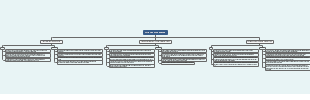
The history of education in Ontario is a rich tapestry that has evolved over centuries, reflecting the province's cultural, social, and political dynamics. This mind map aims to delve into the key milestones that have shaped the educational landscape in Ontario. By visually organizing this information, we can gain a comprehensive understanding of the historical developments in Ontario's education system, including the establishment of schools, curriculum reforms, and the impact of societal changes on educational practices. This exploration will provide insights into the historical context that has shaped Ontario's contemporary approach to education.
Edited at 2022-05-03 22:08:57The history of education in Ontario is a rich tapestry that has evolved over centuries, reflecting the province's cultural, social, and political dynamics. This mind map aims to delve into the key milestones that have shaped the educational landscape in Ontario. By visually organizing this information, we can gain a comprehensive understanding of the historical developments in Ontario's education system, including the establishment of schools, curriculum reforms, and the impact of societal changes on educational practices. This exploration will provide insights into the historical context that has shaped Ontario's contemporary approach to education.

The history of education in Ontario is a rich and evolving story that has shaped the province's educational landscape. From the early establishment of schools to the introduction of key reforms, Ontario's education system has undergone significant changes over the years. This mind map will explore the major milestones and influential factors that have shaped Ontario's education system, providing a comprehensive overview of its historical development. By examining key events, legislation, and educational philosophies, we can gain a deeper understanding of how Ontario's education system has evolved and adapted to meet the needs of its students.
The history of education in Ontario is a rich tapestry that has evolved over centuries, reflecting the province's cultural, social, and political dynamics. This mind map aims to delve into the key milestones that have shaped the educational landscape in Ontario. By visually organizing this information, we can gain a comprehensive understanding of the historical developments in Ontario's education system, including the establishment of schools, curriculum reforms, and the impact of societal changes on educational practices. This exploration will provide insights into the historical context that has shaped Ontario's contemporary approach to education.
The history of education in Ontario is a rich and evolving story that has shaped the province's educational landscape. From the early establishment of schools to the introduction of key reforms, Ontario's education system has undergone significant changes over the years. This mind map will explore the major milestones and influential factors that have shaped Ontario's education system, providing a comprehensive overview of its historical development. By examining key events, legislation, and educational philosophies, we can gain a deeper understanding of how Ontario's education system has evolved and adapted to meet the needs of its students.
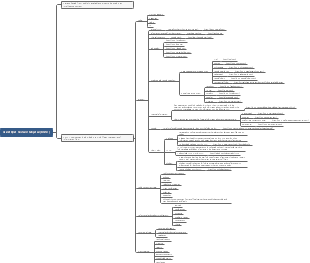
History of Education in Ontario
1600
Petites Ecoles' system
Basic education to boys under catholic csystem
1639
Schools for girls were established by Ursuline nuns
1635
College des Jesuites was established
offered classical education and theological training to males
1660
Seminaire de Quebec was founded by Bishop Laval (Universite’ of Laval)
1763
New France were conquered by British
1791
The Constitutional Act of Canada created Upper and Lower Canada
1790s
Publicly funded schools were initiated
1799
Acts for guaranteed technical education to orphaned children
Teachers should be certified
1807
Public Schools Act was passed
District School Act resulted in government-aided schooling
Critics called for common schooling
1812
A war between Canada and United States
1816
Common School Act was passed
provided mass schooling in Upper and Lower Canada.
1827
Kings College was granted its Royal Charter by King George
Kings College run by the Church of England
1840
Upper and Lower Canada combined into the United Province of Canada
1841
The School Act for the United Province of Canada
Created non-denominational public schools for Upper Canada
Publicly funded protestant and Catholic schools for Lower Canada
Compulsory taxation system to levy school taxes
Voluntary schools existed in addition to common schools in large urban centers
Financed by private tuition fees and attended by exclusively upper social classes
Education was considered as the parent’s responsibility
Sub Topic
Grant-aided common schools were referred to a charity school
1844
Egerton Ryerson became chief superintendent of Education in Upper Canada.
1845
Suspension of property tax resulting in the closure of several schools
1846
Ryerson drafted a bill that became a Common School Act
It was the first education-related legislation in Upper Canada
Act detailed organization of the school system, apporved curricula and standardized text books
Sub Topic
Act designated schools for teacher training and certification
Superintendents were appointed for each school district to condict annual inspection
A rated bill or school tax system was levied on the parents
Standards were established for federal grants
No provincial aid for schools using alternative textbooks
Protection of children was assured
1847
The First Normal School in Ontario, then called the Provincial Normal school was established in Toronto
Twenty women were admitted to the Provincial Normal School
1850
The Common School Act was amended to include the Separate Schools Clause
All the children were provided free admission to the schools
Schools were secularized and religious exams were removed
Ryerson passed a Common School Act, allowing school tax to be levied on all property
School tax was levied on all property
The series of Acts created foundations for Public Provincial Education System (Department of Public Instruction)
Grammar schools existed along with common schools which were mostly attended by boys
1853
The legislation of the Grammar School Act specified the subjects of English, Latin, Arithmetic, and History to be taught.
Grammar schools offered classical education
These schools were considered preparatory schools for university-going and finishing schools for non-university bound people.
Grammar schools received government funding and fees were higher than in common schools
Mid 1850s
Separate Catholic Schools gained status as permanent school boards
1867
Confederation occurred and a country with the provinces of Ontario, Quebec, Nova Scotia, and New Brunswick was formed
British North America Act became the constitution of a new country
The matters of education became a provincial issue and not a federal one.
1871
Ontario School Act was passed
Free elementary schooling in government inspected schools was provided
School attendance was made mandatory for children between the ages of 8 and 14.
Grammar schools were transformed into two types of high schools as i) collegiate institutes and ii) high schools.
Collegiate institutes – focused on classical instruction including English Grammar, composition, Greek, Latin, history, literature, trigonometry, algebra, and natural history.
High schools- Offered classical training and had a track for an English course focussing on natural sciences and practical topics instead of the classics.
Common schools were renamed “Public Schools”
Creation of the University of Toronto as a non-denominational University.
Mid 1870s
The two programs of collegiate and high school blended into a single one
Collegiate institutes were re-casted into first class, well equipped, and well-staffed urban high schools by the end of the century
1875
A Normal School is opened to train teacehrs in Ottawa
1876
Department of Education replaced the Department of Public Instruction
1885
English was made a mandatory subject
1890
English was extended as the main language of instruction
Early 1900s
Ontario schools became a major political issue
1910
Franco- Ontarians promoted French language interests
1912
Regulation 17 was issued limiting French instruction to the first two years of elementary schooling pic
1913
Regulation 17 was amended to allow one hour of French instruction per day
Regulation 17 could not be enforced due to political crisis
1920
Ontario College of Teachers was founded
1960s
Legislation was passed to permit instruction in French as the elementary and secondary levels
1972
Department of Education became the Ministry of Education
1997
Ontario College of Teachers was established as an independent accreditation college
1993-1999-present
Ministries of Education Colleges and Universities and Skills Development were merged into the Ministry of Education and Training