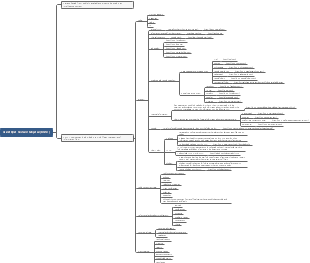
Socially Constructed
Models of Disabilities
Medical Model
sickness to be fixed; diagnose and cure; the problem with "normal"
Pity/Charity Model
patronizing; participation in society is not a "gift;" limiting
Labels
Person-First Language
ideal way to refer to an individual, unless they have explicitly stated otherwise
Strengths-Based Language and Approaches
Least Dangerous Assumption
Positive Personal Profiles (3Ps)
Social Model
disability is part of the diverse human experience; disability is socially constructed; society needs to change, not the person
Inclusive Education
Universal Design for Learning (UDL)
framework to improve and optimize teaching and learning for all people based on scientific insights into how humans learn; provide equitable opportunities to reach high standards across variable students in schools; provide multiple means of engagement; representation;action and expression
School-wide Systems of Support
Key Components
universal screening; multiple levels/tiers of support (Tier 1, Tier 2, Tier3); high quality, evidence-based classroom instruction; progress monitoring; data-based decision making
Academic Support
Response to Intervention (RTI): early framework for systems of support; typically focuses on academics; tiered instruction
Accommodations
changes HOW the students accesses new information and accommodations
Modifications
changes WHAT the student is expected to learn or the product of their work/learning
Behavioral Support
Positive Behavioral Interventions and Support (PBIS): focuses on behavior; impacts other outcomes too
Proactive Behavior Magement
create environments to promote positive behavior (i.e. sitting arrangements; movable seating; student artwork, etc.)
meet students needs (autonomy, relationships and independence, safety and trust, pleasure and joy; communication)
Social Support
Social Emotional Learning (SEL): provides the structure and process for adults and students to develop fundamental emotional and social competencies and experiences
SEL Core Components:
self-awareness; self-management; social awareness; relationship skills; responsible decision making
Ensures FAPE, LRE, and Supplementary Aids and Services
Supplementary Aids and Services
"aids, services, and other supports are provided in general education classes, other education-related settings, and in extracurricular and nonacademic settings, to enable children with disabilities to be educated with nondisabled children to teh maximum extent poappropiate"
environmental; pacing of instruction; presentation of content; materials; specialized equipment or procedures; assignment modification; self-management/follow-through; testing adaptions; social interaction supports; level of staff support; support
Evidence-based Practices
"practices and programs shown by high-quality research to ahve meaningful effects on student outcomes"
student outcomes: behavior; academic engagement; peer interactions; on-task behavior; employment; post-secondary education; independet living; qualitiy of life; community access; goal attainment; attendance; dropourt rates
Purpose of Schooling
Democratic Equality
citizenship training; equal treatment; shared experience; common culture; equal access; opportunity
Social Efficiency
efficiency for the economy/workforce; vocationalism, for employment; stratification, ability grouping
Compulsory Schooling
legally requires all children to attend school
"Us vs. Them" Mentality and the Creation of Special Education
Civil Rights Movement
Brown vs. Board of Education (1954)
increased federal rule in education; "equal protection" clause of the 14th Amendment applied to education
Disability Movement
The Education for All Handicapped Children Act (now Individuals with Disabilities Education Act - IDEA) is signed into law in 1975
ensures educational services to all students with disabilities (13 federally recognized categories); governs how states and public agencies provide early intervention; all federal education law serves as a contract - states must comply to receive special education funding
Landmark Cases
P.A.R.C. vs. Commonwealth of PA (1972)
students with intellectual/developmental disabilities were denied access to education if they "did not reach the mental capacity of a 5-year-old by the time they turn 8 years old; all students 6-21 with intellectual/developmental disabilities will be evaluated and placed in "in a proper publicly funded educational setting"
Mills vs. Board of Education (1972)
expanded and built upon P.A.R.C. case; children who were denied access to education due to labels (i.e. behavior, emotional disturbance) and had no alternative placement; provided publicly funded education and increased funding for special education programs and teachers
Board of Education vs. Rowley (1982)
elementary student was deaf and was denied access to an interpreter; court found the student was not receiving free and appropriate public education (FAPE)
Transitional Planning
"the very intentional, organized and coordinated process of guiding young people with disabilities with education, experiences, supports and services to help them have successful and meaningful lives beyond high school. It is planning that begins with the end in mind."
4 Outcomes of IDEA
Independent Living
self-determination: autonomy in decision making; opportunities for choice making
Economic Self-Sufficiency
contribute to household or community; identify, obtain, and keep job of choice; community-based instruction
Full Participation
Is it enough to have students with disabilities present in the classroom? (See Universal Design for Learning)
Equal Opportunity
Systemic barrier has been removed
6 Principles of IDEA
Zero Reject
ALL means ALL; EVERYONE is entitled to attend school for free and receive appropriate supports to do so
Non-Discriminatory Evaluation
evaluation should be free from cultural and linguistic bias, must include infromation from several sources; two purposes: determine whether a student has a disability anad to identify student's abilities and needs in order to inform special education and related services
Individualized and Appropriate Education
INDIVIDUALIZATION; student's education and services must be individualized to his or her needs using an Individualized Education Program (IEP); ensures effective education based on the student's needs
IEPs are a roadmap and guide for a student's individualized instruction, supports, and service; it is not just a document of meeting
IEP Components: assessments; Present Level of Academic Achievement and Functional Performance (PLAAFP); measurable annual goals and objectives/benchmarks; description of educational services, related services, supplementary aids and services; progress monitoring; LRE statement; statewide participation/justification; date of when services begin along with duration and frequency; age 16 (or 14 in KS) individualization transition plan)
IEP Team members: family collaboration (student and parents); professional collaboration (general education teacher, special education teacher, local education agency representative, someone who can interpret evaluation results, related service provider(s), etc.)
Least Restrictive Environment
students with disabilities should be educated as much as possible with their peers; "have access to the general education curriculum in the regular classroom, to the maximum extent possible (IDEA 2004)"
Procedural Due Process
schools and parents are responsible for carrying out the student's IDEA rights; resolution session; mediation; due process hearing
Parent Participation
parents and students have the right to be part of all decisions and use due process if they disagree with anything; IEP team members; notice of action; access school records; rights transfer to student at age of majority (18); aid nondiscriminatory practices, as well as ensure meaningful and improved outcomes
Social Mobility
education is used to get ahead, to differentiate people; credentials to get ahead
Institutionalizing individuals based on IQ
IQs 70 and lower were sent to institutions
Alexa Pittman:SPED 326 - Exam 2
RATIONAL FOR 10 CONNECTIONS
1). Labels + Pity/Charity Model - Often times, labels are stigmatizing; convey permanence; are reinforced by the lens of disability; lead to social and educational isolation; resort to stereotyping; and fail to recognize individuality and what a person can do. Labels impact our interactions with students, families and other professionals by creating an "US vs. Them" separation. This separation is based on assumptions and ideas stemming from the Medical and Pity/Charity Models of Disabilities to focus on how one's label could potentially lower their quality of life, as they are not "normal" by societal terms.
2). Medical Model + Crip Camp/WillowBrook - Before the development of special education, individuals with disabilities were heavily excluded and frowned upon by society. Prior to 1800, individuals with disabilities were isolated from society and looked upon as deviants for being "defective" and "abnormal." By the late 1800s, the philosophy of care for individuals with disabilities stemmed from the Medical Model of Disability and had them placed in residential schools or institutional training programs, like Crip Camp and Willowbrook, where they were used as free labor.
3). Compulsory Schooling + the Civil Rights Movement and the Disability Movement - Once compulsory schooling legalized that all children needed to attend schools, to maintain society's "Us vs. Them" division, intelligence testing became the norm. This led to the development of education in segregated spaces, both for minority students and students with disabilities. The clear inequity between the segregated spaces further led to the starts of the Civil Rights Movement and the Disability Movement to ensure that all students were receiving equal opportunities and access to education.
4). Transitional Planning + the 4 Outcomes Areas of IDEA - Transitional planning looks to help students with disabilities plan long-term goals for their future beyond high school and have successful and meaningful lives. This correlates perfectly with the 4 outcome areas of IDEA (independent living, economic self-sufficiency, full participation, and equal opportunity) that also look to to help students with disabilities become relatively independent and contributing members within society.
5). Individualization and Appropriate Education + Individualized Education Programs (IEPs) - Individualized and Appropriate Education is heavily centered around individualization and providing the necessary supports and services to a student through their Individualized Education Program (IEP. From there, IEPs ensure effect education is provided to the student through a detailed road map to guide instruction to meet annual goals.
6). Parent Participation + IEP Team Members - Under IDEA, parents (and when appropriate students) are required to attend all IEP meetings to ensure that student's IDEA rights are being meet and the proper support and services are provided to the student. As member of the IEP team, parents have the ability to offer their input for any areas of instruction they are concerned about. This helps everyone involved in the student's educational journey stay united under similar end goals.
7). "Normal" + Socially Constructed - We have discussed in class numerous times that there is no such things as "normal" and that is was socially constructed by society for a variety of reasons. The idea of "normal" was generated during the Industrial Revolution when factories were expanding and needing workers. Since then, "normal" was become a perspective that people use to promote their own agenda and further establish the "Us vs. Them" divide.
8). Social Model + Inclusive Education - The Social Model of Disability certifies that disability is a natural part of the diverse human experience and calls for society to change, rather than the individual. Very similar to this, inclusive education looks to provide students with equal opportunity and access to the curriculum through natural supports and universal design for learning. In inclusive education, instruction is designed and implemented in ways that provide students with a multitude of opportunities to showcase their strengths and if needed, have access to further supports and services. Additionally, inclusive education looks to naturally build in supports so that all students can participate and engage with the content without having to leave the general education classroom.
9). Strengths-based Language + Least Dangerous Assumption - Strengths-based language focuses on an individual's strengths (skills, knowledge, talents, etc.) and communicates what an individual can do, instead of focusing on what a student cannot do. Using strengths-based language aligns with the least dangerous assumption because it ensures that educators should always have a positive mindset and be under the impression that a student is able to complete an activity because it helps them reach higher expectations.
10). IDEA + Landmark Cases: The landmark cases of special education (PARC vs. Commonwealth of PA, Mills vs. Board of Education, and Board of Education vs. Rowley) all called into question the extent of students' rights under IDEA, due to the loose interpretation with the term "appropriate." Without the explicit definition of 'appropriate' as deemed by IDEA, many students were not receiving the necessary supports and services to ensure their FAPE, hence leading to the court cases. IDEA was last reauthorized in 2004 and needs to be updated to reflect current issues and resolve future instances similar to the landmark court cases.
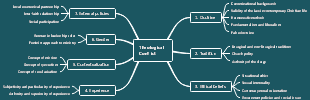
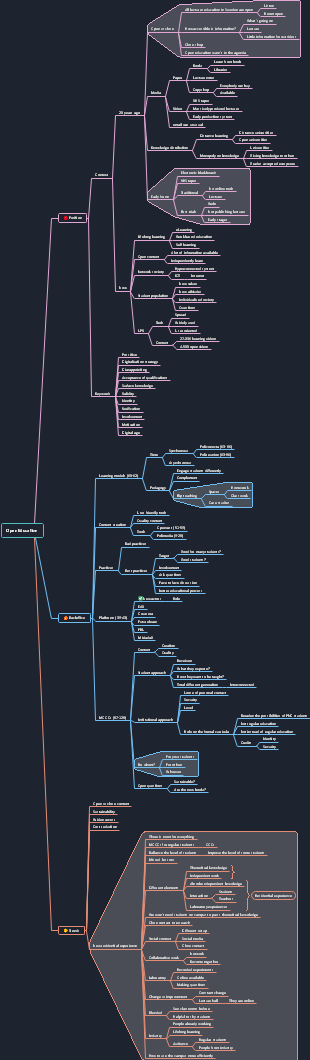
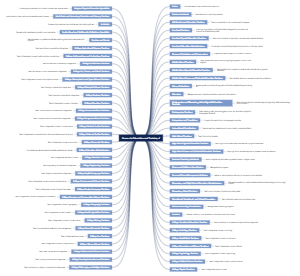
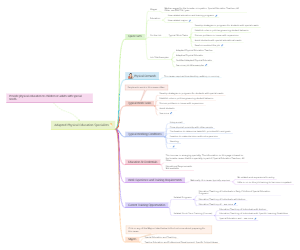
I chose to make my concept map into the style of a lineage tree because I feel that many of the components we learned about this semester are build off one another and tie back to the central idea of "normalcy."
 Wondershare EdrawMind