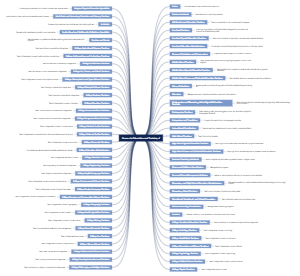
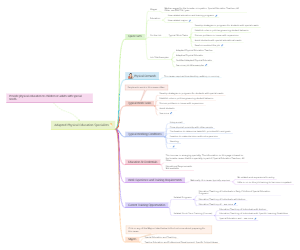
MindMap Gallery “Experiences of Nursing Students on Flexible Learning Modality”
The self-confidence of clinical nursing students during e-learning implementation is a critical aspect of their educational experience. This mind map aims to delve into the factors that influence the self-confidence of nursing students in a clinical setting when transitioning to e-learning. By mapping out these experiences, we can gain a deeper understanding of how e-learning impacts the self-confidence of clinical nursing students.
Edited at 2022-06-05 11:13:12“Experiences of Nursing Students on Flexible Learning Modality”
RESULTS
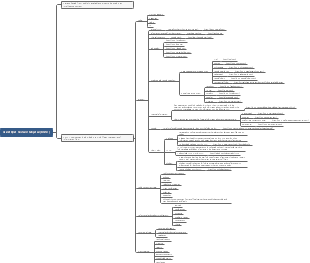
The purpose of this study was to describe self-confidence (SC) of the clinical nursing students based on 3 self-confidence’s components that consist of cognitive, affective, and psychomotor. The self-confidence of nursing students as e-learning evaluation found that the majority of respondents (90,5%) had high levels of self-confidence. Components of self-confidence, consist of cognitive, affective and psychomotor also showed that the majority of respondents were in the high category (84,2%; 88,4%; 66,3%).
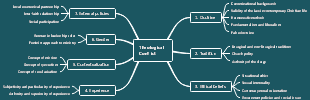
Results: Four themes emerged including "novelty of e-learning"," advantages of e-learning", "disadvantages of e-learning "and" passage of time and the desire to return to face education". Participants evaluated e-learning as a novel method without proper infrastructure, it was initially confusing but became the new normal as their knowledge of the way to use it improved. Advantages included self-centered flexible learning and reduction in their concerns experienced with face-to-face learning. Disadvantages including changing the way they interact with teachers, decreasing interactions with classmates, problems with education files, superficial learning, hardware problems, family members’ perceptions of the student role, interference of home affairs with e-learning, cheating on exams and assignments and being far away from the clinical context
Four main themes were identified, content, context, educational activities, and evaluation. Nine identified organizer themes were as follows: Content objectives, flexibility, control and evaluation, technological capabilities, support system, teaching activities, learning activities, performance feedback, and evaluation methods. Finally, 23 basic themes codes were obtained as factors that should be embedded in the online nursing curriculum
no impact of background variables was observed. Students appreciated teachers’ participation in role play and immediate feedback was considered especially important for learning outcomes. The students perceived that their communication skills and knowledge had improved after completing the blended learning programme.
the analysis of the focus group interviews extracted three main dimensions: didactic aspects of digital teaching, study environment, and students’ own resources. Social interaction was an overall theme included in all three dimensions. Data from the questionnaire showed that a majority of students preferred campus-based education and experienced deterioration in all investigated dimensions after the pedagogical transition. However, approximately one-third of the students appeared to prefer distance learning using digital tools.
The results revealed that the undergraduate nursing students considered having online learning during the COVID-19 outbreak to be stressful (44.4%) and very stressful (47.2%). Moreover, the undergraduate nursing students had low satisfaction (37%) and moderate satisfaction (46.3%) having the online learning during the COVID-19 outbreak. The undergraduate nursing students’ academic performance were affected by the COVID-19 pandemic and resulted in poor (37%) to fair (50%) academic performance and were considerably (43.6%) and greatly (30.6%) affected by the pandemic. Online learning stress had a significant and inverse correlation with online learning satisfaction (p=.000) and academic performance (p=.012).
. The result draws four thematic insights from the experiences of the participants: Sudden Shift of Learning Design is a Tough Change, Gap in the Practical Component of Nursing Education, Flexible Learning is Taking Shape, and Staying Positive with Creative Outlets. The study recommends that nursing institutions and organizations should look into the limitation of resources among nursing students and come up with programs and strategies that would address the gap of skills and practical components in nursing education. Acknowledgment of these limitations should make the nursing schools and administrators come up with some alternatives in the delivery of education as the students adjust to the new learning design.
Students’ anticipations and how set they are in this new learning platform should be investigated. Nursing students had high proficiency with technology but more than one-fourth had an unstable Internet connection. Nursing students generally had high expectations of and readiness for online learning. Although high, expectations about social interactions in the online learning environment obtained the lowest mean score among the five subscales of the SEOLS. Readiness for online learning significantly differed based on family income status and Internet stability. Bivariate analysis indicated a significant positive correlation between students’ expectations and readiness for online learning. Students’ expectations may a play role in students’ readiness for online learning.
Results revealed that first-year student nurses seem to have good distance learning preparedness and academic coping during COVID 19 pandemic. Students with better internet connections seem to be more prepared and coped academically. While females come better prepared for distance learning, males seem to cope better in school. Those in the upper-income class depict better preparation in distance learning yet middle-income class students cope more. It highlights the importance of distance learning preparedness of a student to achieve a greater degree of academic coping. Hence, this study may be suggestive that institutions should conduct a distance learning preparedness program to assist incoming first-year nursing students in college adjustment in distance learning classes.
The results indicated that the type of blended learning in use predicted 40.4% of student learning outcomes. It also predicted 71.9% of the effective learning behaviors of students in learning management systems.

STUDY
Clinical Nursing Students’ Self Confidence During E-learning Implementation
Iranian nursing students experiences regarding the status of e-learning during COVID-19 pandemic
Content Analysis of Blended Curriculum (virtual and non-virtual) in Nursing.
Communication in mental health nursing -Bachelor Students' appraisal of a blended learning training programme - an exploratory study.
Nursing students’ experiences of a pedagogical transition from campus learning to distance learning using digital tools.
Online Learning in Nursing Education During the COVID-19 Pandemic: Stress, Satisfaction, and Academic Performance.
Flexible learning as a new designed pedagogy: The lived experiences of nursing students.
New Normal in Nursing Education: Sophomore Students’ Expectations of and Readiness for Online Learning in the Era of COVID-19 Pandemic
Distance Learning Preparedness and Academic Coping Among first-year Nursing Students. Manila
Effectiveness of Blended Learning in Nursing Education.
FINDINGS
Clinical nursing students have high self-confidence after going through e-learning.
the findings revealed that e-learning has been introduced as a new method for the current research participants and despite the perceived benefits, these students believed that e-learning could supplement face education but not replace it.
Blended learning is a rational and flexible method to improve the educational performance of nursing students. However, it should be based on need assessment, appropriate planning and execution, and evaluation and feedback.
According to the nursing students, blended learning is an appropriate method for improving communication skills in preparation for mental health nursing. Blended learning makes it possible to build flexible courses with limited resources.
The main finding was that the pedagogical transition to distance education reduced the possibility for students’ social interactions in their learning process. This negatively affected several aspects of their experience of distance learning using digital tools, such as reduced motivation. However, the heterogeneity in the responses suggested that a blended learning approach may offer pedagogical benefits while maintaining an advantageous level of social interaction.
Stress negatively impacts the undergraduate nursing students’ satisfaction and academic performance. This research suggests that certain measures should be performed to reduce stress and improve the online teaching–learning processes during the COVID-19 outbreak.
The findings show that participants experienced difficulties and made huge adjustments in their routines and approaches to learning. The absence of clinical exposure and the gap in skills and related learning experience in nursing education is their most concerning aspect. However, even with all the gaps and limitations of flexible learning, it also offers unique advantages to them. Participants cited flexibility, self-paced learning, self-discipline, time management, convenience, and time for the family were their positive experiences
. This study suggests that while students appear ready to take on online learning, the different students’ circumstances along with the challenges associated with online learning such as limited internet connectivity must be properly addressed. It may be necessary for nursing schools to meet students’ expectations in the new learning environment to fully maximize learning and facilitate success and learner readiness in the new normal in nursing education.
The findings indicate that first-year student nurses appear to have high distant learning readiness and academic coping throughout the COVID 19 pandemic. Students that have stronger internet connections appear to be better prepared and able to manage academically. Males appear to cope better in school than girls, despite the fact that females are better suited for distant learning. Upper-income students have superior preparedness for distant learning, whereas middle-income students manage better. It emphasizes the significance of a student's distance learning readiness in order to reach a higher level of academic functioning. As a result, this study may advise that universities implement a distance learning readiness program to help new first-year nursing students acclimate to college life in distant learning classrooms.
It therefore appears that blended learning applied in Learning Management System (LMS) with hypermedia resources favors greater achievement of effective learning. Likewise, with this type of Blended Learning (BL) a larger number of students were found to belong to the intermediate cluster, suggesting that this environment strengthens better results in a larger number of students. BL with hypermedia resources and project-based learning increase students´ learning outcomes and interaction in learning management systems. Future research will be aimed at verifying these results in other nursing degree courses.
REFERENCE
Reference: Satya M. Gautama N, Sugiarsih S, Harjanto T. (2020). Clinical Nursing Students’ Self Confidence During E-learning Implementation. Indonesia: Published in Jurnal Pendidikan Kedokteran. https://jurnal.ugm.ac.id/jpki/article/view/49840
Salmani N, Bagheri I, Dadgari A, (2022). Iranian nursing students experiences regarding the status of e-learning during COVID-19 pandemic. United States: Public Library of Science(PLoS), https://journals.plos.org/plosone/article?id=10.1371/journal.pone.0263388
Toghyani A, Rahmani J, Salehi S, Mehraban M. A. (2022). Content Analysis of Blended Curriculum (virtual and non-virtual) in Nursing. Islamic Republic of Iran: Preventive Care in Nursing and Midwifery Journal. https://zums.ac.ir/nmcjournal/article-1-793-en.html
Furnes M, Kvaal K.S., Høye S. (MAY 2018). Communication in mental health nursing -Bachelor Students' appraisal of a blended learning training programme - an exploratory study. United Kingdom: BMC Nursing ,https://doaj.org/article/9b2d0a3d923a4211910257bd35c1b007
Langegård U, Kiani K, Susanne J. Svensson N.P, (2021). Nursing students’ experiences of a pedagogical transition from campus learning to distance learning using digital tools. United Kingdom: BMC Nursing. https://bmcnurs.biomedcentral.com/articles/10.1186/s12912-021-00542-1
Oducado, R. M. F., & Estoque, H. (2021). Online Learning in Nursing Education During the COVID-19 Pandemic: Stress, Satisfaction, and Academic Performance. Journal Of Nursing Practice, 4(2), 143–153. https://doi.org/10.30994/jnp.v4i2.128
Condes, K.A. & Quezon, A.G. (2021). Flexible learning as a new designed pedagogy: The lived experiences of nursing students. International Research Journal of Science, Technology, Education, and Management, 1(1), 15-25. https://doi.org/10.5281/zenodo.5195590
Oducado R.M. (2021). New Normal in Nursing Education: Sophomore Students’ Expectations of and Readiness for Online Learning in the Era of COVID-19 Pandemic. Iloilo City, Philippines: International Journal of Caring Sciences, Volume 14, Issue 2, Page 1170. http://www.internationaljournalofcaringsciences.org/docs/40_oducato_original_14_2.pdf
Garcia R. (2021). Distance Learning Preparedness and Academic Coping Among first-year Nursing Students. Manila, Philippines: Cosmos, https://cosmosjournals.com/wp-content/uploads/2021/10/CAHE-JD21-Ina-Marie-Nera.pdf
Sáiz-Manzanares, M. C., Escolar-Llamazares, M. C., & Arnaiz González, Á. (2020). Effectiveness of Blended Learning in Nursing Education. International journal of environmental research and public health, 17(5), 1589. https://doi.org/10.3390/ijerph17051589