MindMap Gallery Working Capital Management
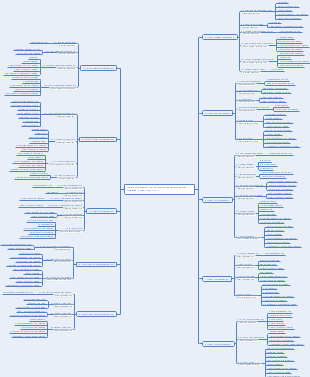
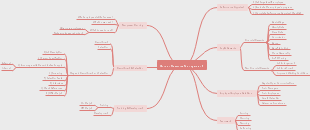
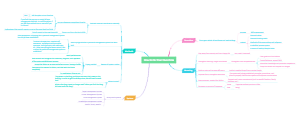
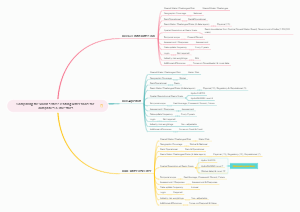
This detailed image is a visual guide to Working Capital Management, outlining key concepts and strategies essential for financial planning in business operations. It includes sections on the basics of working capital, inventory control methods, receivables management, and cash budgeting techniques. The mind map illustrates formulas such as Economic Order Quantity (EOQ) and dives into the principles of managing cash flows and capital cycles effectively. This educational tool is ideal for finance professionals, business students, and entrepreneurs who need a holistic understanding of working capital to enhance operational efficiency and financial stability.
Edited at 2022-09-27 19:20:09Working Capital Management
Apply cash surplus in marketable securities
Marketable securities are liquid financial instruments that can be quickly converted into cash at a reasonable price. The liquidity of marketable securities comes from the fact that the maturities tend to be less than one year, and that the rates at which they can be bought or sold have little effect on prices.
Cash Ratio Cash Ratio= Current Liabilities / MCS where:.............................................................................................................................................................................................. MCS=Market Value of Cash and Marketable Securities
Current Ratio Current Ratio= Current Liabilities / Current Assets
Quick Ratio Quick Ratio= Current Liabilities / Quick Assets
Prepare Cash Budget
A cash budget is an estimation of the cash flows of a business over a specific period of time. This could be for a weekly, monthly, quarterly, or annual budget. This budget is used to assess whether the entity has sufficient cash to continue operating over the given time frame. The cash budget provides a company insight into its cash needs (and any surplus) and helps to determine an efficient allocation of cash.
Short-Term Cash Budget
Cash budgets are usually viewed in either the short-term or the long-term. Short-term cash budgets focus on the cash requirements needed for the next week or months whereas long-term cash budget focuses on cash needs for the next year to several years. Short-term cash budgets will look at items such as utility bills, rent, payroll, payments to suppliers, other operating expenses, and investments.
Long-Term Cash Budget
Long-term cash budgets focus on quarterly and annual tax payments, capital expenditure projects, and long-term investments. Long-term cash budgets usually require more strategic planning and detailed analysis as they require cash to be tied up for a longer period of time. It's also prudent to budget cash requirements for any emergencies or unexpected needs for cash that may arise, particularly if the business is new and all aspects of operations are not fully realized.
Inventory Control
1. The importance of inventory control
Inventory control helps connect the upstream activities of purchasing and manufacturing to the downstream activities of sales and product demand to prevent bottlenecks, speed up processes, identify slow-moving or obsolete items, and even help evaluate suppliers.
2. Types of inventories
raw materials and components
finished goods and maintenance
work in progress
repair and operating supplies
3. Explain Inventory Management Techniques with formulae:-
a. Carrying cost @ storage cost
To determine inventory carrying costs, first add up the expenses outlined above capital, storage, labor, transportation, insurance, taxes, administrative, depreciation, obsolescence, shrinkage—over one year. Then divide those carrying costs by total inventory value and multiply the number by 100 for a percentage.
Inventory Carrying Costs = Cost of Storage / Total Annual Inventory Value x 100
b. Holding cost @ ordering cost
Ordering is the cost of placing an order to the supplier for inventory. The annual quantity calculates the number of orders demanded divided by the volume per order.
Number of orders = D / Q Where, D = Annual quantity demanded Q = Volume per order Annual Ordering Cost
c. Reorder point
A reorder point (ROP) is a specific level at which your stock needs to be replenished. In other words, it tells you when to place an order so you won’t run out of stock.
d. Average inventor
Average inventory is a calculation that estimates the value or number of a particular good or set of goods during two or more specified time periods. Average inventory is the mean value of an inventory within a certain time period, which may vary from the median value of the same data set.
Average Inventory = (current inventory + previous inventory) / number of periods
e. Total cost
The sum of the two costs gives an annual total cost of an order. We get the below equation by adding annual ordering and holding costs.
Annual Total Cost or Total Cost = Annual ordering cost + Annual holding cost Annual Total Cost or Total Cost = (D * S) / Q + (Q * H) / 2
f. Economic order quantity (EOQ)
An inventory management technique that helps make efficient inventory management decisions. It refers to the optimal amount of inventory a company should purchase in order to meet its demand while minimizing its holding and storage costs. One of the important limitations of the economic order quantity is that it assumes the demand for the company's products is constant over time.
where: S=Setup costs (per order, generally including shipping and handling) D=Demand rate (quantity sold per year) H=Holding costs (per year, per unit)
Receivables Control
1. The role of accounts receivables in the working capital cycle
The longer your accounts receivable last (i.e., the longer you don't collect your money), the longer you face limits to investing in production for your next order. Uncollected payments tie up working capital and lead to longer business cycles.
2. The need to monitor accounts receivables
Monitoring the accounts receivable is important since a company's liquidity depends on converting its accounts receivable to cash in time to pay its current liabilities when they are due.
3. Explain accounts receivables control operations and the importance of managing both accounts receivables
CONTROL OPERATION
A good receivable management contributes to the profitability by reducing the risk of any bad debts. Management is not only about reminding the customers and collecting the money on time. It also involves identifying the reasons for such delays and finding a solution to those issues.
IMPORTANCE
Accounts receivable management incorporates is all about ensuring that customers pay their invoices. Good receivables management helps prevent overdue payment or non-payment. It is therefore a quick and effective way to strengthen the company's financial or liquidity position.
4. Describe the various types and form of accounts receivables
Accounts Receivable............................................................... . . .......... Accounts receivable usually occur because of credit sales. It arises as a result of buying goods or services on credit. In general, the payment period ranges from one to two months.
Notes Receivable This receivable has a physical form of a formal letter. This type of loan has a bill of between 2-3 months. Debt settlement made within that time will not be subject to interest. However, if the debtor requests an extension of the payment period, interest will be charged according to a monthly extension.
Other Receivables This receivable is of a broader type, as it includes interest receivables, salary receivables, employee advances, and tax refunds. Due to their general nature, notes can be reported separately on the balance sheet.
5. Describe the various accounts receivables collection method and procedure
METHOD 1. Calculate ART With A/R Aging Reports 2. Offer Your Clients Flexible Payment Plans 3. Sign a Contract or Create a Purchase Order Immediately 4. Be Prompt When Reminding Clients About Payments 5. A/R Automation
PROCESS 1. Sales and delivery – Communication with customer regarding a product or service resulting in sales/delivery 2. Invoice – A/R department sends invoice to the customer 3. Payment collection – Customer typically has 30 days to pay 4. Reconciliation – Process begins again as payment is collected or written off
6. The issues involved with early payment and settlement discounts.
EARLY PAYMENT 1. Tight margins 2. Customers take the discount but don’t pay early 3. Creates extra work
SETTLEMENT DISCOUNTS 1. Invoice the customer's sales order, sending them an invoice stating the terms of the settlement discount being offered. 2. Record the payment for the invoice once it's received. If the settlement discount was taken, the order will look underpaid. 3. Raise a credit note for the amount of the settlement discount. 4. Allocate the credit to the invoice.
Determine The Motives For Holding Cash:
a. Transaction
The cash required by a firm to meet the day to day needs of its business operations. In an ordinary course of business, the firm requires cash to make the payments in the form of salaries, wages, interests, dividends, goods purchased, etc.
b. Precautionary
The tendency of a firm to hold cash, to meet the contingencies or unforeseen circumstances arising in the course of business.
c. Speculative
The firms hold cash for the speculative purposes to avail the benefit of bargain purchases that may arise in the future. For example, if the firm feels the prices of raw material are likely to fall in the future, it will hold cash and wait till the prices actually fall.
Calculate and Evaluate Working Capital Management Cycle :
a. Operating cycle
The flow of a cash operating cycle is as follows: 1. Obtaining raw material 2. Producing goods 3. Having finished goods 4. Having receivables from making a sale 5. Obtaining cash (receiving payment from customers)
b. Cash conversion cycle (CCC)
To calculate CCC, you need to collect information from the company's financial statements: - Average inventory over the period - Cost of goods sold or cost of sales - Accounts receivable balance - Annual revenue - Ending accounts payable
Working Capital Principles
a. Hedging
Known as matching policy, adopting this strategy ensures that the current assets of a company are always in sync with short-term liabilities.
b. Aggressive
As the name may suggest, aggressive policies involve the maximum risk, and thus, also bring the potential for multiplied growth.
c. Conservative
An organisation undertakes this strategy only when it requires minimising risk to the furthest. Under this policy, the management regulates the credit limits stringently to ensure low risk.
DEFINATION & OBJECTIVE
DEFINATION
Defined as the process through which a company plans for utilizing its current assets and liabilities in the best possible manner to ensure operational effectiveness
OBJECTIVE
The main objectives of working capital management include maintaining the working capital operating cycle and ensuring its ordered operation, minimizing the cost of capital spent on the working capital, and maximizing the return on current asset investments.
You use this information to calculate days of inventory outstanding, days of sales outstanding, and days of payables outstanding.
Days of Inventory Outstanding (DIO)
(Beginning Inventory + Ending Inventory) / 2 Then, use it to calculate, ........................................................................................................... ...............................................DIO:Average Inventory / Cost of Goods Sold
Days of Sales Outstanding (DSO)
Average accounts receivable 2............................................................................................ ......................................................................................... .................. ... Then, calculate the DSO:[4] (Accounts Receivable / Annual Revenue) x Number of Days in Period
Days of Payables Outstanding (DPO)
Ending Accounts Payable / (Cost of Sales / Number of Days)
Cash Conversion Cycle
Days inventory outstanding + Days sales outstanding - Days payables outstanding
How to determine an operating cycle
1. Determine the inventory period
Inventory period = 365 / inventory turnover
2. Determine the company's accounts receivable
Accounts receivable period = 365 / receivables turnover
3. Calculate the operating cycle
The following formula can be used for calculating the operating cycle: ,,,,,,,,,,,,,,,,,,,,,,,,,,,,,,,,,,,,,,,,,,,,,,,,,,,,,,,,,,,,,,,,,,,,,,,,,,,,,,,,,,,,,,,,,,,,,,,,,,,,,,,,,,,,,,, Operating cycle = inventory period + accounts receivable period ,,,,,,,,,,,,,,,,,,,,,,,,,,,,,,,,,,,,,,,,,,,,,,,,,,,,,,,,,,,,,,,,,,,,,,,,,,,,,,,,,,,,,,,,,,,,,,,,,,,,,,,,,,,,,,,,,,,,,, This equation can also be used: ............................................................................................................................ Operating cycle = (365 / (cost of goods sold / average inventory)) + (365 / (credit sales / average accounts receivable))