 Wondershare EdrawMind
MindMap Gallery Procurement Management
- 195
- 2
Procurement Management
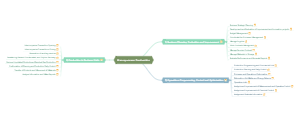
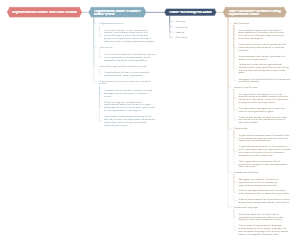
This is a mind map of procurement management. Procurement management is responsible for overseeing all the processes involved in acquiring the products, materials, goods, and services needed for efficient business operations.
Edited at 2022-11-24 10:17:35- Recommended to you
- Outline
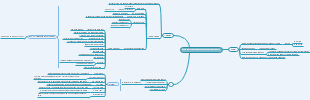

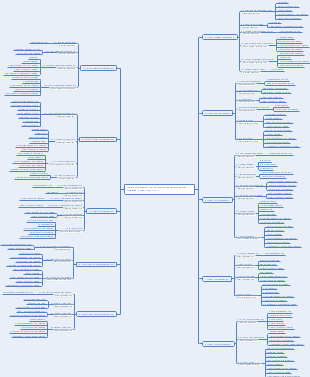
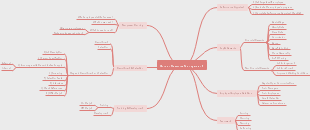
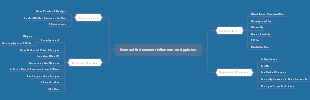

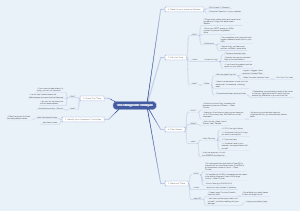
Procurement managemet
PAYMENT METHOD
Cost Plus contracts
Fixed Fee
Applications:- A cost-reimbursement contract in which the contractor is paid a negotiated price that is fixed at the start of the contract.
Challenges:- Owner faces a high level of risk.
Fixed Percentage
Challenges:- Owner faces a high level of risk.
Fixed Fee with a Guaranteed Maximum Price (GMP)
Challenges:- The contractor must have solid estimate skills.
Fixed Fee with GMP and Target Costing
Applications:- it when the owner wants to save money on a project and the contractor wants to work efficiently while managing costs to maximise his profit, such as when consulting or supervising a project.
Challenges:- The contractor must be more capable of performing perfect estimating in order to control costs and increase profit.
Price contracts
Lump Sum
Spotlights:- Lump sum contracts are good when: projects are well defined, designs are done, numbers are accurately estimated, and a minimum amount of variations / changes are expected.
Applications:- includes removal or repair work, highly specialized projects, and multibillion-dollar projects.
Challenges:- The contractor is responsible for both price movements and quantity variations.
Advantage:- The final price is fixed, except for changes in owners.
Disadvantage:- The extra risk carried by the contractor can cause to quality and performance problems, it takes a longer time to create the whole design and correct quantities, and it is less flexible to owner changes.
Unit Price
Spotlights:- based on the unit pricing of each work item more than its amount, project design may not be complete at the time of tendering and signing the contract, One of the most common project contracts.
Applications:- Projects where the final scope of work is unknown If a project needs more work than was originally predicted, this term is used in public works projects.
Challenges:- include the possibility of unit price overrun (contractor) and the possibility of actual quantity overrun (Owner).
Advantages: commonly used and highly known, allows for owner changes, and allows the project to be finished in less time related to design and tendering overlap.
Disadvantage:- The total final price will not be known until the project is completed.
Disadvantage:- The total final price will not be known until the project is completed.
Project Delivery System
Traditional Method (Design Bid Build) (DBB)
Spotlights:- Contractual agreement between the owner and his professional advisers (to design and manage the project's performance) & contractor (to construct / build the project)
Challenges:- The owner is responsible for the design (not contractor)
Applications:- When the owner has changed a lot, this is used.
Advantage:- The owner has full control over the project (construction time, quality, and design), challenge, total cost is known, and all contract forms are possible (unit rate is the most common used). Any adjustments require the owner's flexibility.
Disadvantage:- Increased project complexity (conflicts between partners, changes leading to conflicts), Delivery takes a long time.
Design & Build (DB) Package deal
Spotlights:- The main contractual is between the owner and the contractor for planning and delivering the project (package deal or turnkey agreement). Contractors can have contracts with domestic or nominated subcontractors and design professionals (bridging architect), or they can use in-house staff.
Challenges:- This type of contractor faces a high level of risk.
Applications:- When the owner has believe in the contractor, this term is used.
Applications:- When the owner has believe in the contractor, this term is used.
Advantage:- Time can be saved by overlapping design and implementation (fast-tracking project), responsibility for design and implementation is shared by a single organisation (reducing conflicts and disputes, easier modification implementation)
Disadvantages:- Inflexibility to owner changes, Possible loss in quality to save money, Natural conflict of interest between designer and contractor responsibilities.
Management Contracts
Project Management
Spotlights:- A contractual relationship occurs with a design professional, with the project manager (to coordinate, supervise, and manage project activity), and with the client. Each work package's contractor has a contractual connection with the owner.
Applications:- When projects are divided into work packages in order to bring in more contractors. when the project owner needs greater coordination in projects
Challenges:- The owner is at high danger, yet he has the ability to modify a lot.
Advantage:- Project work is closely connected with project management. Close communication between the project manager and the designer, reducing project duration (design and implementation are done simultaneously, work packages are be like)
Disadvantages:- There is more than one consultant and a number of contractors present, and the final price is unknown until the last work package is contracted.
Management Contracting
Spotlights:- Work package subcontractors enter into a contract with the management contractor (can use lump sum or unit price contracts with each of the work package contractors) and have a contractual relationship with the management contractor (to organize, supervise, and manage project works in partnership with the owner's design professionals).
Applications:- An early start is required for the project; design and implementation are likely to overlap; the project is technically complex and changes are expected; and the owner appears to lack people or specialization to supervise the project.
Challenges:- More risks in management contractor
Advantage:- Benefits include time savings from overlapping design and execution.. Participation of the project manager's practical knowledge in design, Capability to enter into separate firm price contracts for various work packages Work sharing among several contracts, with associated risks
Disadvantage: Unknown about the final project cost. Risks caused by the lack of a tender price for completing task High coordination is required among work package contractors.
Others
PPP(Private Public Partnership)
BOOT(Build Own Operate Transfer arrangement)
Spotlights:- In this type of arrangement the contractor totally finances the project, instead of the owner, and in return, a concession period is provided to the contractor to own and operate the project for his own financial benefit. The project is returned to the original owner after the concessioon period
BOT(Build Operation Transfer)
EPC (Engineering Procurement Construction)
Spotlights:- In the oil and gas industry and with process and offshore projects are common where contractors offer design, procure and build the project in a manner similar to turnkey projects.
(MC)
(PM)
(DB)
(DBB)
Disadvantages: It is difficult to predict the final cost, and the contractor is less concerned with cost control.
Advantages:- Start building without waiting for the entire set of designs and requirements.Changes in the owner's flexibility, During the design process, clarify the contractor's skills.