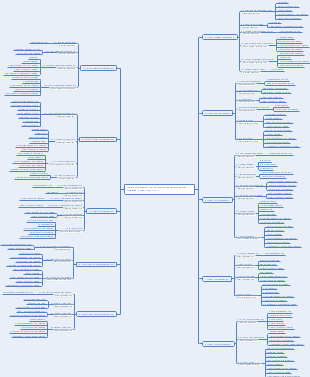
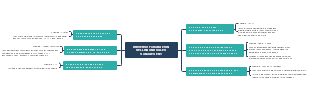
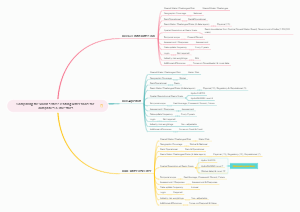
Possible Suitable Materials For Reusable Packaging Applications
PBT
PET
aPET/rPET
Pros
Naturally transparent and can offer high clarity for displaying produce.
VersatilePackaging 2022
Reasonably acceptable mechanical properties which can improved through the incorporation of nanocomposites which have the potential to make stiffer trays more resistant to lateral compression forces.
Fernandez Menendez et al. 2021
Acceptable permeability resistance to gases (O2 and CO2) and water vapor which can be enhanced further through the incorporation of nanocomposites (sepiolite) or fabrication of a multifilm with EVOH. Thinner PET trays containing nanocomposites achieve the same permeability levels as thicker virgin PET trays, therefore cutting material/transportation costs.
Fernandez Menendez et al. 2020
Degradation from mechanical recycling is reversible with a controlled decontamination (reduce number of contaminants and) and post drying process (increase intrinsic viscosity).
Kozlowski. 2015
Eriksen et al. 2018
Like cPET good mouldbility, complex shapes can be easily fabricated (multi compartment, seal mechanisms)
Cons
Not as broad a service temperature range as cPET (-40°C - 60°C), therefore mainly used for cold produce applications
VersatilePackaging 2022
Washing can cause chain stiffening to occur resulting in a slightly stiffer/brittler material.
Nahar et al. 2022
Industrial/Caustic washing can cause severe pack deformation above 70°C.
Nahar et al. 2022
cPET
Pros
Crystallinity gives enhanced thermal stability over aPET and can be used for hot fill applications and may also be safely used in a microwaves and ovens. Temp range: -40°C - 220°C for refrigeration/heating.
Awaja et al. 2005
Cecon et al. 2022
Wide temperature range (-40°C - 220°C) also ensures a degree of impact resistance at ambient temperature.
Galdi et al. 2015
Good barrier to oxygen and other gases, (Oxygen (1.5 - 5) Nitrogen (3 - 6) (cm3.mm/m2.day.atm)). Also good barrier to water vapor (0.1 - 0.4 g.mm/m2.day. Potential to increase barrier properties further through incorporation of nanocomposites (Cloisite 20 A up to 2% wt)
Galdi et al. 2015
Possibility to reduce material cost with the incorporation of bio fillers (coffee chaff, rice hulls up to 10% wt) at the cost of small reduction in temperature resistance and mechanical properties.
Cecon et al. 2022
High mouldbility, trays can be easily manufactured with multi compartments.
Cons
Naturally opaque and lack of transparency, sometimes not desired in food contact applications.
Cecon at al. 2022
Low crystallisation rate, requires a nucleating agent to achieve superior mechanical properties
Wang et al. 2017
Tritan/PET Copolyester
PP
Isotactic PP
Pros
Sub Topic
Cons
Thermoforming process can cause tearing of spherulites reducing crystallinity. Similar observations have been made of PETg.