MindMap Gallery Utility Analysis
Utility analysis is a powerful tool used in various fields, including economics, decision-making, and project management. It involves the assessment and quantification of the value or utility derived from a particular decision, action, or investment. This mind map will explore the concept of utility analysis, its key components, and its applications in different contexts. It will delve into the various techniques and frameworks used to evaluate utility, such as cost-benefit analysis, multi-criteria decision analysis, and risk analysis.
Edited at 2023-07-15 10:24:43Demand analysis is a process that involves studying and understanding the factors that influence the demand for a product or service. It helps businesses make informed decisions about pricing, production, marketing, and overall strategy. Here are some key features of demand analysis。

Utility analysis is a powerful tool used in various fields, including economics, decision-making, and project management. It involves the assessment and quantification of the value or utility derived from a particular decision, action, or investment. This mind map will explore the concept of utility analysis, its key components, and its applications in different contexts. It will delve into the various techniques and frameworks used to evaluate utility, such as cost-benefit analysis, multi-criteria decision analysis, and risk analysis.
Demand analysis is a process that involves studying and understanding the factors that influence the demand for a product or service. It helps businesses make informed decisions about pricing, production, marketing, and overall strategy. Here are some key features of demand analysis。
Utility analysis is a powerful tool used in various fields, including economics, decision-making, and project management. It involves the assessment and quantification of the value or utility derived from a particular decision, action, or investment. This mind map will explore the concept of utility analysis, its key components, and its applications in different contexts. It will delve into the various techniques and frameworks used to evaluate utility, such as cost-benefit analysis, multi-criteria decision analysis, and risk analysis.
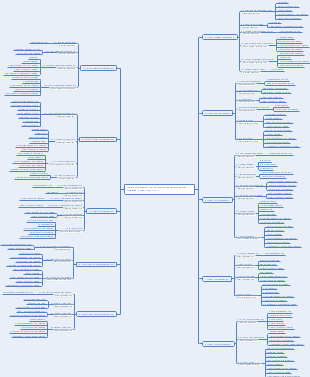
Utility Analysis
Features of Utility
Relative concept
Utility vary's according to time & place
eg Wollen clothes have greater utility in the winter & sand has greater utility at construction site rather than at the sea-shore
Subjective concept
Utility is a pshychological concept & differs from person to person
It depends on likes & dislikes nature habits & profession eg stethoscope has utility for DR but not a layman
Ethically Neutral Concept
Utility is a morally colourless concept
eg knife has utility to cut friuts & vegetables but can also be use to harm someone
Utility vs Usefulness
eg milk has utility & usefullnes bcoz it is a comodity which satisfy human wants
Where as alcohol has utility to an addict but has no usefullness
Utility vs Pleasure
A comodity may posses utility but may not give any pleasure to consumer
eg injection for patient has utility but does not give enjoyment or pleasure to him
Utility vs Satisfacton
Eg Utility is cause of consumption
Eg a thirsty person drinks glass of water since water has capacity to satisfy thirst. Upon drinking water the person will feel satisfied
Measurement of Utility is Hypothetical
Utility is abstract concept there's no numerical utility possible
eg a thirsty person may derive higher or lower level of utility
Utility can be found either (0 or +ve) -ve utility is disutility
Utility is multipurpose
A Commodity can satisfy the want of more than one person & it can be also put to several uses eg electricity can be served to use many purpose & many people at same time
Utility depends on the intensity of want
More intense the want, greater will be the utility eg a hungry person finds more utility in food then a persons who's not hungry
Utility is bases of demand
A person will demand a commodity only it gives utility to him
eg a sick person has utility in medicines so he will demand medicines
Types of Utility
Form Utility
When utility is created due to change in the shape or structure of an existing material then it is called form utility
Eg Toys made of clay, Furniture made from wood
Place Utility
When utility of a commodity increase due to change in its place its called place utility
Eg wollen clothes have more utility at cold place then at warm place
Service Utility
Service Utility arises when personal services are provided by various professionals
Eg DR,Teacher,Lawyers
Knowledge Utility
When a consumer acquires knowledge about a particular product it is called knowledge utility
Eg utility of mobile phone or computer increases when a person knows about its various functions
Possesion Utility
Arises when the ownership of goods is transformed one person to another
eg transform of goods from seller to buyer
Time Utility
When the utility of commodity increases with change in its time of utilization it is called time utility
Eg a student has more utility for textbooks during examination than in the vacations
Time Utility is also observed when goods are stored & stored at the time of scarcity eg blood bank
Concepts of Utility
Total Utility (TU)
It is the aggregate of utility dereived by consumers from all units of commodity consumers
Marginal Utility (MU)
Refers to additional utility dereived by consumer from additional unit of commodity consumed
Relationship between total & Marginal Utility
(TU) (MU) of the very 1st unit of X consume are same
As the consumer consumes further unit of X the total utility increases at a diminishing rate & Marginal Utility goes on diminishing
At a particular stage total utility reaches towards it maximum & remains constant where as marginal utility becomes 0 this is called the point of satirity (TU) highest, MU=0
Any additonal unit consume further results in decline in total utility while marginal utility becomes -ve
After reching the point of satirity a rational consumer should stop his consumption since maximum limit of satisfaction is reached & there's no addition to total utility by further increase in stock of commodity
Consumption beyond point of satirity transforms satisfaction into dis-satisfaction in other words a consumer starts experiencing in effects of consumption
Law of Diminishing Marginal Utility
The Law was proposed prof.Gossen but was dicussed by in detail by Alfred Marshal in his book Principles of Economics in 1980
"Other Things remaining constant,the additional benefit which a person dereives from a given increase in his stoke of a thing, diminishes with every increase in the stoke that he has
In short, the more of thing you have the less you want to have more of it
Criticism of Law of MU
Unrealistic assumptions
Cardinal Measurement
Indivisible goods
Constant marginal utility of money
A single want
Relationship btwn Marginal Utility & Price
Units which are consumer willingly buys bcoz MU is greater than price are called intra marginal units (MUx>Px)
Unit at which MU becomes equal with market price is marginal unit or consumers equilibrium(MUx=Px)
Units which a rational consumer is not willing to buy or consume, where he has to pay more than the MU are called extra marginal units (MUx<Px)
Assumptions of DMU
Rationality
A Consumer is assumed to be rational that means that his behaviour is normal & he'll try to maximise his satisfaction
Cardinal Measurement
The utility can be numerically measured. Hence Mathematical opreations can be done to know & compare the utility derived from each unit of commodity
Homogeneity
All units of a commodity are exactly identical in size shape colour & taste
Continuity
All units of commodity are consumed in quick succestion without any lapse of time
Reasonbility
All units of commodity consume are of reasonable size which means that they're neither too big too small
Constancy
All the related factors like income,tastes,habits,choises,likes,dislikes of a consumer should remain constant. Marginal utility of money is also assumed to be constant
Utility Analysis-II
Assumption of DMU
Divisibility
The law assumes that the commodity consumed by the consumer is divisible so that it can be acquired in small quantities
Single want
A given commodity can satisfy the single want of person the law assumes an experience of single want which is satibiable at given point of time
Exceptions to the Law of Diminishing Marginal Utility
Hobbies
In certain hobbies like collection of stamps & coins rare paintings listening to music reading etc the law does not hold true bcoz every additional increase in stall gives more satisfaction
However this violates assumption of homogeniety & continuity
Miser
In the case of Miser every additional rupee gives him more & more satisfactions
However this situation
Addictions
It is observed in the case of a drunk person the level of intoxication increases with every additional unit of liqour consume
However this violates the assumption of rationality
Power
When a person acqiures power he desires to have more & more of it
However this violates rationality assumption
Money
It is said that the marginal utility of money never becomes 0 this is bcoz money is medium of exchange which is used to satisfy various wants
However according to some economist this law appicable for money to eg marginal utility of money is more to poor person than to rich person
Crisitism of law
Unrelastic Assumption
The law is based on various assumptions like homogenity, continity, constancy, rationality
In real life it is difficult to fullfill all these condition at a point of time
Cardinal Measurment
The Law assumes that utility can be expressed by adding, comparing & presenting through a schedule
In reality this measurment is not possible bcoz utility is pshychological concept
Indivisible goods
The law is not applicable to indivisble & bulky goods like refrigator,car & tv sets etc which are normally purchased in a single unit at a time
Constant Marginal Utility of Money
The law assumes that marginal utility of each unit of money remains constant
However a critics argue that marginal utility of money differs from person to person & is influenced by changes in prices, stock of money etc
A Single Want
The law is restricted to the satisfaction of a single want at a point of time
However in reality a man has to satisfy many wants a point of time
Significance of Law MU
Usefulness to consumer
This law creates awarness among consumer
To obtain maximum utility from limited resources it is necessary to diversify consumption
Useful to government
The law helps the government in framing various policies such as progessive tax policy, trade policy, pricing policy
Bases of paradox of values
This law includes goods that have more value in use & zero or less value in exchange such as air water sunshine etc
It also includes goods that more value in exchange & less value in use such as gold diamonds etc
Bases of law of demand
The law of demand is based on law of DMU
According to law of demand the quantity demanded of a good rises with the fall in price & falls with increase in price
When a consumer purchases more & more units of a good its marginal utility steadily declines
Hence he would buy additional units of commodity only at low cost price
Divisibilty