MindMap Gallery Liquid preparation
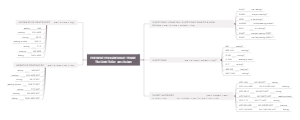
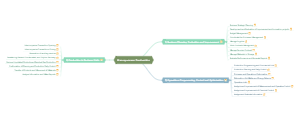
This clear mind map of liquid preparation delves into the homogenization process, preparation methods across various companies, and technological evolutions over different eras. Each section further expands upon details such as the procedures of HRDM Corporation, key individuals involved, and the application of personal computers in the preparation process. This graphically presented thinking tool uses a radial structure centered around core concepts to aid in understanding and memorizing complex information.
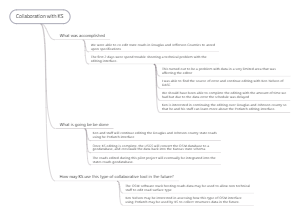
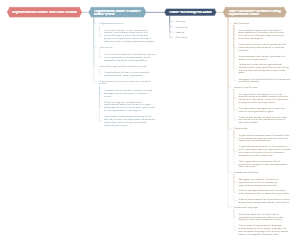
Edited at 2023-08-28 23:05:35This mind map offers a clear framework for understanding liquid formulations. The central node is "Liquid Formulations," with branches including "Intersystem Manufacture" and "System Heterogeneity." Each branch further explores related concepts such as "Solutions," "Classifications," and "Types." This structured view aids learners in quickly grasping the fundamental principles and applications of liquid formulations, while also fostering memory and creative thinking.

This clear mind map of liquid preparation delves into the homogenization process, preparation methods across various companies, and technological evolutions over different eras. Each section further expands upon details such as the procedures of HRDM Corporation, key individuals involved, and the application of personal computers in the preparation process. This graphically presented thinking tool uses a radial structure centered around core concepts to aid in understanding and memorizing complex information.
This mind map offers a clear framework for understanding liquid formulations. The central node is "Liquid Formulations," with branches including "Intersystem Manufacture" and "System Heterogeneity." Each branch further explores related concepts such as "Solutions," "Classifications," and "Types." This structured view aids learners in quickly grasping the fundamental principles and applications of liquid formulations, while also fostering memory and creative thinking.
This clear mind map of liquid preparation delves into the homogenization process, preparation methods across various companies, and technological evolutions over different eras. Each section further expands upon details such as the procedures of HRDM Corporation, key individuals involved, and the application of personal computers in the preparation process. This graphically presented thinking tool uses a radial structure centered around core concepts to aid in understanding and memorizing complex information.
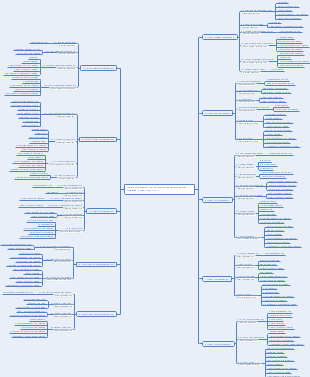
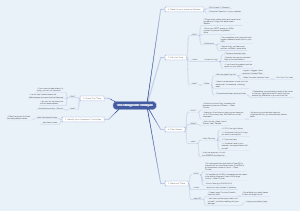
SEDIAAN CAIR
SISTEM HOMOGEN (1 FASA)
Larutan
Larutan adalah sediaan cair yang mengandung satu atau lebih zat kimia yang terlarut.
JENIS LARUTAN
Larutan encer : larutan yang mengandung sejumlah kecil zat A yang terlarut.
Larutan jenuh : larutan yang mengandung jumlah maksimum zat A yang dapat larut dalam air pada tekanan dan temperatur tertentu.
Larutan lewat jenuh : larutan yang mengandung jumlah zat A yang terlarut melebihi batas kelarutannya di dalam air pada temperatur terte
FAKTOR YANG MEMPENGARUHI
Polaritas
Cosolvency
Kelarutan
Temperatur
Salting out
Salting in
Pembentukan Kompeks
Ukuran partikel
PENGGILONGAN LARUTAN
LARUTAN ORAL
LARUTAN TOPIKAL
LARUTAN PARENTERAL
SISTEM HETEROGEN (2 FASA)
Suspensi
Suspensi adalah sediaan cair yang mengandung partikel tidak larut dalam bentuk yang terdispersi kedalam fase cair.
Jenis Suspensi Berdasarkan Penggunaan : 1. Oral (ex: Trisulfa Suspension, Kemicetine Suspension) 2. Topikal (ex: Para nitro sulfathiazol suspension) 3. Tetes telinga 4. Oftalmik (ex: Hydrocortisone acetate suspension) 5. Injeksi (ex: penicillin G. suspension)
KEUNTUNGAN - Penyerapan zat lebih cepat - Diminum dengan takaran yang sesuai - Baik untuk pasien yang sukar menelan tablet/kapsul - Homogenitas tinggi - Menutupi rasa tidak enak - Mengurangi penguraian zat aktif tidak stabil air
KERUGIAAN - Kestabilan rendah - Jika "cacking" sulit terdispersi - Alirannya menyebab sediaan larutan akan sukar dituang - Pada penyimpnan, terjadi perubahan sistem dispersi - Harus dikocok terlebih dahulu
SYARAT - Memiliki kekentalan, tidak cepat mengendap - Mudah terdispersi - Ukuran Partikel seragam - Memiliki sifat alir yang cocokl - Stabil
KARAKTERISTIK - Partikel yang terdispersi memiliki ukurang yang sama - Endapan tidak membentuk cake yang keras - Bahan terdispersi adalah bahan cair yang tidak larut maupun bercampur dengan cairan dari fase pendispersi - Zat pensuspensi : bahan yang digunakan untuk memperlambat penggumpalan - Zat pendispersi : bahan padat tidak larut dalam medium dispersi
PEMBUATAN SUSPENSI
METODE DISPERSI 1. Buat mucilago 2. Menambahkan serbuk bahan obat ke musilago, kemudian encerkan
METODE PRESIPITASI 1. Zat didispersikan dilarutkan ke pelarut organik 2. Larutan diencerkan 3. Endapan halus tersuspensikan
SISTEM PEMBENTUKAN SUSPENSI
SISTEM FLOKULASI
Partikel terikat lemah, cepat mengendap tidak terjadi cake, mudah tersuspensi
SISTEM DEFLOKULASI
Partikel mengendap perlahan dan membentuk sedimen, akan terjadi agregasi dan akhrinya terbentuk cake keras dan sukar tersuspensi kembali.
STABILITAS SUSPENSI
Faktor
UKURAN PARTIKEL
KEKENTALAN
Dibuktikan dalam hukum Stokes : V = d2 (ρ- ρo)/(18 n)
JUMLAH PARTIKEL
SIFAT/ MUATAN PARTIKEL
PENILAIAN STABILITAS
Volume Sedimentasi
VOLUME SEDIMENTASI F = Vu / Vo Harga : <1 - >1
Derajat Flokulasi
DERAJAT FLOKULASI = Vu / Voc
Metode Reologi
Membantu menentukan pengendapan, pembawa dan susunan partikel untuk perbandingan
Alat : Viscometer Brookfield
Perubahan Ukuran Partikel
dengan cara Freeze-Thaw Cycling
Emulsi
sistem dua fase yang salah satu cairannya terdispersi dalam cairan lain dalam bentuk tetesan kecil Tipe emulsi ada dua macam, yaitu: Oil in water (O/W) atau minyak dalam air (M/A) Water in oil (W/O) atau air dalam minyak (A/M)
KOMPONEN EMULSI
Komponen Dasar:
1. Fase dispers/fase internal/fase diskontinu/fase terdispersi/fase dalam 2. Fase eksternal/fase kontinu/fase pendispersi/fase luar 3. Emulgator
EMULGATOR
Emulgator Alam
Hewani
Kuning telur Adeps lanae
Mineral
Magnesium,alumunium, silikat bentonit
Tumbuhan
Gom arab Tragakan Agar-agar kaboksimetilselulosa Pektin metil selulosa
Buatan/Sintesis
Anionik: sabun alkali, Na-lauril sulfat
Kationik: senyawa amonium kuartener
Nonionik: tween dan span
Amfoter: protein, lesitin
Komponen Tambahan
bahan tambahan yang sering ditambahkan ke dalam emulsi untuk memperoleh hasil yg lebih baik.
Misalnya corrigen saporis, odoris, coloris, pengawet, antioksidan
TEORI PEMBENTUKAN EMULSI
Teori tegangan permukaan (surface tension) – tegangan permukaan diturunkan
Teori orientasi bentuk baji (oriented wedge) – kesetimbangan hidrofil dan lipofil
Setiap jenis emulgator memiliki harga keseimbangan (HLB = Hidrophyl Lipophyl Balance) yang besarnya tidak sama. HLB yaitu angka yang menunjukkan perbandingan antara kelompok hidrofil dengan kelompok lipofil.
A% b= (( X-HLBb))/((HLBa-HLBb) ) x 100% B% a=(100%-A%)
Teori film plastik (interfacial film) – lapisan film terhadap droplet (fase terdispersi)
Teori lapisan listrik rangkap (electric double layer) – muatan dalam droplet.
PEMBUATAN EMULSI
Metode gom kering atau metode kontinental
Metode gom basah atau metode inggris
Metode botol atau metode botol forbes
KESTABILAN EMULSI tidak stabil bila :
Creaming
satu bagian mengandung fase disper lebih banyak daripada lapisan yang lain.
Bersifat reversibel
Uji arah creaming: w/o creaming ke arah bawah o/w creaming ke arah atas
Flocculation
proses dimana dua atau lebih droplet saling menempel tanpa kehilangan identitas
Koalesensi dan cracking (breaking)
Pecahnya emulsi karena film yang meliputi partikel rusak dan butir minyak menyatu menjadi fase tunggal yang memisah
bersifat ireversibel
Inversi fase
berubahnya tipe emulsi O/W menjadi W/O secara tiba-tiba atau sebaliknya.
bersifat ireversibel
Tujuan : untuk mendapatkan preparat atau sediaan yang stabil dan merata atau homogen dari campuran dua cairan yang saling tidak bisa bercampur.