 Wondershare EdrawMind
MindMap Gallery E-GRAMMATICAL (Văn phạm)
- 32
E-GRAMMATICAL (Văn phạm)
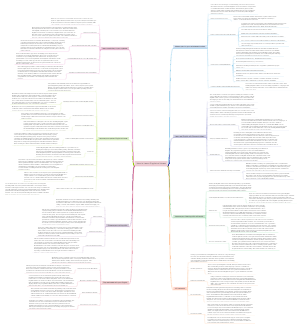
Sơ đồ tư duy này, được tạo bằng EdrawMind, trình bày các thành phần cơ bản của ngữ pháp tiếng Anh. Nó bao gồm các phần chính như "Word" (Từ), "Phrase" (Cụm từ), "Clause" (Mệnh đề), và "Sentence" (Câu). Mỗi phần được phân tích chi tiết với các ví dụ và giải thích, giúp người học hiểu rõ hơn về cấu trúc và cách sử dụng từ loại, cụm từ, mệnh đề, và câu trong tiếng Anh. Đây là tài liệu hữu ích cho việc học và dạy ngữ pháp.
Edited at 2023-08-29 15:41:17
- E-GRAMMATICAL (Văn phạm)
Sơ đồ tư duy này, được tạo bằng EdrawMind, trình bày các thành phần cơ bản của ngữ pháp tiếng Anh. Nó bao gồm các phần chính như "Word" (Từ), "Phrase" (Cụm từ), "Clause" (Mệnh đề), và "Sentence" (Câu). Mỗi phần được phân tích chi tiết với các ví dụ và giải thích, giúp người học hiểu rõ hơn về cấu trúc và cách sử dụng từ loại, cụm từ, mệnh đề, và câu trong tiếng Anh. Đây là tài liệu hữu ích cho việc học và dạy ngữ pháp.
- Phonetic
Phonetics is the scientific study of speech sounds and how they are produced, transmitted, and perceived. It plays a fundamental role in understanding the sounds of human language and their variations across different languages and dialects. By analyzing the physical properties of speech sounds, phonetics helps in developing phonetic alphabets, pronunciation guides, and speech recognition systems. In this mind map, we will delve into the principles of phonetics, including articulatory phonetics, acoustic phonetics, and auditory phonetics, and explore its various applications in fields such as linguistics, language teaching, speech pathology, and technology.
E-GRAMMATICAL (Văn phạm)
- E-GRAMMATICAL (Văn phạm)
Sơ đồ tư duy này, được tạo bằng EdrawMind, trình bày các thành phần cơ bản của ngữ pháp tiếng Anh. Nó bao gồm các phần chính như "Word" (Từ), "Phrase" (Cụm từ), "Clause" (Mệnh đề), và "Sentence" (Câu). Mỗi phần được phân tích chi tiết với các ví dụ và giải thích, giúp người học hiểu rõ hơn về cấu trúc và cách sử dụng từ loại, cụm từ, mệnh đề, và câu trong tiếng Anh. Đây là tài liệu hữu ích cho việc học và dạy ngữ pháp.
- Phonetic
Phonetics is the scientific study of speech sounds and how they are produced, transmitted, and perceived. It plays a fundamental role in understanding the sounds of human language and their variations across different languages and dialects. By analyzing the physical properties of speech sounds, phonetics helps in developing phonetic alphabets, pronunciation guides, and speech recognition systems. In this mind map, we will delve into the principles of phonetics, including articulatory phonetics, acoustic phonetics, and auditory phonetics, and explore its various applications in fields such as linguistics, language teaching, speech pathology, and technology.
- Recommended to you
- Outline

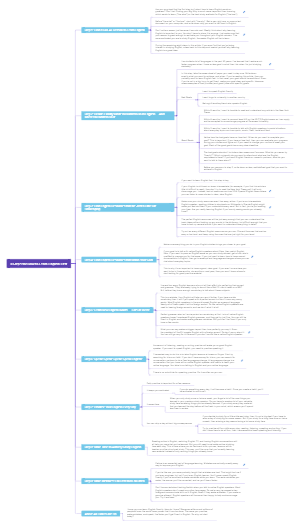
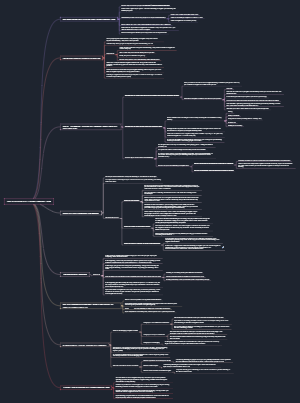
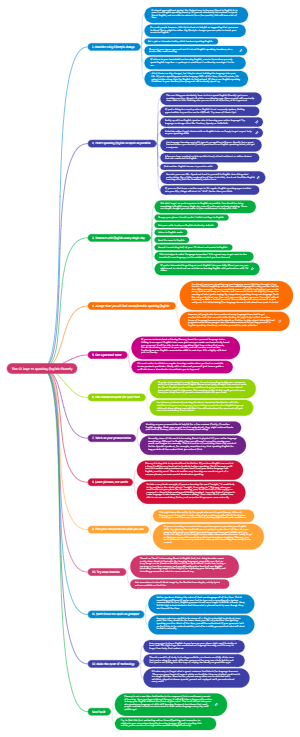
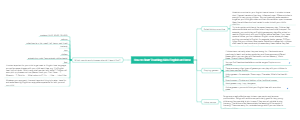
LINGUISTIC
PHONETIC
The study of the articulation and production of human speech sounds
1. Auditory Phonetics
the way listeners perceive sounds
2. Acoustic Phonetics
the physical sounds:frequency, intensity and duration
3. Articulatory Phonetics
the vocal tracts produce sounds: place of articulation, maner of articulation, voicing
PHONEMIC
26 Letters
44 PHONEMES = Sounds
24 CONSONANTS
+_voice
Voiced: vocal cords in closed position. Unvoiced vocal fold are apart
- Sounds are produced with a complete or partial obstruction of the airstream/air constriction/blocking air from the lungs through the vocal tract
7 places
Position: Where the airflow blocked by the articulators
1. Bilabial
sound is articulated with both lips
2. Labiodental/Lips
is a consonant articulated with the lower lip and the upper teeth.
3. Dental
sound is produced when the tongue tip touches the inside margin of the upper central incisors
4. Aveolar
is a sound made with the tongue touching or almost touching the alveolar ridge
5. Palatal
produced by raising the blade, or front, of the tongue toward or against the hard palate just behind the alveolar ridge
6. Velar
articulated with the back part of the tongue (the dorsum) against the soft palate, the back part of the roof of the mouth (known also as the velum).
7. Glottal/Semivowels
The part of larynx: opening/motion of the vocal cords + unvoiced
6 manners
How the airflow is manipulated by the articulators
1. Stop/Explosive
is made when vocal tract is blocked thus there is a build-up of air pressure and then the airstream is abruptly released.
2. Fricative
is produced when air-stream is directed through a narrow constriction in the vocal tract.
3. Africate
is combination of Stop and Fricative
4.Nasal
are sound made with air passing through the nose
5. Liquid
is the sound in which the tongue produces a partial closure in the mouth, resulting in a resonant, vowel-like consonant
Retroflex:is produced when the tongue rises toward the roof of the mouth and then retracts
Lateral: is produced by raising the tip of the tongue against the roof of the mouth so that the airstream flows past one or both sides of the tongue
6. Glide
is the sound in which the air-flow is not stopped but the aperture through which the air passes is smaller than the aperture of any vowel
20 VOWELS
+ voice
The vocal cords are vibrating when vocal folds are apart
The airtream/air constriction/blocking air escape out freely
12 Monothongs Simple vowel
2 Mouths
4 Open
Openness of the mouth which correlates to the height of the tongue
close
close-mid/half close
open-mid/half open
open
2 Shape/lips
The position of the lips which affect the shape of the mouth cavity
round
un-round
2 tongues
3 Positions
Part of the tongue is raised the highest
Font
Centre
Back
3 Height
The height of the tongue when it is in its resting position
high
centre/mid
low
8 Dipthongs - Compound vowels - A glide from one vowel sound to another within a single syllable
3 Mouth openness
Opening position
Centring position:/eɪ/, /aɪ/, /ɔɪ/
Closing position: /əʊ/, /ɑʊ/; /ɪə/, /ɛə/, /ʊə/
PHONOLOGY - The study of the way sounds function in languages: Phonemes, Syllables, Stresses, Pitch - The main component of phonology that phonologists use to predict how speech sounds will change
Phone - A sound in a language ( meaning or no meaning)
- 44 sounds e.g.: we make the sound /k/ by with : {+ stop + velar+ voice}
PHONEME
Phoneme: A unit of speech/A minimal unit of sound that can be used to differentiate Words, differenent meaning. - 44 Phonemes/Phonemic transcription. e.g.: “cat”/kæt/ vs.“bat”/bæt/ => /k/ is a different phoneme from /b/: minimal pair
Allophone - The variation of the phoneme used by various speakers in differing context - Different ways to pronounce a phoneme - The phoneme may has 1 or more allophones. - Same phoneme – Same meaning - Difference in pronunciation e.g.: Butter [bʌɾə] and [bʌtə]
SYLLABLES - A unit of organization for a sequence of speech sounds
Structure
A Syllable
Onset - zero onset: V_ - onset: CV_
Ryhme
Nucleus _V_
Coda - closed coda: _VC_ - open coda: _V
A degenerate syllable
No nucleus: CC (tn, ʃn...)
A Syllabic Consonant: [ə] l,m,n
Suprasegmentals - Including the segments of speech: Vowels + Consonants - >= one Syllables
Stress
Word Stress change the meaning of a word
Stress: vowel - One primary stress: Longer in duration, Higher in pitch, Clearer - Secondary stress: Weaker than primary one
Unstress: - schwa /ə/ - Consonant
Sentence
Stress
A stress-timed language - Content/lexcial words: Noun, Adj, Adv, main Verb - > one stress word - The time between stressed syllables stays fairly constant
Unstress
In a syllable-timed language - Funtion/Grammer words: Determiner, pronoun, preposition, auxiliary verb and conjunction - All syllables take approximately equal amounts of time to pronounce
Rhythm - The speed - Cadence: Rise and fall of the voice
Intonation: how high or low your voice
MORPHOLOGY The study of analyzing the external structure of words and parts of words, such as stems/ root words, prefixes, and suffixes.
MORPHEMES - The smallest meaningful unit in a language - The minimal units of words that have a meaning and cannot be subdivided further - Morphology helps linguists understand the structure of words by putting together morphemes
CATAGORY (2)
1. CONTENT Vs FUNCTION
Meaning/ Content
Derivational affixes Suffixes (only): pre-, un-,dis-, ... Prefixes (>=1): -er, -ly, -tion, ...
4 Content/lexical - Noun roots - Verb - Adj: big, bigg{(est)-grammar} - Adv: ugly
Grammatical/ Structure role
Inflectional suffixes (8) - 4 verb: -ing, -s (-es), -en (v3), -ed - 2 Nouns: -s, 's - 2 Adjs/Advs: -er, -est
5 Function/syntactical - Determiners: a, my, her - Pronoun: her, this - Aux verbs: can, am, do,have - Prepositions, at, from - Conjunctions: but, when, so that
2. BOUND Vs FREE
Free (2) - Independence - Can stand alone as own word
4 lexical/content/vocabulary words= open-class words: Speakers can add new content words to the language. Root words - Noun roots - Verb - Adj: big - Adv
The function/syntactical/structure words = closed-class (5) : speakers cannot add new function words to the language - Determiners: a, my, her - Aux verbs: can, am, do,have - Pronoun: her, this - Conjunctions: but, when, so that - Prepositions, at, from
Bound (3) - Dependence - Stand alone as own word
Contracted form -'ll, -'d, -'re,...
Bound bases. Root words can-, -ceive, -mit,...
Affixes (2) - In order: Derivational -> Inflectional
Derivational (2) - Making new words in a language - Changing the word class and/or the type of meaning of the stem Suffixes (only): pre-, un-,dis-, ... Prefixes (>=1): -er, -ly, -tion, ...
Pre-
Verb
unfair, outlive, disconnect/unhorse, dislike, misinfor, mal-treat, undercook, cooperate, overdressed, foretell, rebuilt intermarry, transplant
Noun
surtax, superman, arch-enemy, miniskirt, antifan, professor, non-smoker, semicircle automobike, prototype, vice-president (deputy) pre-war, post-war, ex-husband, resettlement interaction
Adj
substandard, overconfident, hypercritical, ultra-modern, extremly, anti-social, insane international, transatlantic.
Adv
anticlockwise, backward
-Suffix
Verb
popularize, darken, simplify
Noun
actor, engineer, gangster, employer, employee, wittie, exploration, amazement, drainage, driving, inhabitant, happiness, booklet,sanity, daddy, refinery, refusal, Indonesian
Adj
foolish, colourful, attractive, couterous, youngish, childhood, chracteristic, heroic, childless, creamy, musical, republican, cowardly
Adv
backward, happily
Inflectional (1) -Indicate aspects of grammatical function of a word - Not change the word meaning/word class 8 Suffixes: - 4 verb: -ing, -s (-es), -en (v3), -ed - 2 Nouns: -s, 's - 2 Adjs/Advs: -er, -est
Allomorphs - Variants of a morpheme that differ in pronunciation but are semantically identical
ex
The “negative prefix” morpheme {in}?
in-, il-, im-, ir-
Orthographic: Chính tả + phát âm thay đổi
The “regular past tense” morpheme {ed}
/t/, /d/, /ed/
Phonological: Chính tả ko đổi; Phát âm thay đổi
The morpheme indicating “people of a nation”
-ese, -an, -ish, -ite
Orthographic
The “indefinite article” morpheme
a, an
Orthographic
A zero-morpheme - A type of morpheme that carries semantic meaning but is not represented by auditory phonemes. - Zero morpheme is a morpheme that has no phonetic form/ no visible changes
- Represented by /Ø/ ex: Sheep (plural)= sheep (singular)+ Ø
Braketing diagram - Arrangements of morphemes
/<Un[(ex{pect})ed]>ness/ /Poly[{(morph)eme}ic]/ : đuôi pre áp dụng cho tất cả (v,n,adj) thì sẽ ưu tiên áp dụng sau /{[Re(form)]ation}s/
WORD Word is the smallest meaningful independent unit in grammar.
CATAGORY (4)
1. CONTENT Vs FUNCTION
Function (5): Determiners, Aux verbs, Pronoun, Conjunctions, Prepositions.
Content (4): N, V, Adj, Adv
2. WORD TYPE (4)
Simple (2) 1 Base
- Base: book, go, long - Base + inflectional suffic (8):ko thay đổi nghĩa từ, chia ngữ pháp ex: books, going, longer
Complex (3) 1 Base
- Prefix+ Base : unhappy, dislike - Base + Derivational suffix(es): national, nationalize - Prefix + Base + Derivational suffix(es): international, unhappiness
Compound (5) >2 Base
two elements
- Both simple: blackboard, sleepwalk - Both complex: elevator operator, Assistant Secretary - One complex: taxi-[driv]er, [act]ion film - One compound: football [play]er, greenhouse effect
three elements
- All simple: son-in-law, man-of-war
Compound - Complex >2 Base
- A prefix + a compound: mini {cassette-player}, non{crossover} - A compound + a derivational suffix: {football}er, {daydream}er, {sleepwalk}er
3. WORD RELATION (6) Different meaning, Pronunciation (3) Different meaning, Same pronunciation (1) Same meaning, Different pronunciation (2)
Words family
- Different meaning, same root (base) Base + derived forms (suffixes/prefixes) ex: designate
Hypernym ‘fruit’ is the hypernym of ‘apple’, ‘orange’
Co-hyponyms ‘dog’ and ‘cat’ are hyponyms of ‘animal’ ‘dog’ is a co-hyponym with ‘cat’
Antonyms
- Relational antonyms: opposite within the context of their relationship: Dad-Mom - Gradable Antonyms: There are often other adjectives that fall between and around the original pair: cold-hot (warm) - Complementary antonyms:They exist independently from one another and do not need the other term to exist: Có cái này thì ko có cái kia: dead-live
Homonyms
Different meaning; Same pronunciation - Homographs:spelt same saw: nhìn-cái cưa; bark: sửa - vỏ cây; bat: con dơi - cái gậy - Homophones: spelt differently : cell-sell, knight-night; sea-see, pair-pear; meet-meat, flour-flower
Synonyms
- Same meaning, Different pronunciation Không hoàn toàn giống nhau, có thể khác nhau: Bristish-American, formal-informal, positive-negative- trung hòa ex: Flat (Bristish) - Apartment (Aemrican)
Metonyms
Same meaning; Different pronunciation ex: tounge ~ language sweat ~ hard word Hanoi ~ Goverment
4. WORD FORMATION (>6)
Derivation is the process of forming a new word from an existing word, often by adding a prefix or suffix
Prefixation/Suffixation Forming new words by the addition of a word element: - Prefix - Suffix - Prefix + suffix
The grammatical character of the base 1. Denominal suffixes/ prefixes: unbutton (n); (n)Timeless 2. Deverbal suffixes/ prefixes: rewrite(v); (v)builder 3. Deadjectival suffixes/ prefixes: uneasy (adj); (adj) widen
The formed words class 1. Verbalizers suffixes/ prefixes (V): enclose, capitalize 2. Nominalizers suffixes/ prefixes (N): non-smoker; breakage 3. Adjectivalizers suffixes/ prefixes (Adj): unfair, incredible 4. Adverbializers suffixes/ prefixes (Adv): uphill, backward; likewise
- Numeralizers suffixes: fourteen - Their denotational meaning prefixes: Negative: unhappy; Reversative: untie; Pejorative: maltreat; Time & order: foretell; Repetition: rebuild; Locative: inter-continental; Degree or size: miniskirt; Number: bicycle.
Compounding
Joining two or more bases to form a new unit - Subject and verb: sunrise (the sun rises). - Verb and object: birth control (to control birth) - Subject and object: steamboat (steam powers the boat) - Verb and adverbial: well-behaved (to behave well) - Coordinating relationship: bittersweet (sweet but bitter)
Noun compounds
- N+N/V/Adv/ Ving/ PP: bedroom; rainfall; hanger-on, passer-by; train-spotting; brother in law - V-ing/ Prep/ adv/ adj + N: washing machine; underworld; onlooker, bystander; greenhouse - V + Adv/Prep: lookout, take-off - Adv + V: output, input - Adje + V-ing: dry-cleaning, public speaking
Verb compounds
- N/V/Adj/Adv/Prep + V: sleep-walk, stir-fry,short change, upgrade, underline
Adjective compounds
- Number/ Adj/ N + N: 2-week (holiday); long-life (milk); part-time (job) - N + Adj/ V-ing/PP: fat-free (snacks); English-speaking (countries); sun-dried (fish) - Adj + Adj/ V-ing/ PP/N-ed: red-hot (peppers); long-lasting (batteries); ready-made (suit); long-legged (girl) - Adv + PP: well-known (singer)
Adverb compounds
- Shortened forms of what were originally PPs: downhill, indoors, inside, ... - combinations with other classes of words: somewhere, anywhere, nowhere, ...
Clipping is the word formation process in which a word is reduced or shortened without changing the meaning of the word
- Back clipping: is removing the end of a word ex: Gas from gasoline. - Fore-clipping: is removing the beginning ex: Gator from alligator - Middle clipping: is retaining only the middle ex: Flu from influenza
Blending is the word formation process in which parts of two or more words combine to create a new word whose meaning is often a combination of the original words
initial 1-initial 2: biographical + picture → biopic initial 1-final 2: breakfast + lunch → brunch initial 1+ full 2: American + Indian → Amerindian full 1-final 2: dumb + confound → dumbfound
Acronym is a word or name formed from the initial components of a longer name or phrase, usually using individual initial letters
- The initial components: NATO (North Atlantic Treaty Organization) - The initial syllables: Benelux (Belgium, Netherlands and Luxembourg) - Mixture: First syllable + first components: Radar (RAdio Detection And Ranging) * Pronounce: - Words: NASA - The individual letters: ATM - Mixture: JPEG, IUPAC
Borrowing Loan-tranlation is a type of borrowing sometimes referred to as a 'calque'; direct translation of the elements of a word into the borrowing language
ex: café (French), Karaoke (Japanese
multi word verb
Verb + Prep: look for ex: look for the word
Verb + Adv: look up ex: look the word up, look up the word
Verb + Adv + Prep: look down on
miệng đóng - lưỡi cao
E-GRAMMATICAL (Văn phạm)
WORD
Relative
Co-hyponym
Synonyms
Antonyms
Homonyms
METONYMS
catagory
Content Vs Function
Funtion word (Hư từ)
- Limited - Close class: cannot add new function words - Ý nghĩa về mặt ngữ pháp/ cấu trúc câu
~50 Determiners (7)
- modify or introduce the noun in a sentence - Đặt trước các danh từ xác định - Chỉ một người/sự việc/sự vật cụ thể hoặc đặc biệt mà bạn đang đề cập đến
Articles: Noun đó người nghe/nói đã xác định hay không xác định được
a/an
- Người nghe chưa biết - Số ít
The
- Người nghe đã biết - Số ít, số nhiều
Duy nhất: The sun, The Great Wall
Chức danh: The teacher, The Profession
Demonstrative: Noun vị trí xa gần so với người nghe, nói
this, that,
- Gần- Xa - Số ít
these, those
- Gần- Xa - Số nhiều
Possessive: ai đang sở hữu Noun này
my, your, his, her, its, our, their
Diffirence: chỉ sự khác biệt
The other
Dùng để chỉ đến (những) cái còn lại trong (những) cái đã nói đến trước đó. Danh từ số ít hoặc số nhiều - I enjoyed the first book but I didn’t read the other books in the series. → những cuốn còn lại trong series
Another
Chỉ một cái gì đó khác, hoặc thêm vào cái đã nói đến trước đó. Danh từ số ít - Would you like another cup of coffee? → thêm 1 cốc cà phê nữa - Another reason to reject his offer is…. → thêm 1 lý do nữa là…
Other
Dùng để chỉ một cái gì đó khác hẳn với cái đã nói đến trước đó. Danh từ số nhiều - I have no other ideas. → ý kiến khác
Another - The other: old Another - Other: new
Interrogative: nghi vấn
whose
Của ai
What
Hỏi thông tin cụ thể
Which
Hỏi thông tin cụ thể đã có sẵn
Numbers: số đếm và số thứ tự
one, two, three,...
one-fourth, two-third, ...
The 1980's thế kỷ
Quantifiers: Mô tả số lượng
Count Noun
- a majority of - many - a few - a number of - several - every - more/the most
few: một ít (ko đủ để cho) a few: một ít (đủ để cho)
Uncount Noun
- a great deal of - a large amount of - much - a little - less/ the least
little: một ít (ko đủ để cho) a little: một ít (đủ để cho)
Both
- all - a lot of / lots of, plenty of - any, some - enough - a bit of - not any - no / none
some: (+) Any (-) (?)
- All/some/plenty/lot + of + N + V(chia theo noun) - Half/part/a lot/A number + of + N + V(chia theo noun): Some of the oil was leaking on the seashore - The number of + N(số nhiều)+ V số ít. - Con số/Số thập phân/phân số/đo lường + V số ít: Three quarters of an hour is 45 minutes
~50 Pronouns
- Avoid repeating the same noun
1. Personal Pronouns List
subject
I, you, he, she, it, we, you, they)
object
me, you, him, her, it, us, you, them
Possessive
mine, yours, his, hers, its, ours, yours, theirs
-self or -selves
Reflexive
myself, yourself, himself, herself, ourselves, yourselves, themselves
Intensive
myself, yourself, himself, herself, ourselves, yourselves, themselves
2
Relative
who, whom, that, which, whoever, whichever, whomever
Interrogative
who, whom, which, what
Demonstrative
this, these, that, those
3. Indefinite
all, another, any, anybody, anyone, anything, each, everybody, everyone, everything, few, many, nobody, none, one, several, some, somebody, and someone
~13 Auxiliary verbs
- Along with a main verb - Expressing tense, mood, or voice
Primary verb
be, have, do
Modal verbs -clarify the context
- can, could (ability) - will, would (furture) - shall, should (offer) - must (necessity) - may (permission) - might (possibility) - dare, need, ought to
~150 Prepositions
from, at, on
Time
1. About 2. After 3. Ago 4. Around 5. At 6. Before 7. By 8. Circa 9. During 10. Following 11. For 12. From 13. Gone 14. In 15. On 16. Past 17. Prior to 18. Since 19. Until/till 20. Up to 21. Up until
Place
1. Aboard 2. Above 3. Across 4. Against 5. Alongside 6. Amid 7. Among 8. Apart from . Astride 10. At 11. Atop 12. Behind 13. Below 14. Beneath 15. Beside 16. Between 17. Beyond 18. By 19. Close to 20. Far 21. Far from 22. Forward of 23. From 24. In 25. In between 26. In front of 27. Inside 28. Into 29. Minus 30. Near 31. Near to 32. Next to 33. Of 34. Off 35. On 36. On board 37. On top of 38. Onto 39. Upon 40. Opposite 41. Out 42. Out of 43. Outside 44. Outside of 45. Over 46. Round 47. Through 48. Throughout 49. To 50. Together with 51. Toward/towards 52. Whether this word ends with an -s depends on what region’s English is being used. 53. Under 54. Underneath 55. Up against 56. With 57. Within 58. Without
Movement
1. Above 2. Across 3. Against 4. Ahead 5. Along 6. Along with 7. Amid 8. Around 9. Away 10. Away from 11. Behind 12. Below 13. Beneath 14. By means of 15. Down 16. Further to 17. In between 18. Into 19. Off 20. Off of 21. On 22. Onto 23. Over 24. Out of 25. Past 26. Round 27. Through 28. Toward/towards 29. Under 30. Up 31. Via
Manner
1. About 2. According to 3. Anti 4. As 5. As for 6. As per 7. As to 8. As well as 9. Aside from 10. Bar 11. Barring 12. Because of 13. Besides 14. But for 15. By 16. But 17. Concerning 18. Considering 19. Contrary to 20. Counting 21. Cum 22. Depending on 23. Despite 24. Due to 25. Except 26. Except for 27. Excepting 28. Excluding 29. Given 30. In addition to 31. in case of 32. In face of 33. In favor of/in favour of 34. In light of 35. In spite of 36. In view of 37. Including 38. Instead of 39. Less 40. Like 41. Notwithstanding 42. Of 43. On account of 44. On behalf of 45. Other than 46. Owing to 47. Pending 48. Per 49. Plus 50. Preparatory to 51. Pro 52. Re 53. Regarding 54. Regardless of 55. Save 56. Save for 57. Saving 58. Than 59. Thanks to 60. Unlike 61. Versus 62. With 63. With reference to 64. With regard to 65. Worth
Agent/ Instrument
by, with
Possession
of Da lat
Measure
by kilo
Cause/Purpose
to, for, Because of/ on account of, owing to,
Contrast and Concession
- though- although; Nonetheless- nevertheless- however, All the same - At the same time - as- though; In spite of - despit
Inference, Motive, Source, or Origin
From, Of, Of/Out of
~85 Conjunctions
- Connect words, phrases, and clauses
Coordinating conjuntion
Independent clauses
FANBOYS - For (Purpose) - So (Situation-Result) - And, nor - But/Yet
- I went to market for buy a bottle water - I don't like dog, nor I love cat - She usually studies in the library, but when it is too busy she goes to a cafe
Subordinating Conjuntion
an independent + a dependent clause
Time
- after, as soon as - as long as - before, by the time - now that, since, once - till <until - when, whenever, while
- He came over my house after I had return from my work. - A baby deer can stand as soon as it is born
- You can use my car as long as you ride carefully
- I always feed the dog before i go to work - By the time ambulance arrived, he was unconscious
- You can go and play now that you have finished your homework - Let's start the meeting since everyone's here. - Once you learn it, you never forget
- Jane lived with his parents till he was eighteen - You can stay on the bus until you reach London
- I wasn't at home when he came - Whenever he go abroad, he take as many pictures as possble - When I was walking on the street, I met Jean
Condition
- if, unless - Only if, Provided that - Assuming that - even if - in case - Lest Imagine situation
- You won't success unless you work hard - Only if a teacher have given the permission is a student allowed to leave the room - I was allowed to go off by myself provided that I promised to be careful. - I hope to go to college next year, assuming that I pass my exams - Even if you have already bought the ticket, you will still need to wait in line - I have an umbrella with me in case It rains - Study hard lest you should fail.
Reason
- Because (chưa biết lý do, nhấn mạnh lý do, có thể đứng 1 mình) ; Since, as (Biết lý do, ko sd câu (?)) - So that, in order that, that (Purpose)
- We played chess as/since/because we had nothing better to do - Why am I leaving? I'm leaving because/since/as I'm fed up! - Because/as/since you look so funny - I'll go by car so that I can take more luggage
Concession
- Though< although< even though Fact occurs in spite of a hurdle
- Although the kitchen is small, It is well designed
Manner
- How - As though, As if Situation that may not be true/imaginary situation
- She taugh him how to play piano - They look as though/as if they're heading for divorce
Comparison
than, rather than, as soon as, whereas, whether.
- I'm taller than my brother - I like tea rather than coffee - I eat as much as you - Elli is tall and blond whereas her sister is short and has a black hair. - You must chose whether you will go or stay at home.
- Relative adj - Relative pronoun - Place
- That, whatever, which, whichever - Who, whoever, whom, whomever, whose - where, wherever
- He is studying in the school that his father studied. - I copied in my textbook whatever he worte on the blackboard - The car which I drove is my brother. - Allan will wear pink or black sweater, whichever is clean
correlative
- Both...and / not only ... but also - Either...or /Whether… or/ neither ... nor - The more...the more/ Rather... than / As... as/ No sooner... than - Such... that/So... that/ too...to - Hardly had... when/No sooner... than - So... as
- She can be both a teacher and a student together My friend does know not only the English language but also 14 different languages - You can either eat your favorite dish or order something else. You have to complete every task, whether it is easy or hard. Neither the shopkeeper nor my friend has this game set. - The more you go high, the more things look small This play station set is rather expensive than I expected. He collected the old pieces of stuff from the basement as much as he could. No sooner had Mahendra Singh Dhoni entered the stadium than the whole audience started shouting. - He performed such a brilliant performance that the judges gave a standing ovation She is missing his father so much that she cannot wait till one hour She is missing his father too much to wait till one hour - Hardly had he finished his assignment when the rain had started. No sooner had Mahendra Singh Dhoni entered the stadium than the whole audience started shouting. - I have known my friend for so long when he works as a librarian
Content word (Thực từ)
- Unlimited - Open class: Speakers can add new content words to the language - Mang ý nghĩa khái niệm, tư duy của con người - Thiếu nó, câu không có ý nghĩa
Noun
Verb
Adj
Adv
morphemes and roots
SIMPLE
a base only
book, go, long
+ an inflectional suffix
books, going, longer
COMPOUND
prefix+
unhappy, dislike
+ derivational suffix(es)
national, nationalize
prefix+ base/root/stem + derivational suffix(es)
international, unhappiness
COMPLEX
three elements, all simple
son-in-law, man-of-war
two elements
both simple
blackboard, sleepwalk
one complex
taxi-driver, action film
both complex
elevator operator, Assistant Secretary
one compound
football player, greenhouse effect
COMPOUND COMPLEX
a prefix and a compound:
mini {cassette-player}, non{crossover}
a compound and a derivational suffix
{football}er, {daydream}er
Phrase
CLAUSE
Independence
Coordinating conjunstion
Dependence
Subordinating conjunction
complex
sentence
SIMPLE
COMPOUND
COMPLEX
COMPOUND COMPLEX
ADJ/ADV
comparative
so sánh hơn: -er
so sánh nhất: the+ V-est Trợ từ/ Hư từ
VERB
Tense (Thì)
Present
Past
Aspect (Thể)
progressive
perfect
Time (Thời)
will
be going to
be to
Continuous
Present simple
Form
5V
nguyên mẫu: to go
simple: goes
past: went/ -ed
V3: quá khứ phân từ
-ing: hiện tại phân từ
Voice
passive
active
Mood
Indicative mood Diễn tả 1 sự kiện
Chia verb theo Thì+ Thể
- She insisted that her husband went to the casino. Cô ấy khăng khăng khẳng định là chồng của cô đã có đi đến sòng bạc.
Subjunctive mood - Mong đợi, kỳ vọng
Present - Ước muốn hiện tại, có thành hiện thực ko thì phụ thuộc vào người khác - Verb ở dạng nguyên mẫu
- She insisted that her husband go to the party with her. Cô ấy nhất định yêu cầu chồng của cô phải đi đến bữa tiệc cùng cô ấy.
Past - Simple past(be = were): Diễn tả sự việc đối lập với thực tế ở hiện tại - Past perfcet: Diễn tả sự việc trái ngược với thực tế ở quá khứ
Henry would rather that his girlfriend worked in the same department as he does. (His girlfriend does not work in the same department)
Bob would rather that Jill had gone to class yesterday. (Jill did not go to class yesterday)
verb ko chia tiếp diễn
Abstract (nhóm động từ chỉ nhận thức)
believe, know, need, understand, remember, think, imagine, forget, mean, exist..
ngoại trừ: I'm thinging about him _ chỉ hành động suy nghĩ, ko chỉ nhận thức
Feelings (nhóm động từ chỉ cảm giác)
like, dislike, love, hate, fear, envy, care, prefer, need, want...
Senses (nhóm động từ chỉ chi giác)
hear, see, feel, smell, taste, sound
Belongings (nhóm động từ chỉ sở hữu)
own, have, belong, possess, have got
Linking Verbs (nhóm động từ liên hệ)
Be, become/ get, seem/ appear, remain/ stay), find N/adj, make N/adj…
Voluminous Verbs (nhóm động từ chỉ thể tích, dung tích)
Consist of noun= (be) composed of Noun= comprise Noun
NOUN
Giống
Hiếm chia đực, cái Vd: actor, actress
Số
Số ít,nhiều: s /es
Cách - Đảo nghĩa không thay đổi I love you You love me
Chủ cách
Tân cách
Hữu cách: 's
Main Idea
Main Topic
Subtopic
once every 3 months
three times a month
Subtopic
Main Topic
Subtopic
leave in 3 hours
leave for 3 hours
Main Topic
verb pharse
shool
Subtopic
skip class on the day of the test
be nervous in test
get sweaty on hands and palms
worry that your space is slow
have fast heart beat
have difficulty following the direction on the test
sleep poorly on the previous night day
think that you are dumb or feel sure that you do badly on the test
remember the answer easily after the test is over
a friend in need, is a friend indeed
eating
place
food cart/truck
food court
snack bar
diner/eatery
pizzeria
canteen/cafeteria
bistro
café/ coffee shop
restaurant
fast food restaurant
buffer restaurant
fine dining restaurant
Subtopic
service
great
fast
the best
slow
the worst
foods
exquisite/ havenly
tasty/ fantastic/ delicious/ mouth-watering
good
pretty good
so-so/ ok / bland
bad/ terrible
horrible/distinguish
cuisine
soft food
junk food
price
expensive/ costly/ pricey
reasonable/ affordable
fairly cheap/ /student-friendly
location
asmosphere/ambiance
decoration
unbeatable
romantic
cool
fun
lively
private
itimate
homey
cozy
lining
music
soft music
customer
student
office worker
family
young
elderly
vegan
vegetarian
veggie
diet
a healthy/balanced/varied diet
less sugar, less fat than usual and often sweetened artificially/having artifical sweetener
be on diet
weight
gain weight
lose weight
sentence
- Where do we go? - What kind of food do they have/ do you prefer/ do you recomend? - What dishes do they have - What is your last decision? - How much does usually cost to eat there? - where is it? - Is it cheap/expensive? - where is it located? In the middle of the ...street On the left/right side - How is the service?
Main Topic
Main Idea
Main Topic
I'm just pulling your leg
I'm joking
Main Topic
Main Topic