Status of the ensemble programme
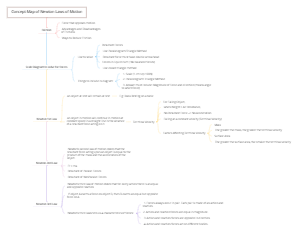
Ensemble lessons are a deep learning method. (Hall, 2015)
Reasons why ensembles are not valued: ensembles do not realise the need for audience participation (Matthew D, 2015)
Most of the secondary school music curricula have ensemble courses, including chorus, jazz/rock ensemble, and orchestra. (Carlos,2008)
In ensemble courses, research has found that willingness to participate in ensemble courses varies by race, with White students being significantly overrepresented in ensemble courses (Kenneth,2001)
Social impact of ensembles
Bands are integral to community celebrations and fully utilise the power of unity. (Lindquist,2006)
There is a great deal of evidence that bands are an important part of schools and communities, although some argue that large ensembles lack a strong connection to the real world of contemporary music. (Kratus,2007).
Disadvantages of ensemble programmes
Ensemble courses have limited opportunities for student/teacher interaction due to student/teacher ratios. (Lisa,2021)
In large ensembles, there may be a need to consider the issue of teachers having too much power. (Lisa,2021)
Advantages of the Ensemble Programme
The ensemble music format creates a sense of belonging, equality, and a sense of group purpose for participants (Parker,2010)
School choral singing has significant stress-reducing potential (Parker,2010)
Students are often able to give their full attention in an ensemble state. (Lisa,2021)
In the ensemble programme, a small "safe society" is created where students can develop the ability to accept failure within the ensemble. (Brian,2022)
Conclusion:In general, the ensemble programme is indispensable in music education, and it has its advantages and limitations. In view of the current situation of the ensemble programme, it may be a good direction for future research to focus on the "development of the ensemble programme of multi-ethnic traditional music".
Implication for my project:research has shown that ensemble programmes have many positive aspects, and it is important to try to maintain their benefits when developing ensemble programmes in response to changing times.
Implication for my project:ensembles are considered a good way of learning, and although most schools have relevant programmes, they still have their limitations, such as unbalanced proportions of various races and low social acceptance due to lack of audience participation. Is it possible to balance the ethnic ratio by introducing traditional music ensembles of various ethnic groups? Is it possible to try more forms of ensembles that allow the audience to participate in the performance?
Implication for my project:ensembles as a form of performance are often seen at community events and social events, which inevitably leads to many performance opportunities for student ensembles.
Implication for my project:given the student/teacher ratio in ensemble courses, is it possible to teach in small groups during the course? In order to achieve more hands-on student participation in the classroom rather than a "teacher-driven" format?