MindMap Gallery Exploring the Rich Tapestry of Ancient Dynasties
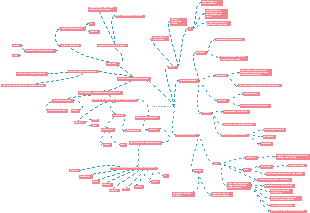
Embark on a journey through time with our comprehensive history unit timeline, detailing the pivotal battles, strategic alliances, and political shifts that shaped the course of ancient dynasties. From the rise and fall of the Three Kingdoms to the cultural renaissance under the Eastern Jin Dynasty, discover the legacy of emperors and the evolution of arts such as calligraphy and sculpture. Understand how reforms like those of Emperor Xiaowen of the Northern Wei set the stage for ethnic integration and societal transformation. Our timeline provides a window into the rich cultural and political landscape of ancient history, invaluable for educators, students, and history enthusiasts alike.
Edited at 2023-11-27 23:45:27
Three Kingdoms
battle
Battle of Guandu
Cao Cao VS Yuan Shao
Cao Cao wins
Laying the foundation for Cao Cao's unification of the north
Battle of Red Cliff
Cao Cao VS Sun Liu Alliance
Sun and Liu allied forces won
Laying the foundation for the three kingdoms to stand together
proclaim oneself emperor
Cao Pi
220 years
Luoyang
Cao Wei
Liu Bei
221 years
Chengdu
Shuhan
Sun Quan
229 years
Jianye
Sun Wu
Three Kingdoms
Cao Wei
Pay attention to agricultural production, vigorously build new water conservancy projects, and invent overturned cars
Shuhan
Under the governance of Zhuge Liang, the economy was developed, ethnic relations improved, and the development of the southwest region was accelerated.
Sun Wu
In 230, he sent General Wei Wen to lead a fleet of ten thousand people to Yizhou, strengthening the connection between mainland China and Taiwan.
Western Jin Dynasty
The establishment of the Western Jin Dynasty
In 263, Wei destroyed Shu. In 266, Sima Yan established the Western Jin Dynasty and made Luoyang its capital. In 280, the Western Jin Dynasty destroyed Wu.
Rebellion of Eight Kings
cause
During the reign of Emperor Hui of Jin Dynasty, eight bee queens armed with heavy troops fought for the central power and started fighting with each other. This was known as the "Rebellion of the Eight Kings" in history.
Influence
A large number of people died in the Central Plains, and survivors fled to the south.
The internal migration of northern nomadic peoples
Di, Qiang, Jie, Xiongnu, Xianbei and other tribes migrated to the Central Plains
The rule of the Western Jin Dynasty was corrupt. It imposed heavy taxes on the people of all ethnic groups who moved inland, conscripted troops, and even sold ethnic minority people as slaves. These tyranny aroused strong resistance from the people of all ethnic groups who moved inland. Some leaders of ethnic minorities took the opportunity to rebel against the Jin Dynasty.
The rulers of various ethnic groups in the north successively established many political regimes. Historically, the 15 major political regimes in the north, together with the Chenghan in the southwest, were collectively referred to as the "Sixteen Kingdoms"
Eastern Jin Dynasty
The Rise and Fall of the Eastern Jin Dynasty
In 316, the Huns who moved inland destroyed the Western Jin Dynasty. Sima Rui rebuilt the Jin Dynasty in 317, with Jiankang as the capital, and it was called the Eastern Jin Dynasty in history.
Because the Eastern Jin Dynasty had doubts about the generals of the Northern Expedition, many parties signed, resulting in a lack of support for the Northern Expedition, and ultimately failed to recover the Central Plains (family politics)
The Eastern Jin Dynasty successfully resisted the military threat from the north (Battle of Feishui), the ruling situation was relatively stable, and the social economy developed. At the end of the Eastern Jin Dynasty, the political power fell into the hands of military generals, and the Eastern Jin Dynasty perished in 420
Politics of the Southern Dynasties (Song, Qi, Liang, Chen)
During the period of Emperor Wu of Liang, a large-scale rebellion occurred (Hou Jing's Rebellion), and Jiankang fell.
In the comparison of strength between the North and the South, the Southern Dynasties were at a clear disadvantage.
Development of Jiangnan area
reason
Superior natural conditions
Southern society is relatively stable
Northerners moving south
Government policy support
Influence
Jiankang became the most active metropolis at that time, laying the foundation for the southward shift of the economic center of gravity in later generations.
Northern Wei
The battle of fat and water
Eastern Jin VS Pre-Qin
Eastern Jin wins
The prospect soon fell apart, and the North once again fell into disunity and discord.
Reforms of Emperor Xiaowen of the Northern Wei Dynasty
reason
The Tuoba tribe of Xianbei moved inland late and still maintained the customs of the Xianbei people. It was very difficult to manage the vast northern area.
National conflicts are acute
measure
Moved the capital to Luoyang
stipulates that officials must use Chinese in the court
Wear Hanfu and use Chinese character
Encourage marriage between Xianbei nobles and Han nobles
Ethnic integration in the northern region
aspect
Production and life
Han→all ethnic groups
Learn the experience of animal husbandry and receive their food, clothing, and utensils
All ethnic groups→Han
Live a settled life, learn agricultural techniques, and engage in agricultural production
political system
All ethnic groups→Han
implement an autocratic monarchy
Ideological and cultural aspects
Han→all ethnic groups
The musical instruments, songs and dances of the northwest ethnic groups are loved by the Han people
All ethnic groups→Han
Use Chinese
Influence
The previous concepts of "Hu" and "Han" are gradually weakening, and the barriers and prejudices between ethnic groups are gradually decreasing.
Promoted ethnic integration and enhanced the strength of the Northern Wei Dynasty
It laid the foundation for the prosperity and development of multi-ethnic countries during the Sui and Tang Dynasties.
Leading to internal divisions in the Northern Wei Dynasty
Accelerated the process of feudalization of various ethnic groups in the north
Technology and Culture
Books
"The Art of Qi Ming"
Jia Sixie
Agricultural production must follow the laws of nature, and crops must be planted according to local conditions and within the farming season.
It is necessary to improve production technology and agricultural tools, and put forward the important ideas of diversified operations and commodity production
"Theory of God's Destruction"
Fan Zhen
The human spirit and body are combined with each other. Only with the body can there be spirit. When the body dies, the spirit will also disappear.
"Shui Jing Zhu"
Li Daoyuan
Landscape prose is a collection of beautiful words and poetic and picturesque descriptions of scenery, which had a great influence on the development of prose travel notes in later generations.
science and technology
Zu Chongzhi
math
Accurate pi to seven decimal places
The famous academic book "Zhushu" co-authored with his son
astronomical
Calculate one year
Created the "Da Ming Calendar"
Machine made
guide car
Water mill
Thousand-mile ship
calligraphy
Cao Wei
Zhong Yao
Original regular script calligraphy, with both hardness and softness, and dot painting, which is very interesting
Hu Zhao
Eastern Jin Dynasty
Wang Xizhi (Sage of Calligraphy)
Running script, the writing style is "floating like floating clouds, as powerful as a frightening dragon"
"The Preface to the Lanting Collection" is known as "the best running script in the world"
Northern Wei
Paying attention to calligraphy, the art has handed down the inscription calligraphy style, which is vigorous and thick, rough and vigorous.
painting
Gu Kaizhi
"Pictures of Proverbs from Women's History"
"Luo Shen Fu Tu"
sculpture
Yungang Grottoes in Datong, Shanxi
Longmen Grottoes in Luoyang, Henan
History Unit 4 Timeline