Startup funding refers to the financial resources that are obtained by new businesses to support their operations and growth.
It plays a crucial role in helping startups cover their expenses, invest in technology and equipment, pay salaries, and expand their operations.
Startups often rely on external sources of funding to bridge the gap between their initial investment and revenue generation.
2. The role of Finvento Economics
Finvento Economics is a financial consulting firm that specializes in providing funding solutions to startups.
They play a pivotal role in connecting startups with potential investors, analyzing their financial needs, and offering customized funding options.
Finvento Economics assists startups in understanding the financing landscape, accessing capital, and navigating the complexities of the funding process.
3. Types of startup funding options
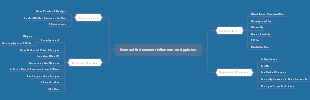
There are various types of startup funding options available, including grants, equity financing, debt financing, angel investors, venture capital firms, crowdfunding, and accelerators/incubators.
Each funding option has its own advantages and considerations, and startups need to carefully evaluate which option aligns best with their business goals and growth plans.
4. Grants and government funding opportunities
Grants are a form of non-repayable funding provided by government agencies, foundations, or corporations to support specific projects or initiatives.
Startups can research and apply for grants that align with their industry, innovation, or social impact to secure funding without diluting their ownership.
Government funding programs, such as Small Business Innovation Research (SBIR) grants, provide startups with opportunities to obtain resources for research and development.
5. Equity financing for startups
Equity financing involves selling a portion of the startup's ownership (equity) to external investors in exchange for funding.
Venture capital firms and angel investors are the primary sources of equity financing for startups.
Startups need to present a compelling business plan, growth potential, and exit strategy to attract equity investors who seek substantial returns on their investments.
6. Debt financing for startups
Debt financing involves borrowing money from banks, financial institutions, or private lenders with an agreement to repay the borrowed amount plus interest over a specified period.
Startups use debt financing to cover immediate expenses, purchase assets, or bridge short-term cash flow gaps.
It is important for startups to carefully assess their ability to repay the debt and evaluate the impact of interest payments on their profitability.
7. Angel investors and venture capital firms
Angel investors are individuals or groups who provide early-stage funding to startups in exchange for equity.
They often bring industry expertise, mentorship, and valuable networks to the startups they invest in.
Venture capital firms, on the other hand, manage funds from institutional investors and invest in startups that have high growth potential.
Startups need to demonstrate a strong value proposition, market potential, and an experienced management team to attract angel investors or venture capital firms.
8. Crowdfunding and crowdsourcing platforms
Crowdfunding platforms allow startups to raise small amounts of money from a large number of individuals, typically through online platforms.
Startups present their business idea or product and offer various incentives or rewards to those who contribute funds.
Crowdsourcing platforms, on the other hand, enable startups to tap into the collective knowledge and resources of a large group of people to solve business challenges or drive innovation.
9. Accelerators and incubators in startup funding
Accelerators and incubators provide startups with a combination of funding, mentorship, resources, and networking opportunities.
Startups join these programs for a limited period to accelerate their growth, refine their business models, and connect with potential investors.
Accelerators and incubators often have a specific industry focus and provide startups with access to a supportive community of entrepreneurs.
10. Factors to consider when seeking startup funding
Startups should consider various factors when seeking funding, such as their financial needs, growth trajectory, valuation, ownership dilution, investor compatibility, and the terms and conditions of the funding option.
It is essential to thoroughly research and understand the potential risks and benefits associated with each funding option before making a decision.
Startups should develop a clear and compelling pitch deck, financial projections, and an understanding of their target market to attract potential investors and secure funding.
 Wondershare EdrawMind