MindMap Gallery Brain Structure and Function
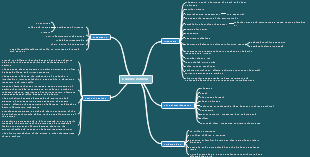
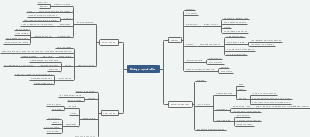
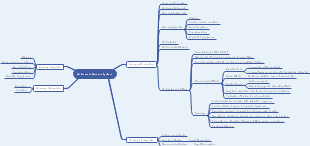
This mind map provides a comprehensive overview of the structure and function of the brain. It starts with a view of the brain, then dives into the details of its various components. The mind map also includes some interesting illustrations that help to explain the complex concepts in a clear and concise way.
Edited at 2023-12-17 22:31:00Topic 1. General Organization of the Brain, Neurons and Synapses
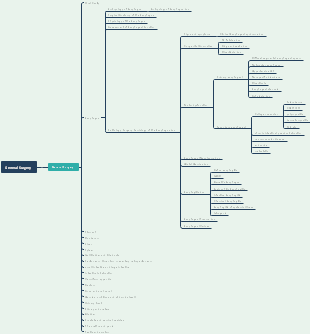
Orientation
Anterior-Posterior
Anterior (Rostral) - towards the front Posterior (Caudal) - towards the back
Dorsal-Ventral
Dorsal - towards the back Ventral - towards the stomach
Medial-Lateral
Medial - closer to the midline Lateral - farther out from the midline
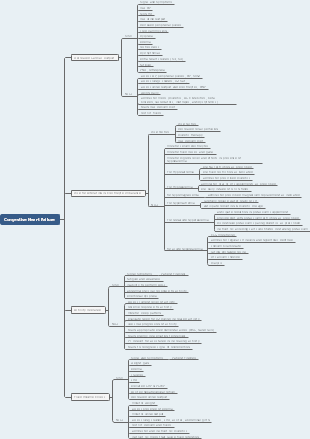
Brain Structure
Medulla
right on top of the spinal cord, first part of the brain
touch comes up and relays in the medulla
regulate blood pressure, breathing, HR
homeostasis
hard to study medulla, b/c once it's damaged you die (neuro mostly study through pts with impairments)
Grab-bag of miscellaneous functions
Pons
control eye and head movement
control arousal state, dreaming
control startle reflex (involuntary)
connection to cerebellum
grab-bag of miscellaneous functiosn
Cerebellum
balance, eye movement, movement coordination, high level cognition, social processing
grown in proportion (humans have big compared to fish)
granular cells: very small and dense so can get many neurons packed
out of 86b neurons, 69b are in cerebellum
elephant has largest neurons in brain among all animals
elephants have particularly large cerebellums -> maybe related to trunks
disruption of cerebellum early on is highly associated with autism
Midbrain
Huge collectino of nuclei
Deeper towards the ventral part of midbrain is not well known for its function
inserting the electrode from the top => huge bias in instensity of dorsal structure study
Colliculus
Superior Colliculus/Optic Tectum
Superior colliculus - mammal; optic tectum - nonmammal
optic tectum in non-mammals: largest structure in the brain (root of the brain); lots of visual information directly from the eyes
mostly studied in primates
visual orientation - adjusting the visual attention to the object
sometimes visual structure (receives visual inputs)
Inferior Colliculus
auditory function; input from ears; relays from the ear anatomy to the interior colliculus
builds the sound map
Diencephalon (aka two brains)
Thalamus
Greek: foundation of the brain
underneath the cerebellum cortex; directly connected
gateway to the cortex; all the senses pass through thalamus
visions - optic nerve projects directly into the thalamus; synapses project upon to the rest of the cortex
auditory - inferior colliculus to thalamus projection
sensation - synapse connected through spinal cord > medulla > thalamus then further projects to the rest of the cortex
Information comes into it and relays (extential cord of the brain
Cortex projects back tot he thalamus
10x projection from the cortex to thalamus; could be due to attentional filter
No related function to the thalamus; no specific connectivity b/w hapothalamus and thalamus
Hypothalamus
Below the thalamus (hypo-)
System related to motivation, rewards; crucial node in that system
Sub-group of nuclei in the hypothalamus
low current can evoke emotional state
studies all the way back in 20th c. > electrical stimulation popular in mid 20th
different regions of sub nuclei
revoke sexually motivated behavior
hunger
early work done on goats, cats, rats, etc.
Pituitary Gland
extension from the hypothalamus
master gland; controls hormones in the body
controls internal state of our body: mood, metabolic rate, growth, appetite
Cerebral Cortex
Frontal Lobe
Front region: Pre-frontal cortex
in front of the motor area
high level reasoning and thinking
very hard to study how the high level cognitive function works
highly dimensional, subtle and complicated
Back region: motor cortex
direct proejction to the spinal cords
Parietal Lobe
Front/anterior region: somatosensory cortex
feel, touch, pain
Back region: visual motor coordination
hands, eyes
Occipital Lobe
Visual system
Temporal Lobe
Visual + auditory + language process + memory
medial temporal region connected to hippocampus
hippocampus > related to epilepsy
removal of this region led to the finding of its role in memory
lose the ability to store information into memory system without hippocampus
Hippocampus
learning and memory
Grey matter vs. White matter
Grey matter > groups of neurons; shown in the MRI scan (outside layer)
White matter > cabling/axons; insulated with fat tissues (inside layer)
Basal Ganglia
hidden in the cortex underneath the cerebral cortex
motivation, reward
involved in clinical syndromes; i.e. ADHD, OCD, turret syndrome
Sulci vs. Gyrus
Gyrus
surface of the folds
Sulcus
folds
Lateral sulcus
Central sulcus
Why is the brain so wrinkly?
The volume of the brain whether it's folded or not are the same
to increase the surface area of the brain
Cytoarchitectonics
study of the cellular composition of CNS's tissue under the microscope
Brodmann's area: separated the brain in the ~50 different region based on their cellular compositional difference in the brain
6 Layers of Cortex
L1
molecular level
L2/L3
processing layer
L4
input layer/granular cell layer
large cell doby/highly dense
projects up or down through the layers
largest layer; lots of sensory inputs
4a, 4b, 4alpha, 4beta
L5/6
proejcts out to deeper layer inside the brain
pyramidal cells (aka betz cell) - synapses connected all the way down to spinal cords
Layers are very closely interwined and interconnected
Layers are a centimeter thick across the lobes
Cortical Column
One column of the brain cortex tends to have specific organization functions
one column is dedicated for touch
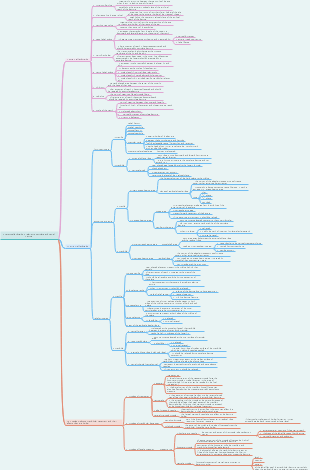
Neurotransmitter
Glutamate
ligands used in driving the action potential
excitatory neurotransmitter
works in different kind of channels
GABA
inhibitory neurotransmitter
injected GABA to study what happens when the region of the brain neuronal transmission is blocked
Dopamine
mood, reward, happiness
Parkinson's disease
Help producing motor movement in muscles
Serotonin
Happy neurotransmitter :D
Prozac (medicine that increases serotonin level)
extend the action of serotonin in the synaptic cleft
Acetylcholine (Ach)
Neurotransmitter for muscle
Poison blocks the Ach gate; reason why you become paralyzed after getting poisoned
Neurons
Basis of information process of the brain
Cell Types
Nucelus vs. Ganglion
fuzzy border between glia and neuron: glia can act like neuron; glia can have AP; much bigger role in information processing
nucleus > clump of neurons inside the brain
ganglion > exactly the same thing, but outside the brain
running along the side of the spinal cord
Glia Cell
generates myelin sheath; 10x more than neuron in NS
Oligodendrocyte
creates myelin sheath
Astrocyte
Microglia
grows when there's damage in the nearby glia cells
Radial glia
important for development
motor rails
Bipolar Cell
has two branches
Pseudobipolar Cell
has one axon then branches out to two direction (splits)
skin cells receptors
ex. sensory receptors in the foot; the pseudo-biopolar cells body travels all the way up to the spinal cord and the cell body located at the spinal cord
Pyramidal Cell
cells from the cortex that projects throughout the body
Interneuron (aka basket cells)
not sending out the signals
involved in local computation within the NS
lots of them in the brain
not every cell in brain has AP
Motor neuron
connected to muscles
various experiments on animals
i.e. giant squid axon experiment
Structure
Synapse
Gap between neurons; where neurotransmitters diffuse from one end of the neuron to another
Presynaptic side of synapse
end terminal
Postsynaptic side of synapse
dendrite
Dendrite
beginning of the neuron
Axon Hillock
where all electrical information dense up from the dendrite/cell body
Axon
Myelin Sheath
covers the axon; spiral around the axon
types of glia cell; fatty substances; membrane materials of the cell
insulates the axon to help the process of the action potential
faster and less energy
Nodes of Ranvier
ions gets diffuse and exchanges across the axon body for action potential
travels down through the axon body
End terminal
triggers neurotransmitters to diffuse across the synaptic cleft at the end of the terminal
Gap Junction
some neurons create physical contacts; single wire
areas of the brain that controls circadian cycle
high proportion of the gap junction - nobody knows why..!
Action Potential
Action Potential
spreads down along the membrane
positively charged ions move along
Sltatory Conduction = AP traveling down the axon
Na+/K+ Pump
releases 3Na+, pumps in 2 K+
Resting Potential: -60mV; Action Potential: +55mV
Ligand-Gated Na+ Channel
Voltage-Gated Channel
Na+
pumps into the intracellular; neurotransmitter controls the flow of Na+ into the cell
EPSP (Excitatory Postsynaptic Potential)
Intracellular becoming more positive as Na+ flows into the cell
IPSP (Inhibitory Postsynaptic Potential)
Intracellular becoming more negative as Na+ flow is blocked
Specific dendrites have either one (almost never both)
K+
pumps out of the intracellular
much more K+ voltage-gated channel then the number of Na+ voltage gated channel
Voltage-gated channel > Below -55mV: closed > Above -55mV: open