MindMap Gallery Ventricular rate
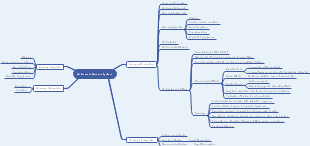
The Ventricular rate, or ventricular rate, is the number of atrial or ventricular contractions per minute. Under normal physiological conditions, the ventricular rate is usually between 60-100 beats per minute. Ventricular rate can reflect the physiological state and function of the heart, which is of great significance for the diagnosis and treatment of arrhythmia, myocardial infarction and other diseases. This is a mind map on ventricular rate, which consists of four branches: <100 Bradycardia, >100 BPM tachyarrythmia, Definition, Factors influencing ventricular rate. Each main branch is described in detail by multilevel subbranches. For those interested in ventricular rate.
Edited at 2024-01-02 22:29:42Ventricular rate
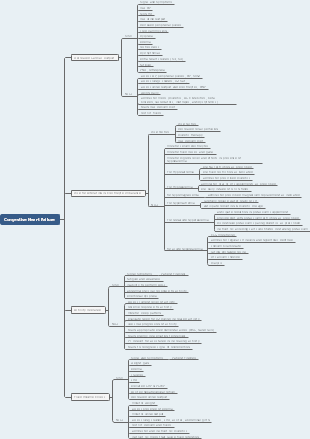
>100 BPM tachyarrythmia
Narrow Complex
Regular
sinus tachycardia
supraventricular tachycardias
SVT's all share episodic conditions, usually with an abrupt (paroxysmal) onset. They are generated from atrial or AV nodal tissue. They present with a regular rhythm
Ectopic Atrial Tachycardia (EAT)
Tachyarrythmia originating from within the atria but outside the SA node, usually a single ectopic focus mechanishms can include: -reentry -triggered activity -increased automaticity distingushed by abnormal P-waves which have different morphology (inverse MAT multifocal atrial tachycardia same as above but requires 3 or more unique origins of waves.
Atrioventricular nodal reentrant tachycardia (AVNRT)
AVNRT requires re-entry (duh) but this is through a congential accessory pathway that permits re-entry of the signal. This affects BOTH the fast and slow pathways. the atrium, AV node and ventricles ALL need to be part of this pathway Slow-Fast AVNRT (Common AVNRT) Accounts for 80-90% of AVNRT Associated with Slow AV nodal pathway for anterograde conduction and Fast AV nodal pathway for retrograde conduction. The retrograde P wave is obscured in the corresponding QRS or occurs at the end of the QRS complex as pseudo r’ or S waves ECG: P waves are often hidden – being embedded in the QRS complexes. Pseudo r’ wave may be seen in V1 Pseudo S waves may be seen in leads II, III or aVF. In most cases this results in a ‘typical’ SVT appearance with absent P waves and tachycardia
Atrioventricular reciprocating tachycardia (AVRT)
AVRT has two arms to the re-entry circuit. One is the AV node, the other is the accessory pathway AVRT only requires the AV node to be part of the circuit. There are two types: Orthodromic and Antidromic Orthodromic means there is conduction down the normal pathway, and back up the accessory pathway causing a NARROW QRS complex Antidromic means there is conduction up the abnormal accessory pathway and back into the node, causing a WIDE QRS complex as the signal has longer to travel Rate usually 200-300 bpm Retrograde P waves are usually visible, with a long RP interval QRS < 120ms unless pre-existing bundle branch block, or rate-related aberrant conduction QRS alternans: phasic variation in QRS amplitude associated with AVNT and AVRT, distinguished from electrical alternans by a normal QRS amplitude Rate-related ischaemia is common
atrial flutter
HR>100 BPM Regular rhythm usually P waves are in a sawtooth pattern seen in leads II, III, aVF Similar to AVNRT and ART, except the circuit of reentry is in the atria Typically flutters at 300 BPm but the AV node filters about half of these resulting in a 150 BPM can happen at normal pulse rates when AV node filters 1:4 as opposed to the 1:2
Irregular
Atrial Fibrillation
No discernable P waves on ECG Rate is 400-600 BPM for the atria, hence no discernable rythym can lead to strokes, heart attacks, heart failure, sudden death risk factors: obesity, atrial remodelling, diabetes, blood pressure, exercise (so long as it's not too strenuous), age clinical impact of AF: high risk of thombus formation, eventually can lead to heart failure (takes time to become HF) SAF scoring for severity: 0-4 who to worry about? people who cant feel it, they aren't aware Evaluation: confirm diagnosis with electrical recording of heart then look for predisposing factors echocardiogram, TSH, alcohol use, diabetes, watch out for pulmoanry embolus Tx: 1) prevent stroke -anticoagulants 2) rate control target is HR<100 beta blockers, CCBs (diltiazem, verapamil) , Digoxin 3) reduce symptoms
Multifocal Atrial Tachycardia (MAT)
Electrocardiographic Features Heart rate > 100 bpm (usually 100-150 bpm; may be as high as 250 bpm). Irregularly irregular rhythm with varying PP, PR and RR intervals. At least 3 distinct P-wave morphologies in the same lead. Isoelectric baseline between P-waves (i.e. no flutter waves). Absence of a single dominant atrial pacemaker (i.e. not just sinus rhythm with frequent PACs). Some P waves may be nonconducted; others may be aberrantly conducted to the ventricles.
Wide complex
Wolf parkinson white syndrome (WPW)
Presence of a congenital accessory pathway and episodes of tachyrarrythmia bundle of Kent pathway bundle can conduct forwards and backwards presence of "delta waves" on lead V3, as there is pre-excitation which kicks off a bizzare looking wave in the ventricles. short P-R interval widened QRS complex P wave is often buried in the QRS complex Always associated with antidromic AVRT
Definition
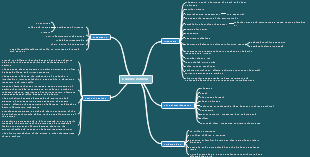
The ventricular rate refers to the number of times the ventricles of the heart contract in a minute.
Factors influencing ventricular rate
1. Autonomic nervous system
Sympathetic stimulation increases the ventricular rate.
Parasympathetic stimulation decreases the ventricular rate.
2. Hormonal influence
Epinephrine and norepinephrine increase the ventricular rate.
Acetylcholine decreases the ventricular rate.
3. Exercise
Physical activity increases the ventricular rate.
4. Medications
Some medications can affect the ventricular rate, such as beta-blockers or calcium channel blockers.
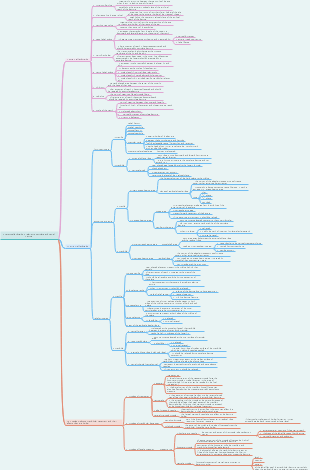
<100 Bradycardia
AV Junction
AV Block
1st degree
Prolonged PR interval (>200m/sec) Length remains constant
2nd degree
Mobitz type I (Wenckebach)
Progressively lengthening PR interval that presents as a missed beat on ECG. the interval after a missed beat is shorter than the PR interval preceeding the missed beat Type 1 blocks are typically associated with diseased states of the AV node
Mobitz type II
Mobitz type II A constant PR interval that may be normal or prolonged with periodic abrupt failure of the atrial impluses to conduct to the ventricles. Usually associated with diseases at the level of the bundle of His MORE worrisome than type 1 as the pacemaker cells are located above the bundle of his, so there is a risk of not propagating entirely.
3rd degree (complete)
Total block at the AV node level, complete AV dissociation heart still functions due to ventricular/junctional escape rhythms Random P, QRS, its all everywhere
Atrial dysrrythmia
Sinus Bradycardia
Characteristics: regular rhythym, HR<60 sinus P waves Causes: Normal when sleeping, increased vagal tone, hypothyroidism, hypothermia, brainstem hemmorage
Ectopic Atrial Rhythm (EAR)
Narrow complex rhythm originating from somewhere in the atria that isn't the SA node Considered an arrythmia of Abnormal Automaticity regular rhythm narrow QRS abnormal P wave morphology being the main feature on ECG
Premature Atrial Complex (PAC)
Features: Irregular rhythm Sinus and ectopic P waves present (earlier than expected) Narrow QRS complex has a compensatory pause every once in a while Causes: Anything that increases sympathetic drive caffeine myocardital ischemia hypokalemia