MindMap Gallery ICT For BS
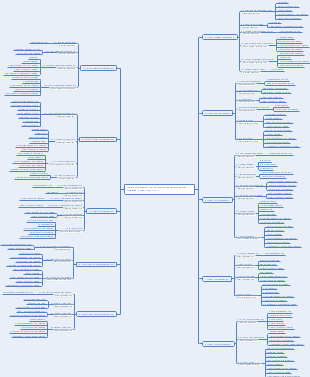
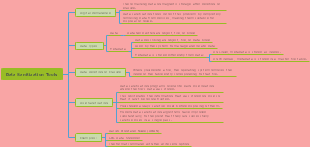
Information and Communication Technology (ICT) is an important driving force for the development of today's society, covering the entire process from information acquisition, transmission, processing, and application. Through ICT, people can achieve remote work, online learning, instant messaging, etc., greatly improving productivity and quality of life. At the same time, ICT is also driving innovation and change in various fields, such as artificial intelligence, the Internet of Things, cloud computing, etc. However, with the rapid development of ICT, it has also brought some challenges, such as data security and privacy protection. Therefore, while enjoying the convenience brought by ICT, we also need to pay attention to its potential risks and challenges. This is a mind map about ICT for BS. The map contains four main branches, namely: Services provided by Internet, Various Technology Fields, Data, and Information. Each main branch has a detailed description of multi-level sub branches. Suitable for people interested in ICT.
Edited at 2024-01-07 11:12:20ICT FOR BS
Information
The processed data which is understandable
Characteristics & Benefits
*Relevancy *Comparability *Accuracy *Completeness *Timeliness >Improved quality >Management of large quantity of information >Less Employment >Low Space >Low Cost
Classification
According to the source.
External, internal, primary and secondary
According to the nature.
Quantitative, qualitative.
According to the level of management.
Tactical, strategically, operational.
According to the time period.
Past, present and future.
According to the probability.
Definite, probable.
According to the management function.
Financial, production, marketing, human resource.
According to the collectiveness and seperatedness
Collective information, separated information.
Data
Basic facts and numbers generated by various events that take place in the environment or in the organization and by business transactions.
Data processing process

Data processing technology

Various Technology Fields
Computing Tech
>The study on the calculations that take place in information systems.
Communication Tech
>This is the communication technology that is sued to deliver the processed data to the relevant party.
Information Management Technology
>The process of using information resources efficiently and effectively by managing the computer and communication technology available in a particular institute.
Services provided by Internet
World Wide Web (WWW)
File Transfer Protocol
Chatting Facilities
VOIP voice over internet protocol
News group
Tele Computing
Information System
A set of components with inter relation engaged in collecting, processing, storing and delivering of information that are necessary for decision making and controlling of a business in known as information system.
Consists of following components
1.Hardware=>All physical components in an information system. Ex:- Key board, monitor, printer, central processing unit (CPU) 2.Software=>Computer programs used for data processing Ex:- Word , Excel etc… 3.Live ware=>Users or consumers of the information system Ex:- computer engineers, computer programmers, Data processors, persons who obtain the services through ATM cards 4.Data=> Raw materials 5.Procedures=>The agreements, regulations and policies established to control the functions and components of the information system are meant by procedures. 6.Firmware=>Computer programs stored permanently in chips, that are in the components Example : Microchip, IC
Importance and necessity
>To make decisions relevant to management. >To achieve the goals and objectives of the organization. >To fulfill the daily functions of a business accurately and successfully. >To improve the productivity of the organization. >To minimize the resource wastage >To continue operational activities. >To minimize errors and storage space
Functions expected to be fulfilled
>Communicating information to the relevant parties accurately. >Assisting in upliftment of the quality of the product. >Assisting in minimizing the cost of the institute. >Providing a situation to face the competition successfully. >Ascertaining the successfulness of the managerial functions. >Providing relevant information for required parties at any required time.
Criteria for classification
According to the level of usage.
Strategic level information system
>Top Managers(To make strategic decisions as well as to solve internal and external problems). Ex : Chairman, General Manager, Director Board >Make decisions which would decide the future path, affect the entire organization and are of long term existence. >The internal and external information of the organization are required for it. >Information should be provided in summarized form.
Executive Support System(ESS)
Management level information systems
>Middle level managers(To make decisions, monitor and control). >This systems is used to implement and control the activities with the decisions made by strategic level managers. Eg: Marketing managers, financial managers, production managers and human resource managers
Management Information system system(MIS)
Decision Suppor System (DSS)
Knowledge level information systems
>Knowledge employees and data employees are two types of employees at this level. >The information systems that are used by them are known as knowledge level information systems. These information systems are used for discovering organizing and integrating new knowledge. Eg:Lawyers, accountants’ auditors and engineers(They are the ones who generate information) Data employees are the employees such as clearks and computer operators who engage in activities like copying the information, distributing and using of the information.
Knowledge work System (KWS)
Office Automation System (OAS)
Operational level information systems
>The information systems that assist operational managers to make decisions on basic activities and transactions of the business. >Information such as sales, receipt of money, depositing of money, pay sheets, purchasing of materials and usage of materials etc… are processed through these systems. >Managerial employees of operational level like supervisors and storekeepers etc…. use these information systems.
Transaction Processing System(TPS)
According to the usage
Executive Support Systems (ESS)
>Operated at strategic level. >Information systems that have been developed to provide the required information to top level managers to make decisions are known as Executive Support Systems.
Decisions Support Systems (DSS)
>Used at management level. >The type of systems with analytical ability that assist middle managers to make uniform structured and semi-structured decisions which cannot be determined easily and keep on changing rapidly. >Structured decisions – Calculating of the EOQ. >Semi-Structured decisions – Investment evaluating decisions.
Management Information Systems (MIS)
>Used at middle management level. >The information systems that assist middle level managers to make planning decisions, monitor and control. >These systems provide information in the form of reports Ex:- Periodical reports – Daily sales reports, Monthly – Receipts from debtors reports Special reports – Providing a report regarding a specific debtor when the management insists for it.
Office Automation Systems (OAS)
>Operated in knowledge level. >Copy data and information electronically and to communicate them in the same form. >Used by the assistant accountants, secretaries and clerks etc.. >The goal of the office automation systems is to facilitate E-pasting of data and information as well as communicating them in the same form. Ex:- For preparing documents - Word Processing Systems For communicating information E – mail
Knowledge Work Systems(TPS)
>Operate at knowledge level. >These are the information systems that generate information required by knowledge employees such as engineers, doctors, lawyers and researchers etc…. Ex:- Computer Aided Designing (CAD)
Transaction Processing Systems (TPS)
>Used to process basic data generated through frequently occurring functions of an organization. >There can be several transaction processing systems developed for each department of an organization. Ex:- Production division - To purchase materials - To order materials. Marketing division - To receive selling orders 284 - To price the goods. Financial/Accounting division - To prepare budgets, Division - To prepare general leader - To make cash payments Human Resource Division - To prepare pay sheets - To record employee attendance - For training and development
Business Intelligence Systems (BIS)
>Strengthen Executive Support System. >These systems are developed using data and information which are to be used for Decision Support Systems. >These are systems that comprise of abilities, processes, technological usage and practices. Even though the systems are classified on usage in the above manner, there is an inter-relationship among these systems.
According to the managerial functions
Operation Information System
The information systems used to process information needed for operational activities. Planning & controlling of purchase Computer integrated manufacturing Controlling of operations process and machiner
Marketing Information System
The information systems installed to process information relevant to marketing management Market research Marketing research Advertising Sales Promotion
Financial and Accounting Information Systems
The information systems installed for financial and accounting activities. Cash management Capital budgeting Financial panning Financial forecasting Auditing
Human Resource Information Systems
The information systems used for human resource management. Human resource planning Salary management Training and development Performance appraisal
Research and Development Information Systems
The information systems that prepare information required for research and development division Product research Product development