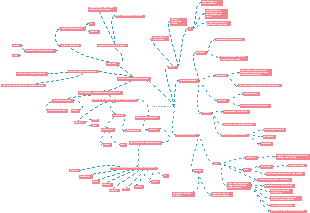
Kesavananda Bharati judgement, 1973The case dealt with a
petition against the
Kerala Government
challenging the
compulsory
acquisition of his land
by the government
under the Kerala Land
Reforms Act 1963, as a
violation of
Fundamental Rights (FRs), as enshrined in - Articles 25, 26 and 31 of the Constitution of India. Outcomes:
o IntroductionofBasicStructureDoctrine. o Corrected judgments of the Golaknath case: o Other judgments: SC upheld the 25th and 29th Amendments except for the parts that curtailed its power of
judicial review and also asserted that the Preamble is a part of the Constitution and hence amendable.
basic structure doctrine holds that certain fundamental features of the Constitution, cannot be amended or abrogated by the Parliament through a constitutional amendment.
no mention of the term “Basic Structure” anywhere in the Constitution of India.
Serves as a check on the power of the Parliament to amend the Constitution.
• Ensures that the Constitution remains a living document that is responsive to changing times while preserving its fundamental values and principles.
• Laid down several principles that have become the bedrock of constitutional law in India such as rule of law, separation of powers, and the independence of the judiciary.
• Ensures that the federal structure of the Constitution is not undermined
• Instrumental in shaping the Indian judiciary's approach to constitutional interpretation
Some Principles that are presently part of the ‘Basic Structure’
• Sovereignty of India
• Essential features of the individual freedoms secured to the Citizens
• Mandate to build a welfare State
• Supremacy of the Constitution
• Republican and democratic form of government
• Secular and federal character of the Constitution
• Separation of powers between the legislature, executive and the
judiciary
• Unity and integrity of the nation
• Power of judicial review
• Harmony and balance between FRs and DPSPs
 Wondershare EdrawMind