MindMap Gallery Early Montage School
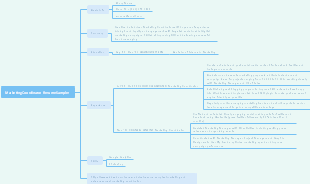
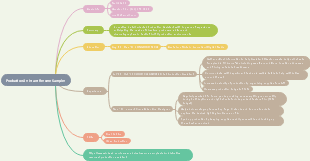
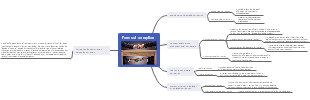
This is a mind map about the early school of montage. The main content includes: The role of montage: Montage is a "grammar and rhetorical rule" for film and television pictures and sounds to realize their narrative functions. It can also be said that film and television can become independent and independent. As the basic means of charming art, montage theory can be elevated to a way of thinking, a theoretical school, and an aesthetic concept.
Edited at 2024-12-11 20:01:14Early Montage School
Overview: In the 1920s, the former Soviet society had the need to create a new film language to adapt to the new social system. Young artists of the montage school drew on the successful experience of Europe and the United States and pushed the practice and research of montage to the level of film aesthetics.
Meaning: The montage school of the former Soviet Union generally refers to the group of artists who were active in the Soviet film scene from the 1920s to the early 1930s and made contributions to the theory and practice of montage. Among them, Kuleshov, Eisenstein, Pudovkin et al.
The role of montage: Montage is a "grammatical and rhetorical rule" for film and television images and sounds to realize their narrative functions. It can also be said to be the basic means for film and television to become independent and charming art. Montage theory can be elevated to a kind of thinking. methods, theoretical schools, and aesthetic concepts.
representative figure
Kulishov
Through experiments, the montage effect of "creative photography" and the narrative function of film montage are explained.
Kuleshov's most famous experiment is the "Kulishov Effect," which revealed the importance of editing to the audience's emotional and narrative understanding.
Shaping of emotional narrative: He emphasized that photography and editing are the core of film art, conveying emotions through the combination of shots and editing, rather than relying solely on actor performance or dialogue.
Construction of space: He is good at creating virtual spaces that do not exist through photography and editing. For example, he shot clips from different time and space and then combined them with montage editing to create a coherent scene that made the audience think they were in the same space.
Combining formal beauty with narrative: Kulishov pays attention to the coordination of composition, light and shadow, and camera movement, and uses visual language to create depth and tension, so that the picture is both aesthetic and serves the narrative.
Eisenstein
He proposed the concepts of "vaudeville montage" and "rational montage" and put these theories into practice in his most famous film, "Battleship Potemkin."
"Vaudeville montage", a group of seemingly unrelated shots are joined together to produce special effects.
"Rational montage" refers to the relationship established between pictures to achieve specific abstract ideas, thereby triggering the audience's rational thinking and judgment.
Juggling: Scene: Massacre on the Odessa Steps Description: Tsarist Russian troops marched neatly from the steps and fired at unarmed civilians. The audience saw detailed scenes of bullets fired, people screaming in terror, trampling to escape, and baby strollers rolling down the steps. Features and functions: The fast editing creates a strong visual impact: the cold and mechanical actions of the soldiers contrast with the panic of the civilians fleeing. Each shot is emotionally explosive (such as a tearful mother, a fallen civilian), stimulating the audience's senses. Intent: Directly arouse the emotions of the audience, making them feel the urgency of the event and the shock of violence. The vaudeville montage here uses sensory stimulation and conflicting visual images to make the audience feel horror, anger and sympathy, forming a strong psychological appeal.
Rational: In an early scene, the sailors discover that their food (pieces of meat) is infested with maggots and that the officers force them to eat it. Shots of rotting pieces of meat alternate with shots of officers giving orders, hinting at the decay of the tsarist system. The camera then shifts to the sailors uniting to reject the carrion, a metaphor for the awakening of rebellion against the tsarist system. Features and functions: The metaphorical nature of the shot: the carrion symbolizes the decay and irreversible decline of the tsarist system. The sailors' actions of solidarity are endowed with profound social significance through editing, foreshadowing the inevitability of revolution. Intent: Through symbolic lenses and logical relationships, the audience is guided to think rationally about the decadence of tsarist rule and the inevitability of revolutionary justice.
Pudovkin
Two treatises, "Film Directors and Film Materials" and "Film Scripts", have far-reaching influence. His representative film works include "Mother".
The story of "Mother" revolves around a famous mother. She was originally the mother of an ordinary working-class family, with a gentle personality and dependence on her husband and son. As sociopolitical unrest intensified and her son became part of revolutionary activities, the mother became increasingly aware of social injustice and oppression, and eventually became a supporter and participant in the revolution.
Rational montage: By editing different social scenes and revolutionary activities, the film shows the mother's transition from dependence on family to recognition and support for social revolution. The comparison of different shots, such as the fierce struggle of revolutionaries and the warm scenes of families, shows the conflict and integration between social change and personal life.
Emotional montage: In some key emotional climax moments, Pudovkin emphasizes the mother's emotional changes through quick camera cuts, close-ups and other techniques. For example, after she discovers her son has been arrested, the camera anxiously zooms in on her facial expression, heightening the audience's emotional investment.