MindMap Gallery Analysis of light and shadow knowledge in design
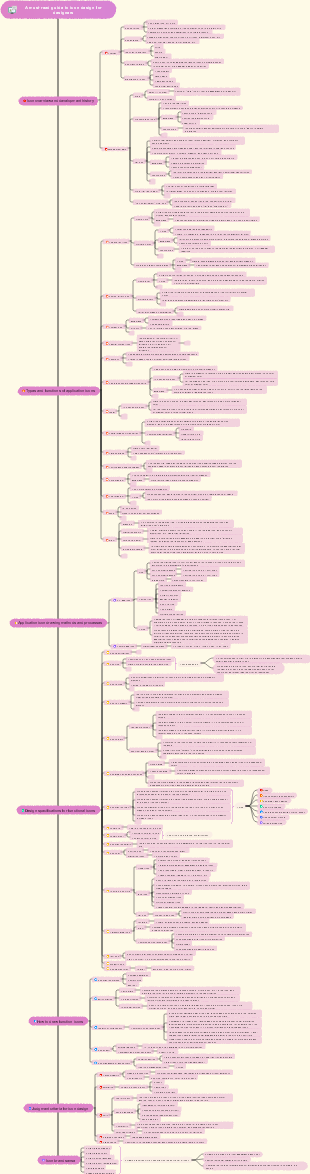
The use of light and shadow is a crucial part of both design and film. This map systematically sorts out and summarizes the knowledge of light and shadow, and supplements it with real case explanations. I hope it will be of some help to you who are studying. Come and join us!
Edited at 2021-01-07 13:58:06Find a streamlined guide created using EdrawMind, showcasing the Lemon 8 registration and login flow chart. This visual tool facilitates an effortless journey for American users to switch from TikTok to Lemon 8, making the transition both intuitive and rapid. Ideal for those looking for a user-centric route to Lemon 8's offerings, our flow chart demystifies the registration procedure and emphasizes crucial steps for a hassle-free login.
これは稲盛和夫に関するマインドマップです。私のこれまでの人生のすべての経験は、ビジネスの明確な目的と意味、強い意志、売上の最大化、業務の最小化、そして運営は強い意志に依存することを主な内容としています。
かんばんボードのデザインはシンプルかつ明確で、計画が一目で明確になります。毎日の進捗状況を簡単に記録し、月末に要約を作成して成長と成果を確認することができます。 実用性が高い:読書、早起き、運動など、さまざまなプランをカバーします。 操作簡単:シンプルなデザイン、便利な記録、いつでも進捗状況を確認できます。 明確な概要: 毎月の概要により、成長を明確に確認できます。 小さい まとめ、今月の振り返り掲示板、今月の習慣掲示板、今月のまとめ掲示板。
Find a streamlined guide created using EdrawMind, showcasing the Lemon 8 registration and login flow chart. This visual tool facilitates an effortless journey for American users to switch from TikTok to Lemon 8, making the transition both intuitive and rapid. Ideal for those looking for a user-centric route to Lemon 8's offerings, our flow chart demystifies the registration procedure and emphasizes crucial steps for a hassle-free login.
これは稲盛和夫に関するマインドマップです。私のこれまでの人生のすべての経験は、ビジネスの明確な目的と意味、強い意志、売上の最大化、業務の最小化、そして運営は強い意志に依存することを主な内容としています。
かんばんボードのデザインはシンプルかつ明確で、計画が一目で明確になります。毎日の進捗状況を簡単に記録し、月末に要約を作成して成長と成果を確認することができます。 実用性が高い:読書、早起き、運動など、さまざまなプランをカバーします。 操作簡単:シンプルなデザイン、便利な記録、いつでも進捗状況を確認できます。 明確な概要: 毎月の概要により、成長を明確に確認できます。 小さい まとめ、今月の振り返り掲示板、今月の習慣掲示板、今月のまとめ掲示板。
Analysis of light and shadow knowledge in design
type of light source
irradiate light
direct light
The light source that directly illuminates is direct light. The light path is two points and one line with clear directions, and the whole is concentrated and focused.
Create a strong contrast between light and dark on the surface of an object
The transition is hard and the contour edges are clear
Direct sunlight, artificial light
Scattered light
A light beam passes through a certain medium (clouds, soft light cloth, etc.) and is dispersed by its surface.
The light path is divergent in multiple directions, scattered overall, and has no clear direction.
The contrast between light and dark formed on the object is weak and the transition is soft.
refracted light
Light that is deflected in the direction of propagation when a beam of light enters from one medium into another medium
Common media include water, glass, etc.
The refraction effect can add a lot of detail to the picture
ambient light
Scattered light
Although the scattered light in the illumination light is soft, it is strong light and can create a contrast between light and dark on the object.
The scattered light in the ambient light is weak light, and its impact is often only seen in places where the main light source cannot reach it (the dark side of the object).
reflected light
When the light beam hits the surface of the medium, some of the light returned from the interface
reflection of mirror
The reflective surface is very smooth
The light and dark of the object itself becomes very weak
You can see the surrounding environment information through the reflective surface
diffuse light
The reflective surface is uneven, and the parallel incident light will be reflected in all directions.
summary
Category 2 often exist at the same time
Generally, illumination light will directly affect the light and dark structure of the object.
Ambient light affects the color balance and reflection of objects
Object light and dark
light and shade
people and products
Different material effects
Diffuse material
specular material
Transparent/translucent material
light and dark principle
Diffuse material
Near bright and far dark
Taking the main light source (irradiation light) of the picture as the center of the circle, the closer the object is to the light source, the brighter it will be, and the farther it is, the darker it will be.
First the whole and then the parts
Determine the overall light and shadow of the object and express the three major sides (bright side, gray side, and dark side)
Add local light and shadow of objects, mainly for objects with block surfaces (cubes)
The bright side and the gray side also follow the principle of "near bright and far dark" respectively.
Detailed depiction
Just add a feathered circular spot to the highlight characterization
Bevel highlights: The edges and corners of block objects usually have smooth transitions, that is, bevels.
Overlapping shadow area: When two objects are adjacent, there will be an "overlapping shadow area" on their adjacent side, and the closer the object is, the darker the shadow will be.
environmental color influence
color balance
Color balance is a color adjustment tool in PS. It is mainly used to adjust the overall color of the picture. It can correct the color cast of the picture and make the colors comfortable and balanced.
You can do the opposite and intentionally bias the picture towards a certain color according to the scene and needs.
When an object is in an environment with a clear color, affected by the diffuse light around the environment, the entire object will be biased towards the environment color.
The color cast on the dark side is more obvious
Reflective
The light of object B which is closer to object A will be reflected to A
The most reflective place is the dark side of an object closest to the ground.
The reflection should not be too bright, let alone the bright surface of the object.
summary
Adjusting "Color Balance" can make objects blend into the colored background
Adding "reflection" can make the object more transparent and have a stronger sense of volume.
Effect of irradiation light
Irradiation direction
Affects the "light and dark ratio" of objects and affects the emotional expression of the picture
Front side light/side light
When the illumination direction of the light source is at an angle of 30°-60° to the line of sight, it is called front side light; when the angle is 90°, it is side light.
The front side light is generally more light and less dark; the side light is half light and dark.
advantage: The ratio of light to dark is relatively moderate It can ensure the brightness of objects and also highlight the shape and texture of objects.
Side backlight/backlight
When the illumination direction of the light source is at an angle of 120°-150° to the line of sight, it is called side backlighting; when the angle is 180°, it is backlighting.
Objects with side backlighting are less bright and more dark; objects with backlighting are almost all dark.
Features: Objects are mainly in dark tones
rim light
Ability to outline characters and separate characters and background
The tone is richly varied, improving the level and details of the picture.
Light source intensity/distance
Affects the contrast between light and dark of an object. The weaker the intensity or the farther the distance, the smaller the contrast between light and dark. The stronger the intensity or the closer the distance, the greater the contrast between light and dark.
Little contrast between light and dark
The contrast between light and dark is reduced, the shadows of characters or products are shallow, the overall structure is clear and soft, and the structure and three-dimensionality are weakened.
Strong contrast between light and dark
Make characters or products have a strong contrast between light and dark, obvious shadows, and highlighted texture, emphasizing the overall structure and three-dimensionality.
If you choose weak contrast between light and dark, in order to prevent the picture from being dark, you need to increase the exposure value of the picture to make it brighter overall.
Light source soft and hard
hard light
Direct light is hard light
The transition between light and dark of the object is more rigid, with obvious shadow outlines, highlighting the surface structure and texture.
At the same intensity, the contrast between hard light and dark is greater than that of soft light
It is often used to express the strength, toughness and strength of a character, and is often used in categories such as men, sports, and fitness.
soft light
Scattered light and diffuse light are soft lights
The transition between light and dark objects is more natural, without obvious shadow outlines, highlighting surface levels and details.
At the same intensity, the contrast between soft light and dark is smaller than that of hard light
It focuses on expressing the softness, freshness and tenderness of the characters, and is often used in categories such as girls and children.
Light source color
When light and color changes and sharp contrast appear in the picture, the picture will have more impact and atmosphere, and it will also give the scene a strong sense of emotion.
summary
When these factors of the illuminating light change, not only the lightness and darkness of the object surface will change, but the projection will also be significantly different.
Object projection
Projection direction
Closely related to the position of the light source
The projection is always on the side opposite the light source
When there are multiple objects, make sure that all shadows are consistent with the direction of the light source.
Projection contour
Basic appearance
The basic shape of an object cast on a plane under the illumination of a light source. There are rules to follow in drawing shapes.
The length of the shadow is related to the incident angle of the light source
degree of divergence
The further the projected outline is from the object, the larger the opening will be.
It is related to the area size of the light source and the distance of the light source.
The larger the area of the light source, the smaller the degree of divergence; the smaller the area, the greater the degree of divergence.
The further away from the object, the smaller the degree of divergence; and the closer the distance, the greater the degree of divergence.
Large degree of divergence
The shadows presented will also be more natural and realistic
Little divergence
Proper use will make the picture full of tension and atmosphere, making people’s eyes brighter, as shown in the picture below
undulating shape
The projection not only needs to change the shape of the two-dimensional plane, but also needs to be adjusted vertically according to the unevenness of the ground.
Projection on the wall
The shadow length of the object is greater than the distance between the walls
Drop shadow
A "step"-like structure appears in the depression on the ground, and the shadow length of the object is greater than the distance between the corners of the step.
ground texture
The surface is uneven, and the projected shape also changes shape according to the undulations of the texture.
Projection color
General principles
Affected by the surrounding diffuse light, most of the time it follows the color of the ground.
It is very rare that the projection appears black
Shadow depth
overall shade
The overall lightness and darkness of the projection, affected by the intensity and distance of the light source
The stronger the light source intensity, the greater the contrast between light and dark in the projection (deep projection). The weaker the intensity of the light source, the smaller the contrast between light and dark in the projection (shallow projection).
The closer the light source is, the greater the light and dark contrast of the projection, and the farther the distance is, the smaller the light and dark contrast of the projection.
relative depth
The light and dark changes of the projection itself
Relative depth changes are affected by the openness of the area where the projection is located
The smaller the openness, the deeper the shadow; the greater the openness, the shallower the shadow.
The area near the bottom of the object is the least open, receives the least ambient light (scattered light/reflected light), and has the deepest projection.
The area farthest from the object is the most open, can receive the most ambient light, and has the shallowest projection.
Relative depth of performance case analysis
Zone 1 is the least open, with almost no light, so the tone is the darkest. This is the darkest area in the projection, called the "vignetting area"
Zone 2 is generally open and receives less light, so the tone is darker and is the "umbral zone"
Zone 3 is the most open and receives the most light, so it has the lightest tone and is the "penumbra zone"
Projection virtual reality
"Virtual" means that the edges of the projection are blurred; "real" means that the edges of the projection are clear.
overall reality
Hard light source
The illumination is direct, and the overall projection is solid, with clear edges and stiff transitions.
Soft light source
The light is soft, the light is scattered, the projection is overall blurry, the edges are blurry, and the transition is soft.
Distant light source
The more realistic the projection
close light source
The more blurry the projection
relatively virtual
Near reality, far virtuality
The closer the projection is to the object, the clearer the edge; the further away from the object, the blurr the edge.
Practical cases
cube
sphere
Milk calcium