MindMap Gallery Qing Dynasty political system
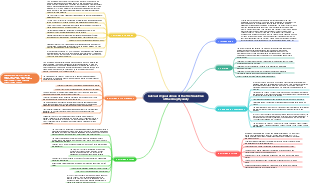
The Chengming system of the Qing Dynasty is a historical conclusion. Today, use a picture to understand the political system of the Qing Dynasty. From the meeting of kings and ministers to discuss government affairs, to the South Study Room, and then to the Military Aircraft Department, the rulers of the Qing Dynasty were constantly looking for a suitable system.
Edited at 2022-09-06 14:59:37Find a streamlined guide created using EdrawMind, showcasing the Lemon 8 registration and login flow chart. This visual tool facilitates an effortless journey for American users to switch from TikTok to Lemon 8, making the transition both intuitive and rapid. Ideal for those looking for a user-centric route to Lemon 8's offerings, our flow chart demystifies the registration procedure and emphasizes crucial steps for a hassle-free login.
これは稲盛和夫に関するマインドマップです。私のこれまでの人生のすべての経験は、ビジネスの明確な目的と意味、強い意志、売上の最大化、業務の最小化、そして運営は強い意志に依存することを主な内容としています。
かんばんボードのデザインはシンプルかつ明確で、計画が一目で明確になります。毎日の進捗状況を簡単に記録し、月末に要約を作成して成長と成果を確認することができます。 実用性が高い:読書、早起き、運動など、さまざまなプランをカバーします。 操作簡単:シンプルなデザイン、便利な記録、いつでも進捗状況を確認できます。 明確な概要: 毎月の概要により、成長を明確に確認できます。 小さい まとめ、今月の振り返り掲示板、今月の習慣掲示板、今月のまとめ掲示板。
Find a streamlined guide created using EdrawMind, showcasing the Lemon 8 registration and login flow chart. This visual tool facilitates an effortless journey for American users to switch from TikTok to Lemon 8, making the transition both intuitive and rapid. Ideal for those looking for a user-centric route to Lemon 8's offerings, our flow chart demystifies the registration procedure and emphasizes crucial steps for a hassle-free login.
これは稲盛和夫に関するマインドマップです。私のこれまでの人生のすべての経験は、ビジネスの明確な目的と意味、強い意志、売上の最大化、業務の最小化、そして運営は強い意志に依存することを主な内容としています。
かんばんボードのデザインはシンプルかつ明確で、計画が一目で明確になります。毎日の進捗状況を簡単に記録し、月末に要約を作成して成長と成果を確認することができます。 実用性が高い:読書、早起き、運動など、さまざまなプランをカバーします。 操作簡単:シンプルなデザイン、便利な記録、いつでも進捗状況を確認できます。 明確な概要: 毎月の概要により、成長を明確に確認できます。 小さい まとめ、今月の振り返り掲示板、今月の習慣掲示板、今月のまとめ掲示板。
Qing Dynasty political system
Qing Dynasty political organization system
After the Qing army entered the customs and gradually unified the Central Plains, the Qing government did not change the country's political system in order to ensure that the country quickly returned to normal operations from the change of dynasties and further exert the ruling efficiency of the ruling class. Instead, it basically followed the policies commonly used by the Ming government. political system.
The decision-making institutions and mechanisms of the Qing Dynasty went through a relatively long period of evolution and became stable during the Yongzheng period. At the end of the Qing Dynasty, the Qing government reformed the government system again according to the internal and external situation of the country.
1. Central Government
emperor
Meeting of kings and ministers to discuss government affairs: a system in which upper-class Manchu nobles participated in handling state affairs in the early Qing Dynasty. Also known as "national meeting". Founded in the second year of Huang Taiji's Chongde reign (1637 AD). It was revoked in the 56th year of Qianlong's reign (1791 AD).
Cabinet: The highest central organization in the early Qing Dynasty, chaired by a bachelor. There are two major bachelor's degree programs (the first rank) and one co-sponsored bachelor's degree (the first rank).
Three halls and three pavilions: Baohe Hall, Wenhua Hall, Wuying Hall, Tiren Pavilion, Wenlan Pavilion, and East Pavilion
Military Aircraft Department: The central authority of the middle and late Qing Dynasty. It was established in the seventh year of Yongzheng (1729) to mobilize troops in the northwest. There are military aircraft ministers, military aircraft Zhang Jing, etc., all of whom are part-time.
six parts
Ministry of Personnel: Responsible for the administration of civil servants. Examination, dismissal and conferment.
Household Department: Responsible for household registration, taxes, salaries, coinage, etc.
Ministry of Rites: Responsible for national ceremonies and educational tributes.
Ministry of War: In charge of military training. weapons and all military orders.
Ministry of Punishment: Responsible for the country’s legal punishments,
Ministry of Industry: In charge of civil construction and water conservancy projects.
The Lifan Yuan: specializes in border ethnic affairs. Its hierarchical organizational form is the same as that of the Six Ministries. The ministers and ministers are Manchus or Mongolians.
The Ministry of Internal Affairs: Responsible for the daily affairs of the palace: it also has jurisdiction over Shengjing (Shengjing Ministry of Internal Affairs), Kouwai and other places such as Huangzhuang and pasture.
Hanlin Academy: In charge of secretarial works. Its main duties are to compile the history of the country, record notes on daily life, lecture on scriptures to the emperor, and draft articles such as registration and edicts.
Metropolitan Procuratorate: the highest supervisory authority of the Jin Kingdom. Its supervisory agencies include Qianwu Dao, Liuke (which was placed under the Metropolitan Procuratorate in 1723), Censorship Office of the Clan, Censorship Office of the Ministry of Internal Affairs, and Wucheng Procuratorate.
Dali Temple: in charge of national criminal names, autumn trials, and court trials (major cases are jointly tried by the Dali Temple, the Ministry of Punishment, and the Metropolitan Procuratorate)
Taiyuan Hospital, Qintianjian, Taichang Temple, Guanglu Temple, Zhanshi Mansion, Taipu Temple, Honglu Temple, Zongren Mansion
2. Local Government
The local administrative system implemented in the Qing Dynasty:
1. Three-level system of province, prefecture (Zhili prefecture, Zhili department), and county (sanzhou, scattered department).
2. Governor-Governor system.
The local administrative system of the Qing Dynasty was inherited from the thirteen chief envoys in the two capitals of the Ming Dynasty, and was transformed into an administrative system managed by eighteen provinces in the Qing Dynasty, plus special agencies for border ethnic groups.
Shuntianfu (Fuyin)
East Road Hall (Tongzhi)
West Road Hall (Tongzhi)
South Road Hall (Tongzhi)
North Road Hall (Tongzhi)
The four-way Tongzhi is in charge of the states and counties
Fengtian Mansion (Fuyin) is under the control of General Shengjing or both
Central to local
Province
The governor is also called "Zhongcheng"
The Prime Minister declared the Chief Envoy, the Chief Envoy-Pan Si
Propose the punishment and press the inspector.
Admiral Xuedao-Xuetai
state level
Mansion
Zhizhou
Tongzhi
pass judgment
Direct state
Zhizhou
Directly Affiliated Office
Promote common knowledge
County level
county
Magistrate
County magistrate
scattered states
Zhizhou
Dispersing hall
Tongzhi
Baojia system
Bao Zheng
Armor length
The department is located in a local administrative unit located in an ethnic minority area or a strategic location. It is divided into Zhili Hall and scattered hall. The Zhili Hall is directly under the Chief Envoy, which is equivalent to the government or Zhili Prefecture. Santing is generally subordinate to the government. Some are also affiliated with Tao.
Eight Governors:
Zhili, Liangjiang, Fujian and Zhejiang, Lianghu, Shaanxi-Gansu, Sichuan, Guangdong, Guangxi, Yunnan and Guizhou.
five general jurisdictions
Shengjing (driving Fengtianfu, present-day Shenyang)
Jilin (based in Jilin)
Heilongjiang (based in Qiqihar);,
Ulyasutai (stationed in present-day Mongolia)
Yili (stationed in Huiyuan City, southeast of today's Huocheng, Xinjiang),
Replenish
There are two ministers: Tibet (stationed in Lhasa) and Xining (stationed in Xining Prefecture, Gansu Province), who are in charge of Tibet and Qinghai areas.
The Lifan Yuan directly governs the Inner Mongolia region and the Six Inner Leagues. Taoxi Second Banner and Chahar.
Other systems: Tusi system: Burke system: Zhasak system, etc.
In 1645 (the second year of Shunzhi), Northern Zhili was changed into Zhisu Province, and Southern Zhili was changed into Jiangnan Province. In 1664 (the third year of Kangxi), Huguang was divided into Hubei and Hunan provinces. In 1667 (the sixth year of Kangxi), Jiangnan Province was officially divided into two provinces, Jiangsu and Anhui. In 1668 (the seventh year of Kangxi), Shaanxi Province was officially divided into two provinces, Shaanxi and Gansu. The so-called "Eighteen Provinces in the Mainland" pattern was formed. They are Zhili, Jiangsu, Anhui and Shanxi, Shandong and Henan, and Shaanxi. Gansu, Zhejiang, Jiangxi, Hubei, Hunan, Sichuan, Fujian, Guangdong, Guangxi, Yunnan, Guizhou
1887 (the thirteenth year of Guangxu). The Taiwan Prefecture of Fujian Province is Taiwan Province. In 1895 (the 21st year of Guangxu), due to the defeat in the Jiaqian War, Taiwan Province was ceded to Japan and was abolished. From then until the end of the Qing Dynasty, the mainland still consisted of eighteen provinces, which were combined with the three eastern provinces and Xinjiang Province into twenty-two provinces.