MindMap Gallery Project risk management
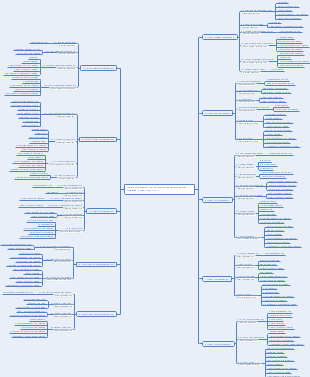
What is project risk management? Risk management includes the formulation of risk management plans, risk identification, qualitative risk analysis, quantitative risk analysis, basic measures to deal with risks, and risk monitoring. let us learn together
Edited at 2020-06-02 08:38:40Avatar 3 centers on the Sully family, showcasing the internal rift caused by the sacrifice of their eldest son, and their alliance with other tribes on Pandora against the external conflict of the Ashbringers, who adhere to the philosophy of fire and are allied with humans. It explores the grand themes of family, faith, and survival.
This article discusses the Easter eggs and homages in Zootopia 2 that you may have discovered. The main content includes: character and archetype Easter eggs, cinematic universe crossover Easter eggs, animal ecology and behavior references, symbol and metaphor Easter eggs, social satire and brand allusions, and emotional storylines and sequel foreshadowing.
[Zootopia Character Relationship Chart] The idealistic rabbit police officer Judy and the cynical fox conman Nick form a charmingly contrasting duo, rising from street hustlers to become Zootopia police officers!
Avatar 3 centers on the Sully family, showcasing the internal rift caused by the sacrifice of their eldest son, and their alliance with other tribes on Pandora against the external conflict of the Ashbringers, who adhere to the philosophy of fire and are allied with humans. It explores the grand themes of family, faith, and survival.
This article discusses the Easter eggs and homages in Zootopia 2 that you may have discovered. The main content includes: character and archetype Easter eggs, cinematic universe crossover Easter eggs, animal ecology and behavior references, symbol and metaphor Easter eggs, social satire and brand allusions, and emotional storylines and sequel foreshadowing.
[Zootopia Character Relationship Chart] The idealistic rabbit police officer Judy and the cynical fox conman Nick form a charmingly contrasting duo, rising from street hustlers to become Zootopia police officers!
Project risk management
1. Risk and risk management
1. The meaning and characteristics of risks
Meaning: First, risk means that a loss has occurred, or the expected goal has not been achieved; rather, whether the loss occurs or not is an uncertain random phenomenon. Probability can be used to indicate the possible degree of occurrence, but the occurrence and the occurrence cannot be determined. Whether to make a deterministic judgment.
feature:
1. Loss or damage
2. It is an uncertainty
3. Focus on the future
4. It exists objectively and does not depend on human will. The measurement of risk does not involve the subjective utility and time preference of the decision-maker.
5. Risk is relative. Although it exists objectively, it depends on the decision-making goals. Different decision-making goals for the same plan will bring different risks.
6. The difference between expectations and consequences is the possibility that actual consequences deviate from expected results.
Influence:
Project risk is an uncertain event or condition that, if it occurs, will have a positive or negative impact on at least one project objective (such as time, cost, scope, or quality goals).
2. The meaning of risk management
The so-called risk management is to identify, deal with and eliminate the sources of risks before they become threats to the project.
It is a series of processes from identification to analysis, evaluation and even response measures to project risks. It includes two aspects: maximizing the impact of positive contribution factors and minimizing the impact of negative factors.
The role and significance of successful project implementation:
1. It can promote the scientific and rational decision-making of project implementation and reduce the risk level of decision-making.
2. It can provide a safe operating environment for the project organization.
3. Ensure the smooth realization of the business objectives of the project organization.
4. Promote the improvement of project organization and operating efficiency.
5. It is conducive to achieving the best combination of resource allocation and improving the efficiency of fund use in the whole society.
6. Conducive to social stability and development.
7. Risk sources, risk formation processes, risk potential destructive mechanisms, risk scope of influence and risk destructive power are complex. Single measures have limitations and cannot be completely effective. Various methods must be adopted comprehensively.
3. Main activities and processes of risk management
process:
1. Risk management planning
Decide how to conduct, plan and implement project risk management activities.
2. Risk identification
Determine which risks will affect the project and document their characteristics in writing.
3. Qualitative risk analysis
Risk probabilities and impacts are assessed and summarized to rank risks for subsequent analysis or activities.
4. Quantitative risk analysis
Conduct a quantitative analysis of the impact of identified risks on the overall project objectives.
5. Prepare response plan
Develop plans and actions to improve opportunities and reduce threats based on project goals.
6. Risk monitoring
Throughout the life cycle, track identified risks, monitor residual risks, identify new risks, implement risk response plans, and evaluate their effectiveness.
2. Develop a risk management plan
content:
1. Methodology.
Determine the methods, tools and data sources that can be used to implement project risk management.
2. Roles and responsibilities.
Determine the leadership, support and composition of the risk management team for each activity in the risk management plan. Assign people to these roles and clarify their responsibilities.
3. Budget.
Allocate resources and estimate the cost of risk management and incorporate this into the project cost baseline.
4. Timing method.
Determine the number and frequency of implementing the risk management process throughout the project life cycle and determine the risk management activities that should be included in the project schedule.
5. Risk classification.
Risk classification provides the basis for ensuring systematic, consistent and effective risk identification and provides a framework for risk management.
The Risk Breakdown Structure (RBS) is one method that provides this framework. Benefits remind risk recognizers that risks arise for a variety of reasons.
6. Definition of risk probability and impact.
7. Probability and influence matrix.
8. Tolerance of modified interests.
9. Report format.
Set out the content and format of the risk register and any other risk reporting required. Define how the results of the risk management process will be recorded, analyzed and communicated.
10. Tracking
Describe how aspects of risk activities will be recorded for use in current projects or to meet future needs or the needs of a learning process. Indicate whether and how the risk management process will be audited.
Other content:
emergency plan
contingency reserve
enter:
corporate environment
organizational process assets
project scope statement
project management plan
Tools and techniques for developing risk management plans
1. Risk checklist method
Risk identification check chart prepared based on previous analog project information and other relevant information.
The advantages are fast and simple, but are certainly limited by project comparability.
2. Risk management form
Recording the basic information for managing risks is a way to follow up to the end.
3. Risk database model
It shows the organizational form of identifying risks and related information, which organizes risk information for people to query, track status, sort and generate reports.
Output:
risk management plan
3. Risk identification
1. The meaning of risk events and risk identification
Risk accidents are the direct or external causes of losses and are the mediators of losses, that is, risks can only lead to losses through the occurrence of risk accidents.
Risk identification is the basis and important component of project risk management. Through risk identification, risk factors that may bring harm and opportunities to the project can be identified, and risk management attention can be focused on specific projects.
Risk identification features:
1. All-inclusiveness
It is not just the work of the project manager or a certain member of the project team, but a task that all members of the project team participate in and complete together.
2. Systematic
Risks during the project life cycle fall within the scope of risk identification.
3. Dynamic
It is not a one-time event, it is carried out at the beginning of the project, in the middle of the phase, before the approval of major scope changes, it runs throughout the entire project process.
4. Information dependence
Risk identification requires a lot of basic work, one of the important tasks is to collect relevant project information.
5. Comprehensive
In addition to being comprehensive in terms of personnel participation, information collection and scope, the risk identification process also requires the comprehensive application of various risk identification tools and techniques.
risk identification participants
Project managers, project team members, risk management team, relevant domain experts outside the project team, customers, end users, project stakeholders and risk management experts.
Risk identification methods
1. Steps of analysis and identification
1. Collect information
2. Risk situation estimation
3. Identify potential risks based on direct or indirect symptoms.
2. Specific methods
1. Delphi technique
2. Brainstorming
3. SWOT analysis method
4. Checklist
5. Graphical technology
cause and effect diagram
Identify the causes of risk.
system or process flow diagram
Show how the various elements of the system are related to each other and the causal transmission mechanism.
Impact diagram.
show causal impact
enter:
Enterprise environmental factors
organizational process assets
project scope statement
risk management plan
project management plan
output;
risk register
1. List of identified risks.
Describe the identified risks, including their root causes, uncertain project assumptions, etc.
2. List of potential countermeasures.
3. Basic reasons for risks.
Basic conditions or events that can lead to identified risks.
4. Risk category update
4. Qualitative risk analysis
Qualitative analysis refers to the assessment of the priority of identified risks by analyzing the probability of risk occurrence, the impact on project objectives and other factors after the risk occurs.
method:
1. Risk probability and impact assessment
Probabilistic analysis involves investigating the likelihood that each specific risk will occur.
Assessment aims to analyze the potential impact of risks on project objectives, both as negative impacts or threats and as positive impacts or opportunities.
2. Probability and influence matrix
Impact on the target The assessment level of the impact caused by the probability of occurrence of each risk on schedule once it occurs.
high risk
medium risk
low risk
3. Risk classification
According to risk source
4. Risk urgency assessment
enter:
1. Organizational process assets
2. Project scope statement
3. Risk management plan
4. Risk register
Output:
1. Relative ranking or priority list of project risks.
2. Risks classified according to categories.
3. Follow the risk list for which response measures have been taken in the near future.
4. List of risks that require further analysis and response.
5. Low-priority risk watch list.
6. Trends in qualitative risk analysis results.
After the analysis is repeated, there may be some obvious trend in the analysis results of a specific risk, making it more urgent or important to take countermeasures or conduct further analysis.
5. Risk quantitative analysis
Definition: It refers to the quantitative analysis of the prioritized risks identified during the qualitative analysis process as having potential significant impact on project requirements, and assigning a numerical value to the risks.
The process uses techniques such as Monte Carlo simulation and decision tree analysis to:
1. Quantify project results and the probability of achieving project results.
2. Evaluate the probability of achieving specific project goals.
3. Identify the risks that require special attention by quantifying the impact of each risk on the overall project risk.
4. Determine realistic cost, schedule, or scope goals that are achievable, taking into account project risks.
5. Determine the best project management decisions when certain conditions or results are uncertain.
Data collection and presentation methods and applications
1. Expected monetary value
Expected monetary value (EMV) is a statistical concept used to calculate the average outcome if a certain situation occurs or does not occur in the future (i.e., analysis under uncertainty).
2. Calculate analysis factors
3. Plan review technology PERT
4. Monte Carlo analysis
Also known as the stochastic simulation method, the basic idea is to first establish a probability model or stochastic model so that its parameters are equal to the solution of the problem, then calculate the statistical characteristics of the required parameters through observation of the model or process, and finally give the solution to the desired problem. As an approximation, the accuracy of the solution can be expressed in terms of the standard error of the estimate.
The basic steps:
1. Establish a simple and easy-to-implement probabilistic statistical model for real-life problems, so that the solution sought is exactly the probability distribution of the established model or one of its numerical characteristics.
2. Establish a sampling method for the random variables in the model, conduct simulation experiments on the computer, extract enough random numbers, and make statistics on related events.
3. Analyze the simulation results, give the solution estimate and its variance estimate, and improve the model if necessary to improve the estimation accuracy and simulation calculation efficiency.
enter:
1. Organizational process assets
2. Project scope statement
3. Risk management plan
4. Risk register
5. Project management plan
Project schedule management plan
Project cost management plan
Output:
1. Probability analysis of the project
A forecast of the potential schedule and cost outcomes of a project, setting out possible completion dates or project duration and costs and their level of confidence.
2. Probability of realization cost and time
6. Basic measures to deal with risks
1. Coping strategies for negative risks or threats
1. Avoid
Changes to the project plan to eliminate risks or conditions, or to protect project objectives from being affected, or to relax requirements for some objectives that are threatened.
Eliminate the origin of risk
2. Transfer
Seek to shift the consequences of the risk to another party, along with the responsibility for response.
3. Reduce
Try to reduce the probability or consequences of adverse risk events to an acceptable threshold.
2. Accept
The reason for this strategy is that it is rarely possible to eliminate all risks from a project. It has been decided not to change the project plan to address a certain risk. The most common way to proactively accept risk is to build contingency reserves to deal with known or potential unknown threats or opportunities. Passive acceptance of risks does not require any action, leaving it to the project team to decide when the risk occurs.
3. Positive risk or opportunity response strategies
1. Develop
Eliminates the uncertainty associated with a specific positive risk by ensuring that the opportunity is certain to materialize.
2. Share
Allocate risk responsibility to the three parties that can best obtain opportunities for the benefit of the project, including establishing risk-sharing partnerships, or forming teams, special purpose project companies, or cooperative joint ventures specifically for the purpose of opportunity management.
3. Improve
Work to change the “size” of opportunities by identifying and maximizing these positive risk drivers by increasing their probability or their positive impact.
7. Risk monitoring
Risk monitoring is to track risks, identify residual risks and emerging risks, modify the risk management plan, ensure the implementation of the risk plan, and evaluate the effect of eliminating risks, so as to ensure that risk management can achieve the expected goals. It is an important part of the risk implementation process. an important task.
Purpose and main content
1. Purpose of risk monitoring
The basic purpose is to control risks in a certain way to ensure that the project completes the project goals reliably and efficiently.
We should focus on the basic issues of project risks, formulate scientific feudal monitoring standards, adopt systematic management methods, establish an effective risk early warning system, make emergency plans, and implement efficient project risk monitoring.
2. Execute risk management plan and risk management process
Includes execution of risk management plans and risk management processes to respond to risk events.
Executing a risk management process means ensuring risk awareness is an ongoing activity performed entirely by the project team throughout the project.
Implementing a separate risk management plan includes monitoring risks according to defined milestones and developing risk decisions and risk mitigation strategies.
3. Take emergency measures
4. Take contingency measures
Contingency measures are used for unplanned risk events.
Techniques and Methods
1. Systematic project monitoring method
Classification
1. Used to monitor risks related to projects and products
2. Used to monitor process-related risks
2. Risk warning system
Risk early warning management refers to adopting a proactive or preventive management method for risks that may arise during the project management process. Once signs of risks are discovered during the monitoring process, corrective actions are taken promptly and early warning signals are issued to maximize the risk. Control the occurrence of adverse consequences.
Therefore, a good start for risk management is to establish an effective monitoring or early warning system to detect plan deviations in a timely manner so as to efficiently implement the project risk management process.
3. Specific methods of risk monitoring
1. Risk reassessment
2. Risk audit
It consists in examining and documenting the effectiveness of the risk response strategy in dealing with identified risks and their root causes, as well as the effectiveness of the risk management process.
3. Variation and trend analysis
Project implementation trends should be reviewed through performance information.
4. Technical performance measurement
Compare technical achievements during project execution with the progress of technical achievements in the project plan.
5. Reserve analysis
Compare the amount of remaining reserves with the amount of remaining risk at any point in the project and determine whether the remaining reserves are sufficient
6. Status review meeting
To sum up, the key to risk monitoring is to cultivate a keen awareness of risks, establish a scientific risk early warning system, and develop from fire-fighting risk monitoring to fire-fighting risk monitoring, from turning the tide to preventing it from happening before it happens.