MindMap Gallery Ancient Literature (History of Foreign Literature)
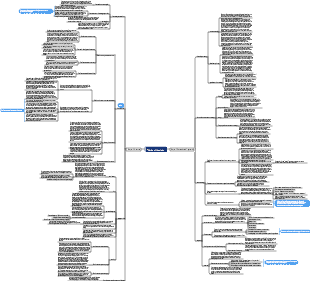
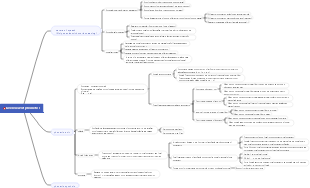
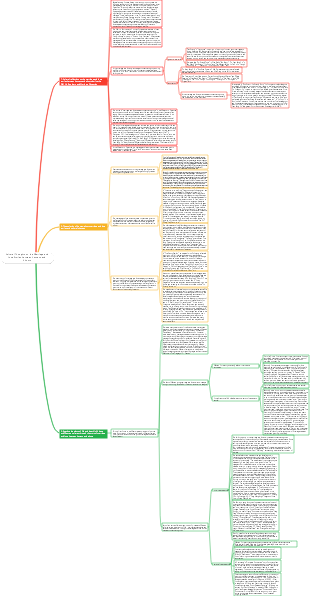
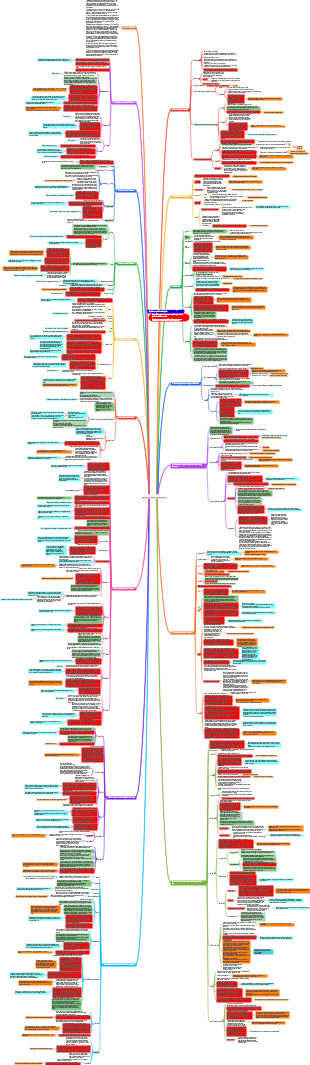
Self-study undergraduate course - History of Foreign Literature. Ancient literature (history of foreign literature) is a colorful and charming field, which covers various literary genres and forms, showing the charm and wisdom of literature in different cultural backgrounds.
Edited at 2024-04-22 14:13:37This article discusses the Easter eggs and homages in Zootopia 2 that you may have discovered. The main content includes: character and archetype Easter eggs, cinematic universe crossover Easter eggs, animal ecology and behavior references, symbol and metaphor Easter eggs, social satire and brand allusions, and emotional storylines and sequel foreshadowing.

[Zootopia Character Relationship Chart] The idealistic rabbit police officer Judy and the cynical fox conman Nick form a charmingly contrasting duo, rising from street hustlers to become Zootopia police officers!
This is a mind map about Deep Analysis of Character Relationships in Zootopia 2, Main content: 1、 Multi-layer network of relationships: interweaving of main lines, branch lines, and hidden interactions, 2、 Motivation for Character Behavior: Active Promoter and Hidden Intendant, 3、 Key points of interaction: logic of conflict, collaboration, and covert support, 4、 Fun Easter eggs: metaphorical details hidden in interactions.
This article discusses the Easter eggs and homages in Zootopia 2 that you may have discovered. The main content includes: character and archetype Easter eggs, cinematic universe crossover Easter eggs, animal ecology and behavior references, symbol and metaphor Easter eggs, social satire and brand allusions, and emotional storylines and sequel foreshadowing.
[Zootopia Character Relationship Chart] The idealistic rabbit police officer Judy and the cynical fox conman Nick form a charmingly contrasting duo, rising from street hustlers to become Zootopia police officers!
This is a mind map about Deep Analysis of Character Relationships in Zootopia 2, Main content: 1、 Multi-layer network of relationships: interweaving of main lines, branch lines, and hidden interactions, 2、 Motivation for Character Behavior: Active Promoter and Hidden Intendant, 3、 Key points of interaction: logic of conflict, collaboration, and covert support, 4、 Fun Easter eggs: metaphorical details hidden in interactions.
ancient literature
Overview
Ancient Western literature includes
Transitional period from clan society to slave society/slavery
ancient greek literature
One of the most perfectly developed literatures of the era of "human childhood"
Social and historical overview
political democracy, freedom of speech
There are many islands in the bay and the navigation industry is developed
The economy is dominated by handicrafts and overseas trade
Characteristics of Ancient Greek Literature
Distinctive humanistic color and concept of destiny
Showing the natural nature of human childhood, the concept of destiny gradually fades away, without the heavy national baggage
Realism and romanticism coexist
Reflecting the society at that time, providing first-hand information, magical imagination, grotesque colors, and strong romanticism
Variety and groundbreaking
Complete categories: myths, epics, tragedies/comedies/fables/stories/educational poems/lyric poems/prose/novels, etc.
The development of ancient Greek literature
The first period (12th century BC - 8th century BC)
(Homeric Age/Heroic Age)
The transitional period from clan society to slave society, the Homeric Age/Heroic Age. Main Achievements: Myth, Epic
Major achievements
myth, epic
writer
Hesiod
Teaching poem "Work and Time"
The earliest extant poem based on real life themes
Narrative Poem "Theogony"
The earliest work that systematically narrates the origin of the universe and the genealogy of gods.
Second period (8th century BC to mid-4th century BC)
Slavery society formed to its heyday
[8th century BC - mid-6th century BC]: The formation of slavery, the era of great migration, lyric poetry and fables
[5th century BC - early 4th century BC]: The heyday of slavery, the classical period, drama, prose, and literary theory
lyric poetry
Double pipe songs (elegies), piano songs (the greatest achievement), satirical poems
Sappho
The most famous female poet in ancient Greece, Plato called her the "tenth goddess of literature and art"
Anacreon
Praising love/praising aristocratic banquets; fresh style/beautiful language/complete form - "Anacreon style"
Pindar
"Ode to Victory" [most famous], "Ode to the Sun", "Ode to Dionysus" and "Ode to the Maiden", famous for their choral piano songs
fable
"Aesop's Fables"
According to legend, it was written by Aesop, a slave in the 6th century BC. It is now circulated as more than 300 chapters compiled by later generations.
It mainly reflects the thoughts and feelings of the working people in the slavery society and is a summary of the working people’s life lessons and struggle experience.
"The Farmer and the Snake" "The Tortoise and the Hare" "The Donkey Carrying Salt" "The Wolf and the Lamb" etc.
Artistic features: personification, contrasting techniques, vivid images, appropriate metaphors, rich folk literature color
Prose [historical work]
Herodotus, "History of the Greco-Persian Wars" ["Father of History"].
Thucydides "History of the Peloponnesian War"
Xenophon's "The Long March"
literary theorist
plato
Opposition to democracy; "Ideology", the ancestor of Western objective idealism; inspiration/ecstasy theory
Representative works: "Dialogue", "Utopia", "Ian" and "Symposium"
Aristotle
Poetics, the master of ancient Greek scholarship, believes that the essence of literature and art is to imitate reality
The third period (late 4th century BC to mid-2nd century BC)
Period of decline of slavery, "Hellenistic period"
new comedy
Comedy in the "Hellenistic" Period of Ancient Greece
It does not talk about politics, but mainly describes love stories and family relationships. Also known as "Comedy of the World"
The most famous writer of new comedies: Menander of Athens, The Hater of the World, The Woman of Samos
Idyll (pastoral)
Theocritus, describing the beautiful rural life and natural scenery of Sicily
ancient roman literature
Social and historical overview
Expanding outward; ancient Roman literature is a bridge connecting ancient Greek literature and modern European literature
The development of Roman literature
first period
Drama flourishes first
Plautus
Most of them are based on Greek story themes ("Twins/Twins", "A Pot of Gold")
Terrence
"Mother-in-law", "Two Brothers"/"Two Brothers"
second period
golden age
Lucretius
He was called by Marx "a bold poet who is full of vitality and dominates the world." The long philosophical poem "On the Nature of Things" is considered a true work of art
Cicero
speech
The reign of Octavian is called the Age of Augustus
Representative writer
Virgil
greatest poet of ancient rome
Works: "Pastoral", "Farming Poems", "Aeneid"
"The Aeneid"
Virgil's masterpiece; it is the beginning of the European literati epic and the first literati epic in the history of world literature.
theme
The work mainly praises the sanctity of the Roman Empire and expresses the hardships of the previous kings in founding the country. Through the plot of traveling in hell, Praising the achievements of Caesar and Octavian and affirming the mission of the Roman Empire to rule the world has a distinct political tendency
art feature
Similar to Homer's epic, imitation of the overall layout and structural arrangement, use of metaphors, repetitions, contrasts, etc.; like national epic, has mature thoughts and a heavier sense of history; it has shaped Aeneas, the national hero and A beautiful image of an ideal king; with an optimistic, brave, serious and sad artistic style, rigorous melody, concise language, and a good understanding of the characters. The delicate description of psychology is a unique achievement in art.
horace
Outstanding satirical poet and lyric poet, literary theorist
"Songbook": a representative work of lyric poetry
"The Art of Poetry"; Essays on Literature. "Poetic Art", written in the form of simplified poems, puts forward the idea of "education through entertainment"
Ovid
The last poet of the Augustan era. Love poem "Kama Sutra", mythological poem "Metamorphoses" [a compilation of ancient Greek and Roman myths and heroic legends]
third period
decline of slavery
Apuleius
The representative work "The Golden Donkey" (also translated as "The Metamorphosis")
early christian literature
Produced by the intersection of Greek literature and Hebrew literature, during the period when the Roman Empire was strong
Works that represent the highest achievements of early Christian literature
"New Testament" (referred to as "New Testament")
"New Testament"
There are four literary genres: "gospel, biography, epistles, and apocalypse"
Gospel
"The Gospel of Matthew" "The Gospel of Mark" "The Gospel of Luke" "The Gospel of John"
historical biography
"The Acts of the Apostles": records the activities in the early days of Christianity and the two main missionaries of Paul and Peter His deeds are known as the "Christian Epic"
letter
book of revelation
"Revelation": Jews were persecuted by Roman rulers, the end of the world, and predicted the coming of a new world
Two major sources
Ancient Greek and Roman literature are the birthplaces of European culture and literature. [Main ancient Western literature]
The early Christian literature that emerged after the contradiction, conflict, complementarity, and fusion of Hebrew culture and Greek culture became another source of European literature.
Greek mythology
Greek mythology content
content
Ancient Greek mythology is the earliest literary style of ancient Greece and the premise of Greek art.
Greek mythology is a collective creation of the ancestors, which was passed down orally for hundreds of years and then recorded in Homer's epics, Hesiod's "Theogony" and ancient Greek poetry, drama, history, philosophy and other works. Come down, future generations will use this These scattered materials were compiled into currently popular Greek myths.
Greek mythology includes two parts: stories of gods and legends of heroes
God’s story includes God’s birth, God’s genealogy, God’s activities, God’s creation, etc.
Heroic legends originated from ancestor worship and are an artistic review of ancient history and the struggle against nature by the ancient Greeks.
god story
Two major gods
Pre-Olympian pantheon
include
Haos, the god of chaos, Gaia, the earth mother, Erebus, the dark god, Uranus, the sky god, Titans (six men and six women), Cronus, Zeus, Rhea, Hera
reflect
Consanguineous family, hybrid marriage; matriarchy (Gaia, Rhea)
Olympus pantheon
include
Apollo (the sun god), the three Moiras (the goddess of destiny), Hera (the queen of heaven), Athena (goddess of wisdom), Zeus (lord of the gods), Aphrodite (god of love), Artemis (god of the moon), Muses (goddess of literature and art)
reflect
Life and family relationships in the late clan society, that is, the patriarchal period
The legend of heroes (combination of humans and gods)
Originating from ancestor worship, it is an artistic review by the ancient Greeks of ancient history and the struggle with nature.
Most of the protagonists are the descendants of humans and gods, and are the embodiment of the collective strength and wisdom of the ancient people.
Including: the story of Hercules establishing 12 great achievements, the story of Jason leading the heroes to obtain the golden fleece, The story of Oedipus, the story of the Trojan War, the story of Odysseus, the story of Theseus
Characteristics of ancient Greek mythology
God is highly personalized, and God and man are of the same form and sex. [Seven emotions and six desires, secularization]
It embodies a strong humanistic color. [Unity of God and man, affirmation and praise of people, optimism, beautiful ideals]
Greek mythology is rich in imagination, vivid in content, and beautiful in story. [Romantic exaggeration and realistic description - creativity]
The influence of ancient Greek mythology
His status and influence are unparalleled, and his ideological and artistic qualities have reached a considerable height.
It is the source of themes for later generations: such as Homer’s epics, ancient Greek tragedies, and European romantic writers
Forming a system for studying myth: myth-archetypal criticism
Its influence on European thought and culture has a long history
Characters, stories and legends have become allusions and are used in daily life and have become a global language.
Homeric
Homeric epic content
Glossary
Homer's epics include "The Iliad" and "The Odyssey", which are the two earliest epics in ancient Greece. It is said that they were written by the poet Homer, so they are called Homer's epics.
The earliest outstanding works of European literature, including The Ilion and The Odyssey
The former takes war as its main content, while the latter writes about drifting on the sea after the war.
Praise the spirit of collectivism and heroism
"Elion"
Storyline: War
Location: Troy. Warring parties: Greek coalition vs Troy
around the core
The Two Wraths of Achilles [Structure]. Cause: "The Golden Apples of Discord"
The poem has 24 volumes and 15,693 lines. It is a heroic epic describing tribal wars. The epic begins with "The Wrath of Achilles" Chapter , the bravest general in the Greek coalition is Achilles, and the whole poem ends with the Trojans holding a funeral for Hector
"The Odyssey"
Storyline: Sea Adventure
Location: Troy City - Returned to China and drifted at sea for 10 years
around the core
Odysseus' Wanderings Revenge. Odysseus represents the "idealized early slave owner"
The poem consists of 24 volumes and 12,110 lines. This is an epic poem that reflects the human struggle against nature and society in the early days from clan society to slave society. The epic is written after the Trojan War, when Odysseus wandered on the sea for 10 years on his way back from Troy. Stories that happened during
Main content of Homer's epic
Rich in content, it broadly depicts the social life and people of Greece during the transition period from clan society to slave society. The spiritual outlook of the ancient Greeks is regarded as an encyclopedia of social life in ancient Greece.
"The Chronicles of Ilion" shows thrilling war scenes, and its basic theme is to praise heroes who fight against alien races. Praise the heroic qualities of the clan leader. It eulogized their heroic spirit of being resourceful and brave, not afraid of sacrifice, and dedicating themselves to the collective, and also condemned their individual consciousness.
"The Odyssey" shows a struggle to fight for and protect private property. Odysseus's fight with the suitors, In fact, it was a struggle to protect private property. The poet affirmed the justice of this struggle, which shows that any means adopted to protect private property were considered legal at that time, reflecting the Greek society based on private property. The relationship of slavery began to take shape. The handling of family relationships also reflects the beginning of monogamy.
Artistic Achievements of Homer's Epic
The basic ideas reflected in the two epics
It expresses man's fighting spirit, enterprising spirit and the decisive factors of man in the process of struggle between nature and God. It also reflects the political, economic, cultural, customs and other aspects of society at that time. Celebrating the new ethics of family life and monogamy formed in the early days of slavery
Structural features
"Elion"
The entire article is organized around the two wraths of Achilles - writing about war
"The Odyssey"
The protagonist's wandering, return home and revenge; main plot: Odysseus drifting on the sea; Subplot: The suitors' entanglement with Penelope on Itaca and Telemachus' search for his father
The main means of shaping characters in epic poems
Put the character in a certain situation, use exaggerated techniques and colorful verses to specifically describe the character's language and actions to express his character. Sometimes the technique of side contrast is also very successful.
image of women
The virtuous Andromache, the loyal Penelope, the infatuated Calypso - lifelike
art value
Compact structure and clever arrangement
For what happened in the two 10 years, only the contents of 51 days and 40 days were shown respectively.
The epic has created many heroic images. For example, the Greek general Achilles is a model of male beauty, who combines youth, beauty, Brave, loving, loyal, ferocious, and kind all in one, his character is three-dimensional and diverse.
The epic poems are smooth, natural and beautiful, and the metaphors are vivid and vivid, using animals and plants to describe people. Later generations praised it as a "Homeric metaphor". There are also fixed stylized adjectives and titles
Homer's epic is the best work in European literature and enjoys a high status in the history of world literature. It is known as "the main legacy of the Greeks from the barbaric era to the civilized era."
Character image
Odysseus
Odysseus is an idealized image of an early slave owner
He is a brave, tenacious and intelligent hero.
He is a complex character. He is not moved by glory and wealth, and the temptation of beautiful women cannot shake his feelings for his wife, but he is also cruel, cunning and selfish.
The epic affirms his struggle to safeguard private property and the new social system of monogamy, embodying The awakening of man's personal consciousness
Achilles
The Greek hero Achilles is the most distinctive image. He is the son of God and man, a paragon of masculine beauty
His character is three-dimensional and diverse, combining bravery, loyalty, irritability, ferocity, kindness, and sincerity.
For the collective benefit of the tribe, he fought bravely and showed a spirit of heroism without complaint.
Maintain personal honor and dignity
Hector
Hector is the general of Troy and the son of the old king.
It is a very touching image of a clan leader. He fought bravely, commanded wisely, and regarded protecting his family and country as his own duty.
Compared with Achilles, Hector is more responsible and collectivist. He is not afraid of the opponent on the battlefield Stronger than yourself, determined to defeat the opponent, and regard dying for the tribe as an honor.
Hector's heroism is more tragic. He knows that he is no match for Achilles and knows that he will lose the battle, but he still fights to the death. This spirit of heroism, which is strong, mighty and attaches great importance to the honor of battle, is exactly the style of Homer's era.
ancient greek drama
Overview of Greek Drama
Ancient Greek drama originated from
Bacchus Sacrifice (Dionysus, the god of wine and wine)
Greek tragedy originated from
"Bacchus" in sacrificial activities
Greek comedy originated from
Carnival songs, dances and folk comedy in honor of the god of wine
ancient greek tragedy
The Three Great Tragic Poets of Ancient Greece
include
Aeschylus
Known as the "Father of Tragedy" in ancient Greece
"The Persians": The only surviving Greek tragedy based on real life
Triptych "Prometheus": composed of "Prometheus Bound", "Prometheus Unleashed", "Prometheus on Fire" consists of three tragedies. ["Oresteia" - the only complete ancient Greek triptych circulating]
Prometheus: A hero with a democratic spirit who resisted tyrants. Marx praised him as "the noblest saint and martyr in the philosophical calendar"
Sophocles
Glossary
Sophocles: The Homer of Dramatic Art. The famous ancient Greek tragedy writer, whose masterpiece "Oedipus the King"
Tragedy mainly expresses the conflict between personal will and destiny, and its creation marks the mature stage of Greek tragedy. "Antigone": Social turmoil during the period of Athens's great prosperity and decline, and people's panic and confusion about the coming changes
"Oedipus the King"
Sophocles' famous tragedy
Based on the story about the royal family of Wubai in Greek mythology
Mainly expresses the conflict between personal will and destiny
Aristotle believed that "Oedipus the King" was a "perfect tragedy" and a model of Greek tragedy.
Oedipus
The protagonist of the ancient Greek tragedy "Oedipus Rex"
Author Sophocles
A tragic hero in conflict between personal will and destiny
Euripides
Glossary
Euripides: Philosopher on the Stage
"Women of Troy": with the theme of opposing the war of aggression. [Based on the Trojan War and opposing unjust wars]
The best work is "Medea"
"Medea"
Taking women's issues as the theme, the best work is "Medea"
Sympathize with women, complain about women's low status and tragic fate, and criticize the inequality between men and women.
Jason: heroic hero → despicable villain; Medea: Passionate Girl → Bold and rebellious woman, rebellious spirit/extreme act of revenge/tragic fate-profound social significance
Features: Adhere to realistic techniques and use "the original appearance in reality" to create characters, which is closer to life; Paying attention to psychological description, revealing the inner world of characters and shaping their images, he is known as the "originator of psychological drama"
The three major tragic poets made important contributions to the development of Greek tragedy
Aeschylus
He increased the number of actors from one to two and strengthened the dialogue part; the performance techniques first adopted scenery and props, and dramatic costumes and actor masks were also initially finalized; the structural formula and artistic features of Greek tragedy have been basically formed in his plays
Sophocles
The use of a third actor in the tragedy strengthens the dramatic dialogue and action, breaking the tradition of the "triptych". His tragedies have sharp conflicts, exquisite and compact structure, simple and bright style, and beautiful chorus lyrics.
Euripides
It pioneered the model of combining psychological clues and plot clues in later dramas. His opening remarks, inner monologue, music and other techniques also had a profound impact on later generations.
The concept of destiny and humanistic thought in ancient Greek drama
The conflict between human will and destiny is a common theme in ancient Greek tragedies, which changes with the development of society
Aeschylus believed deeply in the existence and irresistibility of fate, and regarded fate as a concrete god [a destiny that governs human beings]. Qie/God], but sometimes it also emphasizes human willpower, and the destiny in the writing is on the side of the just cause.
Sophocles also believed in fate, but regarded it as an elusive mysterious force [not a specific divine object]. Although fate is irresistible, sometimes fate is unreasonable and even evil. People should protest/fight against unreasonable fate.
Euripides doubted the existence of fate and no longer believed in fate. He believes that people's destiny depends on their own actions and emphasizes that ordinary people should and can control their own destiny.
Characteristics of ancient Greek tragedy
Materials: Basically based on myths, legends and Homeric epics, with very few based on major contemporary events.
Content: rich in content, serious theme, considerable philosophical depth, although it contains a strong concept of fate or superstition Colorful, but reflecting contemporary social life and struggles
Art form: Tragedy is composed of words and arias. The layout generally includes five parts: opening, entrance song, scenes, arias between scenes, and finale. Some tragedies begin directly with the entrance song.
ancient greek comedy
Aristophanes
father of comedy
Oppose civil war/advocate for peace. Engels called "a poet with strong tendencies"
"The Akane"
Comedy against the war. [Composed of farce scenes, serious thoughts, and wishes for peace]
"bird"
The best works express utopian thoughts [Partridge Country in the Clouds] and reflect the thoughts of freedom and equality. The only comedy work based on mythology and fantasy that has been circulated to this day
Comedy exaggeration
Rich imagination/bizarre plots/comic images describe life, expressing serious themes while laughing and scolding
Menander
Ancient Greek new comedy poet, "The Hater" and "The Woman of Samos", love/family, monologue psychology
Basic characteristics of ancient Greek comedy
Most of them are political satires and social issue dramas, which are based on contemporary real life and focus on major issues of common concern to people. Express opinions on social issues, which are more realistic and politically inclined than ancient Greek tragedies
The plots of ancient Greek comedies are absurd and bizarre, the style is humorous, and the characters, lines and actions are exaggerated and vulgar. The performance is light-hearted but expresses serious themes