 Wondershare EdrawMind
MindMap Gallery Building Engineering Construction Technology
- 102
Building Engineering Construction Technology
3. Construction Engineering Construction Technology First-class Construction Engineer 2024 Practice and management, including construction measurement, earthwork construction, foundation and foundation construction, Main structure engineering construction, etc.
Edited at 2024-04-22 10:00:28
- Analisi controllo gestione portata progetto
Mappa mentale per l’analisi del controllo della gestione del portata di progetto. Tre sezioni principali: 1. WBS Scope Breakdown – scomposizione gerarchica del lavoro con dettaglio dello Scopo del progetto. 2. Scope Boundary / Exclusions – definizione chiara dei confini del progetto e di ciò che è escluso per evitare scope creep. Strumento ideale per project manager e team di controllo per mantenere allineamento e ridurre rischi.
- Miglioramento continuo del sistema di gestione della qualità
Questo template, ideato con EdrawMind, è un modello completo per il miglioramento continuo del sistema di gestione della qualità, con una descrizione di circa 500 parole. È strutturato come un diagramma a lisca di pesce, strumento efficace per analizzare le cause principali dei problemi di qualità e definire le leve di controllo necessarie per risolverli. Il processo è organizzato in quattro fasi chiave: la prima è lo standard e la pianificazione, dove si definiscono gli obiettivi di qualità, i criteri di accettazione, i requisiti di prova e le porte di qualità (Quality Gate). La seconda fase analizza i processi e le porte di controllo, per garantire che ogni passaggio del lavoro segua i standard stabiliti. La terza fase riguarda l’esecuzione QA/QC, con la definizione di metodi di prova e ispezione, nonché regole per la gestione dei difetti e delle non conformità. L’ultima fase è il miglioramento e le azioni correttive e preventive (CAPA), insieme a una catena di audit per monitorare l’efficacia delle misure adottate. In basso, una tabella "Quality Gate" permette di tracciare ogni punto di controllo, con criteri specifici, metodi di prova, proprietario e stato di avanzamento. Grazie alla visualizzazione chiara e intuitiva di EdrawMind, questo strumento aiuta il team a identificare le cause root dei problemi di qualità, implementare azioni efficaci e mantenere un ciclo di miglioramento continuo, garantendo la qualità finale del prodotto o servizio.
- Ottimizzazione del piano di gestione della comunicazione per progetti
Questo template, creato con EdrawMind, è un modello di piano di comunicazione ottimizzato, con una descrizione di circa 500 parole. È uno strumento chiave per evitare incomprensioni tra stakeholder, garantire la trasparenza e mantenere il team allineato agli obiettivi del progetto. Il modello è composto da tre elementi fondamentali e interconnessi: la matrice di comunicazione, la cadenza timeline e le regole di comunicazione/SLA. La matrice di comunicazione è una tabella dettagliata dove per ogni pubblico o stakeholder, si definisce il tipo di informazioni da condividere, lo scopo della comunicazione, il canale da utilizzare (email, riunioni, piattaforme di progetto), la frequenza, il proprietario responsabile, il formato e il percorso di escalazione in caso di problemi. La cadenza timeline è una linea temporale che definisce le scadenze delle comunicazioni chiave, garantendo che le informazioni siano condivise in momento opportuno e non si verifichino ritardi o omissioni. Le regole di comunicazione e gli accordi sul livello di servizio (SLA) definiscono le norme formali della comunicazione, come i tempi di risposta, il tono da adottare e le responsabilità di ciascun membro del team. Grazie alla struttura visuale di EdrawMind, questo template permette di pianificare la comunicazione in modo strategico, trasparente e efficiente, riducendo i rischi di cattiva informazione, migliorando la collaborazione e garantendo che tutti gli stakeholder siano informati e coinvolti nel progetto.
Building Engineering Construction Technology
- Analisi controllo gestione portata progetto
Mappa mentale per l’analisi del controllo della gestione del portata di progetto. Tre sezioni principali: 1. WBS Scope Breakdown – scomposizione gerarchica del lavoro con dettaglio dello Scopo del progetto. 2. Scope Boundary / Exclusions – definizione chiara dei confini del progetto e di ciò che è escluso per evitare scope creep. Strumento ideale per project manager e team di controllo per mantenere allineamento e ridurre rischi.
- Miglioramento continuo del sistema di gestione della qualità
Questo template, ideato con EdrawMind, è un modello completo per il miglioramento continuo del sistema di gestione della qualità, con una descrizione di circa 500 parole. È strutturato come un diagramma a lisca di pesce, strumento efficace per analizzare le cause principali dei problemi di qualità e definire le leve di controllo necessarie per risolverli. Il processo è organizzato in quattro fasi chiave: la prima è lo standard e la pianificazione, dove si definiscono gli obiettivi di qualità, i criteri di accettazione, i requisiti di prova e le porte di qualità (Quality Gate). La seconda fase analizza i processi e le porte di controllo, per garantire che ogni passaggio del lavoro segua i standard stabiliti. La terza fase riguarda l’esecuzione QA/QC, con la definizione di metodi di prova e ispezione, nonché regole per la gestione dei difetti e delle non conformità. L’ultima fase è il miglioramento e le azioni correttive e preventive (CAPA), insieme a una catena di audit per monitorare l’efficacia delle misure adottate. In basso, una tabella "Quality Gate" permette di tracciare ogni punto di controllo, con criteri specifici, metodi di prova, proprietario e stato di avanzamento. Grazie alla visualizzazione chiara e intuitiva di EdrawMind, questo strumento aiuta il team a identificare le cause root dei problemi di qualità, implementare azioni efficaci e mantenere un ciclo di miglioramento continuo, garantendo la qualità finale del prodotto o servizio.
- Ottimizzazione del piano di gestione della comunicazione per progetti
Questo template, creato con EdrawMind, è un modello di piano di comunicazione ottimizzato, con una descrizione di circa 500 parole. È uno strumento chiave per evitare incomprensioni tra stakeholder, garantire la trasparenza e mantenere il team allineato agli obiettivi del progetto. Il modello è composto da tre elementi fondamentali e interconnessi: la matrice di comunicazione, la cadenza timeline e le regole di comunicazione/SLA. La matrice di comunicazione è una tabella dettagliata dove per ogni pubblico o stakeholder, si definisce il tipo di informazioni da condividere, lo scopo della comunicazione, il canale da utilizzare (email, riunioni, piattaforme di progetto), la frequenza, il proprietario responsabile, il formato e il percorso di escalazione in caso di problemi. La cadenza timeline è una linea temporale che definisce le scadenze delle comunicazioni chiave, garantendo che le informazioni siano condivise in momento opportuno e non si verifichino ritardi o omissioni. Le regole di comunicazione e gli accordi sul livello di servizio (SLA) definiscono le norme formali della comunicazione, come i tempi di risposta, il tono da adottare e le responsabilità di ciascun membro del team. Grazie alla struttura visuale di EdrawMind, questo template permette di pianificare la comunicazione in modo strategico, trasparente e efficiente, riducendo i rischi di cattiva informazione, migliorando la collaborazione e garantendo che tutti gli stakeholder siano informati e coinvolti nel progetto.
- Recommended to you
- Outline
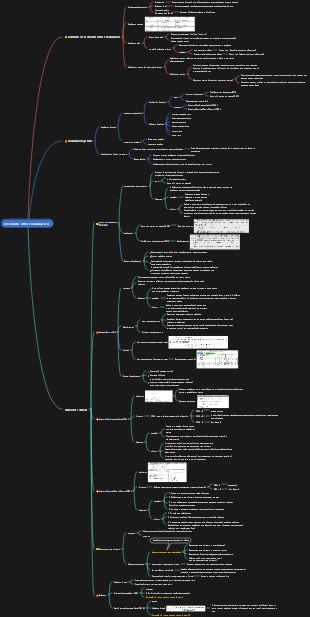
3. Construction technology of construction projects
construction survey
Performance and application of commonly used engineering measuring instruments
Knowledge point 1. What is the composition, function and model of the level? The level mainly consists of three parts: telescope, level and base. It consists of the main parts. The main function of the level is to measure the height difference h between two points. It cannot directly measure the height H of the point to be determined, but it can calculate the height of the measuring point from the known height of the control point. In addition, the sight distance measurement principle is used , it can also measure the horizontal distance D between two points, but the accuracy is not high. Levels include DS05, DS1, DS3, DS10 and other instruments with different precisions. The letter "D" is usually omitted when writing. Type S05 and S1 levels are called precision levels and are used for national first- and second-class leveling measurements and other precision leveling measurements; S3-type levels are called ordinary levels and are used for national third- and fourth-class leveling measurements and general engineering leveling measurements.
Knowledge point 2. The composition, function and model of theodolite? Theodolite consists of three parts: the sighting part, the horizontal dial and the base. The main function of the theodolite is to measure the horizontal angle between two directions. Secondly, it can also measure the vertical angle. Right angle a; with the help of a level ruler and the principle of sight distance measurement, it can also measure the horizontal distance D and height difference h between two points. There are several types of theodolite with different accuracy, such as DJ07, DJ1, DJ2, DJ6, etc. The letter "D" is usually omitted when writing. J07, J1, and J2 types of theodolite are precision theodolite, while J6 type theodolite is an ordinary theodolite. In construction projects, J2 and J6 optical theodolite are commonly used.
Knowledge point three: What are the characteristics and special applicable environments of laser theodolite? (1) The telescope rotates on a vertical (or horizontal) plane, and the emitted laser can be scanned to form a vertical (or horizontal) laser plane. The targets observed on these two planes can be clearly seen by anyone. (2) Generally, theodolite is located in a small site, and when the instrument is placed close to the measurement target, it cannot be observed if the elevation angle is >50°. Laser theodolite mainly relies on emitting laser beams to scan fixed points, which is not affected by the small space. (3) The laser theodolite can emit a vertical laser beam to the zenith, replacing the falling ball hanging wire method to measure verticality. It is not affected by wind, and the measurement is convenient, accurate, reliable and safe. (4) Measurement work can be performed at night or in dark places without being affected by illumination. Because the laser theodolite has the above characteristics, it is particularly suitable for the following constructions: Measurement work: 1) Vertical observation and alignment positioning during the construction of high-rise buildings, chimneys, towers and other tall structures. 2) Precision measurement and verticality control measurement of structural components and equipment installation 3) Axis identification and guidance measurement work in pipeline laying and underground engineering construction such as tunnels and tunnels.
Knowledge point 4. The composition, function and applicable scope of the total station? The total station consists of an electronic theodolite, a photoelectric distance meter and a data recording device. Total stations are generally used for site coordinate measurement and design of large-scale projects and positioning and detailed measurement and design of complex projects.
Knowledge Point 5: An instrument that can directly measure elevation? It can obtain the horizontal distance, height difference, point coordinates and elevation almost at the same instant.
Construction survey methods and requirements
Knowledge point 1. Basic work of measurement? 1. What are the main and basic tasks of measurement? The main work at the construction survey site includes the measurement and design of length, angle, plane position of building detail points, elevation position of building detail points, and slope line measurement, etc. Angle measurement, distance measurement and height difference measurement are the basic tasks of measurement. [B-4, 2012]2. What principles should be followed in plane control measurement? Plane control measurement must follow the organizational implementation principle of "from the whole to the part" to avoid the accumulation of setting out errors. For large and medium-sized construction projects, the site control network should be established first, and then the building construction control network should be established separately. Based on the control points of the plane control network, the main axis of the building should be measured and the details of the building should be carried out based on the main axis. stake out.
Knowledge point 2. What are the methods of construction measurement? (1) What are the methods for measuring the plane position of detailed points in buildings, and what situations are each suitable for? 1. Cartesian coordinate method This method is most convenient when the construction control network is in the form of a square grid or axis. 2. Polar coordinate method The polar coordinate method is suitable for places where the measurement point is close to the control point and is convenient for distance measurement. 3. Angular front intersection method It is suitable for places where it is inconvenient to measure distance or where the measuring and setting points are far away from the control points. (1) What are the methods for measuring the plane position of detailed points in a building? In what situations is each applicable? 4. Distance intersection method No instrumentation is required, but accuracy is lower. 5. The intersection of the direction lines and the normal direction line can be established using a theodolite or a thin string or (2) What is the formula for calculating detailed elevation measurements using a level? HA a=HB b (last plus last=front plus front)
Knowledge point three: Deformation measurement during construction? [B-2]1. Which buildings require deformation monitoring during construction? ① Foundation pits with safety design levels of Level 1 and Level 2. ② Buildings whose foundation design grade is Class A, or whose foundation design grade is Class B on weak foundation. ③ Engineering structures with long span or long and narrow body, important infrastructure projects ⑤Other objects required for monitoring in engineering design or construction [B-4, 2021] 2. Are there any requirements for deformation observation during construction? 1) Settlement observation should be carried out for each object in 1. 2) For foundation pit projects, deformation monitoring of the foundation pit and its supporting structures and deformation monitoring of the surrounding environment should be carried out. The accuracy level of building deformation measurement is divided into five levels: special grade, first grade, second grade, third grade and fourth grade. 3. The location and number of observation points for anti-drop observation, and the number of observations? Main body: the four corners of the building, the four corners of the core tube, large corners, both sides of the intersection of high-rise and low-rise buildings, old and new buildings, and vertical and horizontal walls. Foundation: the four corners and the middle of the base plate or the structural part close to the foundation. (horned) [B-4, 2022X] 3. The location and number of observation points for settlement observation, and the number of observations No less than 4 for special class and first class, and 3 for the remaining (1) Basics: ① Once a day during precipitation ②Once every 2-3 days 10 days after the base plate is finished (2) Main body (foundation completed): {Once every 2-3 floors. 4. What are the location, number and number of observation points for displacement and deformation observation? 1) The deformation observation points on the foundation pit retaining wall or the top of the foundation pit slope should be arranged along the edge of the foundation pit. Points should be set up in the middle of the periphery, at the sun corners, and adjacent to the protected objects; the horizontal spacing between monitoring points should not be greater than 20m, and each side There should be no less than 3 monitoring points; horizontal and vertical monitoring points should share the same point 2) The horizontal displacement monitoring points of the foundation pit retaining wall or the deep soil mass should be arranged in the middle of the retaining wall, at the sun corners and in representative locations. The horizontal spacing between the monitoring points should be 20-60m, and each side should not be less than 1 No less than 4 for special class and first class, and for the remaining 3 subjects: every 2-3 floors will be added. 4. What are the location, number and number of observation points for displacement and deformation observation? Observations will be made once every 1-2 months after capping. 5. Number of oblique observations? Observations will be made once every 1-2 months. [B-4, 2016] 6. What are the situations when it is necessary to implement safety plans immediately and increase the frequency of observations or increase the content of the observation plan during the monitoring process? 1) Abnormal changes in deformation amount or deformation rate: 2) The deformation reaches or exceeds the warning value 3) Collapse or landslide occurs in the surrounding area or excavation surface 4) Abnormalities occur in the building itself, surrounding buildings and the ground surface, 5) Other deformation abnormalities caused by natural disasters such as earthquakes, heavy rains, freezing and thawing.
Earthwork construction
Geotechnical classification and engineering properties
The rock and soil of building foundations can be divided into rock, gravel soil, sand, silt, clay soil and artificial fill soil. Crush Silly Sweet Salt Sticky
Knowledge point 1: How is soil divided according to the difficulty of excavation? According to the difficulty of earth excavation, earth and rock can be divided into eight categories to facilitate the selection of construction methods and determination of labor volume, and to provide a basis for calculating labor, machinery and engineering costs. (Human and financial opportunities) 1) Category I soil: Use a shovel or hoe to excavate loose soil, and a little pedaling. 2) Category II soil: Use shovels and hoes to excavate ordinary soil, and loosen some with picks. 3) Category III soil: Firm soil is mainly excavated with a pickaxe, a small amount of shovel and hoe, and some of it is excavated with a crowbar. 4) Four types of soil: Gravel warriors first dig with picks and crowbars, then shovels, and some use wedges and sledgehammers. 5) Category 5 soil: Soft rocks are excavated with picks, crowbars, and sledgehammers, and blasting methods are used in some cases. 6) Category 6: Sub-hard rock is excavated by blasting, and some use pneumatic picks. 7) Category 7 soil: Solid rocks are excavated by blasting. 8) Category 8 soil: Extra hard rock is excavated by blasting.
Knowledge point 2. Engineering performance of geotechnical materials? (1) Internal friction angle: the friction characteristic caused by the mutual movement and gluing between particles in the soil. It is the shear strength index of soil, and the internal friction angle of soil reflects the friction characteristics of soil. In mechanics, the internal friction angle can be understood as the critical self-stability angle of the block on the inclined surface. Within this angle, the block is stable; if it is greater than this angle, the block will slide. Using this principle, the stability of the slope can be analyzed (2) Soil shear strength: refers to the ultimate strength of soil to resist shear failure, including internal friction and cohesion. (3) Cohesion: It is the mutual attraction between adjacent parts within the same substance. (4) Natural moisture content of soil: The percentage of the ratio of the mass of water contained in the soil to the mass of the solid particles of the soil is called the natural moisture content of the soil. The natural moisture content of soil has an impact on the difficulty of digging, the stability of earthwork slopes, and the compaction of fill soil. (5) The natural density of soil. The mass per unit volume in the natural state is called the natural density of soil. (6) Dry density of soil. The ratio of the mass of solid particles of soil per unit volume to the total volume is called the dry density of soil. The greater the dry density, the firmer the soil. When filling earthwork, the dry density of the soil is often used to control the compaction standard of the soil. (7) The compactness of the soil. (8) Soil loosenability: After natural soil is excavated, its volume increases due to loosening. Although it is vibrated and tamped, it still cannot completely return to its original volume. This property is called the loosenability of soil. It is an important parameter for calculating the productivity of earthmoving machinery, the amount of backfilled earthwork, the number of transportation equipment, the vertical design of site leveling planning, and the balance deployment of earthwork when excavation and filling.
Foundation pit support engineering construction
Knowledge point 1. Deep foundation pit support? 1. Cast-in-place pile support? Usually composed of supporting piles, supports (or soil anchors) and anti-seepage curtains, the pile row can be cantilevered support structure (shallow), anchor-pull support structure, or internal support structure according to the engineering conditions. and internal bracing-anchor-tension hybrid support structure, Applicable conditions: The safety level of the side wall of the foundation pit is Level 1, Level 2, and Level 3; suitable for foundation pits where precipitation or water-stop curtains can be used. 2. Underground diaphragm wall support? The underground continuous wall can be combined with internal supports, combined with the main structure (two walls into one) and other support forms. Good anti-seepage performance. The underground continuous wall should be used as the exterior wall of the main underground structure at the same time, that is, the "two walls combined" Applicable conditions: The safety level of the side wall of the foundation pit is Level 1, Level 2, and Level 3; suitable for deep foundation pits with complex surrounding environmental conditions. 3. Soil nail wall support? (1) The slope ratio of the soil nail wall should not be greater than 1:0.2. (2) The horizontal and vertical spacing of soil nails should be 1~2m; the inclination angle of the soil nails should be 5°~20° (3) Rebar mesh should use HPB300 (4) The strength grade of shotcrete is not less than C20. Applicable conditions: the safety grade of the side wall of the foundation pit is Level 2 or Level 3, Construction must follow the principle requirements of “advanced support, layered and sectioned, layer by layer construction, time-limited closure, and over-excavation is strictly prohibited”. (1) After excavation, the free surface should be closed promptly, and soil nail placement and spray concrete surface layer should be completed within 24 hours. (2) The lower layer of soil can be excavated 48 hours after the upper layer of soil nails has been grouted. 4. Articulating pile retaining wall support? Applicable: The safety level of the side wall of the foundation pit is level one, level two, and level three. 5. Steel cement soil mixing wall? Applicable: The safety level of foundation pit side walls is level one, level two, and level three. 6. Sheet pile retaining wall support? Applicable: The safety level of the side wall of the foundation pit is Level 1, Level 2, and Level 3. 7. Cement-soil gravity retaining wall? Applicable conditions: The safety level of the side wall of the foundation pit is Level 2 or Level 3.
Knowledge point 2. Specific requirements for foundation pit monitoring 1. Before the construction of a foundation pit project (safety level one or two), the construction party should entrust a third party with corresponding qualifications to conduct on-site monitoring of the foundation pit project. Before the foundation pit project is constructed, a foundation pit project monitoring plan should be prepared 2. On-site monitoring of foundation pit projects should adopt a method that combines instrument monitoring and on-site inspections (mainly visual inspection). During the entire construction period of the foundation pit project, dedicated personnel should conduct patrol inspections every day. The patrol inspections should include the main contents: supporting structure, construction status, surrounding environment, monitoring facilities and other patrol inspection contents.
Artificial dewatering and drainage construction
Knowledge point 1. Technical solution for groundwater control? 1. How many meters deep is the excavation and where well points are needed for dewatering? When the excavation depth in soft soil areas is shallow, drainage ditches and water collection wells can be used to collect water while excavation; when the excavation depth of the foundation pit exceeds 3m, well point dewatering is generally required. 2. Groundwater control location? During construction, the groundwater level should be kept 0.5 ~ 1.5m below the bottom of the foundation pit. 3. How to solve the hazards caused by precipitation that threaten the safety of the surrounding environment? When precipitation threatens the safety of the foundation pit and surrounding environment, water interception or recharge methods should be used. 4. How to solve the problem of pressurized water at the bottom of the pit? When the bottom of the foundation pit is a water-proof layer and there is pressurized water at the bottom of the layer, inrush verification at the bottom of the pit should be performed. When necessary, measures such as horizontal bottom sealing to isolate seepage or drilling to reduce pressure can be taken to ensure the stability of the soil at the bottom of the pit and to avoid the occurrence of sudden surges.
What are the characteristics of knowledge points two and three? (1) Light well points The precipitation depth (below the ground) is within 6m. Multi-level light well point dewatering depth (below the ground) is 6-10m. (2) Jet well point Jet well point dewatering equipment is relatively simple and has a large drainage depth. Compared with multi-stage light well point dewatering equipment, it requires less earthwork excavation, is fast in construction, low in cost, and has a dewatering depth (below the ground) of 8 ~ 20m. (3) Vacuum dewatering pipe: Vacuum dewatering tube well equipment is relatively simple, with large drainage capacity and deep precipitation. Lighter well points have greater dewatering effects. The precipitation depth (below the ground) is greater than 6m and is suitable for those with large permeability coefficient (applicable to those with permeability coefficient greater than 1x10⁻⁶cm/s). Precipitation in soil layers containing upper stagnant water or phreatic soil layer). Most of them are suitable for filling soil, clay soil, silt soil and sandy soil. Only dewatering tube wells are not suitable for filling soil, but they are suitable for gravel soil and loess.
Knowledge Point 3: Water Cutoff Curtain? Water interception curtains are commonly used for high-pressure jet grouting, underground diaphragm walls, small toothed steel sheet piles, deep cement-soil mixing piles, etc. For drop-bottomed vertical water-cutting curtains, an impermeable layer should be inserted. When the underground aquifer has strong permeability and large thickness, a combination of suspended vertical water interception and well point dewatering in the pit or a combination of suspended vertical water interception and horizontal bottom sealing can be used
Earthwork and backfill construction
Knowledge point 1: Earth excavation? 1. What are the principles of earth excavation? The sequence and method of earth excavation must be consistent with the design requirements, and follow the principles of trough support, support first and then excavation, excavation in layers (3 meters), and over-excavation is strictly prohibited. 2. What procedures should be followed when excavating adjacent foundation pits? When excavating adjacent foundation pits, the construction procedure should be followed: first deep and then shallow, or simultaneously. 3. In order to prevent over-excavation from disturbing the foundation soil, how to solve it? Excavation of foundation pits should be done to prevent disturbance to the foundation soil as much as possible. When using machinery to excavate foundation pits, in order to avoid damaging the base soil, a layer (20~30cm) should be reserved above the base elevation and combined with manual excavation and trimming. Knowledge point 1: Earth excavation? 4. Precipitation should reduce the water level to ?duration? When excavating soil below the groundwater level, temporary drainage ditches and water collection wells should be dug around the foundation pit, or well-point dewatering should be used to lower the water level to 50cm below the bottom of the pit to facilitate excavation. Dewatering work should continue until the construction of the foundation (including backfill soil under the water table) is completed. 5. The excavation plans for deep foundation pit projects mainly include slope excavation, center island excavation (also called pier excavation), basin excavation and reverse excavation. The former has no supporting structure, and the latter three have all Supporting structure. When the excavation area is large using the reverse method, basin excavation should be used to form the middle structure first.
Knowledge point 2: Earthwork backfilling? 1. What are the requirements for filling in the square? The fill soil should be of the same type as possible. Generally, silt, silty soil with organic matter greater than 5%, and clay soil with moisture content that does not meet the compaction requirements cannot be used. Remove garbage, turf, tree roots, and debris on the base, remove accumulated water, silt, and planting soil from the pits, and fully tamp and compact the base. Backfilling and tamping should be done simultaneously on or around opposite sides. Filling should be started from the lowest point of the site and laid in layers across the entire width from bottom to top. The thickness of each layer of virtual paving should be determined according to the tamping machine 2. What are the fill layer thicknesses and the number of compaction passes per layer for different compaction machines? 3. How dense is the filling? The density of the fill is represented by the compaction coefficient. The compaction factor is the ratio of the controlled (actual) dry soil density of the soil to the maximum dry soil density, which is determined by standard compaction methods at optimal moisture content. The compaction coefficient of the filling soil should be controlled to meet the design requirements.
Foundation pit inspection requirements
Knowledge point 1. Which units must participate in foundation pit inspection? After the foundation pit is excavated to the design elevation of the foundation and cleaned, the construction unit must work with the survey, design, construction, supervision and other units to conduct trench inspection. Only after passing the inspection can the foundation engineering construction be carried out.
Knowledge Point 2: How to check the groove? Observation, drill detection, light power penetration. The trench inspection method usually mainly adopts the observation method, and for the invisible parts of the soil layer below the base, it must first be supplemented by the drill method. 1. Which parts should be observed mainly? P275 When inspecting the trough, focus on observing column bases, wall corners, under load-bearing walls, or other locations with greater stress. When conducting direct observation, a pocket penetrometer can be used as an auxiliary means. [B-2]2.Light power cone probe? (2) The following contents should be checked when inspecting the foundation trench with light power penetration probe: 1) The strength and uniformity of the foundation bearing layer; 2) Shallowly buried soft underlying layer or shallowly buried protruding hard layer, 3) Shallowly buried ancient wells, tombs and cavities that will affect the bearing capacity or stability of the foundation. 3) Light power cone testing should be implemented using mechanical automation, and the inspection depth and spacing should meet the requirements in the table below. After the inspection is completed, the touch probe holes should be filled with sand.
Foundation and foundation construction
Commonly used foundation treatment methods and construction
Knowledge point 1. Commonly used foundation treatment methods? 1. Common foundation treatment methods? There are replacement foundations, compacted and compacted foundations, composite foundations, grouting reinforcements, preloaded foundations, micro-pile reinforcements, etc. 2. What kind of bad foundation is often used to replace and fill the ground? What are the types of foundations classified according to the replacement and filling materials? The replacement foundation is suitable for foundation treatment of shallow weak soil layers or uneven soil layers. According to the different backfill materials, it can be divided into plain soil, lime soil foundation, sand and gravel foundation, fly ash foundation, etc. When constructing the foundation replacement, no joints under the walls between column bases, wall corners and load-bearing windows are allowed. 2. What kind of bad foundation is often used for the foundation replacement method? What are the types of foundations classified according to the replacement material? Sand and Gravel Foundation When fine sand or stone powder is used, not less than 30% of the total weight of gravel or pebbles should be mixed. 3. Divide the foundation? Compromised foundation can be divided into dynamic compaction and dynamic compaction replacement treatment foundation. 4. Composite foundation? (1) Cement fly ash gravel pile composite foundation (2) Gray compacted pile composite foundation (3) Vibrated gravel piles and immersed tube sand and gravel composite foundation (4) Solid cement-soil pile composite foundation (5) Cement-soil mixing pile composite foundation (6) Jet grouting pile composite foundation
Pile foundation construction
Knowledge point 1, prefabricated piles? 1. What is the order of hammering prefabricated piles in dense pile groups? According to the different methods of driving (sinking) piles, the construction methods of reinforced concrete prefabricated piles are divided into hammering pile sinking method and static pile pressing method. The order of hammering pomelo sinking should be carried out in the order of first deep then shallow, first large then small, first long then short, first dense then sparse. For dense piles Group, start from the middle and attack symmetrically around or on both sides: when one side is adjacent to a building, attack from the adjacent building to the other direction. 2. What is the standard for driving prefabricated piles to terminate pile sinking? a. To terminate the pile sinking, the pile end elevation control should be the main method and the penetration control should be supplemented. When the pile end reaches hard, hard plastic clay soil, medium-density or above silt, sand, gravel soil and weathered rock, it can penetrate Penetration control is the main method, and pile end elevation control is supplementary. b. When the penetration reaches the design requirements but the pile end elevation does not, the penetration should be continued for 3 arrays. The penetration of 10 strikes per array should not be greater than the value specified in the design. Confirm
Knowledge point 2: cast-in-place piles 1. What types of slurry wall retaining cast-in-place piles are there? The construction process of bored cast-in-place piles Mud wall protection cast-in-place piles are divided into positive (reverse) circulation drilling rigs, impact drills, rotary drilling rigs, multi-branch cast-in-place pile drivers, bottom-expanding mechanical drilling tools and other pile driver equipment. trench protection, drilling rig in place, hole position correction, hole formation, mud circulation, waste slurry removal, mud cleaning, hole cleaning and slurry replacement, final hole acceptance, steel cage and steel conduit secondary hole cleaning, and underwater concrete pouring (Increase strength) Yichenzhuang The overgrouting height should be at least 1m higher than the pile top elevation. 2. What are the protective walls for manually dug piles? Which ones are more widely used? The wall protection methods can be cast-in-place concrete retaining walls, shotcrete retaining walls, brick masonry retaining walls, caisson retaining walls, steel casing retaining walls, steel or wooden pile tool retaining walls, etc. Widely used cast-in-place concrete segmental retaining wall
Pile driver detection: 1. What indicators are tested before and after construction? It can be divided into test pile testing before construction to provide basis for design, which mainly determines the ultimate bearing capacity of a single pile; After the construction of the pile foundation, the engineering pile inspection provides the basis for acceptance, mainly testing the bearing capacity of the single pile and the integrity of the pile body. 3. What is the testing time for single pile bearing capacity and pile integrity? During the acceptance test, the pile integrity test should be carried out first, and then the bearing capacity test should be carried out. Pile integrity testing should be carried out after excavation of the foundation pit [B-1]5. What are the selection conditions for inspected piles? (1) Piles with questionable construction quality (2) Piles with abnormal local foundation conditions (3) Select some third-category piles during bearing capacity acceptance (4) Piles deemed important by the designer (5) Piles with different construction techniques: (6) It should be selected uniformly and randomly as specified. Everything that the third aunt thinks is important is different.
concrete foundation construction
Knowledge point 1. What are the forms of concrete foundations? What are the conditions and width of the post-casting belt? The main forms of concrete foundations include strip foundations, independent foundations, raft foundations and box foundations. When the length of the raft foundation and box foundation of a high-rise building exceeds 40m, it is advisable to set up a through post-pouring construction joint (post-pouring belt) with a post-pouring width of 280cm. At the post-pouring construction joint, the steel bars must run through
1. What are the requirements for steel mesh binding (which process is similar to it)? The binding of steel mesh. The intersection points of the two surrounding rows of steel bars should be firmly tied at each point, and the intersection points in the middle can be staggered and firmly tied, but it must be ensured that the stressed steel bars do not shift. For steel mesh with two-way main bars, all intersection points of the steel bars must be firmly tied. When tying, attention should be paid to the fact that the steel wire buckles at the ligation points should be in a figure-eight shape to prevent the mesh from skewing and deforming. Knowledge point 2: Steel sub-projects 2. Double-layer steel mesh is used to ensure the position of steel bars? When a double-layer steel mesh is used as the foundation floor, steel support feet should be provided under the upper layer of steel mesh to ensure the correct position of the steel bars. 3. Problem with the direction of the steel bar hook? The hooks of the steel bars should be facing upwards, not to one side, but the hooks of the upper steel bars of the double-layer steel mesh should be facing downwards.
Concrete sub-project 1. What are the cushion strength requirements? The cushion concrete should be poured immediately after the foundation trench inspection, and subsequent construction can only be carried out after the concrete strength reaches 70%. 2. What are the requirements for stepped foundation pouring? Step-type foundation construction can be completed in one step according to the steps. 3. Strip foundation segmentation and layering dimensions? According to the depth of the foundation, concrete should be poured in sections and layers (300~500mm) continuously, generally without leaving construction joints. The layers of each section should be connected to each other, and the pouring length between each section should be controlled at 2~3m, so that the construction can be advanced step by step in a step-by-step manner.
(1) The construction of large-volume concrete should comply with the following regulations 1) The design strength grade of large-volume concrete should be C25-C50, and the 60d or 90d strength of concrete can be used as the basis for concrete mix design, concrete strength assessment and project acceptance 2) Configure structural steel bars to control temperature and shrinkage 3) When large volumes of concrete are placed on rock foundations, it is advisable to set up a sliding layer on the concrete cushion: 4) Technical measures should be taken to reduce the external constraints of large-volume concrete in the design: 5) In the design, relevant testing requirements for temperature field and strain should be proposed based on the engineering conditions. Mass concrete construction organization? Large-volume concrete should use general-purpose Portland cement with low hydration heat The slump of the concrete mixture should not be greater than 180mm The amount of mixing water should not be greater than 170kg/m3 Concrete mixer transport trucks should be used to transport large-volume concrete. The transport vehicles should have sun protection, rain protection and heat preservation measures according to the actual conditions of the construction site. The large-volume concrete supply capacity should meet the needs of continuous concrete construction and should not be less than 1.2 times the amount required per unit time. 2. What are the requirements for mass concrete construction? (1) The construction of large-volume concrete should adopt overall layered or push-type continuous pouring construction. (2) When using the jump method, the maximum one-way size of the jump block should not be greater than 40m and the construction time of the jump interval should not be less than 7 days. (3) The temperature of concrete entering the mold should be controlled at 5-30 degrees Celsius (4) Large-volume concrete pouring should comply with the following requirements 1) The thickness of the concrete pouring layer should be 300-500mm for overall continuous pouring. 2) For overall layered continuous pouring or push-type continuous pouring, the interval time should be shortened, and the second layer of concrete should be poured before the initial setting of the first layer of concrete. When the interval time between layers exceeds the initial setting time of concrete, the layers should be treated as construction joints 3) Concrete should be pumped and vibrated twice. (5) The large-volume concrete pouring surface should be troweled multiple times in a timely manner (6) Large-volume concrete should be maintained with thermal insulation and moisturizing: the duration of thermal insulation and curing should not be less than 14 days. (7) When there is sudden heavy rain or snow during the large-volume concrete pouring process, construction joints should be left in reasonable parts of the structure in time, concrete pouring should be stopped, and the poured unhardened concrete should be covered immediately. Rainwater is strictly prohibited from directly washing the newly poured concrete. Concrete (1) Temperature control indicators for large-volume concrete construction should comply with the following regulations The temperature rise of the concrete pouring body based on the mold entry temperature should not be greater than 50°C. The temperature difference between the inside and outside of the concrete pouring body should not be greater than 25°C The cooling rate of the concrete pouring body should not be greater than 2.0°C/d; When removing the insulation covering, the temperature difference between the concrete surface and the atmosphere shall not be greater than 20°C. (2) The layout of monitoring points inside the mass concrete pouring body should reflect the maximum temperature rise, temperature difference between inside and outside, cooling rate and ambient temperature. The following layout methods can be used The half axis of the symmetry axis of the plan view of the concrete pouring body can be selected in the test area. The monitoring points in the test area should be arranged in layers according to the plane. On each test axis, there should be no less than 4 monitoring points. 2) The layout of monitoring points within the mass concrete pouring body should reflect the maximum temperature rise, the temperature difference between the inside and outside, the cooling rate and the ambient temperature. The following layout methods can be used Along the thickness direction of the concrete pouring body, at least surface, bottom and core temperature measuring points should be arranged, and the distance between measuring points should not be greater than 500mm. The surface temperature of the concrete pouring body should be the temperature 50mm within the surface of the concrete pouring body; The temperature of the bottom of the concrete pouring body should be the temperature 50mm above the bottom of the concrete pouring body. 3) The temperature difference between the inside and outside of the large-volume concrete pouring body, the cooling rate and the ambient temperature should be tested no less than 4 times a day and night after the concrete is poured, and the mold temperature measurement should be no less than 2 times per shift.
Main structure engineering construction
Template sub-project
1. What are the common template features and their applicable situations? (1) Plywood formwork: The advantages are light weight, large board width, flat surface, convenient and simple construction and installation (flat, large and light) (2) Combined steel formwork: The advantage is that it is light, flexible, easy to disassemble and assemble, has strong versatility, and has a high turnover rate. The disadvantage is that there are many joints and poor tightness, resulting in poor appearance quality after the concrete is formed. (Zhou Tong Qingpian) (3) Large formwork: It consists of a board structure, a support system operating platform and accessories. It is a tool formwork for the construction of cast-in-place walls and wall structures. Its characteristic is that the bay, depth and floor height of the building are used as the large formwork size. Since the panels are composed of steel plates, the advantages are that the formwork has good integrity, strong earthquake resistance and no seams. The disadvantage is that the formwork is heavy and requires heavy lifting for mobile installation. Heavy machinery lifting. The shape, size and position of each part of the component should be ensured to be accurate (1) Practicality: It has a simple structure, easy installation and disassembly, smooth surface, tight joints and no grout leakage, etc. (2) Safety: It should meet the requirements of bearing capacity and stiffness, and ensure the overall stability of the building to ensure no deformation, damage, or collapse during construction. (3) Economy: On the premise of ensuring the quality, safety and construction period of the project, try to reduce one-time investment, increase the turnover of formwork, and reduce the labor required for support and disassembly. The joints of the formwork should not leak grout; before pouring concrete, the wooden formwork should be watered and moistened, but there should be no accumulation of water in the formwork, debris should be cleaned up, and an isolation agent should be applied on the surface in contact with the concrete. 4. Requirements for the installation of formwork for beam-column joints? Requirements for arching? Requirements for formwork and supports for post-cast strips? (1) For cast-in-situ reinforced concrete beams and slabs with a span of 24m, the formwork should be arched according to the design requirements; when there are no specific requirements in the design, the arching height should be 1/1000~3/1000 of the span. (2) The installation of formwork should be carried out in conjunction with the installation of steel bars. The formwork of Liangcun nodes should be installed after the steel bars are installed. (3) The formwork and brackets of the post-casting tape should be set up independently 5. Formwork removal strength-beam slab concrete strength-same-cured test block Look at the overhang (100%) first, then look at the other 75% (100%), and the small board 50% 6. What are the requirements for dismantling non-load-bearing formwork? What is the order of dismantling the formwork? Non-load-bearing side formwork, including side formwork for beams, columns, and walls, can be removed as long as the strength of the concrete ensures that its surface and edges will not be damaged by formwork removal. The order of dismantling the formwork: generally follow the order of dismantling the rear support first, dismantling the support first and then dismantling the non-load-bearing part first and then the load-bearing part. Quick arrival system template requirements?---Board The distance between the bracket columns of the quick-release bracket system should be less than or equal to 2m. When the formwork is removed, the vertical poles should be retained and supported to support the floor. The recommended component span of the concrete strength when the formwork is removed is 2m and is determined according to the requirements in the table.
Reinforcement sub-projects
1. Calculate the cutting length of various steel bars? Straight steel bars, bent steel bars, straight steel bar cutting length = member length - protective layer thickness, bending added length The cutting length of the bent steel bar = the length of the straight section, the length of the inclined section - the bending adjustment value, the additional length of the hook Bar cutting length = stirrup circumference bar adjustment value If the above-mentioned steel bars need to be overlapped, the overlap length of the steel bars must be increased. 2. Combined tendons? The steel bars in the components can be configured in parallel. For steel bars with a diameter of ≤28mm and below, the number of parallel bars should not exceed 3. For steel bars with a diameter of 32mm, the number of parallel bars should be 2. For steel bars with a diameter of 36mm and above, the number of parallel bars should not be used. The parallel bars should be calculated as a single equivalent steel bar, and the equivalent diameter of the equivalent steel bar should be converted and determined based on the principle of equal cross-sectional areas. 3. Principles for steel bar replacement? What is the process for replacement? (1) Substitution principle: When the component reinforcement is controlled by strength during equal-strength substitution or equal-area substitution, the replacement is carried out according to the principle that the strength of the steel bars before and after replacement is equal; When components are reinforced according to the minimum reinforcement ratio, or replacement between steel bars of the same steel number is based on the principle that the areas before and after replacement of steel bars are equal 3. Principles of steel bar replacement? What is the process of replacement? (2) When replacing steel bars, the consent of the design unit should be obtained and corresponding procedures should be completed. In addition to the component bearing capacity, total elongation under maximum force, crack width verification and seismic regulations required by the design, steel bar replacement should also meet the minimum reinforcement ratio, steel bar spacing, protective layer thickness, steel bar anchorage length, and joint area. Design of strength requirements such as percentage and finger joint length: seismic joints are large enough 4.How to connect steel bars? There are three ways to connect steel bars: welding, mechanical connection and binding connection. The first two require mechanical experiments 5. How should steel bars for direct dynamic loads be connected? The longitudinal stress-bearing steel bars of axial tension and small eccentric tension members and the longitudinal stress steel bars of structures directly bearing dynamic loads shall not use lashing and lap joints. For components that directly bear dynamic loads, welded joints should not be used for longitudinal steel bars. 6.What are the methods of mechanical connection of steel bars? What diameter of steel bars should not be used for lashing connection? Mechanical connection of steel bars: There are methods such as steel bar sleeve extrusion connection, steel bar tapered thread sleeve connection and steel bar straight thread sleeve connection (including steel bar thick straight thread sleeve connection, steel bar rib stripping and rolling straight thread sleeve connection). At present, the most common and widely used method is steel bar rib stripping and rolling straight thread sleeve connection. When the diameter of the tension steel bar is >25mm and the diameter of the compression steel bar is >28mm, it is not appropriate to use lashing and lap joints. 7.What does steel bar processing include? Steel bar processing includes straightening, rust removal, blanking and cutting, lengthening, bending and forming, etc. Steel bar cutting can be carried out using a steel bar cutting machine or a manual hydraulic cutter. The cutting edge of the steel bar shall not be horseshoe-shaped or raised. Special equipment can be used to bend steel bars into place at one time, and repeated bending is not allowed. Steel bar processing includes straightening, rust removal, blanking, cutting, lengthening, bending and forming, etc. 8.What are the cold drawing rates of plain round and ribbed steel bars? Steel bars should be straightened using mechanical equipment without extension function, or cold drawn straightening can be used. When cold drawing is used for straightening, the cold drawing rate of HPB300 smooth round steel bars should be less than or equal to 4%; The cold drawing rate of HRB400.HRB500 ribbed steel bars should be less than or equal to 1%. 9. How to remove rust from steel bars (two methods)? Removing rust from steel bars: First, remove rust during cold drawing or straightening of steel bars; Second, mechanical rust removal machine, sandblasting rust removal, pickling rust removal and manual rust removal can be used. 10. What should be paid attention to when tying column steel bars (sequence, first joint position "column wraps beam")? (1) The binding of column steel bars should be carried out before the column formwork is installed. (2) Steel bars such as frame beams, corbels and column caps should be placed inside the longitudinal steel bars of the column. 11. What should you pay attention to when tying wall steel bars? (1) The binding of wall steel bars should also be carried out before the formwork is installed. (2) When using double-layer steel mesh, braces or lashing frames should be installed between the two layers of steel bars to fix the spacing between the steel bars. 12. What should be paid attention to when tying steel bars on beams and slabs? The location of the upper reinforcement joints of continuous beams and slabs should be set within 1/3 of the span, and the location of the lower reinforcement joints should be set within 1/3 of the span of the beam end. (upper middle lower end) 12. What should be paid attention to when tying steel bars on beams and slabs? When the height of the beam is small, the steel bars of the beam are tied overhead on the top of the beam formwork and then placed in place; When the height of the beam is large (greater than or equal to 1.0m), the steel bars of the beam should be tied on the bottom formwork of the beam, and the formwork on both sides or one side of the formwork should be installed later. The steel bars of the slab are tied after the formwork is installed. When the longitudinal stress-bearing steel bars of the beam are arranged in double layers, short steel bars with a diameter of greater than or equal to 25mm should be placed between the two rows of steel bars. Pay attention to the negative reinforcement on the upper part of the board to prevent it from being stepped on; especially for cantilever boards such as awnings, overhangs, and balconies, the position of the negative reinforcement must be strictly controlled to avoid breakage after the formwork is removed. At the intersection of the plate, secondary beam and main beam, the plate steel bars are on top, the secondary beam steel bars are in the middle, and the main beam steel bars are on the bottom; when there are ring beams or pad beams, the main beam steel bars are on the top.
Concrete structure engineering construction
1. What requirements should the concrete mix ratio meet? The concrete mix proportion design should meet the design requirements for concrete preparation strength and other mechanical properties. Mixture performance, long-term performance and durability performance. The mix ratio of ordinary concrete should be calculated by a qualified laboratory based on the performance of the raw materials and the technical requirements for the concrete, and determined after trial mixing and adjustment. The concrete mix proportion should be the weight ratio Endurance companion 2. How to deal with delamination and segregation during concrete transportation? Concrete should not be stratified or segregated during transportation; otherwise, it should be stirred twice before pouring. The transportation time and number of transfers of concrete should be minimized to ensure that the concrete is transported to the site and poured before initial setting. 3. What is the construction sequence for pumping concrete? The concrete pump or pump truck should be as close as possible to the pouring site. Concrete is poured backwards from far to near. 4. How to choose the inner diameter of the pump tube for coarse aggregates with different particle sizes? Concrete should be transported by pumping. When the maximum particle size of concrete coarse aggregate is ≤25mm, a delivery pump pipe with an inner diameter of not less than 125mm can be used; When the maximum particle size of concrete coarse aggregate is ≤40mm, a delivery pump pipe with an inner diameter of ≤150mm can be used. 5. Before pouring vertically compacted soil, how to prevent delamination and segregation? Before pouring vertical structural concrete, the bottom should be filled with cement mortar no more than 30mm thick with the same composition as the mortar in the compacted soil; the concrete should not segregate during the pouring process. When pouring concrete vertically, its free falling height should meet the following requirements. If it cannot be met, string tubes, chute pipes, chutes and other devices should be added (liu liu string) 1) When the diameter of coarse aggregate is >25mm, it should be ≤3m; 2) When the diameter of coarse aggregate is less than or equal to 25mm, it should be ≤6m. 7. How should concrete be vibrated? Concrete should be poured in layers and vibrated in layers. 8. When pouring beams and slabs that are integrated with the vertical structure, what should you pay attention to after the vertical components are poured? When pouring beams and slabs that are integrated with columns and walls, stop pouring for 1 to 1.5 hours after the columns and walls are poured before continuing. 9. What is the concrete pouring sequence and other requirements for simultaneous pouring of beams and slabs? Beams and slabs should be poured with concrete at the same time. Floor slabs with primary and secondary beams should be poured along the direction of the secondary beams. One-way slabs should be poured along the long side of the slab. Structures such as arches and beams with a height > 1m can be cast separately. Pouring concrete. 10. What are the requirements during concrete transportation and pouring? It is strictly forbidden to add water during the transportation, transportation and pouring of concrete. The concrete scattered during the transportation, transportation and pouring of concrete is strictly prohibited from being used directly for structural pouring. 11. What are the time and location requirements for leaving construction joints? Concrete pouring should be done continuously. When intermittent work is necessary, the intermittent time should be shortened as much as possible, and the concrete of the sub-layer should be poured before the initial setting of the concrete of the previous layer. Otherwise, the construction joints should be left in place. 11. What are the time and location requirements for leaving construction joints? (1) The location of the construction joints should be determined before concrete pouring, and should be left in a location where the structure is subject to less shear stress and is convenient for construction. The placement of construction joints should comply with the following requirements: 1) Columns: should be left on the top surface of the foundation and floor structure, or can be left on the bottom surface of the floor structure; when there are beams under the slab, they can be left 0~20mm below the beams. 11. What are the time and location requirements for leaving construction joints? 2) One-way board: left at any position parallel to the short side of the board; 3) Floor slabs with primary and secondary beams should be placed within 1/3 of the span of the secondary beams; 4) Wall: left within 1/3 of the mid-span of the lintel at the door opening, or at the intersection of vertical and horizontal walls; 5) The construction joints of stair sections should be set within 1/3 of the end of the staircase plate. 6) Construction joints left in special structural parts should be confirmed by the design unit 12. What regulations should be followed when continuing to pour concrete at construction joints? 1. The compressive strength of poured concrete should not be less than 1.2N/mm2 2. The hardened concrete surface should be roughened, the cement film, loose stones and weak concrete layer should be removed, fully moistened and rinsed, and no water should accumulate; 3. When pouring concrete at horizontal construction joints, it is advisable to first lay a layer of 30mm thick cement mortar with the same composition as the concrete. 13.What are the requirements for post-cast tape filling? For the post-filling pouring zone, micro-expansion concrete can be used, the strength level is one level higher than that of the original structure, and it must be kept moist for at least 14 days. 14. What are the categories of concrete maintenance? Why is it generally maintained at construction sites? Moisturizing and curing should be carried out in time after concrete is poured. Moisturizing and curing can be done by covering it with wine, spraying curing agent, etc. The maintenance method should be determined based on factors such as site conditions, ambient temperature and humidity, component characteristics, technical requirements, construction operations, etc. 15. What are the differences in the curing time of concrete mixed with different cements (main body only) For concrete mixed with Portland cement, ordinary Portland cement or slag Portland cement, ≥7d; for the rest, 14d The maintenance time for the walls and columns at the bottom of the basement and the walls and columns at the first floor of the superstructure should be appropriately increased. Concrete curing water should meet the requirements
Prestressed Concrete 1. Classification of prestressed concrete? What kind of stress is prestressed? Pre-tensioning method and post-tensioning method (according to the bonding state of the prestressed tendons, it can be divided into: bonded prestressed concrete and unbonded prestressed concrete) Prestress is transmitted to the concrete by the bonding force between the prestressed tendons and the concrete and causes it to generate prestressing stress. Grow first and then lower, then stretch and then lower 2. What is the tensioning sequence of the pre-tensioning method? What is the strength of concrete during tensioning? The tensioning sequence should be from bottom to top, from the middle to the edge (symmetrical). When the prestressed tendons are tensioned, the concrete strength should meet the design requirements. When there is no design requirement, it should not be less than 75% of the designed standard value of the concrete cube compressive strength. %. 3. The tensioning sequence should be carried out layer by layer, first up and then down. When tensioning the floor slab first, then the secondary beams and then the main beam prestressed tendons, the strength of the concrete must meet the design requirements. The compressive strength of concrete cubes cured under the same conditions is not the same. Less than 75% of the designed concrete cube compressive strength standard value. The ages of post-tensioned prestressed beams and slabs and cast-in-place structural concrete should not be less than 7 days and 5 days respectively. No need to reserve holes and grouting without bonding
Masonry structural engineering construction
1. Does the masonry mortar mix ratio meet the requirements? The mix ratio of masonry mortar should be designed, calculated and tested according to the actual situation on site, and should meet the requirements of consistency, water retention rate and compressive strength at the same time. Bao Qiang thick 1. How should masonry be laid when the base elevations are different? When the base elevations are different, they should be built from the lower level and from high to low. When there is no requirement in the design, the overlap length should not be less than the height difference of the foundation base. 2.Do bricks need to be watered in advance? The production age of concrete bricks and autoclaved bricks should reach 28 days before they can be used for masonry construction. When building sintered ordinary bricks, sintered porous bricks, autoclaved lime sand bricks, and autoclaved fly ash bricks, the bricks should be moderately moistened 12 days in advance. Dry bricks or bricks that are saturated with water must not be used for masonry. 3. What are the masonry methods? Trinity? The masonry methods include the "three-one" masonry method, the squeezing method (paving method), and the scraping method. The "three-one" masonry method is a shovelful of ash and a mouthful of ash. It is usually advisable to use the brick-by-brick, one-pressure masonry method. 4. What are the requirements for the top brick of the second and fourth walls? What are the requirements for the width of the mortar joints in the brick wall? What are the requirements for the fullness of the horizontal mortar? (Distinguish between the diagonal bricks on the filled walls) The uppermost brick of each layer of the 240mm thick load-bearing wall, the horizontal surface of the brick wall steps and the overhanging layer should be laid in whole bricks. The width of mortar joints in brick walls should be 10mm, and should not be less than 8mm, nor greater than 12mm. 5. Which parts of the wall are not allowed to have scaffolding eyes? 1) 120mm thick wall, plain wall, stone wall, independent column and wall-attached column 2) Within the triangle range of 60° between the lintel and the lintel and the height range of 1/2 of the clear span of the lintel, 3) Wall between windows with width <1m; 4) The stone masonry on both sides of the door and window opening is 300mm, and other masonry is within 200mm. The stone masonry at the corner is 600mm, and other masonry is within 450mm. 5) Under the beam or beam pad and within 500mm to the left and right 6) The design does not allow the installation of feet, hands and eyes. 7) Lightweight walls; 8) Sandwich composite wall exterior leaf wall; 6. What are the requirements for retaining straight beams on the wall? What should be done when it is necessary to retain straight beams? The corners and vertical and horizontal junctions of brick walls should be built with slanted stilts at the same time, with an intensity of above 8 degrees. Temporary interruptions that cannot be built at the same time but must be left in place should be built with slanted stilts. Intensity 6 and 7, when diagonal rafters cannot be left, except for corners, straight rafters can be left, but they must be made into convex rafters and tie bars must be provided. 7. What are the installation requirements for straight tie bars? Straight beams can be left, but they must be made into convex beams and tie ribs must be provided: When the wall thickness is 120mm, ≥6 tie bars should be installed for every 120mm wall thickness and 16 tie bars should be set: 2. The height of the spacing along the wall should not exceed 500mm; The embedded length shall not be less than 500mm on each side from the hook; For areas with seismic fortification intensity of 6 and 7 degrees, the height should not be less than 1000mm; a 90-degree hook should be installed at the end. 8. How to construct columns? For earthquake-resistant multi-story brick buildings with reinforced concrete structural columns, the steel bars should be tied first, then the brick walls should be laid, and finally the concrete should be poured. Walls and structural columns should be provided with tie bars every 500mm along the height direction; Structural columns should be connected to ring beams, and brick walls should be built in the form of horse-drawn beams. The size of each horse-drawn beam in the height direction should not exceed 300mm, and the concave and convex dimensions should be 60mm. Horse tooth rubbing starts from the foot of each column, and should be retreated first and then advanced. 9. What are the daily height requirements for brick wall construction? Under normal construction conditions, the daily construction height of brick masonry should be controlled within 1.5m or one step of scaffolding height. 10. What are the requirements for brick columns? Brick column masonry shall not be built using the core-covering method
Knowledge point 3. Ordinary concrete small hollow block masonry 1. How to build small blocks? (1) When building a wall, the small blocks should be built on the wall with the bottom side at the time of production (age 28 days) facing up. (2) When laying small blocks, it is advisable to use a special mortar spreader to lay the mortar, and the mortar should be laid as it is laid. When a special ash spreader is not used, the length of one ash spread during masonry should not be greater than the length of 2 main specification blocks. (3) Under normal construction conditions, the daily construction height of small block masonry should be controlled within 1.4m or one step of scaffolding height. 2. What are the mortar joint width requirements for small concrete hollow blocks? The horizontal mortar joint thickness and vertical mortar joint width of small block masonry should be 10mm but should not be less than 8mm, nor greater than 12mm, and the mortar joints should be horizontal and vertical 3. How to deal with the through joints of small blocks? Small block walls should be built with staggered holes and joints. The overlapping length of small blocks with single rows of holes should be 1/2 of the length of the block; the overlapping length of small blocks with multiple rows of holes can be adjusted appropriately, but should not be less than 1/3 of the length of the small blocks in individual parts of the wall. When the above requirements cannot be met, medium-sized steel mesh pieces should be installed in the mortar joints, but the vertical joints should still not exceed two skins of small blocks.
Knowledge point 4. Filling the wall 1. What materials are available for infill walls? Infill wall masonry projects usually use Sintered hollow bricks, lightweight aggregate mixed small hollow blocks (1-2 days in advance), autoclaved aerated concrete blocks (on the same day) 2. In what areas should lightweight aggregate concrete small hollow blocks or aerated concrete blocks not be used? (High vibration wet rot) 1) Below the moisture proof layer of the building 2) Walls that have been exposed to vibration sources for a long time. 3) Walls that have been immersed in water or chemically corroded for a long time. 4) The surface of the building blocks is often in a high temperature environment above 80°C 3. What is the height of the main sill? Can scaffolding holes be left in the infill wall? When building walls using lightweight aggregate concrete small hollow blocks or autoclaved aerated concrete blocks in kitchens, bathrooms, bathrooms, etc., the bottom of the wall should be cast-in-place concrete sills with a height of 150mm. 4. How to build sintered hollow bricks? Sintered hollow brick walls should be built sideways and the holes should be horizontal. The bottom of the hollow brick wall should be built with 3 skins of ordinary bricks, and the range of one brick on both sides of the door and window opening should be built with sintered ordinary bricks.
Steel structure engineering construction
1.How to connect steel structure? The connection methods of steel structures include welding, ordinary bolt connection, high-strength bolt connection and riveting
Knowledge point 2. Connection of steel structure - welding 1. What are the temperature and humidity requirements for steel structure welding? 1. The working environment temperature should not be lower than -10°C; 2 The relative humidity in the welding work area should not be greater than 90% 2. Use a welding sequence that controls deformation? 1. Butt joints, T-shaped joints and cross joints should be welded symmetrically on both sides when the component placement conditions permit or it is easy to flip; 2. Long welds should use segmented de-welding method, jump welding method or multi-person symmetrical welding method. (retreat from the jump) Sand blasting, shot blasting, pickling, grinding and other methods can be used. The treated friction surface should be protected and no markings should be made on the friction surface.
Knowledge point 3. Connection of steel structure - bolting 1 ordinary bolt (1) What are the requirements for hole making? Holes can be made by drilling, punching, milling, punching, mantis holes and inscription holes. Drilling can be processed with drilling machines, electric drills, pneumatic drills and magnetic drills. (2) What are the requirements for ordinary bolt washers? 1) Flat washers should be placed under the bolt head and nut. There should be no more than 2 washers on the bolt head side and no more than 1 washer on the nut side. 2) After the bolts are tightened, there should be 22 exposed threads. 3) The number of bolts for the same connecting joint should not be less At 2. (2) What are the requirements for ordinary bolt washers? 4) When the bolt connection is designed to bear dynamic load and has anti-loosening requirements, a nut or spring washer with an anti-loosening device should be used. The spring washer should be placed on the side of the nut. 5) For bolt connections with inclined surfaces such as I-beams and channel steels, inclined washers should be used 2. High strength bolts (1) Hole expansion process and requirements? High-strength bolts should be able to freely penetrate into bolt holes when installed on site, and should not be forced into them. If the bolt cannot penetrate freely, the bolt hole can be trimmed with a sharp knife or a hammer knife. Gas cutting is not allowed to expand the hole. The number of expanded holes should be approved by the design. The hole diameter after trimming or enlarging should be ≤1.2 times the bolt diameter. 2. High strength bolts (2) What are the important procedures for installing high-strength bolts? 1) When installing high-strength bolts, installation bolts and punch nails should be used first, and they should comply with: 1 should not be less than 1/3 of the total number of mounting holes; 2 the number of mounting bolts should not be less than 2; 2. The number of punched nails should not exceed 30% of the number of installation bolts; 3. High-strength bolts must not be used as mounting bolts. (2) What are the important procedures for installing high-strength bolts? 2) High-strength bolts should be tightened after adjusting the component installation accuracy. When installing high-strength bolts that comply with the 0-torsion shear type, a special electric wrench should be used to tighten the nut. The side with the round table should face the chamfered side of the washer; 2. When installing large hexagon head high-strength bolts, the torque method or the angle method can be used. The chamfered side of the washer under the bolt head should face the bolt head, and the rounded table side of the nut should face the chamfered side of the washer. 3) A reasonable tightening sequence should be adopted for the initial tightening, re-tightening and final tightening of high-strength bolted joint bolt groups. In principle, the order should be from the stiffer part of the joint to the direction of less constraint, and from the center of the bolt group to the surroundings. The initial tightening, re-tightening and final tightening of high-strength bolts should be completed within 24 hours (3) For joints using both welding and bolting, what is the construction sequence? For connection nodes where high-strength bolts and welding are used together, when there is no provision in the design document, the construction sequence should be tightening bolts first and then welding.
Knowledge point 4. Steel structure installation Steel structure handover and acceptance Before installing the steel structure, the positioning axis, foundation axis, elevation, anchor bolt position, etc. of the building should be inspected, and handover and acceptance should be processed. When the foundation project is handed over separately, there should be no less than one acceptance check at each handover. The column foundation of the installation unit shall comply with the following regulations (forced shaft compression) 1. The strength of the foundation concrete should meet the design requirements 2. Backfilling and compaction around the foundation should be completed. 3. The basic axis marks and elevation datum points should be accurate and complete. 2. Steel structure installation During installation, the positioning axis of each steel column should be directed upward from the ground control axis and not from the axis of the lower column.
Knowledge point 5: Steel structure painting 1. Paint anti-corrosion coating can be applied by brushing method, manual roller coating method, air spraying method and high-pressure airless spraying method. Should comply with the following requirements: (roller spray brushing) The ambient temperature should be 5-38°C, the relative humidity should not be greater than 85%, the steel surface temperature should be 3°C higher than the dew point temperature, and the steel surface temperature should not exceed 40°C2 There must be no condensation on the surface of the object to be constructed Open-air painting should be stopped when encountering rain, fog, snow, or strong winds, and construction under strong sunlight should be avoided; when the wind force exceeds level 5, outdoor spraying operations should not be carried out Protective measures should be taken within 4 hours after painting to avoid rain and sand dust.
Prefabricated concrete structure engineering construction
Knowledge point 1. Hoisting and transportation of prefabricated components 1. Hoisting of prefabricated components? The horizontal angle of the sling should not be less than 60° and should not be less than 45° 2. Transportation of prefabricated components? (1) Exterior wall panels should be transported vertically, and exterior facing layers should be transported horizontally toward outward stairs and balconies. Beam, plate (2) When transporting vertically with a support frame, the components are tilted 80° to the ground, and the components should be placed symmetrically, with no more than 2 layers on each side; (3) When the insertion rack is used for upright transportation, isolation pads should be installed between the components to prevent them. Tilt measures (4) During horizontal transportation, prefabricated beams and column components should not be stacked more than 3 layers, and plate components (floor slabs, composite panels, balcony panels, air conditioning panels) should not be stacked more than 6 layers
Knowledge point 2: Connection of prefabricated components 1. How to connect prefabricated components to steel bars? The steel bars of prefabricated components can be connected by steel sleeve grouting connection, steel grout anchor lap connection, welding or bolt connection, steel mechanical connection and other connection methods. 2.Grouting requirements? Under any circumstances, the temperature of the grouting material mixture should not be lower than 5°C and should not be higher than 30°C; when the temperature before the start of grouting construction and the temperature of the construction environment are lower than 5°C, heating and sealing insulation measures should be taken. Ensure that the construction environment temperature and the temperature of the grouting area are not lower than 5°C within 24 hours from the start of grouting construction. The grouting method should be used to inject the grouting material from the grouting hole under the grouting sleeve. When the grouting material mixture flows out smoothly from other grouting holes and grouting holes of the component, it should be blocked in time. The grouting material should be used up within 30 minutes after adding water.
Steel-concrete composite structure engineering construction
Knowledge point 1. Design and construction of steel-concrete composite structure 1. When designing steel-concrete composite components, the safety level of the composite structure and components should not be lower than Level 2, and the strength, stiffness and stability of the steel components should be checked. 2. The total thickness of the steel-concrete composite floor slab should not be less than 90mm. 3. The acceptance of concealed processes should meet the following requirements: Before installing steel bars and formwork, the construction quality of steel components should be inspected Before concrete is poured, the construction quality of connectors, studs and steel bars should be inspected After the concrete is poured, the construction quality of the combined components should be inspected Golden Lotus
construction scaffolding
Knowledge point 1. Classification of commonly used construction scaffolding. Scaffolding includes operating scaffolding and support scaffolding. (1) Operation scaffolding includes floor-standing operation scaffolding, cantilevered scaffolding, attached lifting scaffolding, etc., referred to as operation scaffolding (2) Support scaffolding includes structural installation support scaffolding, concrete construction formwork support scaffolding, etc., referred to as support scaffolding. 1. The hovering height of the shelf above the wall connection point should not exceed 2 steps. 2. The horizontal distance between wall-connecting points shall not exceed 3 spans, and the vertical distance shall not exceed 3 steps. 3. Connecting wall parts should be added at the corners of the frame and at the ends of the open-type scaffolding. The vertical spacing between the connecting wall parts should not be greater than the floor height of the building and should not be greater than 4m. 4. Scaffolding must be equipped with vertical and horizontal sweeping poles. 5. When the erection height is below 24m, a scissor brace should be set up at both ends of the frame and at intervals of no more than 15m in the middle. The scissor braces should be set up continuously from bottom to top. When the erection height is 24m and above, a scissor brace should be erected on all sides. The surface is arranged continuously from bottom to top. Cantilevered scaffolding and attached lifting scaffolding should be installed continuously from bottom to top on the entire outer facade. 6. The width of each scissor brace should be 4-6 spans and 6-9m. The inclination angle of the scissor brace diagonal bar and the horizontal plane should be between 45° and 60°. 7. The length of the adjustable support adjusting screw inserted into the vertical pole should not be less than 150mm, and the extension length of the adjusting screw should be calculated and determined, and should comply with the following regulations: 1 When the diameter of the inserted vertical pole steel pipe is 42mm, the extended length should not be greater than 200mm; 2 When the diameter of the inserted vertical pole steel pipe is 48.3mm and above, the extended length should not be greater than 500mm.
Roofing and waterproofing engineering construction
Roofing Engineering Construction and Construction
Knowledge point 1. What are the basic requirements for roof waterproofing? 1. What are the grades of roof waterproofing projects? Flat roof (slope ≤18%) project waterproof level Level three Waterproofing method Waterproof layer There should be no less than 3 layers of fortification and no less than 1 layer of membrane waterproof layer. There should be no less than 2 layers of fortification and no less than 1 layer of membrane waterproof layer. There should be no less than 1 fortification optional 2. Structure and materials; What is the slope of the gutter and eaves? Which slope layer is the thinnest? Roof waterproofing should be mainly based on prevention and supplemented by drainage. The working life of waterproofing design for roofing projects should not be less than 20 years The concrete structural layer should use concrete structures to find slopes, and the slope should not be less than 3%; when using materials to find slopes, materials with light weight, low water absorption and certain strength should be used, and the slope should be 2%. The longitudinal slope of eaves and gutters should not be less than 1%. The slope should be carried out according to the roof drainage direction and design slope requirements. The thickness of the thinnest part of the slope layer should be greater than or equal to 20mm. 3. What are the requirements for setting up grating joints in the leveling layer? The leveling layer on the insulation layer should be compacted and smoothed before the cement is initially set, and grating joints should be left. The width of the joints should be 520mm, and the distance between vertical and horizontal joints should not be greater than 6m. The lattice joints set in the leveling layer can also serve as exhaust passages
Knowledge Point 2: Is membrane waterproof? 1. What are the requirements for the order and direction of laying rolls? 1) When constructing the membrane waterproof layer, detailed structural processing should be carried out first, and then it should be laid upward from the lowest elevation of the roof. 2) When constructing ditches and gutter membranes, they should be laid along the direction of the eaves and gutters, and the overlapping joints should be along the direction of the water flow. 3) The rolls should be laid parallel to the roof ridge, and the upper and lower rolls should not be laid perpendicular to each other. When paving membranes on facades or large slopes, the full-adhesive method should be used, and the overlap of the short sides of the membrane should be reduced. 2. What are the regulations for overlapping seams? (1) The stagger of the short side seams of two adjacent rolls of the same layer should not be less than 500mm; (2) The overlapping seams on the long sides of the upper and lower membranes should be staggered and should not be less than 1/3 of the width; (3) Each layer of rolled material paved should be overlapped at the intersection of the gutter and the roof, and the overlap joints should be staggered; the overlap joints should be left on the sides of the roof and the gutter and should not be left in the ditch. end 3. What is the thickness limit for hot melt construction? For polymer-modified asphalt waterproofing membranes with a thickness <3mm, it is strictly prohibited to use hot melt method for construction.
Knowledge point three: Is the coating waterproof? 1. What are the application methods of different waterproof coatings? 1) Water-emulsion and solvent-based waterproof coatings should be applied by roller coating or spraying 2) Reactive curing waterproof coating should be applied by scraping or spraying 3) Hot-melt waterproof coating should be applied by scraping; 4) Polymer cement waterproof coating should be constructed by scraping method 5) When all waterproof coatings are used in detailed structures, they should be applied by brushing or spraying If the tongue is large (gathered) with heat, the rest will be sprayed, water-soluble and rolled; the details will be brushed.
1. How to deal with the cornice? How to deal with the eaves and gutters? The sticky parts? (1) The lower end of the cornice should be equipped with an eagle beak and a drip channel. The 800mm range around the waterproof layer of the membrane should be fully glued. The end of the membrane should be fixed and sealed with metal battens. (2) The width of an additional layer should be added under the waterproof layer of eaves and gutters and should be greater than or equal to 250mm; 2. How to deal with flooding at the parapet? An additional layer should be added under the waterproof layer at the flooding point of the parapet wall. The width of the additional layer should be ≥ 250mm on both the plane and the elevation.
Knowledge point five, additional layer? 1. When the equipment is placed on the waterproof layer, an additional layer should be provided 2. An additional layer should be provided for the waterproof layer at the flooded areas such as gutters, sewers, skylights, rainwater pipes and tube well pipes extending out of the roof. 3. Roof rainwater gutters and eaves gutters should not cross deformation joints, and the waterproof layer at the flooding point of roof deformation joints should be provided with an additional layer. 4. Where high- and low-span deformation joints are flooded in vertical walls, materials and structures with sufficient deformation capacity should be used for sealing treatment. The waterproof layer should be paved or painted to the bottom of the top surface of the deformation joint retaining wall.
Underground structure waterproofing engineering construction
Underground waterproofing level-same as roof One or two minimum impermeability p8 Three-level impermeability p6
Knowledge point 2. Waterproof concrete? 1. What is the minimum impermeability grade of waterproof concrete? What are the requirements during trial mixing? The impermeability grade of waterproof concrete is greater than or equal to P6. The impermeability grade of the trial concrete should be 0.2MPa higher than the design requirement. 2. Mechanical mixing time of waterproof concrete? Thickness of layered pouring? The waterproof concrete mixture should be mixed mechanically, and the mixing time should be greater than or equal to 2 minutes. Waterproof concrete should be poured continuously in layers, with the layer thickness less than or equal to 500mm 3. How to deal with horizontal construction joints in underground waterproofing projects? (1) The horizontal construction joints of the wall should not be left at the point of maximum shear force or at the intersection of the base plate and the side wall. They should be left on the wall that is greater than or equal to 300mm above the surface of the base plate. When there are reserved holes in the wall, the distance between the construction joints and the edge of the hole should be greater than or equal to 300mm. Vertical construction joints should avoid areas with large amounts of groundwater and fissure water, and should be combined with deformation joints 3. How to deal with horizontal construction joints in underground waterproofing projects? Before pouring concrete on the construction joint, the floating slurry and debris on the surface should be removed, and then the clean slurry or concrete interface treatment agent, cement-based induced crystalline waterproof coating and other materials should be applied, and then 30--50mm thick 1: 1 cement mortar, and concrete should be poured in time 4. What is the value age of the strength grade of large-volume waterproof concrete after rolling with fly ash? ? High-temperature molding temperature? Curing time? For large-volume waterproof concrete, cement with low heat of hydration and long setting time should be mixed with admixtures such as water-reducing agent and retardant, and admixtures such as fly ash and finely ground slag powder. Subject to design permission, the age of the design strength grade of fly ash-mixed concrete should be 60d or 90d. During construction during high temperature periods, the mold entry temperature should not be greater than 30°C. The thermal insulation, moisturizing and curing time of waterproof concrete shall not be less than 14 days, and the post-casting belt shall not be less than 28 days.
Knowledge point 3: Mortar waterproof layer? 1. What environment is cement mortar not suitable for? Temperature? The cement mortar waterproof layer can be used on the front or back surface of the main structure of the underground project. It should not be used for waterproofing of underground projects subject to continuous vibration or temperatures above 80°. 2. What are the construction requirements for cement mortar? (1) The sand should be medium sand with a mud content of no more than 1%. (Concrete 3%) (2) The surface of the base layer for cement mortar waterproof layer construction should be smooth, solid, clean, fully moist, and free of open water. The holes and gaps on the surface of the base layer should be blocked and smoothed with the same waterproof mortar as the waterproof layer. (3) The waterproof mortar should be constructed using a multi-layer troweling method, and the surface of the last layer should be polished and polished. (4) Each layer of the cement mortar waterproof layer should be tightly bonded, and each layer should be constructed continuously; when construction joints must be left, a stepped slope should be used, but the distance from the yin and yang corners should not be less than 200m 3. What levels of wind are common for waterproofing projects? Construction temperature restrictions? Maintenance requirements? The cement mortar waterproof layer must not be constructed in rainy days or in strong winds of level 5 and above. During winter construction, the temperature should be 25°C. Construction above 30℃ or under scorching sun is not allowed in summer. After the cement mortar waterproof layer is finally set, it should be cured in time. The curing temperature should not be lower than 5°C, and the mortar surface should be kept moist. The curing time should be >14 days.
1. What is the environment in which the membrane waterproof layer is used? On the front surface or on the back surface? How to deal with the yin and yang corners? (1) The membrane waterproof layer should be used in underground projects that are often in a groundwater environment and are affected by eroding media or vibrations. (2) Paving and pasting membranes is strictly prohibited in rainy days, snowy days, and strong winds of level 5 and above; the ambient temperature for cold bonding and self-adhesive construction should not be lower than 5°C, and the ambient temperature for hot melt and welding construction should not be lower than 5°C. Below -10℃ Knowledge point 4. Coiled material waterproof layer? 1. What is the usage environment of the rolled material waterproof layer? Facing the water surface or the back surface? How to deal with the yin and yang corners? (3) The membrane waterproof layer should be laid on the facing surface of the main body of the concrete structure. (4) In special parts such as yin and yang corners, the base layer should be arc-shaped, and a rolled material reinforcement layer should be laid. If there is no requirement in the design, the width of the reinforcement layer should be 300 to 500mm. 2. When is the full adhesion method applicable? ① The waterproof membrane on the side walls and roof of the main structure should be fully adhered ② The membrane on the concrete part of the structural base plate cushion can be constructed using the empty laying method or the point-gluing method; when laying the facade membrane waterproof layer, measures should be taken to prevent it from rolling Measures for material decline. 3. What are the specific requirements for the external defense method and the internal defense method? What is the difference in sequence? (1) When using the external defense method to lay the membrane waterproof layer, it should be as follows: first lay the flat surface, and then lay the facade. (2) When paving the membrane waterproof layer using the external defense and internal lamination method, it should be as follows: the membrane should be paved on the facade first and then on the flat surface; when paving the facade, the corners should be paved first and then the large surface.
1. Different coatings are used on the facing surface? The back surface? Construction temperature limits (different from the temperature range of cement mortar)? Inorganic waterproof coatings are used on the back surface of the structural body, and organic waterproof coatings are used on the front surface of the structural body. The pile head should be painted with a cement-based penetrating crystalline waterproof material. The waterproof layer is strictly prohibited to be constructed in rainy days, foggy days, strong winds of level 5 or above. Construction should not be carried out when the construction environment temperature is lower than 5℃ and higher than 35℃ or exposed to the scorching sun. The defined high temperature for rigid mortar is 30℃ and for flexible mortar is 35℃. 2. How to treat the base layer at the yin and yang corners? How to treat the corners? The yin and yang corners of the base layer should be made into arcs; carcass reinforcement materials and waterproof coatings should be added at corners, deformation joints, construction joint wall pipes, etc. 3. The direction of each coat of painting? The direction of paving the upper and lower carcass? Painting should be carried out after the previous coat has dried and formed a film. The direction of the coat should be changed alternately during each coat.
Indoor and exterior wall waterproofing engineering construction
Knowledge point 1, indoor waterproofing 1. Indoor waterproofing level and service life? The working life of indoor engineering waterproofing design should not be less than 25 years Xuan Nei Building ground waterproofing project waterproof level two Waterproofing method Waterproof layer There should not be less than 2 lines of fortification, and the coil material or coating should not be less than 1 There should be no less than 1 fortification optional 1. The raised height of the waterproof layer on the wall of the shower area should not be less than 2000mm and should not be lower than the height of the shower spout. 2. The raised height of the waterproof layer on the wall of wash basins, basins, etc. where water is used is not less than 1200mm. 3. The height of water flooding in other parts of the wall should not be less than 250mm. 4. The waterproof casing passing through the floor slab should be higher than the finished surface of the decorative layer and the height should not be less than 20mm.
Knowledge point 2. Exterior wall waterproofing project 1.Exterior wall waterproof design? (1) The overall waterproof design of the building exterior wall includes: D. The structure of the exterior wall waterproofing project @Selection of waterproof layer materials @Node’s sealed and waterproof construction. (2) The waterproof layer of the building exterior wall should be installed on the water surface (3) Waterproof design of building exterior wall joint structure Waterproofing facilities at the junctions such as awnings, balconies, deformation joints, pipes protruding from exterior walls, parapets, including door and window openings, roof pressure, embedded parts of exterior walls, prefabricated components, etc. [Dream Interpretation by Duke Zhou] His daughter Yuyang was buried under the traffic control door Knowledge point 2. Exterior wall waterproofing project 2. External wall waterproofing construction requirements (1) Exterior wall door frames, window frames, pipes protruding from the exterior wall, equipment or embedded parts, etc. should be installed before the waterproofing construction of the exterior wall of the building. ------The mine tunnel was buried (2) Exterior wall waterproofing projects are strictly prohibited from construction in rainy days, snowy days and winds of level 5 and above; the ambient temperature for construction should be 5~35°C
Thermal insulation engineering construction
Knowledge point 1. Roof thermal insulation project (1) What are the requirements for vertical roofs? 1. The height of the foam concrete pouring outlet from the base layer should not exceed 1m, and low-pressure pumping should be used when pumping. 2. Foam concrete should be poured in layers. The thickness of one pour should not exceed 200m. Moisturizing and curing should be carried out after final setting. The curing time should not be less than 7 days. 3. Construction environment temperature requirements for insulation layers (1) The block insulation material pasted with cement mortar should not be lower than 5°C (2) Dry-laid insulation materials can be constructed at negative temperatures (3) The wind speed for spraying rigid polyurethane foam should not be greater than Level 3 (4) The temperature of cast-in-place foam concrete should be 5-35℃ (2) What are the requirements for inverted roofs? The basic structure of an inverted roof should consist of a structural layer, a slope layer, a leveling layer, a waterproof layer, an insulation layer and a protective layer from bottom to top. (Broken bottle of water is warm) The slope of the inverted roof should not be greater than 3%. When it is greater than 3%, measures should be taken at the structural layer to prevent the waterproof layer, insulation layer and protective layer from sliding down. For the construction of insulation layer boards, the dry laying method can be used for roofs with a slope of not more than 3%, and the bonding method should be used for roofs with a slope of not more than 3%. The bonding method should be used for roofs with a slope of more than 3%, and fixed anti-slip measures should be adopted. (3) Requirements for planted roofs? The drainage slope of the planting flat roof should not be less than 2%. 2 When the roof slope is greater than 20%, anti-slip measures should be taken for the insulation layer, waterproof layer, drainage (storage) layer, and planting soil layer. 3. Planted roofs should not be designed as inverted roofs. Planted roofs are not suitable when the roof slope is greater than 50%
1. Under normal use and normal maintenance conditions, the service life of the external insulation project should not be less than 25 years 2. The ambient air temperature during the construction of external insulation projects should not be lower than 5°C. Construction is not allowed in windy weather above level 5 and rainy days (1) External wall insulation project? 3. Fire isolation belt The combustion performance of the insulation material of the fire isolation belt should be Class A (rock wool belts are suitable) The fire isolation belt should be reliably connected to the base wall without causing penetration, cracks or hollows; it should be able to withstand the repeated effects of its own weight, wind load and climate without causing damage. The width of the fire isolation belt should not be less than 300mm. (2) External wall internal insulation project? (Insulation mortar external wall internal insulation system) 1. The interface layer refers to the interface mortar, the insulation layer uses insulation mortar, and the protective layer includes a plaster layer and a facing layer. 2. It should be constructed in layers, and the thickness of each layer should not be greater than 20mm. The construction of the next layer of thermal insulation mortar should be carried out after the previous layer of thermal insulation mortar has finally set (usually 24 hours) 3. When the internal insulation system of the thermal insulation mortar exterior wall is decorated with paint, elastic putty and elastic paint should be used
Decoration and decoration engineering construction
Lightweight partition wall engineering construction
Knowledge point 1, lightweight partition walls? Panel partition wall skeleton partition wall glass partition Movable partition 1. Construction sequence of light steel keel? Elastic line - Installation of sky and earth keels - Installation of vertical keels - Installation of through-keel electromechanical pipeline installation - Installation of horizontal brace keels (over 3 meters) Production of openings such as doors and windows - Installation of cover panels (one side) - Installation of filling materials (rock wool) - Installation When the partition wall height of the cover panel (other side) is less than 3m and one through-keel is installed for 3-5m, 2-3 through-keels should be installed. 2. What is the construction sequence of panel partition walls and the inspection time for panel seams? Treatment of the base layer - laying out wiring - matching panels and repairs - setting up temporary square timber - arranging adhesive - installing U-shaped clamps or L-shaped clamps (when there are seismic design requirements) - installing partition boards - installing door and window frames - equipment and electrical pipelines Installation--board seam processing 2. What is the construction sequence of panel partition walls and the inspection time for panel seams? 7 days after the installation of partition boards, door and window frames, and pipelines, check whether all gaps are well bonded and whether there are cracks. If cracks occur, the cause should be identified and repaired.
Ceiling engineering construction
1. What is the sequence of ceiling construction? Lay out the wires, install the water and electrical pipes, and install the main keel > the auxiliary keel cover panel beading 2. What measures should be taken if the length of the boom exceeds 1.5m or 2.5m? When the length of the boom is greater than 1500mm, a counter support should be set up. When the length of the boom is greater than 2500mm, a steel structure transfer layer should be set up. 3. Main keel spacing? Installation sequence The distance between the main keels is ≤1200mm. The main keels should be installed parallel to the length of the room. The distance between sub-keels is ≤600mm. The secondary keels are not allowed to overlap The distance between the boom and the end of the main keel is less than or equal to 300mm, otherwise the boom should be added .Installation sequence of decorative panels? (Gypsum board) a. The facing gypsum board should be fixed in a free state from the middle to the surroundings. Do not work at multiple points at the same time to prevent bending edges and bulging phenomena. b. The long edge of the gypsum board (i.e. the enveloping edge) should be laid along the longitudinal sub-keel 5.Additional keel? Additional keels should be installed around ventilation, water and electricity openings.
Ground engineering construction
1. When should marble, tile and stone floors be maintained? The surface layer should be cured after it is laid, and the curing time is 27 days. [B-4, 202112. Tile/Stone Construction Sequence Base treatment - laying out - brick dipping/trial assembly - laying bonding layer mortar - brick paving protection - jointing (28 days after completion of paving) 3. What are the requirements for paving the first piece of bamboo wood flooring? What is the order of paving? Start laying the nailed bamboo floor from one side of the wall. The board next to the wall should be 10mm away from the wall, and then tighten it one by one. When laying bamboo flooring, it should be laid from the inside of the room outwards. 4. Carpet top layer? Base treatment - laying out - carpet cutting, nailing barbed slats - laying mat - laying carpet - detail closing
Wall decoration engineering construction
1. What are the classifications of painting projects? Depending on the chemical composition of the main film-forming substances used in the architectural coatings, coating projects are divided into water-based coating coatings (5--35°C), solvent-based coating coatings, and art coating projects. 2. What is the application sequence of latex paint primer? The order of painting is to paint the ceiling first and then the walls. The walls are painted first up and then down.
1. Wall and column stone installation and construction methods Including dry hanging method, thousand stick method and wet sticking method. Thousand hanging method mainly includes short slot type, back slot type and back bolt type. For stone slab installation projects constructed using wet work methods, the stone slabs should be sealed against alkali. 2. Decorative tiles The facing brick project is generally suitable for interior wall facing brick projects and exterior wall facing brick pasting projects with a height of s100m, seismic fortification intensity of s8, and full-adhesive construction. (1) Arranging bricks, dividing grids, and springing lines: Before pasting, bricks should be arranged and divided according to the design. Whole bricks should be used for arranging bricks. Non-whole bricks should be arranged in secondary parts or inner corners. The width of non-whole bricks should not be Less than 1/3 of the whole brick. (2) Caulking should be continuous, straight, smooth, without cracks or hollows. Caulking should be carried out in the order of first horizontally and then vertically.
Building curtain wall engineering construction
1. Glass curtain wall (1) Frame-supported glass curtain wall (unit type, component type (2) Full glass curtain wall (3) Point supported glass curtain wall 2. Metal curtain wall 3.Stone curtain wall 4. Artificial panel curtain wall 5. Combined curtain wall
[B-2]1. Retest of the main structure related to the curtain wall According to the elevation datum point and axis position given by the civil engineering construction unit, conduct a comprehensive retest on the parts related to the main structure and curtain wall that have been constructed. The contents of the retest include: (1) Axis position, elevation of each floor, verticality, local deviation and concavity of concrete structural components (beams, columns, walls, slabs, etc.); (2) Position deviation and leakage of embedded parts, etc.
1. What are the classifications of component glass curtain walls? Component-type glass curtain wall is a frame-supported glass curtain wall in which columns, beams and glass surfaces are installed sequentially on site. It includes three types: exposed frame glass curtain wall, hidden frame glass curtain wall and semi-hidden frame glass curtain wall. 2. How to avoid rigid contact friction noise at the connection between beams and columns? Aluminum alloy columns are usually one piece high per floor, and there should be a certain gap at the joints. The upper and lower columns are connected through movable joints. In order to prevent friction noise from the connection parts of the curtain wall structure, flexible gaskets should be installed or a gap of 1~2mm should be reserved at the connection between the beam and the column to avoid rigid contact, and the gap should be filled with glue.
3. What are the requirements for curtain wall opening fans? The opening angle of curtain wall opening windows should be S30° The opening distance should be S300mm. 4. Prevent "three-sided bonding"? Structural glue and Are weather-resistant glues interchangeable? The sealant should be bonded on both sides within the joint. Should not be bonded on three sides Silicone structural sealants and silicone weather-resistant sealants have different properties and cannot be used interchangeably.
1. What is the composition of the all-glass curtain wall? What kind of sealant is used? The all-glass curtain wall is composed of glass ribs and glass panels. The glass curtain wall should be sealed with silicone building sealant.
1. What kind of glass should be used for the panels and glass ribs of the point-supported glass curtain wall? The panels of the point-supported glass curtain wall should be made of tempered glass, and the glass ribs should be made of tempered laminated glass.
1.Glue for stone? The same stone curtain wall project should use the same brand of silicone sealant and must not be mixed; the epoxy adhesive used for bonding between stone and metal pendants must not use "marble glue". 2. How to connect the stone panel to the frame? The stone panel is connected to the frame, and there are usually three types: through-through type, short-slot type and back-bolt type. Among them, the through-groove type is less commonly used, and the short-groove type is the most commonly used. The short-groove type is divided into T-shaped, L-shaped and SE-shaped, etc. The latter two are commonly used.
Knowledge point 7: Curtain wall fire protection and lightning protection? 1. Curtain wall fire protection? The gaps between the curtain wall and the outer edges of each floor and partition wall should be plugged with non-combustible materials. Rock wool or mineral wool can be used as the filling material. Its thickness should not be less than 100mm to form a horizontal fire-proof smoke zone between floors. The fireproof layer should be supported by galvanized steel plates with a thickness of not less than 1.5m, and aluminum plates should not be used The fire protection layer should not be in contact with the curtain wall glass (it should be decorated and covered). The same curtain wall glass unit should not span two fire protection zones.
2. Curtain wall lightning protection? The metal frame of the curtain wall should be reliably connected to the lightning protection system of the main structure. The aluminum alloy columns of the curtain wall should have one column within a range of no more than 10m using mulberry wire to connect the connection between the upper column and the lower column. For floors where the main structure has a horizontal pressure equalizing ring, the embedded parts or fixings of the columns corresponding to the conductive paths should be connected to the pressure equalizing ring with round steel or flat steel to form a lightning protection path.
Intelligent construction new technology
Green construction technology
Knowledge point 1. Comprehensive utilization technology of water collection at construction sites includes: four peak water collection and utilization technologies during foundation pit construction, rainwater recycling and utilization technology, on-site production and domestic wastewater recycling technology. (rainfall waste) 1. The precipitation recycling technology for foundation pit construction includes two technologies: one is precipitation recharge technology and the other is centralized storage of pumped water from precipitation for reuse during construction. 2. Rainwater recycling and utilization technology: After rainwater is collected at the construction site, it is stored and reused after treatment such as rainwater seepage, precipitation, etc. The recycled water can be directly used for flushing toilets, washing cars at construction sites and sprinkling water to control dust on site. Including: foundation pit construction rainfall recycling technology, rainwater recycling technology, on-site production and domestic wastewater recycling technology. (rainfall waste) 3. On-site production and domestic wastewater utilization technology: The construction production and domestic wastewater will be filtered, precipitated or purified before it is reused. (esports green) 4. Water bodies that have been treated or whose water quality meets the requirements can be used for greening, structural maintenance water, and concrete test block maintenance water, etc.
1. What are the main types of recyclable construction waste? Scattered mortar and concrete, masonry and concrete fragments produced by chiseling, reinforced concrete pile heads cut off from piling, masonry fragments, waste wood, steel rebar plastics, etc. Jinsha adobe wood plastic head 2. What are the main technologies for on-site waste reduction and recycling? 1. Use optimized blanking technology for steel bars to improve the utilization rate of steel bars: Use reuse technology for the remaining steel bars, such as using the remaining steel bars for processing horse stool bars, embedded parts, and safety fences. 2. Recycle the remaining concrete materials during concrete pouring construction and use them to make small lintels, concrete bricks, etc. 3. Technology to directly use recycled aggregates and fine powder as aggregates and fillers on site to produce concrete blocks, concrete bricks, permeable bricks and other products
1. Solar photovoltaic lighting technology at construction sites? Construction site solar photovoltaic lighting technology: a technology that uses solar cell components to directly convert sunlight energy into electrical energy storage and use it for construction site lighting systems. Suitable for temporary lighting at construction sites, such as street lights, processing shed lighting, office area corridor lights, canteen lighting, bathroom lighting, etc. Eating and drinking in the studio and working 2. Construction dust control technology? Construction dust control technology includes automatic spray dust lifting and fog cannon dust lifting technology on construction site roads, tower cranes, scaffolding and other parts, and automatic washing technology of construction site vehicles 3. Construction noise control technology Control technology that effectively reduces noise at the construction site and during the construction process by selecting advanced construction techniques with low-noise equipment or adopting sound insulation screens, sound insulation and other measures. Soundproof screens reduce noise emissions by blocking and absorbing sound. ((The sound insulation cover is to close up the noisy mechanical equipment (mixers, concrete pumps, electric saws, etc.) to effectively block the transmission of noise. A closed carpentry room should be set up to effectively reduce the impact of electric saw processing. The impact of noise on the construction site should be given priority to the use of low-noise machinery and equipment, and advanced construction techniques that can reduce or avoid noise.
Knowledge Point 4: Tool-type Temporary Facilities Technology Tool-type stereotyped temporary facilities: It includes standardized box-type houses, standardized edge opening protection, processing sheds, modular PVC green walls, prefabricated bridleways, and reusable temporary road slabs. Horse stables on the roadside in Hajian
Knowledge point 5: Vertical transportation technology of garbage pipelines The garbage transportation pipeline is mainly composed of main components such as floor garbage inlets, main pipes, deceleration doors, garbage outlets, special trash bins, pipes and structural connectors. The pipeline is directly fixed to the main components such as beams, columns, and walls of the construction building. It is flexible to install and can be used multiple times. It is suitable for vertical transportation of construction waste in multi-story, high-rise and super-high-rise civil buildings. Slow down at the incoming and outgoing box lanes
Building Information Modeling (BIM) Technology
1. Construction BIM models include detailed design models, construction process models and completion acceptance models. 2. Software that creates, uses, and manages building information models, referred to as BIM software. 3. The professional functions of BIM software should meet the following requirements: 1 Meet professional or task requirements; 2 Comply with relevant engineering construction standards and their mandatory provisions 3Support professional function customization development standard of merit
4. Model element information includes geometric information: size, positioning, spatial relationship, etc.;
Smart construction site information technology
Knowledge point 1, e-commerce procurement technology Through the combination of cloud computing technology and e-commerce model, an e-commerce procurement platform based on cloud services is built. The platform functions mainly include procurement plan management, Internet procurement sourcing, material e-mall, order delivery management, supplier management, procurement data center, etc. Planning mall seeking supplier delivery data
Knowledge point 2: Information management technology for labor workers Utilize Internet of Things technology to integrate various smart terminal devices to establish an information system for on-site labor workers to achieve real-name management and attendance management, safety education management, video surveillance management, salary supervision, logistics management, and various business-based statistical analyses, etc., to improve project site Labor employment management level Video real-name education test logistics
Highly integrate radio frequency identification (RFID), license plate recognition (VLPR), satellite positioning system, geographical information system (GIS), mobile communications and other technologies to establish a comprehensive supervision information platform for construction waste at construction sites to declare, identify and measure construction waste at construction sites , transportation, disposal, settlement, statistical analysis and other links to carry out information management to promote the standardization, systematization and intelligence of construction waste management
seasonal construction techniques
winter construction
According to local meteorological data statistics for many years, winter construction will begin when the outdoor daily average temperature is stable below 5°C for 5 consecutive days, and winter construction will be terminated when the outdoor daily average temperature is above 5°C for 5 consecutive days. 2. For large-area backfill soil and flat site filling within the pavement subgrade and sidewalk area, soil backfill containing frozen soil blocks can be used, but the particle size of the frozen soil blocks shall not be greater than 150mm, and its content shall not exceed 30%. When filling, frozen soil blocks should be dispersed and compacted layer by layer. 3. Outdoor foundation trenches (pits) or pipe trenches can be backfilled with soil containing frozen soil blocks. The particle size of frozen soil blocks shall not be greater than 150mm and the content shall not exceed 15%. 1. When welding in snowy weather or when the wind speed at the welding site exceeds Level 3 wind, shielding measures should be taken, and joints that have not been cooled after welding should be protected from ice and snow.
1. Portland cement or ordinary Portland cement should be used to prepare concrete for winter construction. When steam curing is used, slag Portland cement should be used, and a smaller water-cement ratio and slump should be selected. 2. It is advisable to heat the mixing water. When only heating the mixing water cannot meet the thermal calculation requirements, the aggregates can be heated, and the cement, admixtures, and mineral admixtures must not be heated directly. They should be stored in a greenhouse for preheating in advance. 3. The mold entry temperature should be 25°C 4. The retention of concrete strength test specimens for winter construction should be added with the same conditions as the structure for maintenance test specimens, and the number of curing test specimens should not be less than 2 groups. Test specimens cured under the same conditions should be tested after thawing. 5. The critical freezing strength of concrete poured in winter (the minimum strength that must be reached before freezing) should comply with the following regulations: 1) When the thermal storage method, greenhouse method, or heating method is used for construction, the concrete prepared with Portland cement or ordinary Portland cement should reach 30% of the designed concrete strength grade; When concrete prepared with slag Portland cement, fly ash Portland cement, pozzolanic Portland cement, or composite Portland cement, the strength grade of the concrete should reach 40% of the design value; 5. The critical freezing strength of concrete poured in winter (the minimum strength that must be reached before freezing) should comply with the following regulations: 2) Concrete with strength grade 2C50 should not be less than 30% of the designed concrete strength grade; 3) For concrete with impermeability and durability requirements, it should not be less than 50% of the designed concrete strength grade. Silicon (common) has three and four, strong three and five. 5. The critical freezing strength of concrete poured in winter (the minimum strength that must be reached before freezing) should comply with the following regulations: When the strength grade of concrete needs to be increased during construction, the critical freezing strength should be determined according to the grade. The increased strength
1. The mold entry temperature should be >25°C 2. Moisturizing and heat preservation measures should be taken. The difference between the core temperature and surface temperature of large-volume waterproof concrete should not be greater than 25C, the difference between surface temperature and atmospheric temperature should not be greater than 20°C, the temperature drop gradient should not be greater than 5/d, and the curing time should not be less than 14d. [B-4, 2019] 3. Concrete curing should adopt heat storage method, comprehensive heat storage method, greenhouse method, chemical admixture and other methods
Construction in rainy season
1. Walls should not be built in the open air on rainy days. Walls built on rainy days should be covered. When continuing construction, the verticality of the wall should be reviewed 2. The daily masonry height shall not exceed 1.2m. 3. The floor post-pouring belt can be temporarily capped with hard materials. 4. During rainy season, the cement and admixtures should be waterproof and moisture-proof, and the moisture content of the aggregate should be monitored in a timely manner.
High temperature construction
1. When the average daily temperature reaches 30°C and above, measures should be taken according to high temperature construction requirements. 2. The slump of concrete should not be less than 70mm 3: The molding temperature for ordinary concrete pouring should be ≤35 (out of the machine 30). The molding temperature for large-volume & waterproof concrete should be less than or equal to 30°C, and the steel structure coating should not be higher than 38°C. 4. After the concrete pouring is completed, moisturizing and curing should be carried out in time. Before dismantling the side formwork, it is advisable to use the belt formwork for moist curing. 5. Measures such as sunshade and sun protection should be taken for coarse and fine aggregates stacked in the open air. If necessary, the coarse aggregate can be sprayed to cool down When directly cooling raw materials, the method of cooling water and coarse aggregate should be used. When water is directly cooled, a cooling device can be used to cool the mixing water, and shading and heat insulation facilities should be added to the water pipes and water tanks. Crushed ice can also be added to the water as part of the mixing water. 6. Concrete should be transported by white-coated concrete mixer trucks; the concrete delivery pipes should be covered with sunshade and sprinkled with water to cool down. 7. Concrete pouring should be carried out in the morning or evening, and should be poured continuously. Measures such as wind protection, sun shading, and spraying should be taken on the construction work surface.