MindMap Gallery Introduction to Medical Ethics
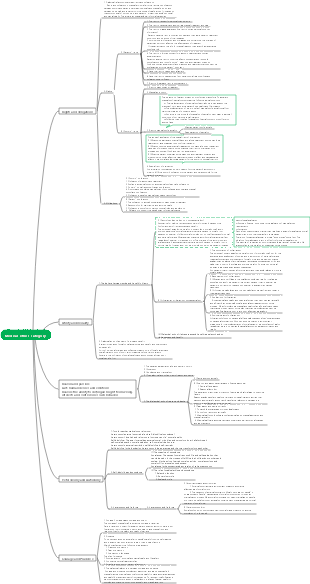
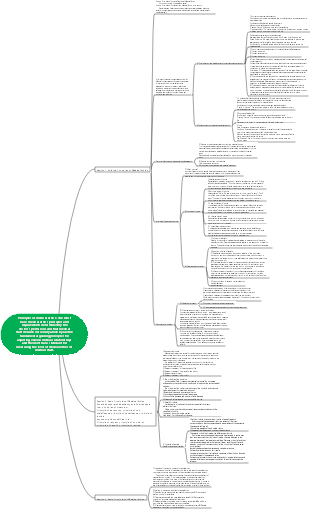
This is a mind map about the introduction to medical ethics. The meaning of ethics: Ethics: a system of theories that takes morality as the research object, that is, studies moral phenomena and reveals their origin, essence, function and development rules The science of ethics is the systematization and theorization of moral phenomena and the philosophical thinking about moral phenomena, so ethics is also called moral philosophy.
Edited at 2024-04-21 18:49:05This infographic, created using EdrawMax, outlines the pivotal moments in African American history from 1619 to the present. It highlights significant events such as emancipation, key civil rights legislation, and notable achievements that have shaped the social and political landscape. The timeline serves as a visual representation of the struggle for equality and justice, emphasizing the resilience and contributions of African Americans throughout history.

This infographic, designed with EdrawMax, presents a detailed timeline of the evolution of voting rights and citizenship in the U.S. from 1870 to the present. It highlights key legislative milestones, court decisions, and societal changes that have expanded or challenged voting access. The timeline underscores the ongoing struggle for equality and the continuous efforts to secure voting rights for all citizens, reflecting the dynamic nature of democracy in America.
This infographic, created using EdrawMax, highlights the rich cultural heritage and outstanding contributions of African Americans. It covers key areas such as STEM innovations, literature and thought, global influence of music and arts, and historical preservation. The document showcases influential figures and institutions that have played pivotal roles in shaping science, medicine, literature, and public memory, underscoring the integral role of African American contributions to society.
This infographic, created using EdrawMax, outlines the pivotal moments in African American history from 1619 to the present. It highlights significant events such as emancipation, key civil rights legislation, and notable achievements that have shaped the social and political landscape. The timeline serves as a visual representation of the struggle for equality and justice, emphasizing the resilience and contributions of African Americans throughout history.
This infographic, designed with EdrawMax, presents a detailed timeline of the evolution of voting rights and citizenship in the U.S. from 1870 to the present. It highlights key legislative milestones, court decisions, and societal changes that have expanded or challenged voting access. The timeline underscores the ongoing struggle for equality and the continuous efforts to secure voting rights for all citizens, reflecting the dynamic nature of democracy in America.
This infographic, created using EdrawMax, highlights the rich cultural heritage and outstanding contributions of African Americans. It covers key areas such as STEM innovations, literature and thought, global influence of music and arts, and historical preservation. The document showcases influential figures and institutions that have played pivotal roles in shaping science, medicine, literature, and public memory, underscoring the integral role of African American contributions to society.
Introduction to Medical Ethics
Overview of Medical Ethics
the concept of ethics
The meaning of ethics: Ethics: a doctrinal system that takes morality as its research object, that is, a science that studies moral phenomena and reveals their origin, essence, function and development laws. It is the systematization and theorization of moral phenomena. It is Philosophical thinking about moral phenomena, so ethics is also called moral philosophy
Classification of Ethics
Normative ethics studies the moral standards of right and wrong, good and evil, establishes moral principles and norms, constructs a system of human moral norms, restricts and guides people's moral practices, and achieves the purpose of standardizing ethical behavior and coordinating ethical relationships.
Meta-ethics is a moral philosophy that uses logical and linguistic methods to analyze moral concepts and determine the nature and meaning of morality.
Descriptive ethics provides purely objective empirical description and analysis of moral phenomena.
Applied ethics is the application of normative ethical theories to practical moral issues. For example, medical ethics and bioethics belong to applied ethics.
The concept of medical ethics
Definition of medical ethics: Medical ethics is a science that studies medical ethics. It is a science that uses general ethical principles to study medical moral issues and medical moral phenomena in medical and health practice and medical development.
The nature of the subject of medical ethics: an interdisciplinary subject between medicine and ethics, using ethical positions and methods to solve ethical problems in medical practice, coordinating the relationship between medical ethics, maintaining the orderliness of medical activities, and promoting human health.
How to learn medical ethics: (1) Rational thinking method (2) Historical analysis method (3) Value analysis method (4) Comparative research methods: vertical ratio, horizontal ratio, same ratio, different ratio
Research objects and contents of medical ethics
Research objects of medical ethics
Explanation: Medical ethics phenomenon: a social phenomenon that exists in the medical and health field and can be perceived by people, and has evaluative significance such as good and evil. Medical ethical relationships: Various interpersonal relationships in medical practice. The phenomenon of medical ethics is always a manifestation of a certain medical ethics relationship. Therefore, medical ethics mainly studies the relationship between medical ethics.
medical ethics relationship
Doctor-patient relationship: The most basic and important medical ethics relationship is the first alliance of interests formed by humans to fight against diseases and maintain health.
Active-Passive (authoritative mode) The doctor is the absolute authority and the patient passively adapts The role of medical staff: to do something for the patient Patient's role: Passive obedience (cannot object or have no effect) Clinical application: anesthesia, coma, infants and young children, etc. Pattern Archetype: Parent-Baby
Mentoring-Collaborative (mentoring model) The patient has some initiative and can play some active role, but the doctor's role is dominant and still plays an authoritative role. The role of health care professionals: telling patients what to do The role of the patient: collaborator (active cooperation) Clinical application: preoperative, postoperative, chronic disease, acute disease recovery period Pattern Archetype: Parent-Child
Joint participation type (participation-negotiation model) Doctors and patients have roughly equal initiative and rights The role of medical staff: helping patients help themselves The role of the patient: participant in the partnership Clinical applications: Chronic or psychological disorders Pattern Archetype: Adult-Adult
Inter-doctor relationship: The second interest alliance established on the basis of the doctor-patient relationship. (Type P (Parent), Type A (Adult), and Type C (Child) constitute PP type, PA type, PC type, AA type, AC type and CC type)
Inter-patient relations, medical-social relations: Inter-patient relations, medical-social relations, etc. are also important research objects, and issues such as moral principles and moral conflicts involving the allocation of medical and health resources should be taken seriously.
Medical ethics relationship and dual backgrounds
1.Social background
(1) Social form
Primitive society: basic moral principles: safeguarding the common interests of mankind, clans and tribes; Medical ethical relationships: mutual aid, equality and solidarity
Personal dependence (direct domination and obedience to a person)
①Simple and cruel slavery Basic moral principles: uphold the absolute submission and personal dependence of slaves to their masters; Medical ethics relationship: slaves' submission and dependence on their slave masters.
② Complex and hypocritical feudal system Basic moral principles: Maintaining patriarchal hierarchical relationships Medical ethics relationship: maintaining the feudal patriarchal hierarchical relationship
Attachment to things: Basic moral principles: egoism; Medical ethics relationships: Rich and complex.
Socialist society: Basic moral principles: collectivism; Medical ethics relationship: taking the best interests of the people as the starting point and destination.
(2) Regional, ethnic and cultural influences
natural background (1) Environmental issues (2) Population issues (3) Development of medical science
Research content of medical ethics (1) Basic theory of medical ethics (2) Normative system of medical ethics: medical ethics principles, medical ethics standards, and medical ethics categories (3) Difficulties in medical ethics (4) Medical ethics practice
The significance of learning and researching medical ethics
1. Coordinate medical relations and protect people’s health
Inherent contradictions in the medical relationship
Conflicting interests: economic interests, health interests
Cognitive contradiction: different motivations, knowledge and experience, interests and positions are required
The necessity and possibility of coordinating inherent contradictions
1. Necessity: A good medical relationship is the necessary foundation for the smooth development of medical activities: Medical staff’s role cognition and moral self-discipline play a vital role in the quality of medical care Whether the medical relationship is coordinated is closely related to the emotions and health of both doctors and patients. Harmonious inter-medical relations are conducive to inter-medical cooperation and are a necessary condition for improving medical quality and improving the overall efficiency of the hospital. Medical relationships play an important role in talent growth
2. Possibility: consistent fundamental interests Medical ethics is an important means to coordinate medical relationships and ensure medical quality.
2. The special significance of current research on medical ethics
(1) Establish a scientific medical ethics system under the market economy and promote the development of health services: 1. It is impossible for a market economy to avoid the issue of interests 2. The welfare nature of health services requires that it should be “decommodified” 3. Medical reform must solve the issue of ethical value orientation: return to public welfare and adhere to "fairness first, taking into account efficiency"
(2) Research bioethics and promote the development of medicine 1. Intervention in birth, old age, illness and death 2. High and new technologies intensify the contradiction between supply and demand 3. Rethink medical responsibility