MindMap Gallery Wang Defeng talks about Capital
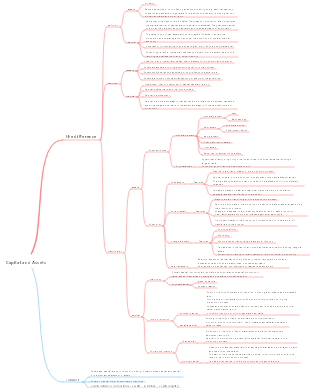
Wang Defeng's reading notes for "Rereading Capital". Professor Wang Defeng conducted an in-depth analysis and interpretation of "Das Kapital" from multiple angles and levels. He emphasized the importance of the subtitle "Critique of Political Economy" in "Das Kapital" and pointed out that this subtitle should not be forgotten because it reminds us that "Das Kapital" is a criticism and transcendence of political economy.
Edited at 2024-02-11 08:49:52Avatar 3 centers on the Sully family, showcasing the internal rift caused by the sacrifice of their eldest son, and their alliance with other tribes on Pandora against the external conflict of the Ashbringers, who adhere to the philosophy of fire and are allied with humans. It explores the grand themes of family, faith, and survival.

This article discusses the Easter eggs and homages in Zootopia 2 that you may have discovered. The main content includes: character and archetype Easter eggs, cinematic universe crossover Easter eggs, animal ecology and behavior references, symbol and metaphor Easter eggs, social satire and brand allusions, and emotional storylines and sequel foreshadowing.
[Zootopia Character Relationship Chart] The idealistic rabbit police officer Judy and the cynical fox conman Nick form a charmingly contrasting duo, rising from street hustlers to become Zootopia police officers!
Avatar 3 centers on the Sully family, showcasing the internal rift caused by the sacrifice of their eldest son, and their alliance with other tribes on Pandora against the external conflict of the Ashbringers, who adhere to the philosophy of fire and are allied with humans. It explores the grand themes of family, faith, and survival.
This article discusses the Easter eggs and homages in Zootopia 2 that you may have discovered. The main content includes: character and archetype Easter eggs, cinematic universe crossover Easter eggs, animal ecology and behavior references, symbol and metaphor Easter eggs, social satire and brand allusions, and emotional storylines and sequel foreshadowing.
[Zootopia Character Relationship Chart] The idealistic rabbit police officer Judy and the cynical fox conman Nick form a charmingly contrasting duo, rising from street hustlers to become Zootopia police officers!
Rereading Das Kapital-Wang Defeng
1 Fact or fact itself?
1.1 Facts, categories and facts themselves
The characteristics of all sciences (social sciences, natural sciences): (1) require empirical evidence and focus on starting from the facts (the facts themselves that have been constructed by the categories of the subject); (2) put the facts into the logical system of the subject discuss. Logical system (logical system, logical framework) refers to a whole composed of a series of categories and their interrelationships.
Case: Suppose a couple (the husband is an economist and the wife is a jurist) encounters a housework problem. From a purely rational perspective, the husband will say: "Now we need a question, the input and output of this matter (cost and benefit) Why?", the wife will say: "More important than input and output, what are our rights and obligations in this matter?"
Contemporary people always unconsciously view everything they encounter in a certain category. Economists discuss everything within the logical framework of the economic category; jurists discuss everything within the logical system of the legal category; the same goes for physicists.
Case: Two groups of people were fighting. When the news reporter saw that this was a mass incident, the descriptions in the report could be as follows: battle between police and gangsters, infighting within the underworld, people's uprising, etc. But none of these reports were what he saw. What he actually saw was just two groups of advanced primates engaging in physical combat.
Facts: Facts themselves constructed by various categories, such as economic facts, political facts, chemical facts, etc. Category: The general reflection of human thinking on the nature of objective things, such as value, wages, commodities, etc. in economics Facts themselves: facts stripped of categories
1.2 Restore a core economic fact
Case: The economic fact that capital hires labor includes three economic categories: capital, wages (wages paid for employment), and commodities (labor must first become commodities before it can be hired). Capital's employment of labor can be realized because of equivalent exchange. In fact, behind it lies the most basic and core category of economics: value.
Capitalist production relations are the most reasonable economic relations of mankind so far, because it does not have political coercion, hierarchical oppression, slave coercion, etc., but independent individuals - meeting as equals in the market - achieving equivalent exchanges. These are all based on the category of value. Economics starts from economic facts and establishes an economic logic system. This system is logical and can be deduced rationally, so economics becomes a (rational) science.
From capital wage labor: taking away capital (currency that can be multiplied), it is accumulated labor (means of production); taking away commodities (traded labor), it is living labor capacity; wages (energy and labor under the category of value, etc.) Take away the price exchange), and the equivalent exchange of accumulated labor and living labor capacity does not exist. At this time, it stands to reason that capital's employment of labor will not happen, but in reality it does happen and it happens every day. Because people who do not have the labor accumulated in the past and only have living labor capacity, in order to ensure their own survival, they can only find people who own the means of production and sell their living labor capacity to ensure their own survival. Accumulated labor has a silent but huge power: let people who do not own accumulated labor actively provide their own living labor capacity.
There are two types of labor accumulated by human beings: (1) consumer goods for daily use, which are only used for enjoyment; (2) consumer goods for production (means of production), which are used to create new value. Everyone in today's society must make this choice: How to spend money? Specifically, do you own the means of production or consumer goods? Those who choose to purchase the means of production automatically have the power to let people who do not have the means of production put part of their life time (living labor capacity) at your disposal.
The left side above is the economic facts, and the right side is the matter itself. The approach from left to right is called "phenomenological reduction". Economics only discusses the left side under the category of economics, and has formed a self-consistent and reasonable economic logic system. Accumulated labor is labeled by economics as value that can be multiplied, that is, capital. Who owns the power on the right depends on the choices we make: Choosing to own the means of production means possessing the power inherent in it: the right to dominate. This is what Marx focused on.
1.3 Marx’s philosophical revolution
Marx's philosophical revolution revealed that the basic part of human social life is irrational. This philosophical revolution is to correct the past "categories determine facts" and explain how the categories that determine facts themselves come from.
2 Capital is power?
2.1 The fact of economic activity itself is irrational
Case: What is the competition in the market? Economics believes that it is competition between capitals that participate in the market. Although this competition will cause some capital to increase slowly or not to increase, it will eventually reach a fair situation - market equilibrium. After Marx took away the economic category, he believed that competition is "the competition between accumulated labor and living labor for the control power." Domination power means that some people (owning the means of production) dominate other people (selling their life time). This is social power, silent And huge.
The rational study of capital (which by its nature demands growth, the reason for which will be discussed later) is called economics. When the economic categories are removed from capital, it exposes its nature - an irrational relationship between people. , Marx called it social power.
Case: Over the past 40 years of reform and opening up, the first goal of the Chinese people is to survive (get rid of poverty), so you go and make money; after getting rid of poverty, the second goal is safety, you continue to make money and achieve personal financial freedom; after achieving personal financial freedom, your Money is not enough to dominate others, but it has to be dominated by others. At this time, the third goal is power, and you will continue to make money. At any time, they are subject to the control of social power.
Economics describes capital competition as a rational activity. You failed because your knowledge of economics was incomplete and you did activities that violated the logical system of economics. Marx said of Capital: This is a struggle, and this struggle is irrational. Because social power is an irrational relationship between people, the relationship in which some people dominate other people and some people rule over other people cannot be rational.
2.2 Capital appreciation == creation of poverty
After seeing the reasons, here are the conclusions and cases
The development of capitalism is accompanied by the expansion of unequal relationships between people. Poverty itself is created first. The proliferation of capital creates poverty at every step. Creating poverty will lead to social division. Poverty in human society is called modern poverty. It is not the result of class oppression—no one uses class political power to force some people into the field of productive labor. Everyone exchanges equally, meets in the market, and signs employment contracts. This equality is constructed through value categories, covering up the continuous creation of poverty.
Case: France’s yellow vest movement. Behind France's years of economic development is the increasing profits obtained by the big bourgeoisie with capital, which will inevitably lead to a continuous decline in the living standards of some people within the country's society. A large proportion of France's population has had no wage growth for many years, but prices have been rising. The increase in fuel prices has directly led to the outbreak of the yellow vest movement. Capital has indeed increased in value, unequal relationships between people have expanded, and poverty continues to be quietly created.
Case: Trump came to power. It’s not that society in the United States was divided as soon as Trump came to power. It’s that society was already divided that made it possible for Trump to come to power. Globalization has benefited the American big bourgeoisie and widened the gap between rich and poor in society. After Trump, who believed in isolationism, was elected by ordinary people with more electoral rights, he began to engage in anti-globalization in order to bridge the divisions in American society.
2.3 Capital, wealth, power
Capital capital is the social form of contemporary wealth, so it is called wealth. Economists have discovered that today’s wealth is not calculated in terms of use value (such as how much land, grain, cattle and sheep). Wealth is not called wealth when the use value is large. It is wealth when the value of capital increases. Smith named his work "The Wealth of Nations" and believed that studying the laws of capital movement is equivalent to studying the laws of national wealth growth.
Marx admitted that today's wealth is capital, and at the same time revealed Capital Capital, that is, Power. Marx directly called his work "Das Kapital" and believed that studying the laws of capital movement is equivalent to studying the laws of movement of contemporary social power. Social power is irrational and is an antagonistic relationship between people. When it expands to a certain extent, it will definitely lead to social division, and then it will take a lot of effort to rebuild social justice and peace. Rather than making mistakes and then correcting them, it is better to correct them before they are made. ——That is, the struggle between political parties.
Case: Is the current world economic trend globalization or anti-globalization? According to the development of capital, that is, the expansion of social power, anti-globalization trends (social fragmentation, national confrontation) are now dominant. When the domestic competition of capital reaches a certain level, the unequal relationships between people in the country will expand, and greater domestic social power confrontation will come, forming social divisions; when the global competition of capital reaches a certain level, the unequal relations between countries will As unequal relations expand, so does the social power confrontation between countries, leading to militarism.
2.4 Power expressed as rights
Capital is power, which refers to social power, but not political power. Political power is the state apparatus: the military, police, and prisons maintain social power.
Case: Now I have a lot of money in my pocket that is way beyond my personal consumption, and I'm surrounded by a bunch of people who have a lot of money, so what happens? The first situation: being robbed, but because of the existence of political power, this situation generally does not happen. The second situation is bound to happen: people with a lot of money are vying to be hired by me, asking to be controlled by me for a part of their life time, so as to ensure their own survival.
Although the money in your pocket does not speak, others will take the initiative to chip in. Therefore, social power is not an idea, but a perceptual and real power. Idea concept will eventually come, and idea expresses this real perceptual power as right.
From left to right, the category of "Dharma" appears. Irrational (social) power now wears the cloak of reason and becomes rights. Social power must first mature and grow, and then ideology expresses social power into the superstructure [both the legal system and the national system must express it]. The so-called power determines right - the economic base determines the superstructure. There are two types of superstructure: one is the ideological superstructure - ideology; the other is called the political superstructure - the national system and rights system.
3 Changes in the purpose of social production
3.1 Use value and value (exchange value)
The use value of commodities can meet specific use needs, and the value of commodities can meet the needs of equal exchange in commodity circulation. This equal exchange can be realized because: commodities all have human physical and intellectual expenditures for a certain period of time, which is called labor time. This step is called "labor abstraction."
3.2 Concrete labor and abstract labor
The use value of commodities is created by concrete labor, while value is created by abstract labor.
3.3 Changes in the purpose of social production
Commodity exchange already existed in the pre-capitalist era, at which time money only served as a measure of value and a means of circulation. The process of commodity production and exchange at this time is: W (commodity) - G (currency) - W (commodity). The purpose of commodity production and exchange is to meet the needs of one's own life, and use value is the dominant factor in commodity production and exchange.
The purpose of production in the capitalist era has changed (the reasons will be explained later), and the process of commodity production and exchange is: G-W-G’. At this time, for this process to be meaningful, G’>G is required. At this time, value becomes the dominant factor in commodity production and exchange. The value of G’-G is called residual value.
The change in the purpose of social production means that money has become the main body of wealth. Man exchanges with nature through labor, and the exchange of matter and energy between man and nature produces use value such as means of living. Man lives by use value, and the purpose of production should be the growth of wealth as use value. This is a natural, natural production purpose. However, this natural and natural purpose of production has now changed to a very strange purpose: it is the proliferation and growth of that general equivalent - money, which is the main body of wealth.
3.4 Reasons for changes in the purpose of social production
The class system in Europe's feudal era was very strict, and merchants as the third class could not purchase land. As more and more serfs broke away from the nobility and became free laborers, merchants hired them to produce goods and sell the proceeds, unable to purchase land and could only continue to circulate it in the form of currency. The purpose of this circulation naturally requires currency to achieve proliferation.
With the increase in the wealth and voice of the third estate, the hereditary possession rights of the nobles finally turned into commodities and circulated in the market, and capitalist production relations were fully established. The process of primitive accumulation of capital in Europe does not refer to the accumulation of capital, but the subjection of land to the movement of capital.
3.5 The nature of capital - proliferation
The nature of capital is to proliferate, and according to its nature, it must break through the borders of Europe. Capital needs a market to survive and grow. The market within Europe is limited, so it must regard the consumption needs of human beings around the world as its market.
3.6 In which area does capital appreciation occur?
Mercantilism is believed to come from the field of commodity circulation, because commercial activities at this time were mainly British merchants trading around the world.
Physiocrats believed that real wealth came from cultivating the land, and merchants began to work as farmers.
Smith believed that wealth growth comes from market circulation, and any activity that can increase the value of money is called labor, because it can increase the value of capital - this is Smith's labor theory of value. Smith distinguished between use value and (exchange) value, but believed that things with high use value have low exchange value. Ricardo proposed that value is determined by labor time, and abstracted specific labor into general labor. General labor was measured through currency, thus completing the labor value theory.
Marx believed that capital appreciation comes from the production field, which means that labor time is extended. The circulation field does not bring wealth growth, but it will share the value growth from the production field.
3.7 Concrete labor is dominated by abstract labor
Abstract labor, (that is) general labor, becomes the source of wealth, and the increase of abstract labor, general labor, is the proliferation of capital. If the use value created by specific labor cannot be sold to increase exchange value, then this use value should be abolished, that is, the labor you create use value cannot be called labor. Concrete labor is dominated by abstract labor - is a life activity that occurs in you considered labor? Depends on whether it brings about the accumulation of abstract labor.
4 If capital does not increase, it will die.
4.1 Currency==Wealth
The labor theory of value was a sign that economics had acquired its own real object of study. The value mentioned in the labor value theory does not refer to the use value of commodities, but to the exchange value of commodities; and this labor is not concrete labor, because concrete labor creates use value, it refers to abstract labor, and abstract labor creates commodities. exchange value. General labor has become the soul that dominates the entire capitalist production. The reason why every concrete labor is established and recognized as labor is because it is the accumulation of abstract labor.
The labor theory of value actually points out the purpose of capitalist production: not use value but the proliferation of exchange value. The appreciation of exchange value cannot occur in the field of circulation, (that is) it cannot occur in the field of commodity exchange, nor can it simply occur in only one kind of labor-agricultural labor. Any labor that creates use value—whether it is industrial products or other means of living needed by humans—can be used as abstract labor to confirm its existence.
General labor has now become the subject. It was originally an abstraction of different labor completions - sublating the specific characteristics of labor and talking only about the investment of labor time. Labor time is the amount of human physical and mental expenditure, the currency that buys labor time, and is therefore converted into capital.
Money becoming the subject means that it is not just an equivalent, it is the subject of wealth, and its growth is the growth of wealth. So money is the principle that governs the economic life of most peoples and countries today. Currency has universal purchasing power, and currency is the representative of power in contemporary society.
4.2 Bookkeeping should not be forgotten
Bookkeeping, the accounting behavior before economics, directly calculates the use value we need, and tries every means to ensure the existence of this use value. When wealth is calculated not by the amount of use value, but by the proliferation of money, bookkeeping is replaced by economics.
Can you ditch bookkeeping today? Economics is about the surplus labor created through the market and through labor. When this surplus labor is sold, it is called surplus value, that is, currency appreciation. Only when it increases can it have purchasing power in the market. What if this market shuts down? Can we still live? At this time, "bookkeeping" was remembered again.
The relationship between electricity and candles, and the relationship between computers and printers, all remind us not to forget bookkeeping, such as food reserves, oil reserves, etc. People still have to stand on the earth, and the situation of not standing on the earth is getting more and more serious.
In essence, capital—abstract labor dominates concrete labor, and the proliferation of exchange value dominates the production of use value. Idealism in the entire social life is called separation from the earth. Market economies are bound to experience large-scale crises: in the past it was a crisis of relative overproduction, and now it is a financial crisis.
4.3 Where does surplus value come from?
Labor value theory provides the theoretical basis for Marx's "Law of Surplus Value"
Examine the general labor process contained in G→W→G’. The expansion of G requires the purchase of production means and labor, and the monetary representation is measured by production costs and wages respectively, with wages representing labor time (assuming 8 hours). The value of the means of production is transferred to W according to the production cost without increasing or decreasing, and the cost of labor is transferred to W according to the wage. When selling, it is realized as G’, and the intrinsic requirement of G’ is larger than G, otherwise this process is meaningless. Capitalists say that the difference between G’ and G is wages, which are created by labor. All the value created by labor is paid to workers through wages. If this is the case, it is expressed in accordance with the economic fact that "capital hires labor", and employment is equivalent exchange.
The means of production must be combined with labor force to create new value. The new value created by labor is all equivalent to wages given to workers. So why do capitalists do this?
According to the law of surplus value, part of a worker's 8 hours of labor is called surplus labor, and the other part is called necessary labor. Assume that the value created by 4 hours of work is enough to pay the value represented by wages, and the other 4 hours of surplus labor is the labor that increases value.
4.4 Relative surplus value production
The market is a competitive arena. In order to survive, capitalists need to reduce their costs as much as possible, that is, work hard on labor time: The first is to extend (surplus) labor time, that is, to increase absolute surplus labor or expand absolute surplus value, but there are limits to this method. The second is to reduce necessary labor time, which requires improving production efficiency. The application of technology and improving the proficiency of workers can improve production efficiency - this is called the production of relative surplus value, increasing the proportion of surplus labor and reducing the proportion of necessary labor.
The purpose of capitalist production is surplus value. Because the production of surplus value cannot only rely on the production of absolute surplus value, because the production of absolute surplus value is called primitive barbaric capitalism, capitalism cannot survive on this, but competition makes it necessary to survive. How to compete? Competitive technology - the application of technology to productive labor around the goal of producing relative surplus value. The dominant force in the production of relative surplus value today is technological development.
4.5 Technology and skills
Capitalist production must bring about the application of technology. Before this, humans had no technology, only skills. Technology and craftsmanship are two different views of nature. The view of nature is how to view the natural world. Technology is the abstraction of nature into a material world, waiting to be processed by the technology created by humans using their own concepts. Technique is a natural view of the unity of man and nature.
One of the characteristics of Western thinking is a hidden technical attitude towards nature. He wants to analyze and dissect natural objects and then turn them into a material thing.
Capital is coming - the production relationship of capitalism abstracts human labor and reduces perceptual characteristics to the lowest level. Efficiency, while abstracting human labor, will also abstract nature. Capital and technology are twin brothers. Relative to the production of surplus value, once this capitalist production relationship is established, machines have been logically invented.
4.6 Efficiency first
We are finally in a technologically civilized world today, and its principle is efficiency. Because efficiency requires technology, because technology must abstract nature, and because capital abstracts human labor. Our lives are becoming more and more efficient, and the meaning of our lives is becoming increasingly empty.
Capital came to the world and was born in Europe. It also brought a brother called technology. It has fundamentally changed people's lifestyles. The goal orientation of this fundamental change is efficiency, which means that you must continue to improve in efficiency. If you stagnate, you will fall behind and regress. Technology has brought something to modern civilization called the force of progress.
5 Non-self-consistent capitalism
5.1 Development is limitation
The nature of capitalism requires it to conquer the world and break through the boundaries of all nations. It allows the cultural differences of different nations to dissolve in the face of capital. The capitalist mode of production does not encounter external limits, external limits. Every step in the development of capitalism simultaneously generates forces that limit itself. The several links of capitalist production, circulation, exchange, distribution, and consumption are not as imagined and set up by economists: they are a logically self-consistent system.
5.2 Necessary labor is the limit of exchange value of living labor capacity
Within a certain period of working time of a worker, labor is divided into two parts. The new value created by necessary labor is equal to the part of wages paid by the entrepreneur to the worker. Then the new value created by surplus labor is occupied by the capitalist. .
After labor efficiency improves, the proportion of necessary labor in the entire labor becomes smaller and smaller, and the proportion of surplus labor becomes larger and larger. However, workers' wages, that is, the exchange value of labor power, will not increase with the increase of surplus labor. The value newly created by labor is divided into two parts: wages and surplus value. Their ratio is synchronized and prescribed with the ratio of necessary labor and surplus labor.
The improvement of labor productivity means that a large number of products are produced and put on the market. The main consumers are workers, but workers' wages are limited and have not increased significantly, making them unable to consume so many products. On the one hand, an entrepreneur hopes that his employees will have strong purchasing power in society because of overproduction, but when his employees work in his enterprise, he must limit their purchasing power, that is, limit their wages. This contradiction is an insurmountable paradox of capitalist production.
5.3 Surplus value is the boundary between surplus labor and the development of productive forces
Capitalist production that pursues value appreciation all pursues surplus labor, but if surplus labor cannot achieve value realization (sell) in the market, it is not surplus value. Because now currency is the measure of wealth, and only when products are sold does it mean that you have wealth. If surplus labor cannot be realized as surplus value, if it cannot realize the expansion of its initial investment and the expansion of currency, then the enterprise will only go bankrupt. All the investment was gone, and even debts were incurred.
What is surplus in the "overproduction crisis" is by no means surplus labor. What is surplus is that this part of surplus labor cannot realize surplus value in market competition. At this time, there is only one way to do it, destroy it (the product), and once it is destroyed, restart the market demand. There are two ways to destroy it: natural disasters and war.
Capitalism has greatly promoted the development of productive forces, and is always ready to destroy the existing productive forces - every development of it will produce self-limitation: it develops productive forces, but must destroy productive forces when it develops to a certain extent; if it does not develop productive forces, relative surplus value The production is impossible. Therefore, it inherently requires the development of productive forces, but at the same time it will have to destroy the productive forces it has developed.
Once a relative surplus crisis occurs, it will become a chain reaction, because industries are all chains, and the communication medium between different links in the industrial chain is common, which is called capital. Therefore, the industrial chain also means the capital chain. So this chain reaction is cross-border (the formation of the world market).
If the domestic production crisis in Japan cannot be resolved, it invades the Northeast region and dumps Japanese goods in large quantities to the Northeast people. In this way, China's national businesses and enterprises are constantly being attacked by it, so the government wants to step in to protect domestic enterprises, and war is coming. The domestic production crisis in the United States cannot be solved, but because of its special geographical location and vast land, they only need one problem to solve the crisis - if the capital chain and industrial chain are broken, then they must artificially invest money to restart it. This is to break through the third boundary - money is the boundary of production.
5.4 Money is the limit of production
The change in the purpose of social production has made the entire production process of capitalism (G-W-G’) always use money as a medium and expression. "Startup" is money, and money runs through the entire production process, from beginning to end.
In an industrial chain, all the links before and after are currencies. Once there is an obstacle in currency settlement (in a certain link), this link is doomed. Because production must be repeated in cycles. When capitalist production encounters this situation, it is said to have hit its limit, and this limit is set by itself, so it begins to break through - over-issuance of money. If the currency lending fails to reach the point where the obstacle occurs, there will be no room for recovery.
Since currency is the sovereignty of the country, the country must intervene in the economy to carry out over-issuance. Roosevelt's New Deal: The first thing was to implement the over-issuance of currency and lend it to companies to resume production; the second thing was to use unused tax revenue in the treasury for national investment to drive employment and restore workers' consumption. ability. This is a gamble - a bet that the products produced by the restored enterprises can be consumed by re-employed workers, thereby restoring the entire capitalist production process, so that the crisis of surplus will be lifted.
This approach was a common approach every time we encountered an economic crisis. A country's internal economic crisis: national investment revives market demand, and once effective purchasing power is generated, the market becomes alive; excessive currency issuance allows those industrial production to resume production. This ensures a successful cycle of G-W-G’.
Therefore, Western countries, which have experienced many "relative overproduction crises", have finally stepped into the highest form of capitalist development - financial capitalism.
5.5 The production of use value is limited by exchange value
Since capitalist production pursues surplus value, if a certain use value cannot bring surplus value - this use value will not be produced. Capitalist production, on the one hand, brings the satisfaction of people's actual needs. (However) if the satisfaction of this actual need cannot bring surplus value, this satisfaction will not be produced.
5.6 Summary of four boundaries
The four limits are Marx’s revelation of the contradictions and paradoxes of capitalist production. While demonstrating its own development, capitalism is also accumulating the power to deny itself. Then it denies itself, not that the fruits of civilization brought by capitalism will disappear, but that in order to preserve the fruits that have been obtained, people have to change their preservation methods. The way to obtain fruits and achievements is not the way to preserve them - through a historical stage like capitalism, people have obtained a large number of civilizational achievements, but it is impossible to preserve such achievements in a capitalist way. This is called dialectics.
6 Let’s talk about financial capitalism again
6.1 Securities market
The securities market marketizes investment itself and investment behavior, which is one of the most prominent features of financial capitalism. Some people praised this invention, believing that it would once and for all solve the economic crisis of capitalism - the crisis of relative overproduction. Through the securities market, a market-oriented social financing method, the optimal market-oriented allocation of materials and energy required for production can be achieved.
6.2 Financial Nervous System
Breaking through the third inner limit relies on "financial means." The modern financial system has become the nervous system of the contemporary economy, and its nerve endings penetrate deeply into the internal finance of enterprises.
It is entirely possible that this nervous system sends out wrong information, so financial capitalism suffers in every process of its growth. After each misfortune, the rules of the financial system will be better--that is, to avoid sending the wrong message.
The relationship between the capital market and the real economy will lead to a financial crisis if a large amount of wrong information is transmitted. The result of the financial crisis is that the real economy is in a mess - there is no money for those who should get it, and there is a pile of money for those who should not get it - companies cannot make the funds generate benefits and return them to the interest earners. The interest earners are all in the capital market, and then collapse. Come and bring down the capital markets.
6.3 Interest-bearing capital
Capital appears as a commodity because capital is provided to the market and the use value of money is actually transferred as capital. Its use value is "production profit".
The reason why capital appears as a commodity is because the "interest" and "profit in the original sense" of profit division are regulated by supply and demand, and thus competition, which is completely the same as the market price of commodities is regulated by them (supply and demand, and thus competition). Same. The same is true for wages. If supply and demand are balanced, the effects of supply and demand will cancel each other out, and wages will be equal to the value of labor force.
This is not the case with interest on money capital, where competition does not determine a deviation from a law (the law of value), but rather there is no other law of division than the law of division imposed by competition, there is no "natural" rate of interest . There is no "natural" limit to interest rates.
There is no center line of value for interest, only the law of division and no law of value determination. It is a strange commodity, it is "capital profitability" as a commodity. It has only price but no value.
6.4 Why does capital profitability have no natural interest rate?
One is that the ability of the real economy to generate average profits in the future is not fixed; the other is the determination of the interest rate. In addition to the real ability to generate profits, its interest rate is affected by the money supply, which is an unfixed quantity.
Because the capital market itself has no value center line, it will become a place for free competition among various enterprises, so it imposes a period of division law (interest rate). Once this interest rate is imposed, it will have a negative impact on the real economy. It will have a certain impact until it collapses.