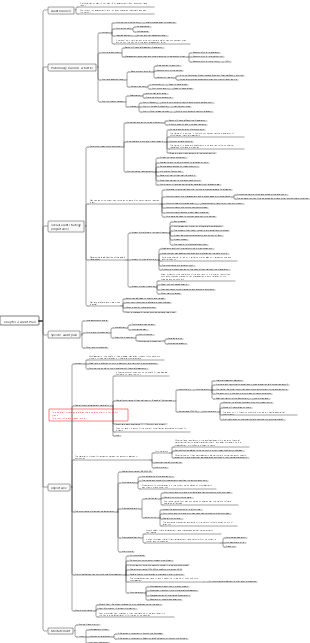
MindMap Gallery CPA Consolidated Financial Statement Accounting Section
Including the consolidation of internal transactions, the consolidation of special transactions, etc., the preparation of financial statements is a complex process that requires compliance with certain accounting standards and regulations.
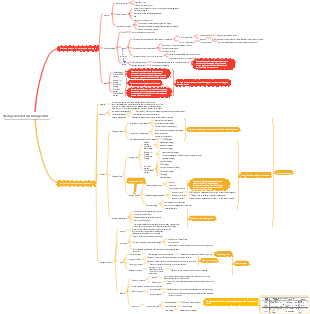
Edited at 2024-04-09 18:20:40This is a panoramic infographic—currently sweeping across the web—illustrating the comprehensive applications of OpenClaw, a popular open-source AI agent platform. It systematically introduces this intelligent agent framework—affectionately dubbed "Lobster Farming"—helping readers quickly grasp its core value, technical features, application scenarios, and security protocols. It serves as an excellent introductory guide and practical manual.

這是一張最近風靡全網關於熱門開源AI代理平台OpenClaw的全網應用全景圖解。它系統性地介紹了這款被稱為「養龍蝦」的智慧體框架,幫助讀者快速理解其核心價值、技術特性、應用場景及安全規範,是一份極佳的入門指南與實操手冊。此圖主要針對希望利用AI建構自動化工作流程的技術從業人員、中小企業主及效率追求者,透過9大模組層層遞進,全面剖析了OpenClaw從概念到落地的整個過程。 圖中核心內容首先釐清了「養龍蝦」指涉的是OpenClawd開源智能體,並強調其本質是「AI基建」而非一般聊天機器人。隨後詳細比較其與傳統AI助理的區別,擁有記憶管理、權限控制、會話隔離和異常恢復四大基礎能力,支援跨平台存取和多模型相容(如GPT、Claude、Ollama)。同時,圖解提供了完整的部署方案(雲端/本地/Docker),並列舉了辦公室自動化、內容創作、資料收集等五大應用程式場景。此外,還展示了其火爆程度、政府與大廠佈局、安全部署建議及適合/不適合的人群分類。幫助你快速掌握OpenClaw技術架構與應用價值,指導個人或企業建構AI自動化系統,規避資料外洩與權限失控風險,是學習「執行式AI」轉型的權威參考圖譜。
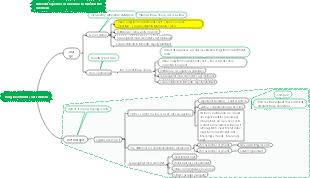
本圖由萬興腦圖繪製,是針對IT研發崗位的結構化個人履歷模板,完整涵蓋求職核心資訊模組。基本資訊區包含姓名、電話、信箱、求職意願及GitHub連結;專業概要要求以2-3句提煉核心優勢;工作經驗以「公司A高級Java開發工程師」為例,以「透過(行動),達成(量化成果)」格式呈現微服務架構設計、系統效能優化、團隊技術規範制定等職責,公司B經歷則聚焦功能模組開發與Elasticsearch搜尋優化;技能專長分程式語言、後端框架、中介軟體、資料庫、容器雲等維度,清楚展示技術堆疊;專案成果以「電商平台秒殺系統」為例,說明技術棧、架構設計、個人貢獻(Redis Lua庫存原子扣減)及KPI;教育背景包含一流大學電腦專業學歷,以及AWS認證解決方案架構師、軟考中級軟體設計師證書。模板邏輯嚴謹,涵蓋IT研發求職全流程關鍵訊息,幫助求職者清晰、量化展示專業能力。
This is a panoramic infographic—currently sweeping across the web—illustrating the comprehensive applications of OpenClaw, a popular open-source AI agent platform. It systematically introduces this intelligent agent framework—affectionately dubbed "Lobster Farming"—helping readers quickly grasp its core value, technical features, application scenarios, and security protocols. It serves as an excellent introductory guide and practical manual.
這是一張最近風靡全網關於熱門開源AI代理平台OpenClaw的全網應用全景圖解。它系統性地介紹了這款被稱為「養龍蝦」的智慧體框架,幫助讀者快速理解其核心價值、技術特性、應用場景及安全規範,是一份極佳的入門指南與實操手冊。此圖主要針對希望利用AI建構自動化工作流程的技術從業人員、中小企業主及效率追求者,透過9大模組層層遞進,全面剖析了OpenClaw從概念到落地的整個過程。 圖中核心內容首先釐清了「養龍蝦」指涉的是OpenClawd開源智能體,並強調其本質是「AI基建」而非一般聊天機器人。隨後詳細比較其與傳統AI助理的區別,擁有記憶管理、權限控制、會話隔離和異常恢復四大基礎能力,支援跨平台存取和多模型相容(如GPT、Claude、Ollama)。同時,圖解提供了完整的部署方案(雲端/本地/Docker),並列舉了辦公室自動化、內容創作、資料收集等五大應用程式場景。此外,還展示了其火爆程度、政府與大廠佈局、安全部署建議及適合/不適合的人群分類。幫助你快速掌握OpenClaw技術架構與應用價值,指導個人或企業建構AI自動化系統,規避資料外洩與權限失控風險,是學習「執行式AI」轉型的權威參考圖譜。
本圖由萬興腦圖繪製,是針對IT研發崗位的結構化個人履歷模板,完整涵蓋求職核心資訊模組。基本資訊區包含姓名、電話、信箱、求職意願及GitHub連結;專業概要要求以2-3句提煉核心優勢;工作經驗以「公司A高級Java開發工程師」為例,以「透過(行動),達成(量化成果)」格式呈現微服務架構設計、系統效能優化、團隊技術規範制定等職責,公司B經歷則聚焦功能模組開發與Elasticsearch搜尋優化;技能專長分程式語言、後端框架、中介軟體、資料庫、容器雲等維度,清楚展示技術堆疊;專案成果以「電商平台秒殺系統」為例,說明技術棧、架構設計、個人貢獻(Redis Lua庫存原子扣減)及KPI;教育背景包含一流大學電腦專業學歷,以及AWS認證解決方案架構師、軟考中級軟體設計師證書。模板邏輯嚴謹,涵蓋IT研發求職全流程關鍵訊息,幫助求職者清晰、量化展示專業能力。
CPA Consolidated Financial Statement Accounting Section
Long-term equity investment (parent company) and owner's equity investment (subsidiary) are consolidated
under the same control 1 adjustment 2 offsets
Merger date offset rights
Borrow: Equity (paid-in capital) capital reserve Other comprehensive income Surplus reserve undistributed profit Loan: Long-term equity investment (parent company) Minority interests (fixed ratio)
After the merger December 31 of that year Every December 31st thereafter The entries at the end of the current year are the same as those on the merger date, but the amount of long-term equity investment needs to be adjusted.
1. Adjust the parent company’s individual cost method accounting results to the joint equity method accounting results (three supplements and one adjustment) (adjusting entries)
When making consolidated statements for subsequent years, you must first copy those from the previous year, rename the equity category to undistributed profits at the beginning of the year, and then make the current year's statements and merge them together for the previous year: Borrow: Long-term equity investment Credit: Investment income [(subsidiary adjusted net profit - cash dividend) * parent ratio] is changed to undistributed profit at the beginning of the year Other comprehensive income capital reserve
2. Offset the owner’s equity of the parent company Long-Term Investment and its subsidiaries (offset equity)
Borrow: paid-in capital/equity [end of subsidiary period] Capital reserve [Subsidiary’s beginning ± increase or decrease in current period] Other comprehensive income [Subsidiaries at the beginning of the period ± increase or decrease in the current period] Surplus reserve [Subsidiaries at the beginning of the period ± increase or decrease in the current period] Undistributed profit at the end of the year [Subsidiary's adjusted net profit at the beginning of the period - profit withdrawal - dividend distribution] Credit: Long-term equity investment [amount after the consolidated statements are adjusted according to the equity method] Minority interests [identifiable net assets of the subsidiary calculated on an ongoing basis x minority %]
3 Offset the investment income of the parent company and profit distribution of subsidiaries (offset profits and losses)
Borrow: Investment income [Subsidiary’s adjusted net profit × Parent’s %] Profit and loss of minority shareholders [Adjusted net profit of subsidiary × minority %] Undistributed profits at the beginning of the year [copied at the beginning of the period or at the end of the previous year] Credit: Appropriation of surplus reserves [surplus reserves withdrawn by subsidiaries in the current period] Distribution to owners (or shareholders) [cash dividends distributed by subsidiaries in the current period] Undistributed profits at the end of the year [copied from the previous article]
not under common control 3 adjustments 3 offsets
Purchase date 1. Adjust assessment value-added/depreciated 2. Offset rights and interests
1. Adjust the estimated value added (actually adjusted from book to fair) (fair > book at the time of purchase)/depreciation (fair < book) Debit: fixed assets/inventories/intangible assets, etc. Credit: Capital reserve (or reverse, accounts receivable are generally assessed for impairment, credited) If income tax is considered, you also need to: Debit: capital reserve or, debit: deferred income tax assets Credit: Deferred income tax liabilities Credit: Capital reserves Or, merged together: Debit: fixed assets/inventories/intangible assets, etc. Credit: Capital reserve (crowding) Deferred income tax liability Calculate consolidated goodwill (will be used to offset equity later) The fair value of the subsidiary's identifiable net assets on the acquisition date after taking into account deferred income taxes: ① Book value of the subsidiary’s identifiable net assets on the date of purchase Appraisal increase × 75% ②The fair value of the identifiable net assets without deferred income tax on the date of purchase of the subsidiary - Appraisal increase × 25% Goodwill = merger cost - fair value share of identifiable net assets of the subsidiary (after taking into account deferred income taxes)
2. Offset rights and interests Borrow: Equity (paid-in capital) Capital reserves (including the increased value of assets and liabilities of subsidiaries) Other comprehensive income Surplus reserve undistributed profit Goodwill (debit balance) Loan: Long-term equity investment (parent company) Minority interests (fixed ratio)
after purchase December 31 of that year Every December 31st thereafter 2 adjustments: Adjust assessment appreciation/impairment (from book to fair value) cost to equity 2 offsets: offset rights against income
5. Offset of internal transactions between parent and subsidiary companies [explained separately later]
1. Adjust the estimated value added (actually adjusted from book to fair) (fair > book at the time of purchase)/depreciation (fair < book) Debit: fixed assets/inventories/intangible assets, etc. Credit: Capital reserve (or reverse, accounts receivable are generally assessed for impairment, credited) If income tax is considered, you also need to: Debit: capital reserve or, debit: deferred income tax assets Credit: Deferred income tax liabilities Credit: Capital reserves Or, merged together: Debit: fixed assets/inventories/intangible assets, etc. Credit: Capital reserve (crowding) Deferred income tax liability Calculate consolidated goodwill (will be used to offset equity later) The fair value of the subsidiary's identifiable net assets on the acquisition date after taking into account deferred income taxes: ① Book value of the subsidiary’s identifiable net assets on the date of purchase Appraisal increase × 75% ②The fair value of the identifiable net assets without deferred income tax on the date of purchase of the subsidiary - Appraisal increase × 25% Goodwill = merger cost - fair value share of identifiable net assets of the subsidiary (after taking into account deferred income taxes) Adjustment to the closing book value at the end of the year (assessment of subsequent changes in appreciation/depreciation) Debit: Management expenses [assume that depreciation of fixed assets is included in management expenses] Credit: Fixed assets (accumulated depreciation) Intangible assets (accumulated amortization) Borrow: operating costs (inventory valuation value-added external sales) Credit: Inventory goods Debit: Accounts receivable (the assessed amount has been collected and bad debts have been written off) Credit: Credit impairment loss Debit: Deferred income tax liabilities (depreciation or amortization is transferred back to the originally recognized deferred income tax liabilities) Credit: Income tax expense
2. Adjust the parent company’s individual cost method accounting results to the joint equity method accounting results (three supplements and one adjustment) (adjusting entries)
When making consolidated statements for subsequent years, you must first copy those from the previous year, rename the equity category to undistributed profits at the beginning of the year, and then make the current year's statements and merge them together for the previous year: Borrow: Long-term equity investment Credit: Investment income [(subsidiary adjusted net profit - cash dividend) * parent ratio] is changed to undistributed profit at the beginning of the year Other comprehensive income capital reserve
3. Offset the owner’s equity of the parent company Chang Investment and its subsidiary (offset equity)
Borrow: paid-in capital/equity [end of subsidiary period] Other equity instruments [Subsidiaries increase at the beginning of the period] Capital reserve [Subsidiary’s opening valuation increase ± increase or decrease in the current period] (first adjustment) Other comprehensive income [Subsidiaries at the beginning of the period ± increase or decrease in the current period] Surplus reserve [Subsidiaries at the beginning of the period ± increase or decrease in the current period] Undistributed profit at the end of the year [Subsidiary's adjusted net profit at the beginning of the period - profit withdrawal - dividend distribution] Goodwill [Changchang Investment-Subsidiary’s share of fair value of identifiable net assets continuously calculated from the date of purchase] Credit: Long-term equity investment [amount after the consolidated statements are adjusted according to the equity method] (second adjustment) Minority interests [identifiable net assets of the subsidiary calculated on an ongoing basis x minority %] The continuously calculated identifiable net assets of the subsidiary = the identifiable net assets on the date of merger/date of purchase, cash dividends distributed from adjusted net profit, other comprehensive income, capital reserves, and other equity instruments.
4. Offset the investment income of the parent company and profit distribution of subsidiaries (offset profits and losses)
Borrow: Investment income [Subsidiary’s adjusted net profit × Parent’s %] Profit and loss of minority shareholders [Adjusted net profit of subsidiary × minority %] Undistributed profits at the beginning of the year [copied at the beginning of the period or at the end of the previous year] Credit: Appropriation of surplus reserves [surplus reserves withdrawn by subsidiaries in the current period] Distribution to owners (or shareholders) [cash dividends distributed by subsidiaries in the current period] Undistributed profits at the end of the year [copied from the previous article]
Consolidation of internal transactions
Consolidation of internal commodity transactions
Offset processing of internal sales revenue and internal sales costs
Year 1: Borrow: operating income [internal sales price excluding tax] ① Credit: Operating costs [back squeeze] ③ Inventories and fixed assets [Gross profit × unsold %] ②
As long as you tell the income tax rate, you must consider the income tax impact (self-inflicted, if impairment occurs, refer to receivables) After the above offset processing, the book value of the inventory = 14 million yuan, and the tax basis = the original tax basis of Company A's financial statements is 20 million yuan, which is equivalent to the impairment of asset assessment, resulting in a deductible temporary difference, and deferred income tax is recognized Assets 150 (600×25%), the lender reduced the inventory, and the tax was not recognized; Debit: Deferred income tax assets 150 Credit: Income tax expense 150
Continuous preparation of consolidated financial statements
Year 2: ① Offset the previous year Borrow: Undistributed profits at the beginning of the year Credit: Undistributed profits at the beginning of the year Inventory (if it has been sold, change it to operating cost here. If part of it is sold, credit: inventory and operating cost respectively in proportion) 【hint】 If the unsold inventory of the previous year is sold this year, "inventory" will be converted to "operating cost" ②Offset this year If internal inventory transactions occur again this year, the handling principles are the same as those of the previous year.
Consolidation of inventory depreciation provisions
Year 1: (Initial establishment) Individual report: cost 2000> net realizable value 1800 (1320), provision for inventory decline in price 200 (680) Combined report: cost 1400> net realizable value 1320, provision for inventory devaluation 80 The former: there is no impairment in the consolidated statement, and all 200 is written back; the latter: only 80 is recognized in the consolidated statement, and part of it is 600; Borrow: Inventory 200 (600) (report type item, replacing inventory depreciation reserve) Credit: Asset impairment provision 200 (600) Year 2: (continuous preparation) ① Offset the previous year Borrow: Inventory (Provision for inventory decline) Credit: Undistributed profits at the beginning of the year If there is external sales in this period, then: (The previous provision for price decline in the individual table has been eliminated in the consolidated table and does not exist. After the individual table sells goods, the inventory provision for decline in price carried forward by the individual table will also be eliminated in the consolidated table. ) Debit: operating costs [carried forward according to sales ratio] Credit: Inventory (Provision for inventory decline) ②Offset this year The idea is the same as last year.
Consolidation of internal claims and debts
Overview
Offsetting entries: Borrow: Debt (payable to xx) Loan: Debt type (xx receivable, debt investment)
Consolidation of internal accounts receivable and payable and bad debt provisions
Debit: Accounts receivable (replacing bad debt provision) Notes receivable (replacing bad debt provision) Credit: Credit impairment loss
Just tell the income tax rate and consider the income tax impact (caused by impairment) To offset bad debt provisions, the original deferred income tax assets should be offset: Debit: Income tax expense [bad debt provision x tax rate] Credit: Deferred income tax assets
Continuous preparation
Year 1: (Initial establishment) If: At the end of the previous year (receivable 500, bad debt 20) Debit: Accounts payable 500 Credit: Accounts receivable 500 Debit: Accounts receivable (bad debt provision) 20 Credit: Credit impairment loss 20 Year 2: (continuous preparation) Scenario 1: The current balance of internal accounts receivable is equal to the previous period This year (receivable 500, bad debt 20) Debit: Accounts payable 500 Credit: Accounts receivable 500 Debit: Accounts receivable (bad debt provision) 20 Credit: Undistributed profit at the beginning of the year 20 Scenario 2: The current balance of internal accounts receivable is greater than the balance of the previous period Amount of bad debt provision = 40 at the end of the period - 20 at the beginning of the period (offset) = 20 (offset) End of the year (receivables 600, bad debts 40) Debit: Accounts payable 600 Credit: Accounts receivable 600 Debit: Accounts receivable (bad debt provision) 20 [previous period] Credit: Undistributed profit at the beginning of the year 20 Debit: Accounts receivable (bad debt provision) 20 [current period] Credit: Credit impairment loss 20 Scenario 3: The current balance of internal accounts receivable is less than the balance of the previous period Bad debt provision amount = 10 at the end of the period - 20 at the beginning of the period (offset) = -10 (reversal) End of the year (receivable 400, repayment 10) Debit: Accounts payable 400 Credit: Accounts receivable 400 Debit: Accounts receivable (bad debt provision) 20 [previous period] Credit: Undistributed profit at the beginning of the year 20 Borrow: Credit impairment loss 10 [current period] Credit: Accounts receivable (bad debt provision) 10
Consolidation of internal fixed asset transactions (Acquisition, depreciation, period, scrapping)
Consolidation of transactions in the current period
Borrow: operating income Credit: Operating costs Fixed assets (inflated original value)
Consolidation processing of transactions in the current period and provision of depreciation
Borrow: fixed assets (replacing accumulated depreciation) (inflated original value/n*m/12) Credit: administrative expenses, depending on the situation, sales department is sales expenses, etc. (If the sale is at a loss and less depreciation is provided, the reverse will apply)
As long as you tell the income tax rate, you must consider the income tax impact (self-inflicted, if impairment occurs, refer to receivables) The original value of fixed assets was reduced by RMB 4.8 million, and the accumulated depreciation was reduced by RMB 1.2 million. Therefore, the book value of fixed assets was reduced by RMB 3.6 million, resulting in deductible temporary differences, and deferred income tax assets of RMB 900,000 (360×25%) were recognized. Yuan. Debit: Deferred income tax assets 90 [(debit 480 - debit 120) × tax rate 25%] Credit: Income tax expense 90 If there is less provision, then Debit: income tax expense Credit: Deferred income tax liability
The period after acquisition to before disposal
Year 1: (Initial establishment) (1) Offset the original value of fixed assets (sell inventory to make fixed assets) Borrow: operating income Credit: Operating costs Fixed assets [inflated original value] Or (sell fixed assets to make fixed assets) Borrow: Proceeds from asset disposal Credit: fixed assets [inflated original value] (2) Offset fixed over-accrued asset depreciation Debit: Fixed assets (accumulated depreciation) Credit: Management expenses [inflated original value/n×m/12] (if the sale is at a loss and less depreciation is provided, the reverse will be reversed) Year 2: (continuous preparation) (1) Offset the original value and depreciation of fixed assets (year 1) ①Debit: Undistributed profits at the beginning of the year Credit: fixed assets [inflated original value] ②Debit: Fixed assets (accumulated depreciation) Credit: Undistributed profits at the beginning of the year (2) Offset the current period (depreciation) (year 2) Debit, fixed assets (accumulated depreciation) loan, administrative expenses … Year n 1: (assuming that the accumulated depreciation in the nth year has been withdrawn) the positive and negative amounts are the same ①Debit: Undistributed profits at the beginning of the year Credit: fixed assets ②Debit: Fixed assets (accumulated depreciation) Credit: Undistributed profits at the beginning of the year
Merge processing during cleanup
Replace all "fixed assets" items with "asset disposal income", regardless of whether they are scrapped in advance, just in time, or delayed. Write it as normal first, and then replace it (the question may require recording "non-operating income and non-operating expenses") (1) Offset the original value and depreciation of fixed assets (year 1) ①Debit: Undistributed profits at the beginning of the year Credit: fixed assets [inflated original value] ②Debit: Fixed assets (accumulated depreciation) Credit: Undistributed profits at the beginning of the year (2) Offset the current period (depreciation) (year 2) Debit, fixed assets (accumulated depreciation) loan, administrative expenses
Consolidation of internal intangible asset transactions
Consolidation of transactions in the current period
(1) Offset the original value of the inflated increase Borrow: Proceeds from asset disposal Credit: Intangible assets [inflated original value] (if sold at a loss, it will be reversed) (2) Offset amortization of intangible assets Debit: Intangible assets (accumulated amortization) Credit: Management expenses (if the sale is at a loss, the reverse will apply)
Consolidation during the holding period of intangible assets
Year 1: (Initial establishment) (1) Offset the original value of intangible assets Borrow: Proceeds from asset disposal Credit: Intangible assets [inflated original value] (2) Offset amortization of intangible assets Debit: Intangible assets (accumulated amortization) Credit: Management expenses [Inflated original value/n×m/12] Year 2: (continuous preparation) (1) Offset the original value and amortization of intangible assets (year 1) ①Debit: Undistributed profits at the beginning of the year Credit: Intangible assets [inflated original value] ②Debit: Intangible assets (accumulated amortization) Credit: Undistributed profits at the beginning of the year (2) Offset the current period (amortization) (year 2) Debit, intangible assets (accumulated amortization) loan, administrative expenses … Year n 1: (assuming that the accumulated amortization in year n has been withdrawn) the positive and negative amounts are the same ①Debit: Undistributed profits at the beginning of the year Credit: Intangible assets ②Debit: Intangible assets (accumulated amortization) Credit: Undistributed profits at the beginning of the year
Merge processing during cleanup
Replace all "intangible assets" items with "asset disposal income", regardless of whether they are scrapped in advance, just in time, or delayed, write it normally first, and then replace it (the question may require recording "non-operating income, non-operating expenses") (1) Offset the original value and amortization of intangible assets (year 1) ①Debit: Undistributed profits at the beginning of the year Credit: Intangible assets [inflated original value] ②Debit: Intangible assets (accumulated amortization) Credit: Undistributed profits at the beginning of the year (2) Offset the current period (amortization) (year 2) Debit, intangible assets (accumulated amortization) loan, administrative expenses
Consolidation of special transactions
additional investment
1. The parent company purchases the minority shareholders’ equity of the subsidiary (80% 10% = 90%, equity transaction) If you spend more money: Borrow: capital reserve (debit side suffers a loss, credit side makes a profit) Loan: Long-term equity investment (spend less, reverse)
2. Multiple transactions to realize the merger of enterprises not under common control in stages [not a “package transaction”] (1)Individual reports ①The original equity is calculated as financial assets (consolidated statements do not need to be processed again) 10% 50%=60% Initial investment cost = original fair value new fair value All other comprehensive income generated from the original equity is transferred to investment income (across accounting accounts) ②The original equity is calculated according to the equity method (consolidated statements need to continue to be processed) 30% 50%=80% Initial investment cost = Original book value ① New fair value Other comprehensive income, capital reserves, etc. generated from the original equity will not be processed temporarily. ④ (2) Consolidated statements ① The original equity book is adjusted to be fair, and the difference is included in investment income. Borrow: Long-term equity investment (fair value) Credit: Long-term equity investment (book value) investment income ②Merger cost = original fair value new fair value ③ Merger goodwill = merger cost – fair value share of the acquiree’s identifiable net assets acquired on the acquisition date ④ If the original equity is accounted for using the equity method, all other comprehensive income (convertible portion), capital reserves, etc. generated by the original equity will be transferred to investment income. Borrow: other comprehensive income capital reserve Loan: investment income (or reverse) (3) Consolidation on the purchase date: Adjust first, then offset Borrow: Subsidiary owner’s equity goodwill Loan: Long-term equity investment minority interests
Disposal of investments in subsidiaries
1. Dispose of subsidiary investments without losing control (90%-10%=80%, equity transactions) The increase in capital reserve in the consolidated statement = disposal price - the disposal portion corresponds to the share of the book value of the net assets of the subsidiary that is continuously calculated Disposal price > share, increase capital reserve; Debit: investment income Loan: capital reserve (debit side suffers a loss, lender gains a profit) If the disposal price < share, the capital reserve will be offset. If it is insufficient to offset, the retained earnings will be adjusted.
2. Loss of control and disposal of investments in subsidiaries Cost method → fair value measurement (90%-80%=10%) Recognition of investment income on disposal portion The remaining part: adjusted to fair value, and the difference between fair value and book value is included in investment income. Cost method → Equity method (individual reporting and combined reporting) (90%-60%=30%) Personal report: Recognition of investment income on disposal portion Remaining part: retroactive adjustment (ratio, three complements and one adjustment) Borrow: Long-term equity investment Credit: Surplus reserve Profit distribution - undistributed profits investment income Other comprehensive income Capital reserve - other capital reserve Joint report: 1. Terminate the recognition of the book value of long-term equity investments, goodwill, etc., and terminate the recognition of the book value of minority shareholders’ equity (including other comprehensive income of minority shareholders) 2. The remaining equity is remeasured at fair value, and the difference is recognized as investment income. Borrow: Long-term equity investment [Fair value of remaining equity] Credit: Long-term equity investment [book value of remaining equity] Investment income (or borrowing) 3. Confirm the current investment income from disposal in the consolidated statement Disposal investment income for the current period in the consolidated statement = (Consideration obtained from disposal of equity + fair value of remaining equity) - Identifiable net assets of the original subsidiary calculated continuously since the date of purchase × % of original equity - Goodwill ± other comprehensive income, other all Change in owner’s equity × % of original equity 4. Other comprehensive income, capital reserves, etc. generated by the carryover of the original equity are transferred to the current profit and loss (investment income) when control is lost, except for those that cannot be reclassified into profit and loss. Borrow: other comprehensive income Capital reserve - other capital reserve Credit: Investment income (or reverse)
The capital increase by the minority shareholders of the factor company leads to the dilution of the parent company's equity
Capital reserve confirmed in the consolidated statement = net book assets of the subsidiary after the capital increase × shareholding ratio after the capital increase - net book assets of the subsidiary before the capital increase × shareholding ratio before the capital increase If the difference is >0, the capital reserve will be increased; Debit: investment income, loan: capital reserve (debit will suffer a loss, and the credit will make a profit) If the difference is <0, the capital reserve will be reduced. If it is insufficient to offset, the retained earnings will be adjusted.
Consolidation treatment of cross-shareholdings (understanding)
Consolidation processing of counter-current transactions
If a counter-current transaction occurs between the parent company and the subsidiary company, that is, the subsidiary sells assets to the parent company, the unrealized internal transaction gains and losses incurred shall be included in the "net profit attributable to the owners of the parent company" in accordance with the parent company's distribution ratio to the subsidiary. ” and “minority shareholders’ profits and losses” are allocated and offset. Internal transaction offset memory: downstream transactions are offset in full, and countercurrent transactions are allocated and offset. Borrow: Minority shareholders’ equity (decrease) [Inflated profits x proportion of minority shareholders] Credit: Profit and loss of minority shareholders (decrease)
Income Tax Summary
Receivables, fixed assets, intangible assets, inventories: If there is impairment and the impairment needs to be reversed, there will also be corresponding deferrals.
Fixed assets, intangible assets, and inventories: there will be corresponding deferrals in the current period (caused by depreciation)
Bookkeeping: Group Perspective
Tax basis: individual table perspective
floating theme