MindMap Gallery proportional function
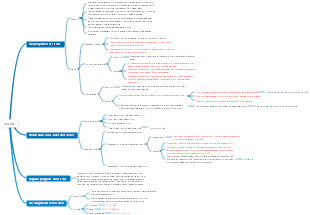
This is a mind map about proportional functions. The main content includes: practice consolidation and classic examples. Used for review and preview to improve learning efficiency.
Edited at 2024-04-10 20:46:36Explore the fascinating world of limits, a fundamental concept in calculus that underpins derivatives and integrals. This overview delves into the core idea of limits, emphasizing how they describe the value a function approaches as the input nears a certain point. Learn about intuitive understandings through approaches versus equals, and the formal ε–δ definition that rigorously defines limits. Discover various types of limits, including one-sided and limits at infinity, and when limits exist or fail. Uncover key properties, their relationship to continuity, and techniques for evaluating limits. Join us in mastering the foundational concepts that shape mathematical analysis!

Explore the fundamental concepts of work and power, essential for understanding energy dynamics in physics. This overview covers core definitions, including work as energy transfer and power as the rate of work done. Delve into the work-energy relation, examining the work-kinetic energy theorem and the distinctions between conservative and nonconservative forces. Learn how to calculate work under various conditions, from constant forces to variable forces and multiple interactions. The mechanical energy framework explains energy conservation principles, while power calculations provide insight into energy transfer rates. Utilize graphical tools and diagrams to visualize these concepts, avoiding common pitfalls in understanding work and its implications.
Discover the fascinating world of isotopes, the variants of chemical elements that share the same number of protons but differ in neutrons, leading to unique properties. This overview covers the core definitions and atomic structure basics of isotopes, including their notation and abundance. Learn about examples like hydrogen, carbon, and oxygen, and differentiate between stable isotopes and radioisotopes. Understand the significance of isotopic variation, its origins in stellar processes and fractionation, and how we measure isotopes using advanced techniques like mass spectrometry. Join us in exploring the critical role isotopes play in science and nature.
Explore the fascinating world of limits, a fundamental concept in calculus that underpins derivatives and integrals. This overview delves into the core idea of limits, emphasizing how they describe the value a function approaches as the input nears a certain point. Learn about intuitive understandings through approaches versus equals, and the formal ε–δ definition that rigorously defines limits. Discover various types of limits, including one-sided and limits at infinity, and when limits exist or fail. Uncover key properties, their relationship to continuity, and techniques for evaluating limits. Join us in mastering the foundational concepts that shape mathematical analysis!
Explore the fundamental concepts of work and power, essential for understanding energy dynamics in physics. This overview covers core definitions, including work as energy transfer and power as the rate of work done. Delve into the work-energy relation, examining the work-kinetic energy theorem and the distinctions between conservative and nonconservative forces. Learn how to calculate work under various conditions, from constant forces to variable forces and multiple interactions. The mechanical energy framework explains energy conservation principles, while power calculations provide insight into energy transfer rates. Utilize graphical tools and diagrams to visualize these concepts, avoiding common pitfalls in understanding work and its implications.
Discover the fascinating world of isotopes, the variants of chemical elements that share the same number of protons but differ in neutrons, leading to unique properties. This overview covers the core definitions and atomic structure basics of isotopes, including their notation and abundance. Learn about examples like hydrogen, carbon, and oxygen, and differentiate between stable isotopes and radioisotopes. Understand the significance of isotopic variation, its origins in stellar processes and fractionation, and how we measure isotopes using advanced techniques like mass spectrometry. Join us in exploring the critical role isotopes play in science and nature.
proportional function
1. Classic examples
1. Definition of proportional function
[Answer and analysis]
【Answer】
2. Image and properties of proportional function
[Ideas] Find two points on each function graph, draw the graph, and answer the question based on the characteristics of the function graph. [Answer and analysis] Solution: List: Draw points and connect lines: [Summary and sublimation] This question examines the use of point drawing method to draw the image of a function. The specific steps are listing, drawing points, and connecting lines.
Then the function value y increases with the value of the independent variable x. (Fill in "increase" or "decrease")
【Idea Tip】Judge based on the properties of the proportional function. 【Answer】Decrease; [Analysis] Solution: Substituting the point (-6, 2) into y=kx, we get: 2=-6k, Then the function value y decreases as the value of the independent variable x increases.
[Variation] Among the following statements about the proportional function y=-5x, which one is correct ( ) A. When x=1, y=5 B. Its image is a straight line passing through the origin C. y increases as x increases D. Its image passes through the first and third quadrants
【Answer】B; Solution: A. When x=1, y=-5, wrong; B. The graph of the proportional function is a straight line passing through the origin, which is correct; C. According to k<0, the image passes through the second and fourth quadrants, and y decreases as x increases, which is wrong; D. The image passes through the second and fourth quadrants, which is an error; Therefore choose B.
Then which of the following relationships is correct ( )
【Answer】B;
3. Application of proportional function
A. A is faster than B B. B is faster than A C. A and B move at the same speed D. uncertain
【Answer】A;
A.2.5 meters B.2 meters C.1.5 meters D.1 meters
【Answer】C;
2. Practice to consolidate
1. Multiple choice questions
1. The straight line passes through the point (0, 0) and the point ( ) A. (-1, -3) B. (1, 3) C. (1, -3) D. (3, -1)
1. 【Answer】C;
2. Among the following functions, which one is a proportional function ( )
2. 【Answer】A;
3. In the following graphs, what represents the graph of the function y=-kx (k<0) is ( )
3. 【Answer】C; [Analysis] Solution: ∵k<0, ∴﹣k>0, ∴The value of function y=-kx (k<0) increases with the increase of independent variable x, and the function is a proportional function, Therefore choose: C.
4. 【Answer】C;
5. Regarding the function y=2x, which of the following conclusions is correct ( ) A. The graph of the function all passes through the point (2, 1) B. The function graphs all pass through the second and fourth quadrants C. y increases as x increases D. No matter what value x takes, there is always y>0
5. 【Answer】C; [Analysis] A. The function graph passes through the point (2, 4), which is an error; B. the function graph passes through the first and third quadrants, which is an error; C. y increases with the increase of x, which is correct; D. when x>0, y>0 can only exist, which is wrong; so choose C.
6. 【Answer】D;
2. Fill in the blanks
10. It is known that the proportional function y=(1﹣m)x|m-2|, and y decreases as x increases, then the value of m is .
10.【Answer】3; [Analysis] Solution: ∵This function is a proportional function, Solve to get m=3.
11. [Answer] 4, one, three
12. If the function y=(2m 6)x (1-m) is a proportional function, then the value of m is .
12.【Answer】1;
3. Answer questions
(2) It takes a few minutes for this candle to burn out.
13.【Analysis】
14. It is known that y is a proportional function of x, and the graph of the function passes through point A (-3, 6). (1) Find the functional relationship between y and x; (2) When x=-6, find the corresponding function value y;
14.【Analysis】 Solution: (1) Let the analytical formula of the proportional function be y=kx, ∵The image passes through point (-3, 6), ∴﹣3k=6, The solution is k=-2, Therefore, the relationship expression of this function is y=-2x; (2) Substituting x=-6 into the analytical formula, we can get: y=12;
15. If the image of the proportional function passes through point A (-5, 3),
15.【Analysis】