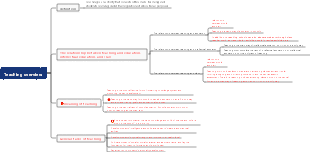
MindMap Gallery Secondary School Teaching Materials 4.1 Cognitive Processes
Mainly includes feelings, Perception, the development and application of perception, memory, thinking, problem solving and creativity, representation and imagination, etc.
Edited at 2024-02-17 15:09:27Avatar 3 centers on the Sully family, showcasing the internal rift caused by the sacrifice of their eldest son, and their alliance with other tribes on Pandora against the external conflict of the Ashbringers, who adhere to the philosophy of fire and are allied with humans. It explores the grand themes of family, faith, and survival.

This article discusses the Easter eggs and homages in Zootopia 2 that you may have discovered. The main content includes: character and archetype Easter eggs, cinematic universe crossover Easter eggs, animal ecology and behavior references, symbol and metaphor Easter eggs, social satire and brand allusions, and emotional storylines and sequel foreshadowing.
[Zootopia Character Relationship Chart] The idealistic rabbit police officer Judy and the cynical fox conman Nick form a charmingly contrasting duo, rising from street hustlers to become Zootopia police officers!
Avatar 3 centers on the Sully family, showcasing the internal rift caused by the sacrifice of their eldest son, and their alliance with other tribes on Pandora against the external conflict of the Ashbringers, who adhere to the philosophy of fire and are allied with humans. It explores the grand themes of family, faith, and survival.
This article discusses the Easter eggs and homages in Zootopia 2 that you may have discovered. The main content includes: character and archetype Easter eggs, cinematic universe crossover Easter eggs, animal ecology and behavior references, symbol and metaphor Easter eggs, social satire and brand allusions, and emotional storylines and sequel foreshadowing.
[Zootopia Character Relationship Chart] The idealistic rabbit police officer Judy and the cynical fox conman Nick form a charmingly contrasting duo, rising from street hustlers to become Zootopia police officers!
4.1 Cognitive process
Notice
concept of attention
Attention function
Select function (the most basic function)
Maintain functionality
Regulatory and supervisory functions
Classification of attention
unintentionally paying attention
pay attention intentionally
Pay attention after intending to
quality of attention
attention span
attention to stability
allocation of attention
Shift of attention
The application of attention rules in teaching
Correctly use the rules of unintentional attention to organize teaching activities
Create a good teaching environment
Pay attention to the use of lectures, blackboard writing techniques and teaching aids
Pay attention to the organization of teaching content and the diversification of teaching forms
Use the rules of intentional attention to organize teaching and improve learning consciousness
Organizing teaching using the law of mutual conversion of two kinds of attention
Cultivating attention of primary and secondary school students
Cultivate students' ability to combat distraction
Cultivate students' stable and broad interests
Cultivate students to develop good study habits
Cultivate students to maintain a good mental state
Enable students to analyze their own strengths and weaknesses in attention, carry forward their strengths, and overcome their shortcomings
Feel
concept of feeling
feeling type
external sensation
Including vision, hearing, taste, smell and skin sense, etc.
internal feeling
Somatosensory (visceral sensation)
Kinesthesia (feeling of joint muscles)
Balance sense (quiet sense or postural sense) eg: motion sickness, seasickness
General rules of sensation
Susceptibility (ability)
Absolute susceptibility (the ability to feel the smallest amount of stimulation)
Differential susceptibility (the ability to sense the smallest amount of difference between two similar stimuli)
Sensory threshold (quantity, value)
Absolute sensory threshold (the amount of feeling the smallest self)
Difference sensory threshold (the minimum amount of difference between two similar stimuli)
Susceptibility is inversely related to sensory threshold
sensory interaction
interaction of the same feeling
Feeling adapted
visual adaptation
dark adaptation
Ming adaptable
olfactory adaptation
Skin sensory adaptation
auditory adaptation
Adaptation of taste
…
Feeling contrast
Compare at the same time
Successive comparison
Feeling aftereffects
front and back image
negative afterimage
interaction of different senses
sensory compensation
sensory interaction
perception
concept of perception
types of perception
spatial perception
time perception
motion perception
kinesthetic perception
dynamic movement
induced movement
autonomous movement
exercise aftereffects
illusion
basic characteristics of perception
Selectivity (objectivity)
integrity
Comprehensibility
Very scene
observe
The meaning of observation: Observation is a purposeful, planned, and lasting perceptual activity of human beings, and is an advanced form of perception.
Cultivation of observation skills
Guide students to clarify the purpose and tasks of observation
Be fully prepared for observation, propose specific methods of observation, and formulate an observation plan
Individual guidance for students should be strengthened during actual observation
Guide students to learn to record and organize observation results. Students should also be guided to discuss and communicate, and report the results of observations.
The development and application of sensory perception
Characteristics of middle school students’ sensory development
Characteristics of sensory development among middle school students: rapid development
Characteristics of middle school students’ perceptual development
The intentionality and purposefulness of middle school students' perceptions are further improved
Perceptual accuracy of middle school students continues to improve
Logical perception begins to appear
Space perception and time perception gradually improve
Observation skills are fully developed
The application of sensory perception in teaching
law of intensity
law of difference
law of activity
combinatorial law
memory
concept of memory
Main types of memory
According to the contents of memory and objects of experience
image memory
visual memory
auditory memory
logical memory
emotional memory
motor memory
According to the length of time the memory content is retained
Instantaneous memory (sensory memory, sensory registration)
concept
Features
Very short time
Larger capacity
Distinctive image
original information
The transition from instantaneous memory to short-term memory depends on attention
coding
Image memory (image characteristics, encoding of visual organs)
Audiovisual memory (encoding of auditory organs)
short-term memory (working memory)
concept
Features
time is short
Limited capacity
Clear consciousness
Strong operability
susceptible to interference
Rehearsal is the way from short-term memory to long-term memory
coding
Auditory Coding (Major)
visual encoding
long term memory
concept
Features
Unlimited capacity
Long lasting storage
coding
Classification
episodic memory
semantic memory
Information processing and storage content vary
declarative memory
procedural memory
According to the degree of participation of consciousness in the memory process
explicit memory
implicit memory
memory process
Memorize
Keep
recall or recognize
forget
Reason for forgetting
Trace decay theory (automatic fading theory)
Representative figures: Pavlov, Thorndike
advocate
interference suppression theory
Representatives: Jenkins, Darren Basch
advocate
motivation theory
Extraction failed says
assimilation theory
The law of forgetting
Factors affecting the forgetting process
Nature of learning materials
The amount of memorization materials and the level of learning
The longevity and importance of memory tasks
Memorization method
time factor
emotions and motivations
Characteristics of memory development among middle school students
Memory capacity gradually increases, and the breadth of short-term memory approaches that of adults
Intentional enhancement of memory
Memorization of meaning becomes the main means of memory
Abstract memory gradually takes over
Improve memory ability and promote knowledge consolidation
Characteristics of good memory quality
Agility
persistence
accuracy
Preparatory
Ways to improve memory skills
Clarify the purpose of memory and enhance learning initiative
Understand the meaning of materials and use less mechanical memory
Refining materials to promote deep understanding
Use chunked learning strategies to organize materials rationally
Use multiple coding methods to improve the quality of information processing
Pay attention to learning methods to prevent forgetting knowledge
Review time
Review in time
Allocate time reasonably
Review method
Combining decentralized review with centralized review
Combining repeated reading with attempts to recall
Review methods should be diverse
Review using multiple senses
number of reviews
The amount of review content should be appropriate, and the amount of review content at one time should not be too much
Appropriate overlearning, overlearning by 50%, and learning proficiency reaching 150%
thinking
concept
characteristics of thinking
indirectness
generalization
quality of thinking
1. breadth of thinking (breadth of thinking)
2. Profundity of thinking (depth of thinking)
3. independence of thought
4. critical thinking
5. flexibility of thinking
6. agility of thought
7. logic of thinking
Classification of thinking
The development level of thinking (relying on objects)
intuitive action thinking
concrete image thinking
abstract logical thinking
logic of thinking
intuitive thinking
Analytical thinking
thinking orientation
Convergent thinking (seeking common ground, concentrated thinking)
Divergent thinking (divergent thinking, radiating thinking)
creativity of thinking
Remodeling thinking
creative thinking
thinking process
analysis and synthesis
Compare and classify
abstraction and generalization
Concrete and systematize
basic forms of thinking
concept
judge
reasoning
Characteristics of middle school students’ thinking development
Abstract logical thinking gradually takes the dominant position
Formal logical thinking gradually develops and is at an advantage in high school
Dialectical logical thinking develops rapidly
Problem Solving and Creativity
Problems and problem solving
General process of problem solving
problem found
Understanding the problem
propose a hypothesis
test hypothesis
Main factors affecting problem solving
problem situation
Settlement and functional fixation
brewing effect
Existing knowledge and experience - transfer
prototype inspiration
Emotions and Motivation
Teaching to improve problem-solving skills
Improve the quantity and quality of students’ knowledge reserves
Teach and train problem-solving methods and strategies
Provide a variety of practice opportunities
Develop the habit of thinking independently
Creative thinking and cultivation
Characteristics of creative thinking
fluency
flexibility
originality
creative cultivation
Create a suitable environment conducive to creativity
Create a relaxed psychological environment
Give students ample room for choice
Reform the examination system and examination content
Pay attention to the shaping of creative personality
protect curiosity
Relieve individuals’ fear of answering questions incorrectly
Encourage independence and innovation
Pay attention to illogical thinking
Provide students with creative role models
Provide courses to cultivate creativity and conduct creative thinking training
method
Divergent thinking training
Speculation and hypothetical training
Self-shooting training
brainstorming training
representation and imagination
concept
imaginary classification
Unintentional imagination (not random imagination)
Intentional imagination (random imagination)
Reimagine
create imagination
fantasy
Ways to Cultivate Students’ Imagination
Guide students to learn to observe and enrich students’ representational reserves
Guide students to think actively and help open the door to imagination
Guide students to work hard to learn scientific and cultural knowledge, increase students' knowledge and experience to develop students' spatial imagination ability
Combined with subject teaching, purposefully train students’ imagination
Guide students to engage in positive fantasies
Pain is the hardest to adapt to because pain is protective