 Wondershare EdrawMind
MindMap Gallery Teaching overview
- 22
Teaching overview
It introduces the definition, significance, tasks and relationship with education, intellectual education, and classes of teaching. It is full of useful information. Interested friends can refer to it!
Edited at 2024-02-14 16:16:15
- What is an Integral
Discover the fascinating world of integrals, a fundamental concept in calculus that encapsulates the idea of accumulation. This overview explores the core idea behind integrals, distinguishing between definite and indefinite integrals, and illustrating their applications in real-life scenarios like calculating distance, mass, and costs. We delve into the fundamental theorem of calculus, which bridges the gap between accumulation and differentiation. Key properties such as additivity and linearity are highlighted, alongside practical computation methodsboth analytical and numerical. Finally, we address common misconceptions to deepen your understanding. Join us on this journey to appreciate the power of integrals in mathematics and beyond!
- What is Probability
Discover the fascinating world of probability, where uncertainty meets mathematical precision. This introduction explores key concepts, starting with definitions and interpretations of probabilityclassical, frequentist, and Bayesian. We delve into fundamental laws, including Kolmogorov's axioms, and essential properties like conditional probability and independence. Learn about the law of total probability and Bayes' theorem, which are crucial for updating beliefs based on new evidence. Finally, connect probability to random variables and distributions, highlighting their significance in real-world applications. Join us on this journey to understand how probability shapes our understanding of chance and decision-making.
- What is Group Theory
Discover the fascinating world of Group Theory, where the elegance of symmetry meets algebraic structures. This branch of mathematics explores how groups model actions that maintain structural integrity, aiming to classify and analyze symmetries across various fields. A group, defined by specific operations and properties, encapsulates transformations that preserve shapes, equations, and more. Key concepts include finite and infinite groups, abelian versus non-abelian structures, and fundamental examples like integers and permutation groups. Group Theory also delves into internal structures like subgroups, normal subgroups, and homomorphisms, providing essential tools for understanding complex symmetry systems. Join us in exploring how this theory formalizes and describes symmetry in both abstract and tangible ways.
Teaching overview
- What is an Integral
Discover the fascinating world of integrals, a fundamental concept in calculus that encapsulates the idea of accumulation. This overview explores the core idea behind integrals, distinguishing between definite and indefinite integrals, and illustrating their applications in real-life scenarios like calculating distance, mass, and costs. We delve into the fundamental theorem of calculus, which bridges the gap between accumulation and differentiation. Key properties such as additivity and linearity are highlighted, alongside practical computation methodsboth analytical and numerical. Finally, we address common misconceptions to deepen your understanding. Join us on this journey to appreciate the power of integrals in mathematics and beyond!
- What is Probability
Discover the fascinating world of probability, where uncertainty meets mathematical precision. This introduction explores key concepts, starting with definitions and interpretations of probabilityclassical, frequentist, and Bayesian. We delve into fundamental laws, including Kolmogorov's axioms, and essential properties like conditional probability and independence. Learn about the law of total probability and Bayes' theorem, which are crucial for updating beliefs based on new evidence. Finally, connect probability to random variables and distributions, highlighting their significance in real-world applications. Join us on this journey to understand how probability shapes our understanding of chance and decision-making.
- What is Group Theory
Discover the fascinating world of Group Theory, where the elegance of symmetry meets algebraic structures. This branch of mathematics explores how groups model actions that maintain structural integrity, aiming to classify and analyze symmetries across various fields. A group, defined by specific operations and properties, encapsulates transformations that preserve shapes, equations, and more. Key concepts include finite and infinite groups, abelian versus non-abelian structures, and fundamental examples like integers and permutation groups. Group Theory also delves into internal structures like subgroups, normal subgroups, and homomorphisms, providing essential tools for understanding complex symmetry systems. Join us in exploring how this theory formalizes and describes symmetry in both abstract and tangible ways.
- Recommended to you
- Outline

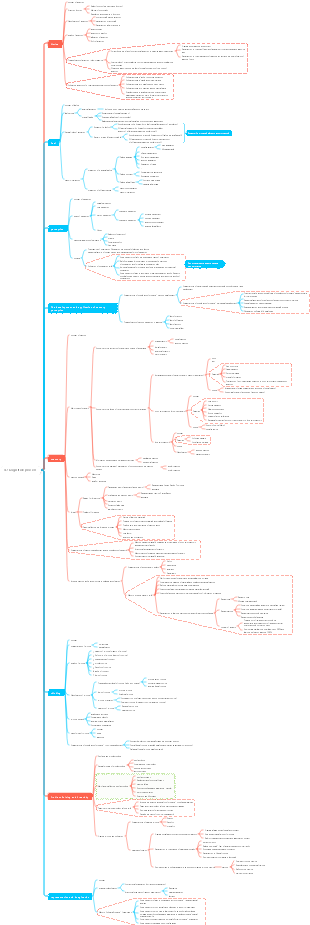
Teaching overview
definition
Teaching is an activity that consists of teachers' teaching and students' learning under the regulation of educational purposes.
The relationship between teaching and education, intellectual education, and class
The relationship between teaching and education
relationship between whole and part
Teaching is a basic way of education in schools
In addition to teaching, schools can also educate students through class teacher work, extracurricular activities, social practice activities, etc.
The relationship between teaching and intellectual education
Teaching is the main way of intellectual education, but it is not the only way
Teaching must complete the task of intellectual education, but intellectual education is not the only task of teaching
The relationship between teaching and class
relationship between whole and part
Teaching work includes lesson preparation, attending classes, extracurricular tutoring, assigning and correcting homework, and student academic assessment. Therefore, teaching includes attending classes, which is the central link and the main way of teaching activities, but it is not the only way.
meaning of teaching
Teaching is the most effective form of imparting knowledge system and promoting student development
Teaching is the basic way for schools to develop education in an all-round way and achieve training goals and educational purposes.
Teaching is the central task of school education. School education work must insist on teaching as the main task.
General tasks of teaching
Guide students to master the basic knowledge and skills of science and culture, which is the school’s top priority
Develop students' intelligence and cultivate students' creative and practical abilities
Develop students' physical strength and improve their health level
Cultivate students' socialist moral character and aesthetic taste, and lay the foundation for them to form a scientific world view
Pay attention to students' personality development
Teaching process
The nature of the teaching process
The teaching process is essentially a cognitive process
The main contradiction in the teaching process is the contradiction between students and the knowledge they have learned
The teaching process is a special cognitive process
indirectness
Students mainly use the scientific and cultural knowledge accumulated by mankind over a long period of time to understand the world indirectly.
Guidance
Students' understanding needs to be carried out under the guidance of experienced teachers and cannot be completed independently.
Simplicity
The process of students mastering knowledge is simple and efficient, and it is a reproduction of scientific and cultural knowledge.
Basic rules of the teaching process
The law that unifies direct experience and indirect experience (the law of indirectness, students understand the law of particularity)
Students mainly learn from indirect experience
This enables students to master a large amount of systematic scientific and cultural knowledge base in the shortest time and most efficiently.
At the same time, it can enable students to continue to understand the objective world from a new starting point and continue to expand new areas of understanding.
Students learn from indirect experience based on direct experience
Adhere to the unity of direct experience and indirect experience
Master the law that unites knowledge and development ability (intelligence) (developmental law)
Master the foundation of knowledge development ability
Developing abilities is an important condition for mastering knowledge
The internal mechanism of mutual transformation between mastering knowledge and developing abilities
Knowledge and ability are interdependent and mutually reinforcing, but knowledge is not the same as ability. It depends on the amount mastered and is not necessarily proportional to the level of ability development. Development ability is not only related to the amount of knowledge mastered, but also closely related to the quality of knowledge mastered, the methods of acquiring knowledge and the application of thinking methods. Some people have a lot of knowledge but poor abilities, such as "high scores and low abilities"; some people have less knowledge but strong abilities.
Two tendencies should be avoided in teaching
The law that unites the leading role of teachers and the leading role of students (bilateral law)
The law of the unity of imparting knowledge and ideological education (educational law)
Basic stages of the teaching process
Stimulate learning motivation (stimulate interest and curiosity)
comprehend knowledge
Understanding knowledge is the central link in the teaching process, including students' perception and understanding of teaching materials.
Consolidation of knowledge
Apply knowledge
Check knowledge, skills and techniques
Basic aspects of teaching work
Lesson Preparation → Preparation before class, prerequisites for taking good classes
When preparing lessons, three aspects of work should be done (three preparations)
Study teaching materials (prepare teaching materials)
There is a deepening process for teachers to master the teaching materials, which generally goes through three stages: understanding, thoroughness and familiarity.
Get to know students (prepare students)
Design Teaching Method (Teaching Preparation Method)
Three plans should be written when preparing lessons
Semester (or academic year) teaching progress plan
Topic (or unit) plan
Lesson plan (lesson plan)
Class → the central part of teaching work and the key to improving teaching quality
Type of lesson
Single lesson: a lesson mainly completes one task
Comprehensive class: two or more tasks are completed in one class
Basic criteria for a good class
with a clear purpose
The content is correct
Proper method
Reasonable structure
the art of language
Blackboard writing in order
Calm attitude
Giving full play to students' subjectivity is the fundamental requirement for a good class.
Arrangement and correction of extracurricular homework → continuation and supplement of classroom teaching
Form of extracurricular assignments
Reading assignments, oral assignments, written assignments, practical activity assignments
Requirements for assigning homework
The content of the assignment must comply with the scope and depth of the subject curriculum standards.
The assignments must be representative and typical, the weight must be appropriate, and the difficulty must be moderate.
Assignments should be logically connected to the textbook content, but cannot copy examples or materials from the textbook.
Assignments should help stimulate students' thinking and have elements that encourage independent inquiry and creative thinking
Homework should be combined with the reality of modern production and social life as much as possible, and strive to integrate theory with practice.
Make clear requirements to students and set a time for completion
Requirements for correcting assignments
Check and correct homework in a timely manner so that students can develop good habits of completing homework on time
Pay attention to discover errors and loopholes in students' knowledge and skills
Evaluate carefully, give grades, write short comments, and put forward clear requirements for students' learning.
Provide timely feedback on the status of homework to students, correct errors in students' homework and point out the reasons
Teachers should focus on explaining and correcting the mistakes that most students often make in their homework, and provide guidance to students.
Tutoring
Extracurricular tutoring is a necessary supplement to class, but it is not a continuation and simple repetition of class.
basic requirements
Help students complete their homework
Strengthen guidance for students with learning difficulties
Expanding knowledge for students who have room for learning
No new classes can be taught, teachers can come and go flexibly
Inspection and evaluation of students’ academic performance
Teaching principles
concept
Teaching principles are formulated based on certain teaching purposes and following the laws of the teaching process. They guide the basic requirements of teaching work. They guide both teachers’ teaching and students’ learning. They should be implemented in all aspects and always of the teaching process.
Commonly used teaching principles in middle schools
The principle of unifying scientific nature and ideological nature (educational nature)
meaning
Teachers must impart the basic knowledge and basic skills of modern advanced science to students, and must combine the moral education factors contained in knowledge and skills to provide students with political, ideological and moral education.
Related ideas
Herbart: "I cannot think of any education without teaching, just as, on the contrary, I do not recognize any teaching without education."
Implement requirements
Ensure that teaching is scientific and relevant to the times
Explore the ideological nature of teaching materials and pay attention to educating students on their emotions, attitudes, and values during the teaching process.
Pay attention to adding valuable information, examples or videos
Continuously improve one's professional quality and ideological and moral cultivation
intuitiveness principle
meaning
Through students' direct observation of the things they learn or the image of the teacher's language, students form a clear representation of the things they learn or the learning process, thereby gaining perceptual knowledge and enriching direct experience, thereby correctly understanding book knowledge and developing cognitive abilities.
Intuitive means
Intuitive in kind
Directly perceive the actual things to be learned
Impressionistic and intuitive
Direct perception of simulated images of actual things
Intuitive language
Describing perceived things through teachers’ figurative language
Related ideas
Xunzi: "Not hearing is not as good as hearing it, and hearing it is not as good as seeing it. Hearing it but not seeing it, even if you are knowledgeable, you will be wrong."
Comenius "Illustration of the World"
Ushinsky: "Generally speaking, children rely on forms, colors, sounds and feelings to think."
Implement requirements
Correct selection of visual aids and skills and teaching methods
Demonstration of visual aids should be combined with language explanations
Pay attention to the intuitive use of language
Prevent intuitive manipulation and abuse. Intuition is a means of teaching, not the purpose. It cannot be intuitive. Intuition is not the more the better.
heuristic principle
meaning
Teachers should take the initiative to recognize students as the main subjects of learning, pay attention to mobilizing students' initiative in learning, guide students to think independently, actively explore, learn lively, consciously master scientific knowledge and improve their ability to analyze and solve problems.
Related ideas
Confucius: "If you are not angry, you will not be enlightened; if you are not angry, you will not be angry."
"Xue Ji": "The Tao cannot be restrained, the strong cannot be restrained, the open cannot be reached."
Socrates: "Midwifery"
Implement requirements
Mobilizing students' initiative in learning is the primary issue of inspiration
Inspire students to think independently and develop students' logical thinking ability
Encourage students to use their hands and develop their ability to solve problems independently
Carry forward teaching democracy
step by step principle
meaning
Also known as the systematic principle, it means that teaching should be carried out in accordance with the internal logical system of scientific knowledge and the order of students' cognitive ability development, so that students can systematically master basic knowledge and basic skills and form rigorous logical thinking abilities.
Related ideas
"Xue Ji": "Learning without neglecting others", "giving without neglecting the mausoleum", "giving miscellaneously without giving to others, will lead to chaos without cultivation."
Mencius: "Be successful and advance backward"
Implement requirements
Teaching in accordance with the systematic teaching materials
Pay attention to the main contradictions and solve the key points and difficulties in teaching
According to the order of students' understanding, teaching is carried out from shallow to deep, from easy to difficult, from simple to complex.
Combine system coherence with flexibility and diversity
Principle of teaching students in accordance with their aptitude
meaning
Vocational teachers need to consider students' learning situations and individual differences, and provide targeted and differentiated teaching so that each student can develop their strengths and avoid weaknesses and achieve optimal development.
Related ideas
A key opens a lock
Implement requirements
Provide differentiated teaching according to students’ characteristics
Take flexible and diverse measures to fully develop students’ talents
The principle of integrating theory with practice
meaning
It means that teaching should be dominated by learning basic knowledge. Teachers should guide students to understand knowledge from the connection between theory and practice, and pay attention to using knowledge to analyze and solve problems, so as to understand and apply what they have learned. This principle is the experience of the law of the unity of direct experience and indirect experience in teaching.
Related ideas
read more, walk more
Implement requirements
The teaching of book knowledge should focus on connecting it with practice
Adopt a variety of teaching organization forms and pay attention to cultivating students' ability to apply knowledge
Correctly handle the relationship between knowledge teaching and intelligent training, and organically combine the two
Supplement necessary local teaching materials according to local conditions and develop school-based teaching materials
the principle of consolidability
meaning
Teachers should guide students to firmly grasp basic knowledge and basic skills on the basis of understanding, and keep them in memory for a long time, so that they can be reproduced quickly when needed to facilitate the development of knowledge and skills.
Related ideas
Review is the mother of learning
Implement requirements
Consolidate knowledge based on understanding
Pay attention to the role of organized review and guide students to master memory methods
Actively consolidate knowledge by expanding, reorganizing and applying it
Check the quality of students’ learning in a timely manner
principle of quantification
meaning
Also called the principle of acceptability. Refers to the teaching content, methods, weight, and pace that should be suitable for students’ development level so that they can accept it, but it must be difficult and require hard work for them to master.
Related ideas
Jump around and pick peaches
Implement requirements
It is necessary to correctly understand and scientifically estimate the development level of students and their potential development possibilities.
Organize teaching rationally so that teaching is always in the zone of proximal development and plays an important role in promoting student development.
Choose appropriate teaching methods to maximize students’ acceptance of new knowledge
Pay attention to the characteristics of the times when students’ cognitive development
teaching method
concept
Teaching methods are methods used to complete teaching tasks, including teachers’ teaching methods and students’ learning methods.
Commonly used teaching methods in middle schools
Teaching methods based on language transmission
Teaching method
meaning
A method for teachers to impart knowledge to students systematically and coherently through oral language
advantage
efficient
low cost
Conducive to giving full play to the leading role of teachers
Ensure knowledge is systematic and can solve most students’ questions
shortcoming
It is not conducive to students’ active and active learning
Too much lectures will take up time for students to study and practice on their own
Unable to take care of students’ individual differences, which is not conducive to students’ personality development
Not conducive to inspiring students
basic requirements
Pay attention to inspire and induce students
Carefully organize teaching content
Pay attention to language arts
Organize students to attend lectures
conversation method
meaning
Also known as the question-and-answer method, teachers ask questions to students according to certain teaching requirements, require students to answer, and guide students to acquire, consolidate or check knowledge through answers or dialogue.
advantage
Can fully stimulate students' active thinking and promote students' independent thinking
Have a positive effect on students’ intellectual development
Conducive to the training and improvement of students' language expression ability
shortcoming
Compared with decimal method, it takes more time to complete the same teaching task
When the number of students is large, it is difficult to take care of every student
basic requirements
Prepare questions and conversation plans based on teaching content and students’ existing experiences
Ask questions that are challenging and provocative
Talk to all students so that every student benefits
Good at inspiring and inducing students to think
Do a good job of summarizing to make students' knowledge systematic and scientific, correct students' misunderstandings, and help them accurately grasp knowledge.
discussion method
meaning
Under the guidance of teachers, students discuss a certain issue as a whole class or in small groups to distinguish right from wrong and acquire knowledge.
advantage
Helps stimulate students' interest and activate students' thinking
Helps students brainstorm, inspire each other, deepen understanding, and develop independent thinking abilities
Can promote the expression of students’ thinking ability
Helps mobilize students’ enthusiasm for learning
Can promote the development of students' oral language expression ability
shortcoming
Limited by students’ knowledge base, experience level and understanding ability
Easy to get off topic
basic requirements
Choose engaging discussion topics and be well prepared
Be good at inspiring and guiding students in discussions, allowing students to speak around central topics and never deviate from the topic.
After the discussion, make a summary of the discussion, summarize the main points, correct mistakes, one-sided or vague understanding, and affirm the value of students' various opinions.
reading guide method
meaning
Teachers guide students to acquire or consolidate knowledge by reading textbooks and other reference books.
basic requirements
Put forward clear goals, requirements and thinking questions
Teach students how to read
Good at guiding students to discover and solve problems while reading
Properly organize students to exchange reading experiences
Teaching methods based on intuitive perception
demonstration method
meaning
Teachers guide students to acquire knowledge or consolidate knowledge by displaying physical objects, visual teaching aids, conducting demonstration experiments, or using modern audio-visual means.
basic requirements
Be fully prepared before giving a demonstration, select appropriate demonstration teaching aids according to the teaching objectives, inspect the teaching aids, and consider the method and process of the demonstration.
During the demonstration process, let students clarify the purpose and requirements of the demonstration, organize students' observations and thinking, explain appropriately, and guide students to use multiple senses to perceive objects. You can also ask students questions so that students can observe with purpose and focus. and thinking, and at the same time pay attention to the timing of presenting teaching aids
Organize student exercises and discussions after the year to enable students to combine the phenomena demonstrated by teachers with theoretical knowledge in books and improve theoretical understanding.
Visit method
meaning
According to the teaching objectives and requirements, teachers organize students to conduct on-the-spot research on food, so that students can acquire new knowledge in practice or consolidate and verify methods of learning knowledge.
basic requirements
Have specific goals before the visit. According to the teaching objectives, determine the location and content of the visit, do a good job in organizing the visit, clarify the requirements, disciplines and precautions for the visit, and obtain the support and cooperation of parents
Students visiting Mercury Road should observe carefully, collect materials around the theme, and make records. Teachers should provide necessary explanations and introductions to guide or deepen students' understanding.
After the relevant work is over, organize students to summarize and use homework, conversations, discussions, etc. to let students express what they have seen, heard, felt, and experienced
Teaching methods based on practical training
Practice method
meaning
Also known as the homework method, it is a method in which students, under the guidance of teachers, use the knowledge they have learned to repeatedly complete certain operations and exercises to deepen their understanding and form skills.
basic requirements
Enable students to clarify the purpose and requirements of practice and master the principles and methods of practice to improve their learning consciousness
Select exercise materials, appropriately allocate weight, frequency and time, practice in various ways, and practice step by step
Strictly require students and provide timely feedback on practice to students
Experimental Method
meaning
The experimental method is a method in which students, under the guidance of teachers, use certain instruments and equipment to perform independent operations, observe the characteristics of things, explore their development and change patterns, acquire knowledge and skills, and cultivate scientific spirit.
basic requirements
Be prepared before the experiment. Develop an experimental plan, prepare experimental supplies, divide experimental groups, and prepare students for preparation
Make students clear the purpose, requirements and methods of the experiment.
During the experiment, attention should be paid to guiding the experimental process. Inspect the entire class's experiments, guide students to correct mistakes in a timely manner, and explain in a timely manner what students do not understand.
Guide students to make a summary of the experiment, point out the advantages and disadvantages of the experiment, analyze the causes of the problems, put forward suggestions for improvement, and require students to write experimental reports in accordance with regulations
Internship method
meaning
Also known as the practice method, the teacher guides students to use the knowledge they have learned to perform certain operations and apply book knowledge into practice according to the subject curriculum standards.
basic requirements
To prepare for the internship, teachers should make a plan, identify the location, prepare instruments, and form a team for the internship
Do a good job in mobilizing internship work. Teachers should make students clear the purpose, tasks, and precautions of internship assignments, and improve students' consciousness and enthusiasm
Provide guidance during the internship process. During the internship process, teachers should give students necessary guidance and communicate with students in a timely manner to ensure quality
Do a good job summarizing the internship assignments. Teachers should guide students to write internship reports or experiences, and evaluate and summarize them.
practical activity method
meaning
Let students participate in social practice activities and cultivate students' ability to solve practical problems and multi-faceted practical abilities.
basic requirements
Teachers must make sufficient preparations before students participate in practical activities
During the practical activities, students’ performance should be paid close attention to and guidance or help should be given to them.
At the end of the practical activities, arrange for students to summarize
Teaching methods focusing on emotional cultivation
Appreciative teaching method
Appreciation education refers to the method in which teachers guide students to experience the truth, goodness and beauty of objective things during the teaching process. Appreciation generally includes appreciation of nature, appreciation of life and appreciation of art, etc.
situational teaching method
Situational teaching refers to the purposeful introduction or creation of vivid and specific scenes with images as the main body and certain emotional colors by teachers in the teaching process, so as to arouse students' certain emotional experience, thereby helping students understand the teaching materials and improve students' psychological well-being. ways to develop functions
Basic basis for choosing teaching methods
Teaching objectives and teaching task requirements
Nature of courses and characteristics of teaching materials (teaching content)
Student characteristics, mainly the psychological characteristics and knowledge base of students
Teaching time, equipment conditions
Teachers’ professional level, practical experience and personality characteristics
Teaching methods, teaching environment, teaching principles, etc.
Teaching mode
program teaching model
representative figure
Skinner
concept
The procedural teaching model is an individualized teaching model that uses procedural teaching materials and is conducted in the form of personal self-study.
Discover the teaching model
representative figure
Bruner
concept
The discovery teaching model is a teaching model that aims to cultivate students' creative thinking, takes the basic structure of the subject as the content, and uses continuous discovery and inquiry as the method.
Master the learning teaching model
representative figure
bloom
concept
The mastery learning teaching model is a teaching model that is guided by the teaching philosophy of “everyone can learn” and effectively uses feedback and correction in the teaching process to provide students with the time and help they need. First, the vast majority of students meet academic requirements. required teaching model
suggestive teaching model
representative figure
Lozanov
concept
The suggestion teaching model is to carefully design the teaching environment and use comprehensive methods such as suggestion, association, practice and music to enable students to establish an unconscious psychological tendency, achieve a harmonious unity of consciousness and unconsciousness, and stimulate students' learning interests and needs to fully A teaching model that unleashes students' potential and enables students to achieve better results in relaxed and enjoyable learning
Example teaching model
representative figure
Wagenschein
concept
The model teaching model is a teaching model that uses exemplary materials in selected textbooks to enable students to master regular knowledge and abilities from individual to general.
non-directive teaching model
representative figure
rogers
concept
The non-directive teaching model is a student-centered, emotion-based individualized teaching method that promotes students' self-realization by establishing a democratic and equal teacher-student relationship and creating a suitable learning environment.
Teaching organization form
The basic organizational form of ancient teaching—individual teaching
concept
The teacher takes turns teaching students one by one. When the teacher is teaching a certain student, the other students will review or complete their homework as required by the teacher.
advantage
Teachers can teach students in accordance with their aptitude according to their characteristics
One-to-one communication between teachers and students can ensure that teachers have a full understanding of students' academic progress, so that the teaching content and teaching progress are suitable for each student's acceptance ability and level.
shortcoming
The efficiency is low and the teaching content is relatively simple.
status
Most schools in ancient China, ancient Egypt and ancient Greece adopted the form of individual teaching.
Modern teaching organization form
Class teaching system - basic form
concept
Also known as classroom teaching, it refers to a collective teaching organization form in which students are organized into classes with a fixed number of people according to age and education level, and teachers conduct subject-specific teaching according to the curriculum content and teaching hours uniformly specified in the curriculum plan.
produce
1632 Comenius' "Grand Teaching"
The earliest school in my country to adopt the class teaching system was the Jingshi Tongwen Museum opened by the Qing government in Beijing in 1862.
Basic Features
Group teaching on a class-by-class basis
Teaching by class
teach on time
advantage
Conducive to cost-effective large-scale training of talents and improvement of teaching efficiency
Help students acquire systematic scientific knowledge
Conducive to giving full play to the leading role of teachers
Conducive to the collective educational role of students
Conducive to teaching management and teaching inspection
It is conducive to ensuring the normal development of teaching and the completion of teaching tasks with strict systems
shortcoming
Not conducive to the development of students’ subjectivity
Not conducive to teaching students in accordance with their aptitude
It is not conducive to cultivating students’ exploration spirit, creativity and practical ability.
status
The most basic form of teaching organization
Individual tutoring and on-site teaching - assisted form
Individual tutoring mainly deals with special students (top students and underachievers)
On-site teaching refers to a form of auxiliary teaching organization in which teachers lead students to places related to production or life according to certain teaching tasks and teaching content.
Duplex teaching - special organizational form
Students of two or more grades are put into the same class, and a teacher uses different teaching materials. In the same class, direct teaching and self-study or homework are alternated between students of different grades. Teaching organization form for teaching
Other teaching organization forms
Group teaching
concept
Group teaching is an organizational form that divides students into groups of different levels for teaching based on their abilities or academic performance.
type
internal grouping
Grouping within class
external grouping
In-school grouping
advantage
Conducive to teaching students in accordance with their aptitude
shortcoming
It is difficult to identify students’ abilities and levels
Treating students differently can easily lead to criticism of equality in teaching
Not conducive to the healthy development of students’ personality
Bell-Lancaster system (tutored system)
It is based on the class, but the teacher does not directly face all students, but selects older students with better academic performance to serve as tutors. The teacher first teaches the tutors, and then the tutors teach the younger students. or other students with lower grades
design pedagogy
The design teaching method was pioneered by the American educator Dewey, and was later improved and vigorously promoted by his student Kerberk
This form of teaching organization organizes scenic area textbooks to break traditional subject boundaries. Under the guidance of teachers, students decide the purpose and content of their own learning, and acquire relevant knowledge and abilities in unit activities that they design and are responsible for.
dalton system
Founded by American educationist Parkhurst, teachers no longer systematically teach textbooks to students during class. They only assign self-study reference books to students and assign homework. Students study by themselves and work independently. When they have problems, they ask teachers for help. After completing the learning tasks at a certain stage, report the learning status to the teacher and accept the inspection
Vennat card system
The course is divided into two parts. One part is taught individually by subject, and the other part is conducted through group activities such as the Music and Art Movement Association and the Store Opening Organization Self-Government Association.
Trump system
Also known as a flexible curriculum, it combines large class lectures, small class discussions, and individual self-study, replacing fixed and unified class time with flexible time units, with a class period of approximately 20 minutes.
Teaching Evaluation
concept
Refers to the value judgment of teaching activities and their results based on teaching objectives and through certain standards and means, that is, the process of measuring, analyzing and evaluating teaching activities and their results.
content
Student academic performance evaluation, teacher evaluation and classroom teaching evaluation
Classification