 Wondershare EdrawMind
MindMap Gallery Class Management and Teacher Psychology
- 18
Class Management and Teacher Psychology
Introduce class management and teacher psychology from the aspects of class collective and class management, classroom management, class teacher work, extracurricular activities, and teacher psychology.
Edited at 2024-02-14 16:30:20
- What is an Integral
Discover the fascinating world of integrals, a fundamental concept in calculus that encapsulates the idea of accumulation. This overview explores the core idea behind integrals, distinguishing between definite and indefinite integrals, and illustrating their applications in real-life scenarios like calculating distance, mass, and costs. We delve into the fundamental theorem of calculus, which bridges the gap between accumulation and differentiation. Key properties such as additivity and linearity are highlighted, alongside practical computation methodsboth analytical and numerical. Finally, we address common misconceptions to deepen your understanding. Join us on this journey to appreciate the power of integrals in mathematics and beyond!
- What is Probability
Discover the fascinating world of probability, where uncertainty meets mathematical precision. This introduction explores key concepts, starting with definitions and interpretations of probabilityclassical, frequentist, and Bayesian. We delve into fundamental laws, including Kolmogorov's axioms, and essential properties like conditional probability and independence. Learn about the law of total probability and Bayes' theorem, which are crucial for updating beliefs based on new evidence. Finally, connect probability to random variables and distributions, highlighting their significance in real-world applications. Join us on this journey to understand how probability shapes our understanding of chance and decision-making.
- What is Group Theory
Discover the fascinating world of Group Theory, where the elegance of symmetry meets algebraic structures. This branch of mathematics explores how groups model actions that maintain structural integrity, aiming to classify and analyze symmetries across various fields. A group, defined by specific operations and properties, encapsulates transformations that preserve shapes, equations, and more. Key concepts include finite and infinite groups, abelian versus non-abelian structures, and fundamental examples like integers and permutation groups. Group Theory also delves into internal structures like subgroups, normal subgroups, and homomorphisms, providing essential tools for understanding complex symmetry systems. Join us in exploring how this theory formalizes and describes symmetry in both abstract and tangible ways.
Class Management and Teacher Psychology
- What is an Integral
Discover the fascinating world of integrals, a fundamental concept in calculus that encapsulates the idea of accumulation. This overview explores the core idea behind integrals, distinguishing between definite and indefinite integrals, and illustrating their applications in real-life scenarios like calculating distance, mass, and costs. We delve into the fundamental theorem of calculus, which bridges the gap between accumulation and differentiation. Key properties such as additivity and linearity are highlighted, alongside practical computation methodsboth analytical and numerical. Finally, we address common misconceptions to deepen your understanding. Join us on this journey to appreciate the power of integrals in mathematics and beyond!
- What is Probability
Discover the fascinating world of probability, where uncertainty meets mathematical precision. This introduction explores key concepts, starting with definitions and interpretations of probabilityclassical, frequentist, and Bayesian. We delve into fundamental laws, including Kolmogorov's axioms, and essential properties like conditional probability and independence. Learn about the law of total probability and Bayes' theorem, which are crucial for updating beliefs based on new evidence. Finally, connect probability to random variables and distributions, highlighting their significance in real-world applications. Join us on this journey to understand how probability shapes our understanding of chance and decision-making.
- What is Group Theory
Discover the fascinating world of Group Theory, where the elegance of symmetry meets algebraic structures. This branch of mathematics explores how groups model actions that maintain structural integrity, aiming to classify and analyze symmetries across various fields. A group, defined by specific operations and properties, encapsulates transformations that preserve shapes, equations, and more. Key concepts include finite and infinite groups, abelian versus non-abelian structures, and fundamental examples like integers and permutation groups. Group Theory also delves into internal structures like subgroups, normal subgroups, and homomorphisms, providing essential tools for understanding complex symmetry systems. Join us in exploring how this theory formalizes and describes symmetry in both abstract and tangible ways.
- Recommended to you
- Outline
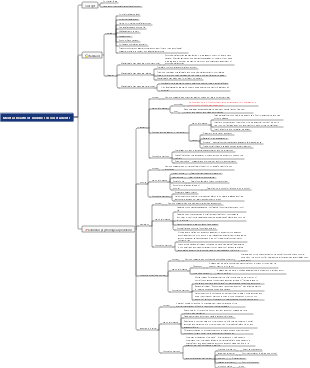
Class collective and class management
class
concept
It is a basic educational unit with a fixed number of students formed by the school in order to achieve certain educational purposes by grouping students with similar age and knowledge levels into classes.
status
It is the most basic administrative organization in the school administrative system, the basic organizational unit for the school to carry out education and teaching activities, and the most basic organizational form for teachers and students to carry out activities and exchange information.
source
In the 16th century, Erasmus, the famous educator during the Renaissance, was the first to officially use the word "class"
Class management
Class management content
Class organization building
Class system management
Class teaching management
Class activity management
Class management model
General management
Manage regular class activities by developing and enforcing rules and regulations
parallel management
The class teacher not only indirectly affects the individual through the management of the collective, but also affects the collective through direct management of the individual, thus combining the management of the collective and the individual.
democratic management
A management model in which class members participate in class management on the premise of obeying the correct decisions of the class collective and taking responsibility.
management by objectives
The class teacher and the students jointly determine the overall goals of the class, and then transform them into group goals and individual goals, so that the group goals and individual goals are integrated with the overall class goals to form a goal system, in order to promote class management activities and achieve the management of class goals. model
Class management functions
Helps achieve teaching goals and improve student learning efficiency, which is the main function of class management
Helps maintain class order and form a good class style, which is the basic function of class management
It helps to train students' abilities and let them learn to take care of themselves. This is an important function of class management.
class
concept
It is organized according to the training objectives and educational standards of the class teaching system. It is an activity community composed of class students with clear goals, strong leadership core, good discipline and public opinion.
Basic Features
clear common goals
It is the condition for the formation of the class and the driving force for progress.
a certain organizational structure
certain rules of common life
Criteria can be explicitly stated or intangible
An atmosphere of equality and psychological compatibility among group members
formation and cultivation
development stage
Formation stage
Students formally belong to the same class, but in fact they are relatively isolated individuals. Most class members are not familiar with each other, lack a sense of identity, and lack organization and coordination in their actions. At this stage, the class teacher is the core and motivation of the class. The collective has a greater dependence on the class teacher. Therefore, this period is the busiest period for the class teacher's work, and it is also a critical period when the class teacher's work ability is tested.
The initial stage of core formation
The initial core formation stage is a period of stable development of the class collective. The characteristics of the class collective have clearly emerged. There is a certain understanding and trust between teachers and students, and between students and students, and a certain degree of friendship is generated. Student activists continue to emerge and unite around the class teacher. The class cadres selected by the class teacher also begin to play a core role. The cohesion of the class begins to appear. Most students gain a sense of belonging in the class collective. The organizational functions of the class are relatively sound. The core of the class Initial completion. The class can actively organize and carry out class work and activities under the guidance of the class teacher. The class teacher begins to directly lead and direct the work and activities of the class, and gradually transitions to making suggestions to the students, and the class cadres organize and carry out collective work and activities. Therefore, This period is an important period for the class teacher to cultivate the backbone of the class.
collective autonomous activity stage
The Geely independent activity stage is a period when the class collective matures, and the collective characteristics are fully and completely reflected. The class has clear goals that are mutually recognized by the members, forming a strong core. Class cadres have the ability to independently support class work, and students have strong self-education capabilities. The class forms correct public opinion and good class style. The class teacher's job is mainly to educate students collectively, and the collective begins to become a real educational method.
Methods of cultivating class collectives
Determine the development goals of the class collective
Establish the core team of the class collective
Establish normal order in the class
Organize various educational activities
Cultivate correct class public opinion and good class style
Do a good job in individual education
classroom management
classroom management
concept
It is a series of activities and measures taken to organize teaching, design learning environment, and deal with classroom behavior in order to effectively use time, create a pleasant and constructive learning environment, and reduce problem behaviors.
Function
Maintenance function (the basic function of classroom management)
promotion function
development function
basic mode
behaviorist approach
Classroom managers with a behaviorist orientation believe that students' growth and development are determined by the external environment. Students' bad behaviors in the classroom are either acquired through learning or due to failure to learn correct behaviors. In classroom management , the teacher’s responsibility is to reinforce appropriate behaviors and eradicate inappropriate behaviors.
humanistic orientation
Classroom managers in humanistic schools believe that students have their own decision-making abilities and that they can take primary responsibility for controlling their own behavior. In classroom management, teachers should not require students to be obedient, but should pay attention to students' needs, emotions and Initiative, providing students with the best opportunities to explore their sense of belonging, achievement and positive self-identity, in order to maintain a positive classroom atmosphere.
teacher effectiveness orientation
The teacher effectiveness-oriented classroom management model focuses on the improvement of teachers' classroom management skills. Researchers who hold this orientation believe that the effectiveness of classroom management mainly depends on teachers' classroom management skills. Improving teachers' classroom management skills through training can achieve the effect of improving the quality of classroom management.
Classroom group management
functions of groups
belonging function
It means that the school group can enable members (teachers or students) to have the experience of becoming a member of the group and receiving mutual care and care.
Identity function
It means that the whole school can enable students or teachers to maintain common views and evaluations with the school group on some important matters or principle issues.
Support function
It means that the school group can inspire or promote the thoughts, emotions, behaviors and performance of students or teachers.
shaping function
It means that the school group plays an important role in forming a sound personality that adapts to the requirements of modern society and cultivating talents that society needs. The rules and requirements in the school group, public opinion, and the words, deeds, and performance of students and teachers evaluated according to the role norms of students and teachers make teachers and students more adaptable to the requirements of society and grow more healthily.
formal groups and informal groups
formal group
It refers to a group of students formed according to certain regulations under the leadership of the school administration, class teachers or social groups. Classes, Communist Youth League, etc. are all formal groups.
informal group
concept
It refers to a small group formed spontaneously by some students who combine freely in the process of peer interaction.
type
Positive
The value goals of the positive informal group are consistent with the value goals of the formal group in the class, and they are a supplement to the formal group in the class.
Entertainment type
Members of recreational informal groups often gather together out of mutual goodwill and the need to spend their spare time. Their purpose is to be healthy and have fun.
Negative
Negative informal groups will consciously or unconsciously conflict with the class teacher and class committee
Destructive
Destructive informal groups have separated from formal groups. They lack standards of right and wrong, good and evil, and often have a destructive effect on class organization.
Influence
positive influence
Can promote information communication among students and meet students’ psychological needs
It helps students organize and carry out various healthy activities, management and education.
It helps to solve difficulties that cannot be taken care of by teachers or formal groups at the moment.
negative impacts
Provide unprincipled support for the bad behavior of peers and oppose teachers and classes
Spreading gossip, breaking discipline, gathering people to cause trouble
Easily taken advantage of by bad guys and led astray into committing crimes, etc.
Classroom climate management
type
Positive
A positive classroom atmosphere is an organic unity of quiet and active, deep heat, relaxation and rigor. In such a classroom atmosphere, students are active in thinking, enthusiastic in classroom speeches, have good classroom discipline, and have a harmonious and harmonious relationship between teachers and students.
Negative
Negative classroom atmosphere is usually characterized by students being nervous, reserved, absent-minded, and unresponsive.
Confrontational
A confrontational classroom atmosphere is an out-of-control classroom atmosphere. During classroom teaching activities, students are overly excited, do their own thing, interrupt at will, and deliberately cause trouble. The teacher loses the ability to control and control the classroom.
Influencing factors
Teacher factors
Teacher leadership style
Teachers’ expectations for students
Teacher's emotional state
Teacher’s teaching ability
student factors
Students are the main body of classroom activities, and students' recognition of collective goals is a necessary prerequisite for the formation of a good classroom atmosphere. Students consciously abide by classroom disciplines and develop good moral character and study habits, which is conducive to the formation of a good classroom atmosphere.
In addition, the collective public opinion in the classroom and the cooperation and competition among students will all affect the classroom atmosphere.
Classroom physical environment factors
The physical environment of the classroom refers to the specific teaching environment composed of teaching time and space factors, including teaching time arrangement, class size, classroom equipment, light, sound, temperature, seating arrangement, etc.
Conditions for creating a good classroom atmosphere
Establish harmonious interpersonal relationships, which is the basis for creating a good classroom atmosphere
Use flexible and diverse teaching methods
Adopt democratic leadership
Give students reasonable expectations
Classroom discipline management
type
teacher-facilitated discipline
It refers to the class code of conduct formed under the guidance and help of teachers.
collective discipline
It refers to the group behavioral norms formed under the influence of collective public opinion and collective pressure.
mission-enabled discipline
It refers to the specific requirements that a specific task places on students’ behavior.
self-enabled discipline
It refers to the individual's internal binding force that is internalized from external disciplines under the individual's conscious efforts.
development stage
Resistance behavior stage
Children before the age of 4 to 5 are mostly in the stage of rebellious behavior. At this stage, children's behavior often shows confrontational behavior. They refuse to follow instructions and requests and require a lot of attention. Children rarely have their own rules, but may follow the requirements of others because of fear of rebuke. Students at this stage behave well when the teacher is keeping them in check, but if they are not careful, they will lose control.
self-serving behavior stage
Children aged 5 to 7 are mostly in the stage of self-serving behavior. At this stage, students are self-centered, but easier to manage in the classroom, and they are concerned with the consequences of their behavior "what it means to me," whether it is a reward or a punishment.
interpersonal discipline stage
Most middle school students are in the interpersonal discipline stage. At this stage, students' behavioral orientation is to establish a mutual interpersonal relationship, and their behaviors are often linked to the motivation of "how can I please you"; they care about their own image in the minds of others and hope that Others like you. For students at this stage, if the teacher asks them to calm down, they will calm down.
self-discipline stage
Students in the self-discipline stage can distinguish right from wrong, understand the meaning of observing discipline, and can restrain themselves. They can maintain discipline even if the teacher is not in the classroom. Although many middle school students are able to reach this level, only some are able to maintain it stably. Students at this stage do not appreciate arbitrary discipline. In the classroom, students at this stage will become bored if certain students force the teacher to spend a lot of time dealing with discipline issues.
Strategies for Maintaining Classroom Discipline
Establish positive, effective classroom rules
Fully discussed and jointly formulated by teachers and students
Try to be as few and precise as possible, and the content should be mostly positive guidance.
should be formulated and adjusted in a timely manner, and students should be guided to comply with
Properly organize classroom teaching to maintain students’ attention and interest in learning
Increase opportunities for students to participate in classroom teaching
Maintain a tight teaching pace and arrange academic tasks reasonably
Handle transitions between teaching activities.
Do a good job in classroom supervision
Teachers should be able to promptly prevent or discover some disciplinary problems that arise in classroom teaching, and use verbal prompts and objectives to correct them. Light contact and other methods remind students to pay attention to their behavior
Cultivate students' self-discipline quality
Put forward clear requirements for students and strengthen purposeful education of classroom discipline
Guide students to have a correct and positive attitude towards learning discipline, allow students to have a positive emotional experience of discipline, cultivate students' good habits and willpower to consciously abide by discipline, and guide students to self-monitor
Collective public opinion and collective norms are effective means to promote the formation and development of students' independent qualities, and teachers should make effective use of them
classroom problem behavior
concept
It refers to behavior that occurs in a classroom situation, violates classroom rules, interferes with the normal progress of classroom learning activities, or affects teaching and learning efficiency.
Performance
Main manifestations include insouciance, indifference, avoidance of class activities, tense relationships with teachers and classmates, impulsiveness, interrupting in class, restlessness, overactivity, etc.
nature
Problem behavior is an educational concept. In addition to poor students having problem behaviors, excellent students sometimes also have problem behaviors.
type
Character problem behaviors, those directed toward the environment and other people
Personality problem behavior, that is, bad behavior related to the student's personality
main reason
Student-related factors mainly include maladaptation, boredom, frustration and tension, venting of troubled emotions, seeking attention, excessive activities, gender differences, uneven cognitive levels of students in the class, curiosity about the consequences of violating rules and disciplines, personality factors etc.
Factors on the part of teachers include improper teaching, improper management and loss of prestige, etc.
Environmental factors include mass media, home environment, classroom seating arrangement, temperature and color of the teaching environment, etc.
Preventing Problem Behavior in the Classroom
Teaching is engaging
Conduct participatory teaching (increase participation)
maintain momentum (maintain momentum)
Keep teaching flowing
Handle conversion
maintain group attention
Responsibility
group alert
Observe everything clearly
a
Avoid the ripple effect
Treatment and Correction of Objective Problem Behaviors
Use positive verbal and non-verbal means of regulation
Use punishment appropriately
Guide students to participate in learning activities and leave no time for students to violate disciplines
Provide psychological counseling
Class teacher work
The status and role of the class teacher in class management
The class teacher is the designer of class construction
The class teacher is the leader of the class organization. Its leadership influence is mainly reflected in two aspects: First, the authority, status, and authority of the class teacher, which constitute the authority and influence of the class teacher; second, the personality characteristics and charisma of the class teacher, which constitute the personality influence of the class teacher.
The class teacher is the coordinator of interpersonal relationships in the class
The head teacher’s leadership style
Basic qualifications that a class teacher should possess
Ideological and moral quality
Knowledge quality
Ability and quality
Physical and mental quality
Basic contents and methods of the work of a class teacher
Get to know and study students
Understand and research student content
Get to know and study students as individuals
Understand and study student group relationships
Understand and study students’ learning and living environments
Key methods of understanding and studying students
Observation
conversation method
Survey
Analyzing Written Materials
Organizing and cultivating class collectives
Create student profile
Carry out individual education work
Advanced student work
Guide them to correctly understand and evaluate themselves and cultivate their awareness and ability of self-education
Provide reasonable frustration education to cultivate their strong will, quality and ability to resist frustration.
Create a healthy competitive atmosphere and help them establish a correct sense of competition and cooperation
Encourage them to actively use their strengths and role models to drive the whole class to make progress together
Secondary school job
Pay attention to the education of middle school students
According to the different characteristics of middle school students, individual mathematics education is carried out in a targeted manner
In view of the lack of confidence of middle-level students, create opportunities for middle-level students to fully demonstrate their talents and enhance their self-confidence.
Job for underachievers
Caring for, caring for, and respecting underachievers and their personality
Cultivate and stimulate the learning motivation of underachievers
Set an example and enhance the concept of right and wrong among underachievers
Teach students in accordance with their aptitude according to individual differences
Be good at identifying the "sparkling points" of underachievers to enhance their self-confidence and collective sense of honor
Organize class activities and extracurricular activities
Class meeting activities are an important means for class teachers to carry out educational activities, an important method to cultivate excellent class collectives, and a basic way to improve students' activity ability. In terms of carrying out extracurricular activities, the head teacher is mainly responsible for mobilizing and organizing work
Coordinating various educational influences
Coordinate the relationship between various educational factors within the school
Coordinate the relationship with subject teachers
Coordinate relationships with school leaders at all levels
Guide and assist the Communist Youth League work
Coordinate the relationship between school education and family education
Ways to coordinate the relationship between school education and family education include home-school visits, home-school correspondence, parent schools, parent committees, parent meetings, parent salons, etc. Among them, teacher home visits during home-school visits are an important way to coordinate the relationship between school education and family education.
Coordinate the relationship between school education and social education
Relying on community education committee
Establish an off-campus education base
conduct assessment
Concept and general steps of conduct assessment
Conduct assessment is based on the educational purpose as the guiding ideology and the student code as the basic basis. It is a summary and evaluation of students' study, work, life, conduct, etc. within a semester. The general steps of conduct evaluation are student self-evaluation, group evaluation, class teacher evaluation, and information feedback.
Things to note when writing conduct reviews
Seek truth from facts, be objective and fair
Actively induce and encourage
Accurate language and specific content
Be targeted and highlight your personality
Prepare the class teacher's work plan and summary
The class teacher's work plan is generally divided into semester plan, monthly or weekly plan and specific activity plan
The class teacher's work summary is a comprehensive and appropriate assessment of the entire work process, status and results by the class teacher, and a qualitative evaluation and quantitative estimate.
extracurricular activities
concept
Extracurricular activities refer to a kind of educational activities that are organized and guided by schools or off-campus educational institutions in addition to classroom teaching to supplement classroom teaching and achieve the requirements of educational policies. They are based on the needs of the educated and the needs of education and teaching. Activities to achieve educational purposes under the direct or indirect guidance of educators
significance
Helps students broaden their horizons and acquire new knowledge
It is a vast world for teachers to teach students in accordance with their aptitude and for students to develop their individual strengths.
Conducive to developing students' intelligence and cultivating students' various abilities
It can enrich students’ spiritual life and promote their physical and mental health development.
It is an important way to carry out moral education
main content
Subject activities
Science and technology activities
Literary and artistic activities
sports activities
social activity
extracurricular reading activities
Theme activities
organizational form
mass activities
Group Activity
individual activities
Features
Voluntary participation
autonomy of activity
organizational flexibility
Practicality of activities
breadth of content
, Requirements for organization and management of extracurricular activities
Must have clear purpose and planning
Take care of students’ interests and talents, and adapt to their age characteristics
Activities should be colorful, diverse and attractive
Pay attention to giving full play to students' collective and individual initiative, independence, and creativity, and combine it with teacher guidance
Classroom teaching and extracurricular activities should cooperate and promote each other; ⑥ Extracurricular activities should be adapted to local and school conditions
Teacher Psychology
Teacher's Role Psychology
Teacher role concept
Teacher role means that teachers assume corresponding social roles according to their specific social status and display behavior patterns that are in line with social expectations.
Teacher's professional role
evangelist
Teacher and puzzle solver (the role of imparter of knowledge)
Demonstrator (role model)
Designers, organizers and managers of educational and teaching activities
parents and friends
learners and researchers
Cultivator of students’ souls
school administrator
Teacher role awareness
Teachers' role awareness refers to teachers' awareness, understanding and understanding of their own role status, role behavioral norms and role playing. Its psychological structure includes role cognition, role experience and role expectations. Character recognition is a prerequisite for role-playing
The formation stage of teachers’ professional role
role recognition stage
role identification stage
role belief stage
Characteristics of teachers’ labor
The complexity and creativity of teachers’ labor
The complexity of teachers’ labor is mainly reflected in three aspects: ① The purpose of teachers’ labor is complex: ② The objects of teachers’ labor are complex: ③ The methods of teachers’ labor are complex
The creativity of teachers’ labor means that teachers should use educational rules tactfully and flexibly according to different students and different educational situations to achieve optimal educational results, which is mainly reflected in the following three aspects: ① Teaching students in accordance with their aptitude; ② Adjusting educational content and methods and continuous updating of means; ③ Educational wisdom
The long-term and indirect nature of teachers’ labor
The long-term nature of teachers' labor means that the cycle of talent training is relatively long, and the impact of education is slow-acting.
The indirectness of teachers’ labor means that teachers’ labor does not directly create material wealth, but uses students as an intermediary to realize its value.
The Subjectivity and Demonstration of Teachers’ Labor
The subjectivity of teachers' labor means that teachers themselves can become vivid educational factors and influential role models.
The exemplary nature of teachers' labor means that teachers' words and deeds will become the objects of imitation by students, and teachers' character, talent, academic attitude, etc. will all affect the development of students. The exemplary nature of teachers' labor is determined by students' plasticity and teacher-oriented nature.
The continuity and extension of teachers’ labor
The continuity of teachers' labor means that teachers' labor does not have strict handover time limits. Teachers may work before and after get off work.
The extensive nature of teachers' labor means that teachers' labor does not have strict boundaries of labor places. Both inside and outside the classroom and inside and outside the school may become the space for teachers' labor.
The individual and collective nature of teachers' labor
The individual nature of teachers' labor means that from the perspective of labor means, teachers' labor is mainly carried out in the form of individual labor, and teaching activities are mainly completed through the individual labor of each teacher. Each teacher has strong individual characteristics in a certain time, space and goal.
The collective nature of teachers' labor means that the fruits of teachers' labor are the result of collective labor and the influence of many parties. Teachers’ individual labor will eventually be integrated into teachers’ collective labor. Educational work is teachers’ group labor.
Teacher prestige
Classification
power prestige
Convince authority
Influencing factors
Objective factors
The society's attitude towards the teaching profession, the attitude of educational administration agencies and school leaders towards teachers, the attitude of students' parents towards teachers, students' understanding and attitude towards teachers' work, the social status of the teaching profession, etc. Society's attitude towards the teaching profession and the social status of the teaching profession are the most important objective factors
Subjective factors
Teachers' noble ideological and moral qualities, profound knowledge and superb educational and teaching artistic level are the basic conditions for teachers to gain prestige; teachers' appearance, style and habits are necessary conditions for teachers to gain prestige; equal exchanges between teachers and students are important for teachers to gain prestige conditions; the first impression a teacher gives to students has a great impact on the teacher’s prestige.
Ways to build teacher prestige
Develop your own good moral character
Develop good cognitive skills and character traits
Give students a good first impression
Pay attention to the development of good appearance, demeanor and behavioral habits
Be a friend and confidant of students
Maintenance and Development of Teachers' Prestige
Have an open mind and a pragmatic attitude
Correctly understand and rationally use one's authority
Have an enterprising work spirit
Be consistent in words and deeds, and be a role model for students
Teachers’ Psychological Characteristics
Teacher’s Cognitive Characteristics
knowledge structure
Ontological knowledge refers to the specific subject knowledge that teachers have
Conditional knowledge refers to the knowledge that teachers have in pedagogy, psychology, etc.
Practical knowledge refers to the classroom situation knowledge and related knowledge that teachers have in teaching behaviors.
Cultural knowledge, including knowledge in philosophy, social sciences, natural sciences, etc.
teaching ability
Teaching cognitive ability refers to the degree to which teachers generalize the theorems, rules, concepts, etc. of the subjects they teach, as well as the degree to which they understand the psychological characteristics of the students they teach and the teaching strategies they use.
Teaching operation ability refers to the level of teachers' use of strategies in teaching. Its level mainly depends on how teachers guide students to master knowledge, think actively, and use a variety of strategies to solve problems.
Teaching monitoring ability refers to the teacher's ability to proactively plan, inspect, evaluate, feedback, control and adjust the teaching activities themselves in order to ensure that the teaching achieves the expected goals during the teaching process.
Teacher’s Personality Traits
professional beliefs
teaching efficacy
General sense of teaching efficacy
personal teaching efficacy
teaching attribution
professional character
The basic core of the character quality of excellent teachers is "promotion"
Teacher Behavioral Characteristics
Teacher’s Teaching Behavior
Teachers’ teaching behaviors are all behaviors that teachers cause, maintain or promote student learning
teacher expected behaviors
The teacher expectation effect is also called the Rosenthal effect or the Pygmalion effect. This effect shows that after teachers’ expectations are conveyed to students explicitly or implicitly, students will shape their behavior in the direction of teachers’ expectations. Generally speaking, teachers' positive expectations for students will make students develop in a good direction, while teachers' negative expectations for students will make students get worse and worse. Therefore, in education, teachers should give students positive expectations
Teachers’ Growth Psychology
Teacher’s growth stages
Pay attention to the survival stage
Those who are in the concern survival stage are usually new teachers. Teachers spend a lot of time dealing with interpersonal relationships or managing students.
focus on situational stage
When the focus is on improving students' performance, they enter the situation-focused stage. Teachers in the situation-focused stage are concerned about how to teach the content of each class well, and are always concerned about such things as the size of the class and the pressure on teaching time. and whether the lesson preparation materials are sufficient and other issues related to the teaching situation. Traditional teaching evaluation also focuses on this stage. Generally speaking, old teachers pay more attention to this stage than new teachers
Pay attention to the student stage
In the stage of focusing on students, teachers will consider the individual differences of students and recognize that students with different development levels have different needs and that certain teaching materials and methods may not be suitable for all students. Being able to consciously pay attention to students is one of the important indicators of a teacher's maturity.
Teacher's growth path
Professional development based on learning and research
Teachers are learners who enrich their knowledge system by learning the knowledge of the subjects they teach, educational theoretical knowledge, basic technical and methodological knowledge of educational practice, knowledge of modern educational technology and teaching and scientific research knowledge. Teachers are researchers who mainly improve their understanding of teaching through research on practical issues.
Professional development based on teaching practice
Teachers are practitioners, and practical knowledge plays a practical guiding role in teachers' daily teaching behaviors and is of great significance in promoting teachers' growth. Teachers are actors who improve their teaching by actively carrying out "research for action, research on action, and research in action"
Professional development based on teaching reflection
Teachers are reflectors. Teachers consciously regard their teaching practice as the object of understanding, conduct comprehensive and in-depth thinking and summarization, and thereby continuously improve their teaching behavior and improve their teaching level. This is an important way for teachers to grow. American educational psychologist Posner proposed a teacher growth formula: experience, reflection = growth
Professional development based on self-development
Teachers are independent growers, and self-development advocates a teacher-centered development concept. It will encourage teachers to actively construct their own knowledge system through learning and research in teaching practice to obtain new developments.
Professional development based on information environment
Teachers are users of information technology. The improvement of teachers’ information technology literacy will encourage them to consciously use information technology in teaching, thus promoting changes in teaching content, teaching methods and students’ learning methods.
Teachers’ Mental Health
The concept of teachers’ mental health
Teacher mental health means that teachers consciously improve their personality, develop their psychological potential, maintain and enhance all aspects of their psychological functions and social adaptability, and prevent various psychological diseases during the education and teaching process, so as to maximize their individual psychological functions.
Teacher mental health standards
Able to actively accept oneself, that is, truly understand, correctly evaluate, accept and like oneself
Have a good level of educational cognition, be able to correctly understand and treat the surrounding things and the objective environment, and have the necessary abilities to engage in educational work
Love the teaching profession and care for students
Have a stable and positive educational mentality
Ability to exercise self-control over various emotions and emotions
Those who have harmony have interpersonal relationships, can get along harmoniously with others in interactions, and have more positive attitudes than negative ones.
Able to adapt to and transform the educational environment
Have rich creativity and be able to deal with emergencies and classroom problems in an adaptable manner
Teachers’ occupational stress and coping strategies
Manifestations of Teachers’ Occupational Stress
Physiologically, occupational stress may lead to an increase in teachers’ physical illnesses, such as headaches, dizziness, technical labor, etc.
Psychologically, occupational stress may cause teachers to have negative emotions such as anxiety, tension, oppression, helplessness, frustration, depression, and lack of self-confidence.
In terms of behavior, occupational stress may cause teachers to have out-of-control behavior, low work efficiency, absenteeism and other bad behaviors.
Sources of Teachers’ Occupational Stress
There are many sources of teachers’ occupational stress, including class size, teaching conditions, student behavior, management tasks, working hours, interpersonal relationships, teaching reform, economic income, professional image, professional development, etc.
Coping Strategies for Teachers’ Occupational Stress
The direct action method includes all strategies for actively dealing with stress sources: ① Identify and monitor the sources of occupational stress and reduce excessive and excessive occupational stress: ② Adjust personal expectations and set appropriate work goals: ③ Change is easy Behaviors that increase stress and handle the relationship between work and leisure; ④ Expand coping resources and be good at seeking and utilizing social support
Mitigation methods, that is, efforts to reduce the negative emotional experience caused by occupational stress, include the following points: ① Positive cognition, rational, objective and positive view of the impact of stress on oneself, and forming a good mentality in the face of stress; ② Active response, Improve the ability to withstand stress; ③ Master the control methods, learn to relax mentally, and relieve bad emotions
Teachers’ professional burnout and coping strategies
Characteristics of burnout
emotional exhaustion
physiological exhaustion
Symptoms include extreme chronic fatigue, powerlessness, fatigue and weakness, sleep disorders (insomnia/drowsiness), headaches, abnormal appetite (anorexia/bulimia), etc.
psychological exhaustion
It is the core dimension of professional burnout, which specifically refers to loss of enthusiasm for work, high mood swings, easy anger at others, and feeling that one's own emotions are in a state of extreme fatigue.
dehumanization
Dehumanization refers to deliberately maintaining a distance between oneself and the people one works with, and adopting an attitude of indifference and neglect towards the people one works with and the environment. Dehumanized teachers treat students with a negative, negative, insensitive attitude and emotion
Low sense of personal achievement
A low sense of personal achievement manifests itself in negative evaluation of oneself, a decrease in self-efficacy, devaluation of the meaning and value of one's work, work becoming mechanized and inefficient, and a lack of adaptability.
Causes of teacher burnout
Social factors, namely the prestige pressure of the teaching profession
Occupational factors, that is, the role pressure, role conflict, and role transcendence caused by teachers' multiple roles load pressure
The working environment, that is, the interpersonal pressure between teachers and students, parents, leaders, and colleagues, and the pressure caused by the school’s evaluation and appointment system
Personal factors such as role ambiguity, self-efficacy, social comparison style, collective self-esteem, coping style, creativity, etc.
Strategies for coping with teacher burnout
Strengthen social support system 1
The government should appropriately regulate and guide academic discussions, give teachers more humanistic care, form a culture of respecting teachers in the whole society, improve teachers' professional reputation, and form a good academic support system and public trust atmosphere.
School leaders should do a good job in the ideological education of teachers and students: pay attention to teachers' workload issues: and create a good humanistic environment.
Teachers’ families should communicate well with teachers to create a happy and happy family atmosphere
Adjust and optimize mental state
Develop a positive attitude
Look at problems from a dialectical perspective
Control and regulate individual emotions and emotions