MindMap Gallery Psychological Counseling for Middle School Students
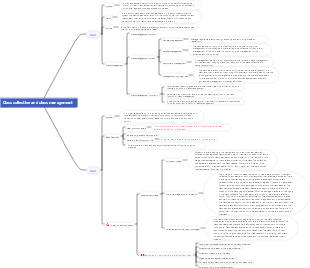
It introduces psychological counseling for middle school students from the aspects of mental health of middle school students, school psychological counseling, stress and frustration, etc. Friends in need should quickly collect it!
Edited at 2024-02-14 16:26:38Avatar 3 centers on the Sully family, showcasing the internal rift caused by the sacrifice of their eldest son, and their alliance with other tribes on Pandora against the external conflict of the Ashbringers, who adhere to the philosophy of fire and are allied with humans. It explores the grand themes of family, faith, and survival.

This article discusses the Easter eggs and homages in Zootopia 2 that you may have discovered. The main content includes: character and archetype Easter eggs, cinematic universe crossover Easter eggs, animal ecology and behavior references, symbol and metaphor Easter eggs, social satire and brand allusions, and emotional storylines and sequel foreshadowing.
[Zootopia Character Relationship Chart] The idealistic rabbit police officer Judy and the cynical fox conman Nick form a charmingly contrasting duo, rising from street hustlers to become Zootopia police officers!
Avatar 3 centers on the Sully family, showcasing the internal rift caused by the sacrifice of their eldest son, and their alliance with other tribes on Pandora against the external conflict of the Ashbringers, who adhere to the philosophy of fire and are allied with humans. It explores the grand themes of family, faith, and survival.
This article discusses the Easter eggs and homages in Zootopia 2 that you may have discovered. The main content includes: character and archetype Easter eggs, cinematic universe crossover Easter eggs, animal ecology and behavior references, symbol and metaphor Easter eggs, social satire and brand allusions, and emotional storylines and sequel foreshadowing.
[Zootopia Character Relationship Chart] The idealistic rabbit police officer Judy and the cynical fox conman Nick form a charmingly contrasting duo, rising from street hustlers to become Zootopia police officers!
Mental health of middle school students
concept
No mental illness
Have a positive mental state of development
standard
details
Normal intelligence level
correct self-awareness
Harmony in interpersonal relationships
Live a balanced and positive life
Well adapted to society
Upbeat mood
Sound will and behavior
Unified and complete personality
The psychosomatic characteristics are consistent (that is, the psychological characteristics are consistent with age characteristics)
Features
Mental health standards are multidimensional
Psychological activities are manifested in three aspects: cognition, emotion and behavior. Mental health accordingly establishes evaluation indicators from these three aspects to consider the stability, harmony, enthusiasm and adjustment of psychological activities.
Mental health standards are relative
The relativity of social and cultural environment
The division between mental health and psychological abnormality is not relative. There is no strict boundary between the two, there is only a difference in degree.
Mental health standards vary for different individuals
Mental health standards are hierarchical
Low-level criteria are mainly used to determine whether there is a mental illness
High-level standards are mainly used to judge whether one can fully realize one's potential.
Common psychological problems
anxiety
concept
Neurosis characterized by anxiety reactions inappropriate to objective threat
main performance
psychology
Nervousness, worry, difficulty concentrating, extreme sensitivity, overreaction to minor stimuli, difficulty making decisions
body
Rapid heartbeat, excessive sweating, persistent muscle tension, frequent urination and urgency, and sleep disturbances
Common anxiety reactions - test anxiety
main performance
I was extremely nervous before the exam, had difficulty remembering, and had difficulty sleeping.
Unable to concentrate on the world during the exam, narrowing of the world, rigid thinking, flustered emotions, and inability to perform to a normal level
I can't relax for a long time after the exam
cause
Pressure to enter higher education
Parents’ high expectations
Students’ personal competitiveness and academic failure experience
The personality basis that easily induces anxiety reactions
Counseling methods
Use relaxation training, systematic desensitization and other methods
Use self-help cognitive remediation procedures to guide students to use positive self-talk
Exercise students’ character and improve their ability to resist setbacks
phobia
concept
Neurosis characterized by irrational fear of specific, non-actually harmful things and scenes
main performance
object phobia
Fear of certain objects or situations
agoraphobia
fear of certain circumstances
Social phobia
Fear of social situations and human contact
School phobia (a special type of phobia)
Fear of going to school or refusing to go to school
Counseling methods
Systematic desensitization
Help students improve their interpersonal relationships, create a relaxed and free atmosphere, and appropriately reduce students' stress
depression
concept
Neurosis characterized by a persistent state of depressed mood
main performance
Negative mood, sadness, decadence, indifference, loss of satisfaction and joy of life
Negative cognitive tendencies, low self-esteem, feelings of incompetence, looking at things from a negative perspective, excessive self-blame, and no hope for the future
Lack of motivation, passivity, lack of enthusiasm
Physical fatigue, insomnia, loss of appetite, etc.
Counseling methods
Provide emotional support and encouragement to students with depression, encourage them to do things within their capabilities, enable them to take active actions, and experience success and the joy of interpersonal communication from activities
Use cognitive behavioral therapy to change students' habitual self-deprecating thinking patterns and inappropriate attribution patterns of success and failure, and develop students' more positive views on themselves and the future.
obsessive-compulsive disorder
concept
Neurosis characterized by obsessive-compulsive symptoms
Characterized by the coexistence of conscious self-compulsion and counter-compulsion, the strong conflict between the two makes the patient feel anxious and painful
main performance
Obsessions
It means that the person concerned cannot help but think about things that he does not want to think about.
compulsive behavior
It means that the person involved repeatedly performs actions that he does not want to perform.
Counseling methods
Morita therapy: Emphasizes that the client should give up the intention of controlling obsessive thoughts and adopt an attitude of "let nature take its course and do what is appropriate" to treat obsessive-compulsive symptoms
Behavioral therapy: "Exposure and response prevention" is an effective method for treating obsessive-compulsive behavior
Help students build confidence, guide them to participate in more activities, and guide them to adopt methods such as thinking suspension or continuous addition of self-control behaviors to treat obsessive-compulsive symptoms
addicted to Internet
concept
A state of obsession resulting from excessive or inappropriate use of the Internet that makes it difficult to resist using the Internet again.
main performance
Spending a lot of time online without restraint, and must increase the time online to gain satisfaction
Feeling empty and lost when unable to access the Internet
Reluctance to communicate with others, spending little time participating in social activities and interacting with others, worsening of interpersonal relationships, and academic failure
Often accompanied by physical symptoms, such as dizziness, chest tightness, shortness of breath, upset, nervous excitement, laziness, etc.
Counseling methods
Understand the causes of students’ Internet addiction, help students understand their inner needs and existing irrational beliefs, guide students to channel, vent, and adjust negative emotions, and encourage students to re-establish their self-confidence in real life.
appropriate behavioral therapy
intensive intervention
Incentive mechanisms
aversive intervention
Punitive stimulation (before going online)
diversion
Divert attention
delayed gratification
Control online time
group counseling
group
School psychological counseling
general goals
Learn to debug
seek development
in principle
Principle for all students
All students are targeted for tutoring
The principle of combining prevention and development
Respect and understand students’ principles
principle of student subjectivity
The principle of individualized treatment (principle of assisting students in accordance with their aptitude)
holistic development principles
Integrity and confidentiality
method
psychoanalytic therapy
free association method
Transference Analysis (Freud)
Empathy
countertransference
dream analysis
behavioral therapy
behavioral reinforcement
Whenever a student exhibits the expected psychological and target behavior, rewards should be adopted to confirm it immediately
Token reward method
Use token-like prizes as reinforcers to reinforce good behavior (such as little red stars, stamps, etc.)
role model
Imitation of examples is an important way for students to learn social behavior
extinction method
ignore
punishment law
Present an aversive stimulus or withdraw a pleasant stimulus
self-control
Perform self-analysis, self-monitoring, self-reinforcement and self-punishment
Relaxation training method
Modifies muscle tension and modulates emotional responses by reducing the soreness of muscle tension
Systematic desensitization
Establish an anxiety level and gradually overcome anxiety and fear
affirmative training
Assertiveness training promotes individuals to express their emotions in the group and affirm themselves
cognitive therapy
Emphasis on reducing or eliminating existing emotional disorders by changing cognition, replacing irrational ways of thinking with reasonable ways of thinking, and replacing irrational beliefs with reasonable beliefs.
ABC theory
A: Inciting event
Indirect causes that cause an individual’s emotional and behavioral reactions
B: Beliefs generated after encountering inducing events
The direct cause of an individual’s emotional and behavioral reactions
C:result
irrational beliefs
Absolute requirements
pursuing perfection
overgeneralization
generalize from partial to complete
Very bad
Think one's future is hopeless
humanistic therapy
Sincere and consistent
Unconditional positive attention
Empathy
stress and frustration
pressure
concept
A state of physical and mental tension caused by stimulation and accompanied by changes in physical functions and mental activities.
source
physical stressors
Irritants that cause physical and mental stress to an individual by directly stimulating the human body
psychological stressors
Nervous messages from people's heads
social stressors
Refers to situations, events or changes that cause changes in an individual's lifestyle and require the individual to adjust and adapt. Social stressors include both changes in individual life and important events in social life.
cultural stressors
Refers to cultural issues that require people to adapt and cope with
Coping and Adjustment
Strategy
Dealing with distress
Address stressful situations directly
Reduce discomfort
Try to relieve negative emotions caused by stress
method
reduce tension
Treat stress as a problem to be solved and solve it step by step
Shift your attention appropriately and then reevaluate the stressful situation
Seek support from friends and parents
frustration
concept
An emotional state of anxiety and nervousness that occurs when an individual encounters obstacles or interference while engaging in purposeful activities, resulting in his or her needs and motivations not being satisfied.
Solution
sublimation
Divert your emotions and energy into beneficial activities
agree
Add to oneself the qualities that others have that make one feel envoyed, or regard oneself as one with the person one admires, in order to improve one's confidence, prestige, and status, thereby alleviating frustration.
compensate
Reduce psychological discomfort by replacing it with another daily goal or compensating for it with another activity
Decoration (rationalization)
Individuals unconsciously use seemingly reasonable understandings to justify unacceptable emotions, behaviors, and motivations so that they can be accepted
Sour grapes mentality (e.g. "Sour grapes are said to be sour if you can't eat them")
Sweet lemon psychology (such as "A poor man loses his horse, how can he know that it is not a blessing")
Prevarication (e.g., “It’s none of my business”)
humor
When an individual encounters setbacks, is in a difficult situation, or becomes increasingly embarrassed, he or she uses wit, puns, satire, self-deprecating language, or benign stimulation through actions to resolve the difficulty or embarrassment in order to get rid of the inner imbalance.
projection
Achieve the purpose of psychological defense through the method of saving people
Displace (transfer)
Taking anger out on people/things
Regress
infantilization
negative
refuse to admit
catharsis
cognitive restructuring
Re-understanding and evaluation of frustration situations