Chapter One
strategic overview
Chapter two
Strategic Analysis
external environment analysis
Macro environment analysis
PEST model
political and legal environment
social and cultural environment
Industrial environment analysis
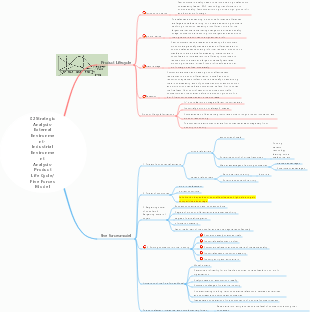
Product Lifecycle
Product sales growth rate curve
five forces model
Threats from potential entrants to the industry
structural barriers
economies of scale
Increase the quantity and reduce the cost
Existing enterprise’s control of critical resources
Funding Resources Technology Channels Learning Curve
Market advantages of existing enterprises (brand and government policies)
behavioral disorders
restricted entry pricing
I hate you if I don’t make money
Enter the opponent's territory
Penetrate into the enemy's interior
Bargaining power of suppliers/buyers
degree of vertical integration
Buyer (seller) concentration or business volume
Degree of product differentiation or asset specificity
Competition among existing companies within the industry
There are many evenly matched competitors in the industry
Industrial development is slow
Customers believe all products are the same
The industry has excess productivity
Products with low barriers to entry and high barriers to exit
Strategies for dealing with the five competitive forces
Analysis of key factors for success
Industry and Market Level Characteristics
Competitive environment analysis
competitor analysis
Competitors’ future goals
competitor assumptions
Assumptions that competitors make about themselves or about other businesses
Competitors’ current strategies
Competitors' capabilities
Quick response ability
Free cash reserves, borrowing capacity, new products have not yet been finalized
ability to adapt to changes
Adapt to changes in external environment
strategic group
effect
Helps understand competition among strategic groups
Helps understand mobility barriers among groups
Helps understand the main focus of competition within strategic groups
Anticipate market changes or identify strategic opportunities
internal environment analysis
Enterprise resources and capabilities analysis
resource
tangible resources
Visible and can be directly measured in currency
intangible resources
Long-term accumulation, no physical form
Brand, cultural organizational experience, technology, patents, intangible assets
Enterprise resource judgment criteria that determine the competitive advantage of enterprises
inimitability of resources
physically unique resources
Resources with path dependencies
Resources with causal ambiguity
Economically constrained resources
irreplaceability of resources
ability
basic ability
Production management capabilities
Marketing ability
Market decision-making ability
Organizational management capabilities
core competencies
Benchmark analysis
datum object
Activities that take up a lot of money
Activities that significantly improve relationships with customers
Activities that ultimately impact business results
Base type
Process and activity benchmarks
Indirect competition between different industries
General benchmark
Indirect competition among peers
Competitive Benchmark
Direct competition among peers
Industrial resource allocation analysis framework
diamond model
National and regional competitive advantage model
Related and supporting industries
Corporate strategy, corporate structure
Industry competition
Value Chain
Independent and related to each other
Support activities
human resource Management
infrastructure
Organizational structure system culture relationship finance system
Basic activities
internal logistics
Loading and unloading of raw materials into storage
external logistics
Final product orders shipped
Production and operation
Processing Manufacturing Equipment Maintenance
marketing
Advertising Pricing Sales Channels
value chain analysis
Identify key activities that support the company's competitiveness
Clarify the linkages between activities within the value chain
Clarify the connections between value activities within the value system
business portfolio analysis
boston matrix
Assume that the market share of an enterprise is directly proportional to capital investment
Two major indicators
The market growth rate is set at 10%
Relative market share is bounded by 1
Four kinds of business
star business
Market growth rate>10%
Relative market growth rate>1
Strategy: Give priority to providing the resources they need in the short term
Organizational requirements: People who are good at business department, production and sales
problem business
Market growth rate>10%
Relative market share <1
Strategy: Selective Investing
Organizational requirements: Think tank project team
cash cow business
Market growth rate <10%
Relative market share>1
Organizational requirements: business department, marketing person
Thin dog business
Market growth rate is less than 10%
Relative market share <1
Strategy: Harvest or Give Up
Organizational Requirements: Merge with other divisions
Use of Boston Matrix
harvest
Can be used except for celebrity business
give up
Thin dog business and problem business
limitation
It is difficult to determine a single indicator
Assuming there are loopholes and not comprehensive
universal matrix
limitations
Not applicable to companies with many business types
Requires a lot of data and is difficult to operate
Comprehensive analysis of internal and external environments
principle
Disadvantage W (internal)
application
Multiple business strategiesST
third chapter
Strategic Choice
overall strategy
development strategy
integrated strategy
horizontal integration
Advantages: Achieve economies of scale and gain competitive advantage
Applicable conditions: legal monopoly, large potential, sufficient resources, fierce competition, significant scale
vertical integration
forward integration
Advantages: Control and master the market, improve sensitivity and competitiveness
Applicable conditions: low quality, high price, great potential, sufficient resources, high profit
backward integration
Advantages: control the cost and supply of raw materials, stable production
Applicable conditions: low quality, high price, great potential, sufficient resources, high profit, short supply, stable selling price
Diversification Strategy
advantage
Leverage existing market image and reputation to enter new markets
risk
Original industry risks
Insufficient resources and energy
Industry exit risk
It's hard to escape unscathed
Internal business integration risks
Too little meat, too many people, not enough portions
contraction strategy
reason
active cause
Strategic restructuring needs
passive cause
Internal and external environmental factors
Way
austerity and concentration
Tighten your belt and live life
Turn to strategy
Adjust product positioning and marketing strategies
abandon strategy
Sell Transfer Cease Operation
exit barriers
Degree of specificity of fixed assets
exit cost
Employee placement costs, labor agreements
internal strategic connections
Government and Social Constraints
Development strategy approach
M&A strategy
type
Category
horizontal merger
The acquiring party and the acquired party belong to the same industry
vertical merger
Forward M&A
Manufacturing enterprise mergers and acquisitions sellers
backward merger
Corporate mergers and acquisitions of raw material suppliers
attitude classification
Friendly mergers and acquisitions
Funding source classification
Leveraged buyout
Whether own funds exceed 50%
non-leveraged acquisition
Whether own funds exceed 50%
Identity classification
Industrial capital mergers and acquisitions
Acquiring party non-financial enterprise
Financial capital mergers and acquisitions
The acquirer is a financial enterprise
motivation
Avoid entry barriers, enter quickly, and seize market opportunities
Overcome negative externalities of enterprises, reduce competition, and enhance control over the market
Reason for failure
poor decision making
I bought something I shouldn’t have bought.
Enterprise integration cannot be carried out well after mergers and acquisitions
It’s not good to buy a tube
Cross-border mergers and acquisitions face political risks
Violation of laws and regulations is not a political factor
Strategic Alliance
motivation
Promote technological innovation
avoid reducing competition
Realize resource complementation
Reduce coordination costs
Main types
Equity strategic alliance
Advantages: It is conducive to improving financial strength and enhancing the sense of trust and responsibility of both parties.
Disadvantages: poor flexibility
contractual strategic alliance
limited to a certain field
Advantages: high flexibility
Disadvantages: poor control over the alliance, insufficient communication, not conducive to long-term cooperation
Business Unit Strategy (Competitive Strategy)
basic competitive strategy
Competitive Strategies for Small and Medium Enterprises
Competitive strategy in fragmented industries
causing sporadic causes
Low entry barriers and exit barriers
Diverse market demands lead to high product differentiation
Economies of scale do not exist or are difficult to achieve
The company does not have enough strength
Strategic choices for fragmented enterprises
Overcome fragmentation and gain cost advantage
Technological innovation gains economies of scale
Discover industry trends early
Increase product added value
Specialization Goal aggregation
Product type or product segment specialization
Customer Type Specialization
Geographic area specialization
Potential strategic pitfalls
Avoid seeking dominance
Recognize your own strength
Maintain strict strategic constraints
Don't eat in the pot and think about what's in the bowl
Avoid over-centralization
Understand competitors’ strategic goals and overhead costs
Know yourself and the enemy
Avoid overreacting to new products
Competitive strategies in emerging industries
obstacle
Difficulties in selecting, acquiring and applying proprietary technology
Insufficient supply of raw materials, parts, funds and other supplies
Customer Confusion and Waiting and Seeing
Reaction of the substituted product
Lack of courage and ability to take risks
Strategic Choice
Shape industrial structure
Correctly Treat the Externalities of Enterprise Development
Pay attention to changes in industry opportunities and barriers
Choose the right time and field to enter
blue ocean strategy
Incremental market, value innovation, replicable
Don’t compete, create demand
high value low cost
Establish principles
Rebuilding market boundaries
Fundamental rules for reconstructing market boundaries
Examine alternative industries
Across different strategic groups within the industry
Redefining industry buyer groups
Look at complementary products or services
Reset the functional and emotional orientation of the industry
Participate in shaping external trends across time
Focus on the big picture rather than the numbers
Follow a sound strategic sequence
Overcome key organizational barriers
Make execution part of the strategy
functional strategy
marketing strategy
Determine target market
market segmentation
Consumer market segmentation basis
psychographic segmentation
psychological characteristics human characteristics
behavioral segmentation
behavioral manifestations characteristics of objects
Industrial market segmentation basis
User's geographical location
Target market selection
undifferentiated marketing strategy
Differentiated marketing strategy
centralized marketing strategy
Market positioning
Strategies to seize or fill market gaps
Market positioning strategies to coexist or confront competitors
Market positioning strategies to replace competitors
Design marketing mix
product
Product portfolio strategy: expansion, reduction, product extension
product development strategy
Brand and Trademark Strategy
price
Basic pricing method
Competition Oriented Pricing
Main pricing strategies
psychological pricing strategies
Mantissa pricing Integer pricing
Product portfolio pricing strategy
Discounts and discount strategies
Geographical Spread Strategy
New product pricing strategy
satisfaction pricing method
Distribution
Distribution channel type
traditional classification
Promotion
Components of a Promotional Mix
personal selling
Sales representative direct sales
research and development
strategic role
basic competitive strategy
R&D positioning
Become a company that introduces new technology products to the market
Become an innovative imitator of successful products
Become a low-cost producer of successful products
Become an imitator of low-cost producers of successful products
Production and operations
Four factors of operational processes
Contents of production operations strategy
Supply chain and distribution network selection
Manufacturer's inventory plus direct shipping
Manufacturer's inventory, direct shipping plus in-transit consolidation
Distributor inventory plus carrier delivery
Distributor inventory added to door delivery
Manufacturer or distributor inventory plus customer pickup
Retailer inventory plus customer pickup
Competitive Focus of Production Operations Strategy
manufacturing flexibility
React quickly and seize opportunities
Balancing Capacity and Demand Approach
resource order
Waiting for orders - gathering resources - producing
Order production
Gather a small amount of resources - receive orders - produce
Inventory production style
Collect resources - produce - wait for orders
purchase
Three supply policies
Few or single source strategy
Advantages: Building strong relationships, keeping information confidential, economies of scale, high-quality supply
Disadvantages: Suppliers have strong bargaining power and supply interruptions
Multi-source, low-volume strategy
Advantages: Stable supply Enhanced bargaining power Obtain more information
Disadvantages: Unstable relationship
Trading straregy
market trading strategies
short term cooperation strategy
functional alliance strategy
Innovative alliance strategies
Procurement model
Traditional procurement model
According to stock availability
Disadvantages: Insufficient communication between enterprises and suppliers
Lack of consideration of production needs and market changes
Lack of cooperation in other aspects
MRP procurement model
Prepare purchasing plan according to production plan
Disadvantages: meticulous planning, but complex calculations
JIT procurement model
The company places an order with the supplier and requires the goods to be delivered to the appropriate location.
Meet demand, zero inventory
Disadvantages: Few or single suppliers
Advantages: Establish long-term cooperative relationships
Small batch size and high delivery frequency
VMI Procurement Model
Resource sharing, inventory managed by suppliers
Advantages: Enterprises establish in-depth cooperative relationships with suppliers
Digital procurement model
Automation, visualization, standardization, controllability
Digital platform eliminates manual labor
HR strategy
Human resources acquisition
internal recruitment
Advantages: Be on your own, have a sense of identity, be familiar with each other, save costs
Disadvantages: Overly competitive, difficult to appease, nepotism
External recruitment
Advantages: Fresh blood, avoid competition
Disadvantages: Attacking insiders and not understanding each other
Human resources salary incentives
cost leadership
Resume and interview based
Employees come from outside. Promotional ladder is narrow. HR decision-making emphasizes skills.
Differentiation
Employees are sourced from within, promotion ladders are broad and flexible, business unit decisions are made, and cultural fit is emphasized.
financial strategy
Use and management of funds
Financing
internal financing
Use your own money, but too little is not enough
Sales asset financing
Determined to sell, may be sold cheaply
debt financing
lease
High cost, limited rights
dividend distribution
Fixed dividend payout rate policy
financial strategy options
The combination of operational risks and financial risks
Strategic Choice
Impairment cash shortage
Sales growth rate > sustainable growth rate, return on capital < capital cost
Complete reorganization or sale
Shortage of value-added cash
Sales growth rate > sustainable growth rate, return on capital > cost of capital
If rapid growth is temporary, through borrowing
If rapid growth is long-term, increase sustainable growth rate, improve operating efficiency and change financial policies to increase equity capital
value-added cash surplus
Sales growth rate <sustainable growth rate, return on capital> cost of capital
Internal investment, acquisition of related businesses, increase in dividend payments, repurchase of shares
Impaired cash surplus
Sales growth rate<sustainable growth rate, return on capital<cost of capital
Increase return on invested capital, increase after-tax operating profit margin, increase operating asset turnover, reduce average cost of capital, and sell at worst
international tactics
motivation
seeking efficiency
cheap factors of production
Seek ready assets
Brand technology experience
Main way
Foreign Direct Investment
non-equity investment
Contract manufacturing, franchising, service outsourcing, contract farming
International operations of enterprises in global value chains
Global value chain theory concept
Product international division of labor
Global production network
global value chain
A global multinational enterprise network organization that connects production, sales, recycling and other processes to realize the value of goods or services worldwide.
Corporate role positioning in global value chains
Other tier suppliers
Non-critical production activities
The division of labor model of the global value chain
Bureaucratic value chain
Foreign Direct Investment
market value chain
Obtain goods and services through normal trade
Global value chain and enterprise upgrading in developing countries
Value chain upgrade
Enter value chain links with higher capital and technical barriers
Types of strategies for international operations
international strategy
Product development in the home country, manufacturing and marketing in the host country
Multi-country localization strategy
Meet the local needs of different countries
global strategy
Promote standardized products and services to the world
transnational strategy
The relationship between the parent company and the subsidiary is two-way, and product technology is provided in both directions.
Corporate strategy for emerging markets
factor
Degree of industrial globalization
Are the advantages of local enterprises transferable?
Strategic Choice
Dodger
There is great pressure from globalization, but local advantages cannot be transferred.
counterbalancer
The pressure of globalization is great, and the advantages of ontology can be transferred
defender
There is little pressure from globalization and local advantages cannot be transferred.
expander
There is little pressure from globalization and local advantages can be transferred
Chapter Four
strategy implementation
Corporate strategy and organizational structure
elements of organizational structure
vertical division of labor
superiors and subordinates
horizontal division of labor
Different departments at the same level
Vertical and horizontal division of labor structure
vertical division of labor structure
Tall type
Advantages: Many management layers facilitate control
Disadvantages: slow response, difficult to implement,
Flat type
Advantages: timely response to market changes
Disadvantages: easy to cause management loss of control
centralization
Advantages: coordination, quick decision-making, economies of scale
Disadvantages: Long decision-making time, limited employee development
Decentralization
Advantages: Reduce communication barriers, improve responsiveness, motivate
Disadvantages: difficult to coordinate, out of control management, inconsistent goals
horizontal division of labor structure
entrepreneurial organizational structure
Less flexibility, lack of professional division of labor, and reliance on personal abilities
Suitable for small businesses
functional organizational structure
Division of labor according to functional specialization
Adapt to single business enterprise
Advantages: Economies of scale, developing functional experts, improving efficiency, monitoring
Disadvantages: Difficult to determine profit and loss, individual management slows down reaction speed
Business unit organizational structure
Divide by business, product, service and market
There are various functional departments under the business department
Market Segmentation Division
M-shaped organizational structure
Multi-business unit structure
Suitable for enterprises with multiple businesses
Advantages: continuous growth, reduced workload, easy comparison, mobilizing enthusiasm
Disadvantages: Difficulty in allocating costs, resulting in conflicts
Strategic Business Unit Organizational StructureSBU
Suitable for large-scale and diversified enterprises
There are various business departments under SBU
Advantages: Reduce span of control, reduce excessive information, easy to evaluate and monitor
Disadvantages: The headquarters and business divisions have become alienated, causing competitive friction.
matrix organizational structure
Two or more command channels, two lines of budget entitlement, two sources of performance rewards
Suitable for control issues of very complex projects
Advantages: The project manager has a close relationship with the project
Pay more attention to the product market and make quality decisions
To achieve coordination among various departments, the enterprise has multiple positioning
Disadvantages: unclear division of rights, easy to cause conflicts
Dual power structure Struggle for power
Coordination increases time and financial costs
H-shaped structure
Holding company
pure holding
Not directly engaged in production, only holding shares
Mixed Holdings
Holding a controlling stake and engaging in production itself
Applicable to many business fields and global competition
Features: Each unit has strong autonomy, the enterprise does not need to bear high central management fees, saves taxes and fees, and decentralizes risk management
The organizational structure of an internationally operating enterprise
International Department Structure
Product development in the home country and manufacturing in the host country
Global regional segment structure
Multi-country localization strategy
Global product segment structure
basic coordination mechanism
Adapt to each other and adjust on your own
direct command direct control
Work process standardization
Standardization of work results
Standardization of memory knowledge
Organizational structure consistent with company strategy
Organizational structure and strategic relationships
Enterprise development stages and organizational structure
Initial development stage shortly after establishment - market penetration strategy
simple structure
After starting development-market development strategy
functional strategy
Further development – vertical integration strategy
Business unit structure
Maturity stage-diversification strategy
Strategic business units matrix system
H type
type of organization strategy
Defensive
Defensive and conservative
Existing product, existing market, cost efficiency, mechanical
Pioneering
Innovation
Develop product markets, be flexible, and have mechanisms
Analytical
rational analysis
Keep what you have while looking for new opportunities
Corporate strategy and corporate culture
Types of corporate culture
rights oriented
Family businesses and start-ups
role-oriented
State-owned enterprise Civil servant
task oriented
Emerging industries high-tech enterprises
cultural performance
Based on corporate mission
Organizational elements change a lot
Great cultural potential consistency
Strengthen the coordination effect
Little change in organizational elements
Great cultural potential consistency
Consolidate and strengthen corporate culture
Leverage corporate culture to stabilize
Manage according to cultural requirements
Little change in organizational elements
Cultural potential consistency is small
Restrategize
Organizational elements change a lot
Cultural potential consistency is small
Strategic control processes and methods
strategic control
strategic control
Focus internal and external
Qualitative and quantitative methods
Continuous correction process
budget control
The focus is on the inside
Corrected only after the end of the budget period
strategic control process
strategic control methods
Budget
incremental budget
Use previous data or build on existing data
Encourage spending of the budget to increase next year’s budget
zero based budgeting
Re-evaluate every period
Complex preparation, heavy workload, high cost
business performance measurement
Financial Metrics (Ratio)
Profitability and rate of return indicators Shareholder investment indicators Liquidity indicators
Reason: It is easy to detect changes by comparing different periods
Ratios are more suitable for measuring corporate performance
Adapt to performance indicators
Ratios provide tools and methods for summarizing comparable
Disadvantages: Difficulty in obtaining information and limitations in use
It is difficult to compare the performance of different companies in different industries or the same industry
Ignore other strategic elements
non-financial indicators
Services Human Resources Marketing Sales Growth Market Share Number of Customers
Reason: Responding to and monitoring non-financial aspects of operating performance
Provide more timely information than financial indicators
Easily understood and used by non-financial people
Avoid short-term behavior to better reflect the company’s true performance
The scope of incentive and control personnel is wider, covering non-responsible personnel
Disadvantages: Unable to use a unified ratio standard. It is not easy to detect changes and make comparisons.
balanced scorecard
financial perspective
outcome indicators
operating income growth rate rate of return
Customer perspective
relevant to customers
Market share On-time delivery rate
internal process perspective
motivational indicators
Order on-time rate Procurement cost and cycle Digital system coverage Employee income
Innovation and Learning Perspective
motivational indicators
Related to innovative employees
Corporate strategy and digital technology
The impact of digital technologies on corporate strategy
Impact on organizational structure
Transformation of organizational structure to platform
Flexibility, flatness and networking, large platform and small front end
Build a fusion structure of traditional and digital
Taking the new organizational structure as the main form
The form of organizational flattening among enterprises High flexibility
Impact on business model
The influence of Internet thinking
Industrial Thinking (Traditional)
Mass production sales communication
Slow cycle and information asymmetry
Internet thinking
Lower price, faster speed
The impact of diversification
Impact of consumer engagement
Impact on products and services
Impact on business processes
digital strategy
Key aspects of digital transformation
technological change
Related to new products, new technologies, and R&D investment
Digital infrastructure construction
managing change
Business digital management
Production digital management
Financial digital management
Marketing digital management
chapter Five
Corporate Governance
Corporate Governance Overview
Three major issues in corporate governance
The issue of “insider control” of managers over shareholders
breach of duty of loyalty
breach of duty of diligence
The problem of “tunnel digging” by ultimate shareholders against small and medium-sized shareholders
Abuse of company resources (breach of duty of diligence)
Taking up company resources (violating the duty of loyalty)
predatory financial activities
predatory capital operations
Internal governance structure and external governance mechanism
Chapter Six
Risk and risk management
The concept of risk and the elements of risk
concept
Opportunity risk (loss ➕ profit)
elements
tangible risk factors
Direct impact Material risks Substantial risk factors
intangible risk factors
psychological risk factors
risk loss
indirect loss
Indirect losses are sometimes greater than direct losses
Concepts, Characteristics, Objectives and Functions of Risk Management
feature
Systematic
Holistic
Governance Management and all employees participate
duality
Managing both pure and speculative risks
Target
Target
direct target
Guaranteed normal operation
Core target
Ensure risk management is aligned with strategic objectives
support goals
Strengthen corporate culture construction
Function
planning function
Design plan Develop risk response implementation plan
organizational functions
Assign and combine risk management unit activities and their production factors
Guidance function
Explain, judge and communicate risk response plans
control function
Inspect, supervise, analyze and evaluate implementation
Chapter VII
Risk management processes, systems and methods
risk management process
Gather initial information for risk management
Analyze operational risks
Analyze legal compliance risks
Conduct a risk assessment
method
Combining qualitative and quantitative methods
Unify the formulation of various risk measurement units and risk measurement models
Conduct risk identification, analysis and evaluation regularly or irregularly
Develop a risk management strategy
Propose and implement risk management solutions
Risk management supervision and improvement
risk management system
Standardized corporate governance structure
Board of Directors
"Approval" to review and submit the "Comprehensive Risk Management Annual Work Report"
risk management committee
Responsible to the Board of Directors Responsible to the general manager or senior management
Risk management function department
Responsible to the general manager or senior management
"Responsible" and "Research Proposal"
Other functional departments and business units
Accept the organization, coordination, guidance and supervision of the risk management function department and internal audit department
risk management strategy
The overall positioning and role of risk management strategies
Determine risk appetite and risk tolerance
risk measurement
risk measurement method
method type
Maximum possible loss (loss only)
Generally used when the probability of occurrence cannot be judged or no judgment is needed
Probability value (probability only)
Only good and bad, right or wrong, win or lose, life or death, etc. are used in simple situations.
Expected value (probability ➕ loss)
Volatility
Expressed as variance or standard deviation
Value at risk (probability ➕ loss)
intuitive approach
Does not rely on probability and statistical results
Choose risk management strategy tools
Risk Aversion
Avoid Stop Forbidden
Exit Reject Outsourcing
risk transfer
non-insurance risk transfer
risk transformation
Relaxing customer credit standards will not reduce total risk
risk hedging
influences cancel each other out
risk compensation
Take steps to compensate for possible losses
risk control
Mitigating losses caused by risk events or reducing the probability of occurrence of risk events
Risk management measures
Risk management concept
Use financial means to manage risk
It does not change the possibility of occurrence of risk events, nor does it change the direct losses caused by risk events.
Excludes reputational and other risks whose value is difficult to measure
Can target controllable and uncontrollable risks
The pricing of risk judgment has relatively high quantitative standards.
Risk management measures
loss financing
Anticipated loss financing is working capital
Unexpected losses belong to risk capital
venture capital
The traditional form of risk capital is risk reserve
Emergency capital (repayment of principal and interest)
Providers of contingency capital bear no risk
Financing options under certain conditions
It is risk compensation, not risk transfer.
Provide guarantee of continuity of experience
Insurance
risk transfer
Insurable pure risk Uninsurable opportunity risk
Professional self-insurance
An affiliate of a non-insurance company that provides insurance to its parent company
Reduce costs and improve cash flow
internal control system
Five elements of internal control
Information and communication
Risk management techniques and methods
Brainstorming
Advantages: Stimulates imagination
Contributes to comprehensive communication
Fast and easy to carry out
Disadvantages: Participants lack skills and knowledge
Delphi method
Back-to-back solicitations to express unpopular opinions
Authoritative figures influence other people's opinions and are unwilling to express different opinions due to human feelings
The process is complicated and takes a long time
Failure mode impact and hazard analysis method
Qualitative and quantitative analysis
Issue issues early in the design process
Unable to identify multiple failure modes simultaneously
flowchart analysis
Clear and easy to operate
Better identify risk points
The larger the organization, the more complex the process, and the more superior it is.
Depend on the level of professionals
risk assessment diagram
Preliminary analysis of risk assessment
scenario analysis
Qualitative and quantitative analysis
Anticipate dangers and opportunities
sensitivity analysis
Adapt to the impact of project uncertainty on outcomes
event tree analysis
Deducing possible outcomes based on the chronological order of events
decision tree method
Beginning with initial matters or initial decisions
statistical inference
Push forward, push back, push aside
chapter eight
Main risks faced by enterprises and their responses
Strategic Risks and Responses
Market risks and responses
 Wondershare EdrawMind