MindMap Gallery Card Note Writing Method-Schenker Ahrens-Reading Notes
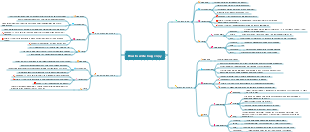
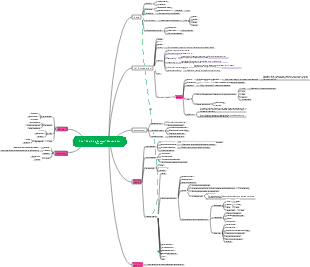
Schenk Ahrens summarized Niklas Luhmann's card-note-taking method and wrote this book, a comprehensive guide and explanation of the card-note method. This book explains in detail the working principle and specific writing methods of the card note writing method, which can help us focus on what is really important - thinking, understanding and coming up with new writing ideas, instead of wasting time looking for notes, information or references.
Edited at 2022-05-12 09:14:53This article discusses the Easter eggs and homages in Zootopia 2 that you may have discovered. The main content includes: character and archetype Easter eggs, cinematic universe crossover Easter eggs, animal ecology and behavior references, symbol and metaphor Easter eggs, social satire and brand allusions, and emotional storylines and sequel foreshadowing.

[Zootopia Character Relationship Chart] The idealistic rabbit police officer Judy and the cynical fox conman Nick form a charmingly contrasting duo, rising from street hustlers to become Zootopia police officers!
This is a mind map about Deep Analysis of Character Relationships in Zootopia 2, Main content: 1、 Multi-layer network of relationships: interweaving of main lines, branch lines, and hidden interactions, 2、 Motivation for Character Behavior: Active Promoter and Hidden Intendant, 3、 Key points of interaction: logic of conflict, collaboration, and covert support, 4、 Fun Easter eggs: metaphorical details hidden in interactions.
This article discusses the Easter eggs and homages in Zootopia 2 that you may have discovered. The main content includes: character and archetype Easter eggs, cinematic universe crossover Easter eggs, animal ecology and behavior references, symbol and metaphor Easter eggs, social satire and brand allusions, and emotional storylines and sequel foreshadowing.
[Zootopia Character Relationship Chart] The idealistic rabbit police officer Judy and the cynical fox conman Nick form a charmingly contrasting duo, rising from street hustlers to become Zootopia police officers!
This is a mind map about Deep Analysis of Character Relationships in Zootopia 2, Main content: 1、 Multi-layer network of relationships: interweaving of main lines, branch lines, and hidden interactions, 2、 Motivation for Character Behavior: Active Promoter and Hidden Intendant, 3、 Key points of interaction: logic of conflict, collaboration, and covert support, 4、 Fun Easter eggs: metaphorical details hidden in interactions.
"Card Note Writing Method" Author: Schenk Ahrens
Chapter One Introduction
What you need to know about writing
How taking notes can help you write
Well-structured notes are a treasure trove of writing you can trust
Don’t be satisfied with just scratching the surface when looking at problems
Taking notes can help adjust deviant behaviors
The complexity of notes and how to solve them
question
Just to sort out what you read, organize your notes, and record your thoughts, you also have to organize increasingly complex texts;
Splitting notes into piles, stacks, or separate folders can reduce their complexity, but such a process reduces the likelihood of discovering potential connections between notes, making notes difficult to balance between usability and usefulness;
method
Complex content can be built with simplified structures;
The importance of overall workflow - GTD: The principle is to collect everything that needs to be processed and process it in a standardized way, and it works;
We need a note-taking system as comprehensive as GTD, but one that is suitable for open-ended writing, learning, and thinking processes.
The formation and development of Luhmann’s card box
Formation: In the 1960s, the young German Niklas Luhmann changed the way he took notes. He wrote all his notes on small pieces of paper, numbered them on the corners of the pieces, and then collected them in In card box.
Results: With the help of the card box, Luhmann completed his doctoral thesis and professional thesis in less than a year. During this period, he also took sociology classes and was elected to the University of Bielefeld in 1968. Professor of Sociology and holds this position for life.
Optimization: Luhmann realized that an idea or a note is only valuable in its context, and context is not necessarily its source. So he started to think about the idea of how to make notes relevant and useful in different contexts.
Principle: Luhmann was able to focus on the important things at hand, quickly pick up work he had dropped, and maintain control of the process because the structure of his work allowed him to do so.
Luhmann Card Box Working Principle & User Manual
Classification
Literature card box, which contains literature and a brief description of the content of the literature;
The main box of cards, mainly the ideas he collects and generates about what he has read.
association
Write bibliographic information on one side of the card, make brief notes on the content on the other side, and place it in the bibliographic card box;
Review the brief notes and consider how they relate to your own thinking and writing.
serial number
number them in a rather abstract way;
If a new note can directly point to an existing note, he will directly add the new note after the existing note.
He uses numbers, letters, slashes, and commas to code: if a note is numbered 21/3d7a6, a new note added thereafter will be numbered 21/3d7a7.
index
Create an index and cite a note or two from this index as an entry point into a certain idea or topic.
What you need to do about writing
Use the steps of writing a paper to understand the use of card notes
Thinking, reading, learning, understanding and generating ideas is the main job of every learner, researcher or writer. If you take notes using the card box method, it will give you a huge boost.
Take flash notes
You need to have a note-taking tool on hand at all times to capture every thought that comes to mind. Don’t worry too much about how or what to write. These are flash notes, just memos of what's going on in your head, without thinking too much about anything else.
You can put them in a place you define as a "collection box" and process them later.
Take literature notes
Whatever you read, take notes and write down anything you don't want to forget or that you think you might use in your own thinking or writing.
Document notes should be very short, carefully selected, and recorded in your own words. Be particularly picky about citations. Don't just copy without truly understanding their meaning.
Take permanent notes
Read through the notes you took in steps one or two each day and think about how they relate to something related to your own research, thinking, or interests.
Write down a note accurately for each idea, mark the source, provide references, and try to be precise, clear, and brief. Throw away the flash notes from the first step and put the literature notes from the second step into your literature management. system.
Add new permanent notes to card box
Develop themes, questions and research topics from within the system from the bottom up
Collect enough ideas to decide on a writing topic
Turn notes into first drafts
Editing, proofreading
What you need to know about writing
The core concept and characteristics of Luhmann card box
Core philosophy: Focus on the fundamentals of things rather than unnecessarily complicating things.
Feature ①: As a key element in the overall workflow, it does not distract from any important work.
Feature ②: The system provides an external workbench, allowing us to think in it, helping our brains complete those tasks that are not very good at - storing most objective information.
Feature ③: Provides a brain that can concentrate on thinking without interference and a reliable note-taking system
Four essential tools for reading and writing
writing tools
Document management tools
card box
Editing tools
Several issues you need to pay attention to about writing
Tools are only as good as your ability to use them
Even the best tool won't do us much good if we use it without understanding how to use it.
It is crucial to know not only how it works, or how to use it, but also why it works.
By understanding the logic behind the documentation system, anyone can replicate Luhmann's methods and achieve success in learning, writing, and research.
Chapter 2 Four Basic Principles of Effective Writing
Writing is the only thing that matters
Focusing on writing does not mean cutting back on reading, which is the primary source of writing material.
This does not mean that you should attend less lectures or seminars, because they can provide you with ideas for writing and questions worth answering. They are one of the best ways to understand the current status of research and provide a platform for raising and discussing issues.
This doesn’t mean you have to stop giving presentations or find other ways to get your ideas out there—there’s no better way to get feedback on your ideas.
Simplicity is the most important
Card box note-taking system application
Flash notes: These notes are just a reminder to collect information. They can be written in any way and will eventually be thrown into the trash can within a day or two.
Permanent Notes: These notes contain necessary information in a permanently understandable way and are never thrown away. They are always stored in the same place in the same way, either in a bibliographic management system or written to publication standards in a card box.
Project Notes: They relate only to a specific project, are saved in a project-specific folder, and can be discarded or archived after the project is completed.
Avoid three typical mistakes
Mistake 1: No ideas will be lost. Take notes anytime and anywhere. Classify each note into the category of "permanent notes", causing excellent notes to be replaced by other notes that may only be related to a specific project, or may not actually be that good. submerged, so the swarm effect can never be achieved.
Mistake 2: Only collecting notes related to a specific project. The disadvantage is that you have to start over after each project is completed and cut off other useful ideas. This also means that any non-project-relevant information you discover, think of, or encounter during a project will be lost.
Mistake 3: Treat all notes as flash notes. Collecting only unprocessed flash notes will inevitably lead to confusion. Even if a small number of unclear and irrelevant notes are scattered on your desk, you will quickly become confused. Want to start all over again.
Long-lasting and broadly applicable writing process advice
Put pen to paper
Read with a pen, put the development process of your thoughts on paper, and build a growing external thought bank.
Rather than being guided by a blindly concocted plan from our brain, be guided by our interests, curiosity, and intuition.
This intuition is a growing capacity that reflects our knowledge and understanding, developed during the physical work of reading, thinking, discussing, writing, and developing ideas.
emerge naturally
Focus on what interests you and keep a written record of your knowledge development process, and topics, questions and arguments will naturally emerge from the material.
This means that the material in the card box is at our fingertips and we no longer have to squeeze topics from the few ideas in our minds, so it is easier to find topics for papers or research.
Each theme that emerges from the card box is naturally and conveniently linked to the corresponding material.
Break the linearity
Arrange your work flow based on "writing is not a linear process, but a cyclical process", and the problem of "finding topics to write about" will become the problem of "how to deal with too many topics to write about".
As you continue to develop your ideas as you write, the open questions will become clear and provide you with many possible topics for further elaboration in your writing.
Do those things necessary to arrive at informed decisions—read, think, and write. Through this work, interesting questions will inevitably arise.
Let work drive you forward
Two working states
Feeling that work is consuming our energy and we can only move forward by investing more and more energy
Getting into work mode itself feels like gaining momentum and even makes us energized
Create a positive feedback loop
Have a growth mindset: Get pleasure from getting better (intrinsic rewards) rather than from receiving praise (extrinsic rewards).
Follow a cyclical approach: actively seek and accept feedback, build a learning system, and implement the feedback loop in a practical way.
Example ①Reading with a pen forces us to think about what we read and check our understanding; ② Use your own language to express what you understand, and use this process to realize what you don’t understand and further increase your learning experience; ③Use the card box to point to relevant arguments and generate insights through the blending of ideas.
Chapter 3 Six Steps to Successful Writing
Clearly differentiate between independent yet related tasks
Give full attention to every task
We are surrounded by more distractions and fewer opportunities to focus.
Don't multitask
Psychologists test this: Give a group of people multiple tasks and compare their test results to another group of people who only do one thing at a time.
Different tasks require different levels of attention
"Writing" encompasses clearly different tasks, and the kinds of attention these tasks require vary.
Be an expert, not a planner
To become experts, we need to make decisions freely and independently and make the necessary mistakes that help us learn.
Write it down to lighten the load on your brain
Our short-term memory capacity is limited, so strategies need to be developed to move ideas out of short-term memory that can be stored in external systems.
Make fewer decisions
The drive or willpower of our brains is also a finite resource, a finite resource that is consumed quickly and restored slowly.
reading and comprehension
Have a pen in your hand when reading
The richer the card box is, the richer your thinking will be.
Turn the notes in the card box into final text
Paraphrase it in your own words
write down the important points
keep an open mind
confirmation bias
Ways to deal with bias
①Turn the entire writing process upside down
②Change the motivation from looking for confirming facts to gathering all relevant information, regardless of what argument it supports.
Develop the ability to grasp key points
Learn the ability to distinguish relevant information from irrelevant information through practice
Have the courage to use your own reason
Use notes to condense and rewrite the text you read
Think critically
Writing it down helps you truly understand
Exposure effect: When we become familiar with something, we begin to believe that we understand it. The biggest problem is that we like it more and more.
The benefits of writing it down
“If you can’t explain it clearly, you don’t understand it either.” (John Searle)
The most important benefit of "writing it down" is that it helps us face our perspective when we don't understand something as well as we thought we did.
Learn while reading
deliberate practice
Learning requires effort because we have to think to understand knowledge, and we need to actively extract old knowledge to convince our brains to connect it with new ideas as clues.
Knowing how to answer a question before we try to answer it will help us remember the answer better in the future, even if our attempts fail.
If we put effort into our attempts to retrieve information, we are more likely to remember it in the long run, even if retrieval ultimately fails without help.
elaboration
Elaborating means really thinking about the meaning of what you read, how it can inform different questions and topics, and how it can be combined with other knowledge.
Using card boxes promotes real, long-term learning, which means not cramming isolated facts into your brain—writing, taking notes, and thinking about how to connect ideas are exactly the “elaborations” we need to learn.
Take notes in card box
Keep taking a few notes every day
Putting your notes into the Luhmann card box is like investing, and you will reap the rewards of compound interest.
Thinking outside the brain
Explicit knowledge
Real thinking requires some kind of externalization, especially in the form of writing.
thought process
Luhmann pointed out very clearly: without writing, it is impossible to think systematically
Say goodbye to rote learning
Card boxes force us to do the exact opposite, to elaborate, to understand, to relate, and thus to study seriously. In this way, we can learn knowledge that cannot be learned in learning institutions.
Add permanent notes to card box
Adding notes to a card box can be added after the note you mentioned directly in that note.
Add note links to other existing notes, or vice versa, link existing notes to new notes.
Make sure the newly added note can be found in the index, add an entry in the index if necessary, or reference the index from a note connected to the index.
Grid structures for building mental models.
develop ideas
The value of notes
only depends on the network of notes and references it is embedded in
Coding makes connections
By placing a card behind an existing card and numbering it accordingly, an infinite number of sequences and sub-sequences can be spent internally, with no hierarchical order, by alternating numbers and letters.
Build a note sequence
Note sequences are the backbone of note development, and they combine the advantages of summarization and sorting by topic.
Complex to the point of order
The Card Box is not a book with just one theme, so we don't need an overview of it. Card boxes are the medium through which we think, not the object of thought. The collection of notes will gradually grow from complex to orderly.
Build a theme
index
①After adding a note to the card box, we need to ensure that it can be found again;
② You can quickly go from the index notes to the specific notes you are looking for, and then you can quickly transfer the writing arguments from preconceived ideas to the interrelated facts in the card box, and have a fact-based dialogue with the card box.
Select keywords
Selecting keywords is not only a routine procedure, but also an important part of the thinking process. It will allow us to interpret a certain note more deeply and the relationship between a certain note and other notes more deeply.
Keywords should be chosen carefully and not too many, because the card box should not be used as an archive for accessing notes, but as a toolbox to assist thinking, so the reference relationship between notes is greater than the relationship between the table of contents and the content. The index relationship is much more important.
Create smart links
cross reference
Cross-referencing is a matter that requires serious thought and is a key part of the development of ideas: Luhmann used four basic types of cross-referencing: only the first and last are related to card boxes in software form, the other two are just for Make up for the limitations of paper and pen. If you're using an app instead of pen and paper, don't pay attention to them.
the first sort
① Collect links to other notes related to this topic or question and briefly describe what can be found on these notes.
②These notes do not have to be written all at once, links can be added over time, and topics develop naturally.
③ Take seriously what you think is relevant to the topic, because it defines both an idea and the facts on which it is based.
④Change the entry in the index to this new note, and/or indicate on the old note that the new structure is now deemed more appropriate.
Category 2
① Since Luhmann will insert new notes between the original notes to internally branch out subtopics and more subdivided subtopics, the original idea will often be interrupted by hundreds of different notes.
②The second type of notes is generally used to record original ideas.
③This approach is to make up for the shortcomings of paper notes. If we use application software, we don’t need to worry about this problem.
Category 3 & Category 4
①No matter where the notes are in the card box, or what the context is, surprising new ideas can be generated by connecting two related notes.
②The connection between notes is like the "weak connection" in the social relationship between us and acquaintances.
③Although they are usually not our first choice for help, they can often provide us with new and constructive perspectives.
Compare, correct and differentiate notes
feature presence effect
We tend to overestimate (psychologically) the importance of readily available information and skew our thinking toward the most recently acquired facts, not necessarily the most relevant ones. Without external help, we may only consider what we know, but not the information that we have forgotten. There is a lot of such information, but most of us don’t remember it and can’t find it. The card box can continue to It reminds us of information we have long forgotten.
Use the card box as a thinking toolbox
A toolbox for building mental models
Build a toolbox of useful mental models to help us deal with everyday challenges and make sense of what we learn and encounter.
The function of card box
Not only does the card box provide us with this proven learning opportunity, but whenever we use it, we are guided to do exactly what is recommended.
Use your card box as a creative machine
Many exciting stories in the history of science lead us to believe that great insights come from inspiration, but our fascination with these stories obscures the fact that all good ideas take time to accumulate, and even sudden breakthroughs usually There was a long and intense preparation process beforehand.
Thinking inside a card box
Simple ideas can lead to coherent and complex theories, but complex ideas cannot. By continuing to use the card box, we can check whether our understanding of the reading is correct with the text in front of us, and we can also use a small card to focus on the key points of an idea.
Promote creativity by setting limits
The greatest threat to creativity and scientific progress is not structure and constraints, but the lack of them.
Share your insights
From brainstorming to card box storming
card box storm
For those of us who have been writing and organizing our notes throughout, we can look directly into our box of cards as we write, eliminating the need for brainstorming at all.
Brainstorming is like predicting which ideas are worth writing about, whereas using a card box is more effective because you can actually see what is worth writing about.
When working with a card box, we no longer have to worry about what to write because we answer that question every day. Whenever we read something, we will judge what is worth writing and then write it down; if it is related to our long-term thinking and helpful for developing existing ideas, we will record it in permanent notes.
Find writing topics
If we decide to use the card box from the beginning and regard writing as the means and goal of our entire intellectual activities, then finding a writing topic will not be difficult at all. The key to the problem at this time is no longer finding a topic to write about, but through writing to develop the themes we found.
By using card boxes in our daily work, we can sift through dozens or even hundreds of possible questions to those that can actually be used in writing.
Processing, writing, connecting, differentiating, supplementing, and elaborating on questions are all things we have already done when taking notes in a card box.
From top-down to bottom-up
writing process
The process of asking questions, developing themes, and writing through the card box proceeds from the bottom up.
Writing Advantages
The ideas we use are embedded in rich context and come with materials to work with, rather than being generated out of thin air.
familiarity with ideas
When we become very familiar with an idea, we will no longer mistake it for a new idea and repeat the analysis. Instead, we can have fun revising it and discover new ideas based on it.
conventional thinking
Think of old ways of thinking as conventional thinking. If we are not aware of our conventional thinking, we cannot hope to break it.
Complete tasks driven by interest
learning motivation
Ask yourself: "What is interesting about this matter?", "Which of the things related to this matter are worth recording?" In addition to selecting information based on interest, we can also conduct research on problems encountered at work. Explain in detail, discover aspects that we didn't know before, and thus extend our own interests.
Task decomposition
Break down the big task of "writing" into specific small tasks, control your own work, and guide our work to develop in directions that we think are interesting and relevant, so that the work itself can become a source of motivation.
Free choice
"When people can choose what to do independently, they will have more energy to complete subsequent tasks. Whether independent choices will activate or enhance self-regulation ability in subsequent tasks is also worthy of our continued research and attention.
Organize work tasks
Guiding projects in the most promising direction not only allows us to focus longer, but also allows us to have more fun.
Finalization and revision
The first key point
Make sure the text is structured and flexible. Card boxes are great for experimenting with ideas and generating new ideas. We need to organize our ideas into linear text. The key is to visually determine the structure of the draft.
When organizing notes related to a specific project, there should be a separate place dedicated to that project. Outlining software can help us develop a rough structure while maintaining flexibility in the content.
The second key point
Try working on multiple project manuscripts at the same time so you can unleash the true power of your card box.
When we write down all the writing materials we may need into card notes and collect them in a card box, it will help multiple projects in different states of completion.
Give up planning to become an expert
over confidence
The problem with planning is that the actual time it takes is much longer than the estimated time, and even the actual time spent by most students exceeds their estimate of the worst-case scenario.
learn lessons
A general skepticism of planning is needed, especially when the plan focuses solely on results and not on the actual work and steps required to achieve the goals.
set a goal
Breaking the big challenge of "writing a paper" into small, manageable tasks helps to set goals that are realistic and can be checked regularly.
Specific tasks
If the task is "take a note", "collect interesting content from this article" or "integrate this series of notes into a paragraph", it is easy to complete.
Revise repeatedly
Hemingway example
Hemingway was asked how many times he would revise a first draft. His answer was: "It depends. I rewrote the end of the book "A Farewell to Arms," which is the last page, 39 times before I was satisfied."
The interviewer asked: "Is there any technical problem? What caused you difficulty?" Hemingway replied: "To find more correct words."
Proposed changes
Remember that a draft is just a draft.
The hardest task in revising a draft is to delete things that don't add to the argument, as painful as "kill your loved ones."
to form a habit
Old habits or intuition don’t always hold up, so develop new note-taking habits. Because the more accustomed we are to a certain way of doing things, the more we feel we have control over it, but in fact we don’t have the control we imagine. Therefore, if we want to change long-standing behavior, we need to recognize the difficulty of changing behavior from the beginning
The trick to developing new habits is not to try to break with old habits or to force yourself to do them through willpower, but to strategically build new habits and gradually replace old ones.
Chapter 4 Postscript and Method Practice
It’s not difficult to learn how to write using card notes. You don't need to start from scratch. Just hold a pen while reading, follow the suggestions in the book, take notes on cards, and make connections between the notes. More and more ideas will emerge automatically, and your writing tasks will also improve. It will progress naturally.
Reading, thinking, writing, these are things you have to do no matter what. As long as you take notes during this period and put them into the card box correctly, these problems can be solved easily.
Liu Shaonan, co-founder of flomo Card Notes, shares his practice
Accumulation time: 3 years
Materials involved: more than 10 books, more than 20 papers, nearly 100 articles, and more than 50 hours of conversations with many close friends.
Accumulated cards: more than 300
Produce results: Build the product and operation system of the "Dingxiang Doctor Online Consultation" platform.
Card note writing practice
management knowledge system
Input: Treat writing cards as a deliberate practice and capture as much of your thoughts and interesting knowledge as possible, but avoid excerpts without thinking.
Output: The important thing is not literary talent, but internalizing knowledge and getting high-quality feedback.
Practice: Continuously test knowledge through practice, establish connections between knowledge, and establish a cycle between input and output.
There is no need to deliberately classify, let the structure grow naturally. In Luhmann's card box system there was no sorting like in a library. Rather, let the structure slowly emerge as the records continue to grow.
Compound interest in accumulated knowledge
The card note writing method is a way of "quantitative" knowledge accumulation. Just like fund fixed investment, it does not require us to make a huge "financial" investment from the beginning - for example, many writing camps now emphasize writing an article every day.
Rather, we need to choose a good "track", continue to invest and accumulate over time, and establish connections between knowledge cards.
With the accumulation of time, knowledge that was originally unquantifiable becomes measurable, and the effect of compound interest will slowly be reflected in the card box.
The important thing is not to record better, but to think better.
The choice of which tool to use does not depend on the richness of the tool itself, but on the applicable situation and needs.
Book introduction
Based on insights from learning psychology, Niklas Luhmann, a famous German scholar, drew on time-tested note-taking techniques and used the card box note writing method. He accumulated 90,000 knowledge cards and wrote 58 books and hundreds of articles in his life. Thesis, he became one of the greatest sociologists of the 20th century with his high quality and high output.
Schenk Ahrens summarized Niklas Luhmann's card note-taking method and wrote this book "Card Note Writing Method". This book is the first Chinese comprehensive guide and explanation of the card note method system.
About the Author
PhD, lecturer in educational philosophy at the University of Duisburg-Essen and author of the award-winning book "Experimentation and Exploration".
Teach students, academics, and professionals how to manage time, decision-making, and personal growth.