 Wondershare EdrawMind
MindMap Gallery Trade War
- 27
- 1
Trade War
Only when you find the battlefield can you join the battle - Clausewitz, this book introduces the four main forms of business strategy, namely defensive warfare, offensive warfare, flanking warfare and guerrilla warfare, as well as the principles and cases related to these strategic forms .
Edited at 2024-01-13 01:56:46
- Calendrier Annuel
Ce calendrier annuel, créé avec EdrawMax, présente une disposition claire et organisée des mois de janvier à décembre. Chaque mois est affiché dans un cadre distinct, montrant les jours de la semaine et les dates correspondantes. Les weekends (samedis et dimanches) sont mis en évidence pour une meilleure visibilité. Ce format est idéal pour la planification et l'organisation des activités tout au long de l'année, offrant une vue d'ensemble rapide et facile à consulter.
- 2026 Quarterly Calendar Overview
This quarterly calendar overview for 2026, created with EdrawMax, presents a structured and colorful layout of the entire year divided into four quarters. Each quarter is displayed in a separate column, showcasing the months within that quarter in a clear grid format. The days of the week are labeled, and each date is marked within its respective cell, allowing for easy identification of dates across the year. This calendar is an excellent tool for long-term planning, providing a comprehensive view of the year at a glance.
- Weekly Calendar 2026
This weekly calendar for 2026 is designed using EdrawMax to provide a detailed and organized view of each week, starting from January. The left side features a mini monthly calendar for quick reference, highlighting the current week in yellow. Below it, there's a section for weekly goals to help prioritize tasks. The main area is a time-grid from 6:00 AM to 12:00 AM, divided into half-hour slots, allowing for precise scheduling of daily activities throughout the week. This layout is ideal for managing a busy schedule efficiently.
Trade War
- Calendrier Annuel
Ce calendrier annuel, créé avec EdrawMax, présente une disposition claire et organisée des mois de janvier à décembre. Chaque mois est affiché dans un cadre distinct, montrant les jours de la semaine et les dates correspondantes. Les weekends (samedis et dimanches) sont mis en évidence pour une meilleure visibilité. Ce format est idéal pour la planification et l'organisation des activités tout au long de l'année, offrant une vue d'ensemble rapide et facile à consulter.
- 2026 Quarterly Calendar Overview
This quarterly calendar overview for 2026, created with EdrawMax, presents a structured and colorful layout of the entire year divided into four quarters. Each quarter is displayed in a separate column, showcasing the months within that quarter in a clear grid format. The days of the week are labeled, and each date is marked within its respective cell, allowing for easy identification of dates across the year. This calendar is an excellent tool for long-term planning, providing a comprehensive view of the year at a glance.
- Weekly Calendar 2026
This weekly calendar for 2026 is designed using EdrawMax to provide a detailed and organized view of each week, starting from January. The left side features a mini monthly calendar for quick reference, highlighting the current week in yellow. Below it, there's a section for weekly goals to help prioritize tasks. The main area is a time-grid from 6:00 AM to 12:00 AM, divided into half-hour slots, allowing for precise scheduling of daily activities throughout the week. This layout is ideal for managing a busy schedule efficiently.
- Recommended to you
- Outline
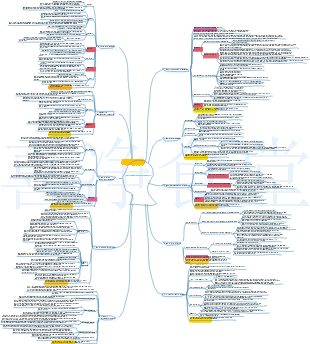
"Trade War"
1. Overview
The business world is like a battlefield, and this is the role of strategy. In fact, whether they admit it or not, many leaders in the business world today ignore strategy and pay attention to tactics. For businesses, this is an extremely dangerous mistake. You need to think carefully and determine your strategy before going to war. To win the battle.
Four forms of strategy
Defensive warfare applies to market leaders
Only market leaders can fight defensive battles
The best defense is to have the courage to attack yourself
A powerful attack must be blocked
Offensive warfare is suitable for companies in the second and third positions
The strength of the leader's position is an important consideration
Find weaknesses in leaders’ strengths and attack them
Attack from the narrowest possible position
Flanking warfare is suitable for smaller companies
The most beautiful operation should be carried out in the uncontested zone
The tactical system should be an important part of the plan
Pursuit and attack are equally important
Guerrilla warfare applies to local or regional businesses
Find a niche market that is small enough to defend
No matter how successful you are, never act like a leader
ready to retreat at any time
Forget those old thoughts
Human activities to satisfy people's needs and wants through the process of exchange
Marketing is the business practice of guiding the flow of goods or services from producers to consumers
Activities in which an organization seeks to achieve its goals by anticipating customer or customer needs and directing the flow of goods and services that satisfy the needs from producers to customers or customers.
Why should we forget old ideas?
Nowadays every company is customer-oriented, such as dozens of companies are trying to meet the requirements of the same set of customers. Then, just understanding the needs of customers is of little use.
In military warfare, two or more armies fight for first control.
In a business war, two or more companies fight for consumers. Unlike military wars, business wars never end.
The essential characteristic of business today is the struggle between companies rather than meeting people's wants and needs.
2. Learn from Napoleon
Napoleon Bonaparte was perhaps the best military strategist in history. The locations he chose to fight and how he deployed his forces were based on a careful analysis and assessment of the enemy's position. Business people should also follow his example. Detailed investigation of opponents is the first step in establishing an effective business strategy.
3. force principle
Basic principle: Concentrate superior forces, no matter what the circumstances, this should be done first and with all efforts. ——Clausewitz
It is necessary to commit as many troops as possible to the decisive point and fight. ——Clausewitz
It is far easier to stay number one than to be number one, because the leader is the king of the mountain and can take advantage of the principle of force.
Mathematical laws at war
Assume that the red team has nine soldiers and the blue team has only six soldiers. The red team has a 50% numerical advantage.
Let's also assume that on average, 1 out of every 3 bullets can kill a soldier.
After the first firefight: The situation of the battle will change dramatically, and the red team's 9:6 advantage will become a 7:3 advantage. The red team's 50% strength advantage becomes greater than 100%.
After the second firefight: the numbers will change to the red team, with an absolute advantage of 6:1.
After the third battle: the blue team was completely wiped out.
Mathematical rules in business war
If there is an untapped market, the company with a larger sales force will end up with a larger market share.
Napoleon said: The art of war for a numerically inferior force is to invest more troops in the offensive and defensive points.
The “Great Employee” Fallacy
You should tell your employees how great they are, but you can’t rely on your employees to win the battle.
To win the battle, you must rely on excellent strategy.
The “better product” fallacy
Many business people believe in their own advantages. Their only problem is to change the misconceptions in the minds of their target customers. This is wrong, A more effective method is to accept the perceptions in the minds of target customers and then exploit them.
Why?
Everyone has a secret box in their mind. If you sell a product or advertise to this person, he will take a look at the hidden fragrance in his head and then say whether it is right or wrong.
In today's marketing, the most useless thing you can do is try to change people's minds. Once a mind is formed, it is almost impossible to change.
What is the truth?
The facts are the perceptions in the customer’s mind.
Maybe, this is not a fact you agree with. But this is the only fact you have to deal with. You have to admit it first and then deal with it.
If you are so smart, why aren't you rich?
This question is difficult to answer. In business wars, you cannot win by being right alone.
There is this illusion that in the long run, the better product will ultimately win. However, the history of both war and business is written by the victors, not the losers.
Might makes right, and winners usually have better products, and only they can say so.
Strategy is about winning the war
4. defensive superiority principle
Defense, by the very nature of its form of warfare, is stronger than offense. ——Clausewitz
Clausewitz's second strategic principle is the principle of defensive superiority.
Military commanders do not challenge forces several times their own. Roughly speaking, if the attack wants to be successful, it should invest at least three times more troops than the enemy at the attack location.
In the wilderness, the two armies exchanged fire, and victory or defeat was quickly determined. The side with more troops will always have the advantage.
But when one side is on the defensive, the laws of numbers change.
Mathematical Laws in Defense
Assume that the red team commander has nine soldiers and is fighting against the blue team. The blue team commander has only six soldiers. At this time, the red team has a 50% strength advantage. But this time the blue team is on the defensive, defending in trenches or foxholes.
For the blue team members and soldiers, the situation is still the same. Every 3 bullets fired can hit a red team soldier; the blue team is in a safe defensive position, and it takes 9 bullets from the red team to hit a blue team soldier.
Red team, this situation is the same as the difficulty of "persuasive" selling, that is, it is much harder to take away business from a competitor with a solid market position than from a customer who is not loyal to any manufacturer.
After the first firefight: The red team has more troops than the blue team, but the ratio is only 7:5;
After the second exchange of fire: the score dropped to 5:4;
After the third exchange of fire: the two sides were evenly matched in strength, 4:4.
The red team had better cancel the attack under such circumstances, otherwise the whole army will be annihilated.
Don't try to be a hero
The biggest mistake business people make is failing to face up to the powerful power of an opponent who is on the defensive. (ignorance and arrogance)
General Patton said: "Now I want you to remember that no one can win a war simply by dying for his country. If you want to win a war, you must make the enemy sacrifice more than his country."
Losers will tell you that love cannot soothe the pain of losers, which is difficult for winners to realize.
Launching an attack takes time
In the offensive war of business, the most difficult thing is the transmission of information. It takes months, even years, to get product information to millions of consumers. In this way, the defender has enough time to hinder and disrupt the attacker's sales message in different forms.
To make better use of the time factor, defenders must be alert to potential dangers from all sides.
5. A new era of competition
Some politicians and generals tried to avoid decisive battles. History has disillusioned this illusion. ——Clausewitz
Propaganda is propaganda, don’t make predictions
A military commander with normal thinking would never set a timetable for victory.
Business promises should be as ambiguous as political language, otherwise they will weaken your power.
The truth about business wars
If you just want to win through hard work, you will usually end up in failure. One-heartedness is the key word here.
In contrast, a better strategy would be to exploit opportunity rather than brute force.
Whenever you hear your boss say, "We need to work harder," you know you're hearing failure.
Stop asking employees to make unnecessary efforts and make worthless contributions. This is not something a general should ask his army to do.
6. The Nature of Battlefield: Mind
By analyzing the characteristics of our opponent's location, we can know his plans and act accordingly. ——Clausewitz
The battlefield of business war is in the mind. Every day, the war is going on in your own mind and in the minds of your customers.
It is a battle of wits where the battlefield cannot be seen and can only be imagined in the mind, which makes business war one of the most difficult subjects.
You don’t win with a better product, you win with better knowledge.
Draw a mental map
You should explore where other companies occupy the customer's mind and find out which company occupies the commanding heights in the customer's mind.
Drawing a mental map gives you a huge advantage; most of your competitors don't even know where the battlefield is.
They are completely tied to their own camp, their product, our sales force, and their own sales plan.
king of the hill
In military battles, hills are usually considered to be favorable terrain for combat, especially for defense. In business wars, managers call a powerful position the "commanding heights." Therefore, it seems more appropriate to use Shantou as a main concept in business wars.
Market segmentation breaks down positions
"Greed" often instigates a brand leader to increase his troops to control the entire position. The result is often that in trying to hold on to a small part of the position, the entire position is lost.
Frederick the Great said: "He who tries to defend everything will defend nothing."
7. strategic situation
The first, highest, and most far-reaching judgment that statesmen and commanders must make is to determine the strategic form of the war they are waging. Neither wrong judgments can be made, nor judgments should be allowed to run counter to their nature. ——Clausewitz
Clausewitz: Defense itself is a reverse action. Because he is committed to defending against his enemy's intentions rather than being distracted by his own.
Based on the theory of "make the easy money first". People tend to prey on the weak rather than the strong, but the opposite is true. The smaller the company, the harder it fights to defend its share. The following tactics will also be adopted, such as price reductions and discounts, and extended warranty periods.
Therefore, never fight with a wounded beast, it will give up profits and you will have no room to survive.
mountain in mind
Let us take another look at the battlefield in our hearts. Of course, the hilltop is the commanding height of the leader's strategy.
If you want to climb the mountain, that means you have to fight an offensive battle. You're hopeful that you might find a breakthrough, but the fighting is brutal and the price will be high because the leader on the top of the mountain usually already has enough resources to launch a powerful counterattack.
If you are rushing down the mountain to stop the attack, then you are fighting a defensive battle, and the rule is: the best defense is an effective attack.
If you are detouring through mountains, or you are fighting a flanking battle, this kind of warfare is usually most effective and least expensive. But in many product categories, opportunities for launching excellent flanking campaigns are becoming increasingly rare.
If you hang around at the bottom of the mountain, you are fighting a guerrilla war, looking for a safe market that can be defended, or a small market that the leader is too lazy to enter.
8. defensive warfare principles
Politicians who see war as inevitable but hesitate to attack are guilty of treason. —— Clausevich
Three principles
The first principle of defensive warfare: Only market leaders can fight defensive battles.
In business strategy, self-righteousness and self-deception have no place. It is one thing to exaggerate the facts in order to boost morale; it is another thing to make strategic mistakes due to self-deception.
An excellent commercial general must have a thorough understanding of the actual situation in order to make correct judgments based on historical facts.
You can fool your enemies, but don't fool yourself.
The second principle of defensive warfare: The best defense is to have the courage to attack yourself.
Self-attack may sacrifice immediate interests, but it has the biggest benefit, which is to defend market share. This is a super weapon in business wars.
Conversely, companies that hesitate to attack themselves often lose market share and, ultimately, their position as market leaders.
The third principle of defensive warfare: The powerful attack continues to be blocked.
Most companies have only one chance to win, while market leaders have two. If a leader misses an opportunity to attack himself, he or she can often copy the actions of competitors to defend against competition. However, leaders must move quickly to stop the attacker before he can gain a foothold.
It is safer to overdefend than to underdefend. You could call it an insurance premium.
Be prepared to fight back
In war, it is best to forget about the so-called principles of peaceful coexistence.
If a war begins, make sure you are the victor.
The time when the war starts is uncertain, and the attacking party may not be you.
leave a reserve
Another effective strategy for leaders is to leave a reserve fund for themselves.
The attacker should attack with all his strength, but it is not cost-effective for the leader to spend as much money as possible on one campaign. It is better to invest only what is needed to suppress the opponent.
Clausewitz once said: "The number of vocal reserve armies is the focus of attention of the commanders on both sides."
Defenders should take into account a certain amount of legal fees as a normal expense of doing business.
peace of business war
The ultimate goal of all defensive warfare is to win peace and force competitors to engage in scattered guerrilla warfare.
Assuming that leaders have recently made permanent peace, they can change their strategy and focus on the product itself rather than their brand.
If you have a piece of pie, you should make the whole pie bigger, not just the small piece in your hand.
9. principles of offensive warfare
If you cannot gain an absolute advantage, you must flexibly use your existing power to create a relative advantage at a decisive location. ——Clausewitz
Offensive warfare, strategy and defensive strategy have opposite names but the same nature. The two are closely connected and difficult to separate.
A strategy that is good for the leader is bad for the followers. Vice versa, therefore, before you use a certain strategy, you must constantly ask yourself what position you occupy in the market structure.
Leaders should engage in defensive warfare rather than offensive warfare. Offensive warfare is suitable for companies with the second or third market share. Such companies have enough power to launch a sustained attack on the leader. No one can say what sufficient power is? Just like in military combat, business warfare is an art, not a science, and you have to use your mind to judge.
Three principles
The first principle of offensive warfare: The strength of the leader's position is an important consideration.
Most companies are like children. When they encounter a problem, their first reaction is to study themselves. Getting caught up in the quagmire of pursuing internal operating efficiencies ignores real strategy.
What companies in second or third place should do is focus on researching leaders.
sales force
product price
Sales channels
No matter how strong the second company is in a certain product category, if the leader is also very strong in this area, the former has absolutely no chance of winning.
Leaders occupy the minds of customers. To win the mental battle, you must first remove the leader and then replace him. It’s not enough to win, you have to let others fail, especially leaders.
Remember, business war is a psychological war. In this war, the human mind is the battlefield. All attacks should be aimed at this. Your weapons should be
language
Word
image
sound
The second principle of offensive warfare: Find the weakness in the leader's strength and attack that weakness.
Weakness in strength
Only the weaknesses inherent in a leader's strength are unavoidable. To avoid them, one must pay the price of giving up strength.
Mercedes-Benz builds comfortable cars and emphasizes craftsmanship; the opposite of comfort is sports unless it gives up its positioning. Therefore, BMW will always have the positioning of control.
The third principle of offensive warfare: Attack on the narrowest possible front.
The ideal offense is a single product.
Full variety is a luxury that only leaders can afford, and offensive battles should be fought on narrow fronts to ensure initial results.
If he invests in a variety of products and launches an all-out attack in an attempt to gain as much territory as possible as quickly as possible, he will eventually lose all the territory and even more.
Because at any time, leaders always have an absolute power advantage, whether it is financial resources, industrial relationships, distribution channels, or customer awareness.
Defense has a greater chance of winning
Some good offensive strategies are actually difficult to generalize because they are counter-normal in nature and contrary to the mindset of most managers to "do better" in the norm.
10. principles of flanking warfare
Pursuing victory is the second action to win. In many cases, the first move is more important. ——Clausewitz
Flank war is the most innovative strategic situation in business warfare.
Flanking is a bold action, like a gamble, and a huge gamble that requires careful planning every moment of every day.
Three principles
The first principle of flanking warfare: This operation should ideally be conducted in an uncontested zone.
To launch a flanking war, you do not need to produce a new product that is different from any existing products on the market, but your product There must be something innovative or unique in your product to allow customers to classify your product as a new category.
The success of flanking often depends on your ability to create and sustain a unique new category, which is key. This is not easy to do, especially since defenders may deny the existence of the new category, thus thwarting your attack.
Traditional market theory calls this method "market segmentation", that is, looking for market segments or niche markets. This is a very important ability. To launch a true flanking war, you must be the first to seize a market segment. Otherwise, it will become like a tightly defended enemy and launch a pure offensive war.
Flanking warfare is very different from offensive warfare. If there is no defense on a hilltop or a market segment, the strength of a squad will be You can attack it. But if the opponent has set up defenses, then it will require the greatest efforts of an entire division to attack.
Launching a flanking attack requires unique, far-sighted vision. The reason is that in a true flanking war, there is no ready market for the new product or service.
The second principle of flanking warfare: Tactical surprise should be an important part of the plan.
Essentially, this segment is a surprise attack.
The characteristics and directionality of offensive and defensive warfare are predictable. A flanking battle is completely unexpected, and the greater the element of surprise, the longer the leader is forced to react.
Market testing and too much research often sabotage the move, exposing the path to outflanking to competitors. You have to pray silently that your competitors don't notice what you're doing.
The third principle of flanking warfare: Pursuit is as important as attack.
If there is no pursuit and victory, there will be no good results.
However, many companies stop moving after getting ahead. They hit their initial sales goals and then diverted resources to other things, which was a mistake, especially for a flanking campaign.
There is an ancient military motto: "Consolidate victory and abandon defeat."
Kill all the backward products and distribute their resources to the commanders who are achieving the greatest victory.
The focus of most business planning is to protect the business from failure, so a lot of money and time are spent on protecting old products and old markets, but little attention is paid to consolidating the successes that have been achieved.
"Success breeds success." This is very important. Enterprises must take advantage of the advantages they have established in a timely manner. Before leaders start to set up defenses, Get your new product off the ground quickly before the swarm of copycat products comes your way.
If you don't have enough resources, maybe you shouldn't launch a flanking attack in the first place and should engage in guerrilla warfare. It is impossible to persevere if you are short of funds.
Several typical forms of flanking warfare
Low-priced flanking battle
The trick to lowering prices and making a profit at the same time is to lower costs in ways that customers don’t notice or care about.
High-priced flanking battle
There are more market opportunities than lower-priced wings for two reasons:
One is the tendency of customers to use price as a measure of quality, believing that a high price should be worth the money.
Another reason is the potential for high prices to generate high profits. High profits can provide you with the necessary additional capital for this battle.
Channel flanking war
Another powerful form of flanking is attacking an opponent's sales channels. Sometimes you can flank a solidly defended opponent by opening up a new channel.
Small product flanking war
The book talks about how the Volkswagen Beetle became popular in the United States and made large cars in a new and different way under the market environment.
Big product flanking war
The book tells the story of the founder of Hyde Sports Equipment Company, who created an oversized tennis racket in order to reduce the difficulty of tennis. It’s also about being different.
FeaturesFlanking
If you know what you are looking for, identify it as soon as you find it.
Utilizing distinctive product features for flanking warfare is applicable to almost any product and is the most widespread form of strategic application.
Success factors for flank warfare
Flanking is not for the faint of heart or the timid, it is a gamble that may lead to great success or total failure.
Business managers who like to do market research often find that it is very difficult to launch flanking wars. They always use surveys instead of foresight.
If you want to have a grasp of the industry situation, one way is to read industry publications. Leaders are very open about their vision for the future. If they openly oppose the development of a product, you can have extra time. They have to overcome their own arrogance before they follow your lead, and that takes time.
The preparation time for production is an important factor that needs to be considered on both the defensive side and the flanking side. Hitting the time difference is a key factor in controlling the rhythm.
11. principles of guerrilla warfare
When the enemy advances, we retreat; when the enemy is stationed, we harass; when the enemy is tired, we attack; when the enemy retreats, we pursue. ——Mao Zedong
More important than your own size is the size of your competitors. The key to a successful business war is to develop strategies and tactics for your competitors, rather than developing strategies for your own situation.
Three principles
The first principle of guerrilla warfare: Find a market segment that is small enough to defend
This territory can be small in a geographical sense, small in terms of capacity, or small in other concepts. In short, it is small, making it difficult for large companies to attack.
Guerrilla warfare has not changed the principle of force in war. Large companies will still defeat small companies. The purpose of guerrilla warfare is to minimize the battlefield to gain the advantage of military strength. In other words, it's like trying to be a big fish in a small pond.
Sometimes companies engaged in guerrilla warfare are easily tempted. Change guerrilla warfare to flank warfare. In other words, it is trying to get closer to the industry leader, weakening the leader's position, and thereby increasing its own market share.
Why doesn't Rolls-Royce make cheap cars to capture the market of Mercedes-Benz and BMW? If he takes a cheap car, then he has entered the brand extension trap, a seesaw, and the effect will be obvious immediately.
Essentially, a guerrilla company starts with limited power, and in order to survive it must firmly resist the temptation to spread its power, otherwise it can only lead to disaster.
The second principle of guerrilla warfare: No matter how successful you are, never act like a leader.
The essence of guerrilla strategy and tactics is exactly the opposite of the strategies and tactics of Fortune 500 companies.
Guerrilla companies should exploit this weakness of large companies and put as many people as possible on the front lines.
You should also resist the temptation to formulate formal organizational systems, job descriptions, ktv assessments, job promotion systems and other equipment.
Guerrilla companies should try their best to put all their personnel on the front line and leave no non-combatants behind.
Guerrilla companies should be "nimble and fast."
Guerrilla companies can take advantage of their small size to make decisions quickly, which is a valuable asset when competing with large companies. Because big companies make a decision quickly It takes staff six weeks, and ordinary decision-making takes six months. (The current organizational structure is no longer as bloated as the author described. If the opponent is strong, they can overcome this internal problem)
The third principle of guerrilla warfare: At the first sign of failure, be ready to retreat.
As long as the company survives, it can continue to fight in the future.
If the occupation is not good for you, don't hesitate to give up your position or product quickly. The guerrillas do not have so much financial and manpower to waste in a battle where defeat is certain. They should abandon the battle as soon as possible and change their route to advance.
The opposite of retreat is proximity, and guerrilla companies should use their flexibility to enter the market at the right time when they spot an opportunity.
Several typical types of guerrilla warfare
geographical guerrilla warfare
Almost all nationally known products or services will be attacked in one area. This is a classic guerrilla tactic. There are vivid guerrilla warfare operations in almost any industry.
If I create a brand in Nanchang, what I have to do is to choose a good strategy. Whether it is an offensive war, a flank war or a guerrilla war, it depends on what category I choose to start the war.
Population guerrilla warfare
Guerrilla tactics are to attract a specific group of people, such as customer groups based on age, income, occupation, etc.
Industry guerrilla warfare
Focusing on a specific industry, such as the computer industry, is a strategy called "deep" services. The key to success in industry guerrilla warfare is to be narrow and deep, never broad and shallow.
product guerrilla warfare
Many guerrillas make money by focusing on a small market with a single, unique product so that their sales are not large enough for larger companies to become interested in the same product.
High-end guerrilla warfare
High-end products at high prices will make consumers ask: "Look, why are their products so expensive?" Then they will ask why. Of course, this creates a problem for merchants An opportunity to tell consumers what they value.
You have to be the first to capture the high-priced positions, otherwise you need to have unlimited resources. (Guerrilla companies have none)
If you want to fight a guerrilla war at a high price, you must have confidence and courage, be confident in the future of innovative products, and have the courage to launch this product under an unknown brand.
In the future, you should not fall into the “brand extension trap.”
development alliance
That's roughly what it means. Franchise operates with a national name, establishing a national chain network, but with ownership and control remaining local. This strategy can be divided into two approaches, top-down and bottom-up.
The top-down organizational form is to first formulate a plan, and then let local businessmen enter and operate McDonald's, Pizza Hut, and Holiday Inn. Those who are qualified are a few typical examples. In other words, you have an idea and then find a group of guerrillas to complete your plan.
A more creative approach was to organize the organization from the bottom up. With this approach, the show was a huge success because it required very few resources to begin with. The 21st century company is a typical example For example, he recruited existing real estate agencies to join this national group that exchanges information. This is a good story because both selling and buying a home often involve, from The jurisdiction of one real estate agency company crosses over to the jurisdiction of another.
When developing an alliance, you have to ask yourself a key question: Who are your competitors? Sometimes your competitors are your neighbors, sometimes they are not.
Business wars do not make companies hostile. Sometimes, on the contrary, they hope to see more alliances, such as product alliances, regional alliances, consumer group alliances, etc.
Guerrilla warfare everywhere
The general principle is
Only one company in every hundred should take a defensive approach.
The two families should take an offensive approach.
The three companies should engage in a flanking battle.
The remaining 94% are all engaged in guerrilla warfare.
12. Supplementary explanation of the case
coke war
Business managers should spend more time studying business history. Most business history has focused on results rather than causes. We should look through the results to find the causes. And knowing that this is a complex system, you The reasons found may not be enough to determine the outcome of the entire battle. But you still have to find them.
Tactically speaking, the language, graphics and music can be changed as often as needed, but the strategy must not be changed.
Cognition can affect people's judgment and taste. The mind is the battlefield. There are no facts in the mind, only cognition, and cognition is the fact.
beer war
Many people believe that half the effort can lead to twice the result. Although it is easier to cross a small step than a big step, when crossing a big ditch, no one would want to cross one half first and then the other half. ——Clausewitz.
When it comes to increasing advertising budgets, top management always makes the mistake of asking, what is the return on the investment? Instead, they should ask how much we should invest to ensure victory.
The boundary between victory and defeat in war sometimes lies in the slight difference between victory on the battlefield and the losing side's casualties, prisoners of war and artillery losses.
At the right moment, the power used against the right enemy will produce greater power.
Those who forget history are doomed to repeat it.
burger war
There is an art to leadership - leaders say to employees: "Without you, we can accomplish nothing."; Strategy - Strategists must understand in their hearts, "We can do without you."
Products are just tools to carry strategy. You can't think about problems from a better perspective, you can only think from differences.
product line mix
Drainage products
Iconic products are labels, labels that enter the mind.
Sales Products
Other products sold normally.
high profit products
Profit growth.
computer warfare
In war, the most serious mistakes are made out of kindness. ——Clausewitz
When dealing with competitors, don't give them a chance to breathe. You must know that letting the tiger go back to the mountain will cause troubles in the future.
The commander must exert all his efforts in the first battle to win the final victory.
For a good business strategy, what he should focus on is to establish his dominant position as early as possible in the battle. Just like playing chess, winning a group at the beginning can often guarantee the final victory.
If you want to win, you can only completely overturn the leader's strategy, either find the weakness in the leader's strength, or carry out flanking, or engage in guerrilla warfare, or concentrate your own forces.
If you do not occupy the commanding heights in the minds of customers, it is not enough to have a good product. Victory usually belongs to the party that controls the mental position of the customers.
If you understand the strategy of business war, you don't have to be a prophet to make the right move.
13. General traits of a leader
Among a thousand outstanding figures, some are famous for their wisdom, some are famous for their bravery and strong will, but no one combines these advantages and becomes the best general. ——Clausewitz
Patton's Third Army had 105 officers but only one strategic planner. The more people involved in strategic planning, the harder it is for a company to come up with a good strategy. What we need to do is push strategic planning to senior managers instead of delegating it to middle and lower managers.
"Fire Line"
Decentralized management erodes the risk-taking spirit of business people. Managers are not fools. They know that as long as they can stay above the "dismissal line", they can successfully ascend to the top management of the company.
"Fire Line" Test
If you were fired because you couldn't meet your sales goals, you're below this line.
If you have the authority to fire someone because they didn't meet their sales goals, you're above this line.
When a person is above the "dismissal line", the individual does not have any sales goals. If the sales are successful, he can naturally receive the glory of victory; if the sales fail, he can blame others. This position may be redundant at this time.
Decentralized management means that the dismissal line is getting lower and lower, and the company is divided into many territories. Each territory does not have enough power to launch large-scale business war operations on its own. As a result, many companies' commercial warfare activities are reduced to many small-scale battles, you might call it, "Trench warfare" in business.
Must be flexible
Ability to adapt strategy to form, rather than form to strategy.
Much of the intelligence obtained during the war was contradictory, much more was erroneous, and much of it was questionable.
In the fog of war, it is easy to resort to strategies that have been successful before. In fact, when it comes to strategic decision-making, you should sit down and think about all elements of strategy and tactics.
For a general, stubbornness and inflexibility are weaknesses, not strengths. Strip away their pretense of determination and courage.
A good general should not have stubborn prejudices. He should carefully consider all options and listen to various opinions before making a decision.
It is this flexibility of the mind that can cause the enemy to panic. They cannot know when and where the other party will attack, making it difficult to guard against them.
Must be decisive
The distinguishing quality of a good general is the type of courage he possesses. Excellent ones will have unlimited courage to face the different opinions put forward by bosses and colleagues. Although good business leaders are open-minded and able to listen to various opinions, when it comes to making decisions, Their minds will close in time and they will find the firm belief and courage deep within to make decisions. ——This is decisiveness
Mediocre generals are all "tough" type: "No one can tell me what to do?" (Deng Binbin, it seems that you have been like this in recent years. You must always remember to reflect on the situation, and don't let it happen because of you. Long-term exclusion or neglect has caused you to Lose the inertia of being a wise person. You can be grumpy, all I ask of you is that you make thoughtful choices before you grump. )
"Strong" people can become excellent leaders, and leaders do not have to be excellent generals or strategists. (I am not a leader, I want to be a strategist-type business general.)
If you're good at acting, you can be both a competent leader and a good strategist. Patton often practiced his "war expression" in front of the mirror. (In the Hongbo incident, you told yourself not to perform, so will you perform?)
Many consultants overemphasize the "morale" factor, believing that morale alone can win a business war. They did it, and the opposite is true. Only victory in the war can boost the morale of the troops.
Must have fearlessness
Clausewitz said: "The higher the military rank, the less courageous you are." In other words, the closer you are to retirement, the less courageous you are; the more stock options you have, the less courageous you are.
Many business generals have inherent flaws: when they are in trouble, they show too much courage; when they are in adversity, they are too cautious. (How to define this? Can knowing the facts solve this flaw?)
Must know the facts
Every business question has a simple and obvious answer, but that answer is usually wrong.
Excellent business generals, when formulating strategies, start from the basics and start with the details. Once a strategy is developed, it's a simple, but not necessarily "obvious" answer.
need luck
Luck plays an important role in business wars. The strategy has been decided, the attack has begun, and you have to be ready to wait for luck to come. Of course, if you do things right, your chances of winning are better.
Clausewitz said: "No other human activity is so permanently and universally associated with chance. War is most similar to playing cards."
Conditional surrender is not a shame. A good general will never fight until only one person is left; a good chess player will never play a chess game that has already been decided.
Because it is meaningless to waste resources in vain, it is best to admit failure and withdraw and invest in another shopping mall station.
There are more battles to fight on the business battlefield, and more victories waiting for you to fight for.
Should know the rules
To play a game, you first have to learn the rules or principles of the game, and then you have to try to unlearn those rules. That is, you have to learn to play without thinking about the rules.
A good general should not deliberately ask, "What type of war are we fighting? What principles should we use?" When the battle starts, you don't have time to flip through the book. If These cognitions are all in other people’s heads, so what use do you have? So you need to practice the "rules" deliberately.
To correct this problem, you must start to systematically study the history of business competition, and then propose strategic principles that affect business success or failure. Nothing is more important today than strategy.
Strategy and timing are the high points of business competition; all other aspects are minutiae.
14. strategy and tactics
Revolutionary conclusion:
Regardless of the strategy model, strategy should be developed from the bottom up rather than planned from the top down.
Strategy should be derived from practical tactics, and marketing tactics should lead to corporate strategy.
what are tactics
Tactics is how you enter the mind, and it is a mental entry point for competitive differences.
The primary characteristic of a tactic is differentiation, which can be smaller, larger, lighter, heavier, cheaper, more expensive, or simply different Distribution system, and this difference is for the entire market, not just the difference between the products or services of one or two competitors.
Once you find a recording angle and direction, you can directly turn this tactic into a strategy and truly penetrate the brand into the minds of customers.
what is strategy
Strategy is not a goal. Top-down corporate thinking is goal-oriented. We first decide the results we want to achieve, and then discuss the plans and means to achieve the goals.
Strategy is not a goal, it is a consistent business policy for the enterprise.
Strategic consistency means always being directed towards the chosen tactics. All resources and operational activities across the enterprise, including product, pricing, distribution, advertising, and everything else leading up to the initial tactics.
If tactics are thought of as nails aimed at the mind, then strategy is a hammer wielding potential energy.
As a one-time business policy, strategy should not be changed once it is set. The purpose of strategy is to allocate corporate resources to promote the realization of tactical advantages, and to maximize the utilization and publicity of tactical advantages.
Strategy is not limited to specific goals. When tactics achieve tactical advantage, they turn into strategic advantage. We say that the corporate strategy is successfully implemented.
It can be seen that strategy comes from tactics. No matter what strategic model a company chooses, strategic planning always starts with looking for tactics.
Tactics vs. Strategy
A tactic is a concept or a perspective/strategy that has many elements that are integrated around the tactic.
Tactics are highly differentiated/strategic and can only be ordinary.
Tactical is more of a time category than static/strategic with a concept of time. For most retailers in the United States, discounting is a tactic for occasional sales. For discount stores with low prices every day, implementing discount sales is a strategy.
Tactics are competitive advantage/Strategy is the plan achieved to maintain competitive advantage.
Tactics are independent of products, services and enterprises, and may even have nothing to do with the products manufactured by the enterprise. Strategy belongs to the internal scope of the enterprise, including multi-faceted reorganization.
Tactics are communication-oriented, and getting customers to accept the concept/strategy is product-service-oriented, or enterprise-oriented.
The principle of bottom-up strategy is simple. Enterprises choose a suitable strategic model, define their main competitors, and find unique tactics for competition. Then formulate a strategic plan. The business's job is to push specific tactics into general execution and extend short-term execution into long-term implementation, so that the strategic model is realized.
What needs to be reminded is that tactics are what you are better at than your competitors. In World War II, General Aton fought a single tank battle. This was his tactic. Southwest's "single class" strategy led to its unprecedented success of low-cost, short-haul flying.
We would make a mistake if we thought of strategy as a force independent of tactical results. ——Clausewitz
strategy follows tactics
Tactics drive strategy, and strategy is played out.
Just as form should follow content, strategy should follow tactics.
The achievement of tactical results is the ultimate goal and only purpose of strategy.
If a given strategy cannot serve the tactical results, no matter how clever the idea is and how touching the expression is, the strategy is wrong.
Strategy should be developed from the bottom up, not the top down. (It is worth noting here that it does not mean that you should go to the bottom employees to ask about strategies from the bottom up, but that you should start from the bottom up. Go up layer by layer and feel it clearly. )
Business strategy should be developed from the mud of the front line of the market, not from the imagination in the ivory tower.
The strategic goal is to make the tactical level work go smoothly.
The main strategic goal in military operations, to put it bluntly, is that at any time and at any place, we must have two soldiers who are ready, willing, and more capable to fight. A soldier against the enemy. In other words, assisting in the application of force principles at the tactical level.
A grand strategy may make people awe-inspiring, full of inspiration, courageous and fearless, but if it cannot put its troops into battle at the right time and in the right place, If the corresponding tactical tasks are completed, then this strategy will eventually fail.
There is no good or bad strategy, and there is no inherent standard of right or wrong in strategy itself.
The criteria for judging works of art are often their originality, creativity and uniqueness of ideas. Strategy is different. Strategy can only be achieved when it comes into contact with customers and competitors. Only then can their effectiveness be judged.
All great military strategists have similar experiences. Their strategic thinking is based on previous tactical learning, that is, strategy obeys tactics.
"You're not supposed to make a plan and then adapt the situation to the plan; you're supposed to adapt the plan to the situation, and I think victory or defeat depends on whether the top commander has that capability," Patton said.
Advertising Expert's Weapons
advertise
public relations
Strategy tolerates mediocre tactics
Strategy is developed from a detailed understanding of tactics, but paradoxically, good strategy often does not rely on the best tactics to be realized.
The essence of a sound strategy is the ability to win in business wars without relying on superior tactics.
A company will fail if it does either of the following
1. Reliance on a poor strategy.
2. Rely on excellent tactics.
Commercial generals who rely on superior tactics to win are often quick to accuse weapons of ineffectiveness, and on today's battlefield, those weapons are advertisements.
strategic guidance tactics
If a strategy is reasonably formulated from a tactical perspective, then this strategy should guide the tactics after the battle begins.
Sometimes it is necessary to invest significant resources in order to capture key points that affect the development of the overall strategy. For example, you may have to continue operating some loss-making projects for a period of time in order to achieve certain tactical goals. This in turn ensures the success of the overall strategy.
Vice versa, for example, when some profitable products are inconsistent with your strategy, you will have to reduce or abandon these products.
This may trigger some pushback from employees focused on sales performance, whereas Clausewitz always emphasized consistency of strategy.
Excessive delegation can also lead to strategic disunity, and decentralized management is the most common reason for lack of strategic guidance in tactics. Just like the seesaw principle, decentralized management has certain results in the short term. In the long run, the company will definitely Pay a heavy price for this.
Attack and Counterattack
According to the laws of physics: any action has an equal and opposite reaction. When many commercial war commanders formulate combat plans, they assume that the enemy will not react at all. In fact, this is not the case.
If you cut your price in half, your competitors will probably do the same. If you take every action, even if your opponent doesn't copy your original action at all, they will act accordingly.
Never think unilaterally. A good business strategist will anticipate the opponent's counterattack. Many principles of business warfare take into account the danger of counterattack.
Analyze the possibility of a major counterattack by looking at changes in expected market share. For example, some people boldly predict that they will steal the market share of the leader, but they forget to consider what will happen in the process. Fight to the death, forgetting to consider that the injured eagle will fight to the death.
Consider enemy counterattacks. Your opponent will spend more money and sacrifices than you to defend what they already have.
Action cannot be separated from strategy
action is strategy
"As long as the company has the confidence to win, then anything is possible." It is this wrong concept that brings trouble to many successful large companies. They usually first determine a goal they hope to achieve, and then A team is then deployed to develop a strategy to achieve this goal. In reality no company is powerful enough to behave this way. As a result, impossible goals always arise.
Good business strategists live in a world of tactics and reality. They always focus on those goals that can be accomplished through available tactics, never on grandiose plans and impossibilities. Spend energy on realizing dreams. (This paragraph is very important. Sometimes you will stay in the wild sky. If you can hold the reins firmly, it may be a good personal advantage, not a disadvantage.)
Strategy cannot be separated from tactics
If action implies strategy, then strategy implies tactics. This is a continuum, and if you try to separate them at any point, you will suffer the consequences.
Knowledge about tactics can help you develop strategies that enable a company's set of courses of action.
Once this step is recognized, strategy takes the lead to guide the appropriate tactics.
Setting strict boundaries between tactics and strategy will hinder the entire process.
Use reserve forces
The number of active reserve forces is usually a major concern for both commanders.
The commander with a stronger reserve army has control of the battlefield. But it does not devote all its troops to every battle.
A good general will try to win without mobilizing all his reserves.
The above is the concept of a reserve army in a tactical sense, which is a force that can be put into battle immediately if needed; a strategic reserve force is another matter. The army cannot rely on soldiers who are first recruited and then trained before they can be used.
Clausewitz warned that the strategic reserve army could not be relied on, which he believed was a local incoordination. If it is a force in a strategic sense, it cannot be called a reserve force. In other words, these troops cannot be deployed The combat commander immediately mobilizes and goes into battle as soon as the order is given.
An entrepreneur who invests in two businesses instead of one will fall into the trap of having a strategic lack of backup. One business cannot serve as a backup for the other because neither investment is readily available in the economic moment liquidation.
Better yet, start a business and leave the flow yourself as a backup force.
This principle also applies to companies that try to put too much product on too many fronts in too little time. The main question they have to ask is: "Where are the reserves?"
15. growth trap
Growth is a by-product of doing the right things, but it’s not a worthy goal in itself. In fact, “growth” is the culprit behind impossible goals and bad decisions.
In a business war, it’s not what you want to do, but what your enemies or competitors will ask you to do; it’s not about your stock price, but how many customers you win compared to your competitors?