MindMap Gallery Accompany your children’s lifelong growth
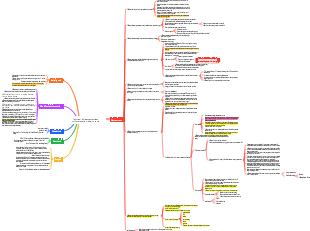
I thought it was a book that followed the crowd, but it contained a lot of gold. "Along with Children's Lifelong Growth" is an educational method summarized by Dr. Fan Deng based on his own parenting experience with his team, as well as in-depth exchanges with a large number of parents. All parents who have problems raising or getting along with their children should read this book.
Edited at 2024-01-13 13:00:18This strategic SWOT analysis explores how Aeon can navigate the competitive online landscape, highlighting strengths, weaknesses, opportunities, and threats. Strengths include strong brand recognition (trusted Japanese heritage, quality), omnichannel capabilities (stores + online + mall integration), customer loyalty programs (Aeon Card, points, member pricing), and physical footprint (extensive store network for pickup/returns). Weaknesses encompass digital maturity gaps (e-commerce penetration, app functionality, personalization vs. Amazon, Alibaba), cost structure challenges (store-heavy, real estate, labor), and supply chain complexity (fresh food, frozen logistics for online). Opportunities include enhancing e-commerce competitiveness (faster delivery, wider assortment, lower minimum order), leveraging data-driven strategies (purchase history, personalized offers, inventory optimization), expanding omnichannel integration (buy online pick up in store, ship from store), and private label growth (Topvalu, localized brands). Threats involve online-first players (Amazon, Alibaba, Sea Limited) with lower costs, wider selection, faster delivery, market dynamics (changing consumer behavior post-COVID, discount competitors), and regulatory risks (data privacy, cross-border e-commerce rules). Aeon can strengthen market position by investing in digital capabilities, leveraging store assets for omnichannel, and using customer data for personalization, while addressing cost structure and online competition.

This analysis explores how Aeon effectively tailors offerings to meet the diverse needs of family-oriented consumers through a comprehensive Segmentation, Targeting, and Positioning (STP) framework. Demographic segmentation examines family life stages (young families with babies, school-aged children, teenagers, empty nesters), household sizes (small vs. large), income levels (mass, premium), and parent age bands (millennials, Gen X). This identifies distinct consumer groups with different spending patterns. Geographic segmentation highlights store catchment types (urban, suburban, rural), community characteristics (density, income, competition), and local preferences (fresh food, halal, Japanese products). Psychographic segmentation delves into family values (health, safety, education, convenience), lifestyle orientations (busy professionals, home-centered, eco-conscious). Behavioral segmentation focuses on shopping missions (daily grocery, weekly stock-up, seasonal shopping), price sensitivity (value seekers, premium), channel preferences (in-store, online, pickup). Needs-based segmentation reveals core family needs related to value (good-better-best pricing), budget considerations (affordability, promotions, member pricing), safety (food quality, product recall), convenience (one-stop shopping, parking, store hours). Targeting prioritizes young families with school-aged children, budget-conscious households, and convenience-seeking shoppers. Positioning emphasizes Aeon as a family-friendly, value-for-money, one-stop destination with Japanese quality and local relevance. These insights enhance family shopping experiences through tailored assortments (kids’ products, school supplies), promotions (family bundles, weekend events), and services (nursing rooms, kids’ play areas).
This Kream Sneaker Consumption Scene Analysis Template aims to visualize purchasing and consumption journeys of sneakers, identifying key demand drivers and obstacles. User behavior within Kream includes searching, bidding, buying, selling, authentication, and community engagement. External influences include brand drops (Nike, Adidas), social media (Instagram, TikTok), influencer hype, and cultural trends. Target categories: limited editions, collaborations, retro releases, performance sneakers, and general releases. Timeframes: launch day, first week, first month, long-term (seasonal, yearly). Regions: North America, Europe, Asia (Korea, China, Japan). User segments: Collectors: value rarity, condition, completeness (box, accessories). KPIs: collection size, spend, authentication rate. Resellers: value profit margin, volume, turnover. KPIs: sell-through rate, average profit, listing frequency. Sneakerheads: value hype, trends, community validation. KPIs: purchase frequency, social engagement, wishlist adds. Casual trend followers: value style, convenience, price. KPIs: conversion rate, average order value, repeat purchases. Gift purchasers: value ease, presentation, brand trust. KPIs: gift message usage, return rate. Consumption journey: Awareness: social media, email, push notifications. Search: browse, filter, search by brand, model, size. Purchase: bid, buy now, payment, shipping. Authentication: inspection, verification, certification. Resale: list, price, sell, transfer. Sharing: review, unboxing, social post, community discussion. Key performance indicators: conversion rate, sell-through rate, average order value, customer lifetime value, authentication pass rate, return rate, Net Promoter Score. This framework helps understand sneaker trading dynamics, user motivations, and touchpoints for engagement and satisfaction.
This strategic SWOT analysis explores how Aeon can navigate the competitive online landscape, highlighting strengths, weaknesses, opportunities, and threats. Strengths include strong brand recognition (trusted Japanese heritage, quality), omnichannel capabilities (stores + online + mall integration), customer loyalty programs (Aeon Card, points, member pricing), and physical footprint (extensive store network for pickup/returns). Weaknesses encompass digital maturity gaps (e-commerce penetration, app functionality, personalization vs. Amazon, Alibaba), cost structure challenges (store-heavy, real estate, labor), and supply chain complexity (fresh food, frozen logistics for online). Opportunities include enhancing e-commerce competitiveness (faster delivery, wider assortment, lower minimum order), leveraging data-driven strategies (purchase history, personalized offers, inventory optimization), expanding omnichannel integration (buy online pick up in store, ship from store), and private label growth (Topvalu, localized brands). Threats involve online-first players (Amazon, Alibaba, Sea Limited) with lower costs, wider selection, faster delivery, market dynamics (changing consumer behavior post-COVID, discount competitors), and regulatory risks (data privacy, cross-border e-commerce rules). Aeon can strengthen market position by investing in digital capabilities, leveraging store assets for omnichannel, and using customer data for personalization, while addressing cost structure and online competition.
This analysis explores how Aeon effectively tailors offerings to meet the diverse needs of family-oriented consumers through a comprehensive Segmentation, Targeting, and Positioning (STP) framework. Demographic segmentation examines family life stages (young families with babies, school-aged children, teenagers, empty nesters), household sizes (small vs. large), income levels (mass, premium), and parent age bands (millennials, Gen X). This identifies distinct consumer groups with different spending patterns. Geographic segmentation highlights store catchment types (urban, suburban, rural), community characteristics (density, income, competition), and local preferences (fresh food, halal, Japanese products). Psychographic segmentation delves into family values (health, safety, education, convenience), lifestyle orientations (busy professionals, home-centered, eco-conscious). Behavioral segmentation focuses on shopping missions (daily grocery, weekly stock-up, seasonal shopping), price sensitivity (value seekers, premium), channel preferences (in-store, online, pickup). Needs-based segmentation reveals core family needs related to value (good-better-best pricing), budget considerations (affordability, promotions, member pricing), safety (food quality, product recall), convenience (one-stop shopping, parking, store hours). Targeting prioritizes young families with school-aged children, budget-conscious households, and convenience-seeking shoppers. Positioning emphasizes Aeon as a family-friendly, value-for-money, one-stop destination with Japanese quality and local relevance. These insights enhance family shopping experiences through tailored assortments (kids’ products, school supplies), promotions (family bundles, weekend events), and services (nursing rooms, kids’ play areas).
This Kream Sneaker Consumption Scene Analysis Template aims to visualize purchasing and consumption journeys of sneakers, identifying key demand drivers and obstacles. User behavior within Kream includes searching, bidding, buying, selling, authentication, and community engagement. External influences include brand drops (Nike, Adidas), social media (Instagram, TikTok), influencer hype, and cultural trends. Target categories: limited editions, collaborations, retro releases, performance sneakers, and general releases. Timeframes: launch day, first week, first month, long-term (seasonal, yearly). Regions: North America, Europe, Asia (Korea, China, Japan). User segments: Collectors: value rarity, condition, completeness (box, accessories). KPIs: collection size, spend, authentication rate. Resellers: value profit margin, volume, turnover. KPIs: sell-through rate, average profit, listing frequency. Sneakerheads: value hype, trends, community validation. KPIs: purchase frequency, social engagement, wishlist adds. Casual trend followers: value style, convenience, price. KPIs: conversion rate, average order value, repeat purchases. Gift purchasers: value ease, presentation, brand trust. KPIs: gift message usage, return rate. Consumption journey: Awareness: social media, email, push notifications. Search: browse, filter, search by brand, model, size. Purchase: bid, buy now, payment, shipping. Authentication: inspection, verification, certification. Resale: list, price, sell, transfer. Sharing: review, unboxing, social post, community discussion. Key performance indicators: conversion rate, sell-through rate, average order value, customer lifetime value, authentication pass rate, return rate, Net Promoter Score. This framework helps understand sneaker trading dynamics, user motivations, and touchpoints for engagement and satisfaction.
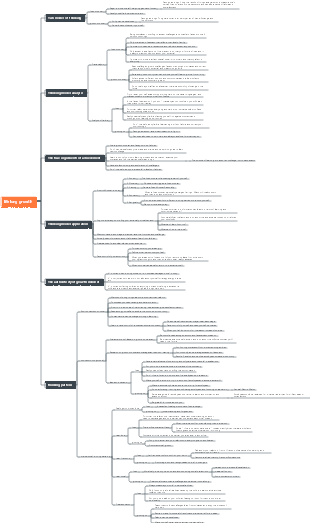
Accompany your children’s lifelong growth
Related Information
Fan Deng
Related books
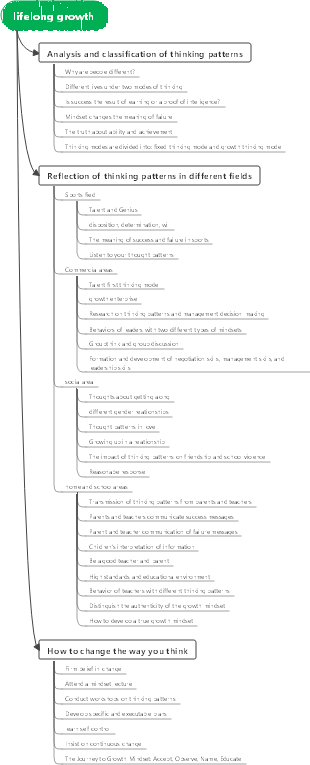
lifelong growth
raising boys
raising girls
puppy money money
Coaching Parents
Fast to intuition, slow to think
"Thirty Million Words: Building a Child's Brain," co-authored by Dana Suskind, a professor of pediatrics .
Christopher Moon, Relationship: Bridge to the Soul
Chapter Reading
Preface: You must grow up in order to accompany your children to grow up
Parents have endless anxieties, introversion and naughty, well-behaved but poor at studying, good at studying but no friends, many friends but many bad friends, huge differences between people (intelligence, emotional intelligence, economic status, social circles), and the same growth methods and speeds The difference is huge, but parents and society train children like an assembly line: efficient and perfect, while parents are as anxious as assembly line operators.
Most parents don't see the connection between their children's behavior and their own upbringing. They spend money on tutoring, training camps, and military service, but they don't think about whether they have room for improvement and whether they can make up for it.
Violence can be solved before the age of three, and parents will not turn to wise men, books, or rational reviews. Parents change over time, and children can feel it and respond positively.
Anxiety and worry are just instincts. Intelligence ensures that children survive. What children need to learn is: knowledge, patience, and love.
Children are not cars but forests. Cars can be polished, extruded and assembled. Such children will get high scores in exams, but have no enthusiasm for knowledge, have five senses about people, and do not love society or their families. Children should be like forests.
If you think your child is more like a living forest, you should allow her to grow in her own way and give her sunshine, rain, dew, companionship, patience, and positive discipline.
If the child does not realize that growth is his own business, we can only wait and demonstrate, rather than arranging her unwilling life on his behalf. When parents focus on transforming and improving themselves, the atmosphere will be relaxed and children will believe that change can really happen.
Understand the nature of parenting
Chapter 1 Why the parent-child relationship determines a child’s life
The parent-child relationship determines our relationship with the world
Parents have a greater influence on their children than any parent can imagine; parents do whatever they want, but stop their children from losing their temper.
Used to evaluate all normal game behaviors, the result is that no one can cooperate
If parents are used to being harsh and harsh on their children, when they grow up, they will easily regard all challenges, pressure, criticism, and even a little bit of bargaining as moral issues, misunderstanding what others say and do, and mistakenly believe that the other person's motives are Look down on yourself, disrespect yourself
A person's relationship with his parents, brothers and sisters is his relationship with the whole world
Parents have a huge influence on their children
A child's lifelong learning, behavior, and health are based on a positive, responsive, and courteous relationship with his or her parents.
Living in a faceless, bad, angry, violent, and hostile environment for a long time cannot be compensated with a hug.
In an hour, children from high-SES families heard an average of 2,000 words. Children from poor families hear only 600 words. In addition, parents' responses to their children vary greatly. In high-SES families, parents responded to their children 250 times an hour, but in low-SES families, parents responded to their children less than 50 times an hour.
Parents use words to define and describe their children every day, and the children turn into things that their parents hate.
If you do something wrong and are beaten by your parents, your children will learn: those with the right have the final say If the parents are unhappy and the children are locked out, the children will learn that they can immediately turn against each other if they are unhappy.
Children are copies of their parents. If the child is wrong, there must be something wrong with the original; parents' language, interactions, and the process of children observing their parents' reactions and imitating their parents' words and deeds build a world view.
The child’s guardian, whether it is grandparents or parents, must not hand over the child to Instead of giving TV sets, it is necessary to influence and shape children's personalities and behavior patterns through interaction.
All relationships are projections of the family of origin
When you instruct your child on homework or evaluate her, you become that eight-year-old child and treat your child the way your mother/father/brother treated you.
When a child does his homework, the whole family becomes inexplicably nervous and feels uncomfortable all over. How can he write his homework quietly, without distractions, and willingly?
Our thinking patterns are determined by our parents
Most of the beautiful things in the world come from relaxation and pleasure. A good company can also solve social problems elegantly. Colleagues go to work elegantly, happily and effortlessly. Before you know it, the company has grown bigger.
Chapter 2 Stay away from inferior parent-child relationships
Domestic violence is a killer of children's healthy growth, including any form of violence, such as verbal violence and cold violence
Children who are beaten, suppressed, or subjected to cold violence have higher levels of adrenaline and are more likely to do outrageous things.
In today's society, it is actually very difficult to have nothing. What is more difficult than this is to overcome the fear in your heart. For example, we are always filled with anxiety and fear, thinking that something bad will happen sooner or later. This is because when I was a child, my parents kept saying "You are going to die, you are going to die" in my ears every day.
Why do we feel insecure?
Cold violence that brings lifelong fear
Cold violence is a lifelong curse brought by parents to their children
If an adult knows that the more angry the situation is, the worse it will be, but still insists on doing so, or He always wants to get angry "inexplicably" because his subconscious mind is at work.
I often hear some parents say that parents love their children more than children love their parents. I just asked he: "Then try it. Your son will beat you up. After 15 minutes, you can reconcile with him. ? "
Those childhood traumas hidden in the subconscious
Stockholm effect, the worse parents treat their children, the better the children will treat their parents. On the surface, everything is normal, but in fact, all pain will not occur for no reason, nor will it disappear for no reason. Where did the pain go? It goes into people's subconscious mind.
I'm so sensitive to a certain little thing that I can't touch it, and I'll explode when I mention it. If your partner is in a similar situation, it must have triggered his subconscious feelings of worthlessness and insecurity.
Angry expressions of struggle between partners
Aggression: getting angry, arguing
Emotional withdrawal: not speaking, being cold, not responding
Passive aggression: Forgetting the wedding anniversary, my wife is sad and depressed: I am not important.
The subconscious mind is not the conscious mind. Even if the other party is late, the other party can still treat you well. The subconscious mind is I want to use this method to verify that the other person loves me very much and is more generous to me than my parents.
Everyone must learn to reflect on whether their heart is incomplete when they are in pain. like If you are really strong enough, you will find that others cannot control your happiness. Carl Jung (Carl Gustav Jung) said: “The subconscious mind, if it does not enter the conscious mind, will guide you The life you are born to become your destiny. "
Chapter 3 Parenting is a complex system
Raising children is essentially a complex system
Growing in complexity makes life full of vitality
Three important pillars of life
Three pillars to rebuild the parent-child relationship model
Chapter 4 Cultivate unconditional love and fill children’s hearts with strength
True love requires no exchange
Home is home without requirements
Don’t let “dislike” enter your mind
Accept your child’s imperfections
Comprehensive application
Chapter 5: The sense of value determines how high a child can fly
A sense of belonging and value makes children better
No one has a sense of value
The higher the level of self-esteem, the better children can take care of themselves
Forget your identity, lower your profile and grow up with your children
Chapter 6 Cultivating a Lifelong Growth Mindset
Lifelong growth, the virtues behind virtues
Behind all virtues is a growth mindset
Unconditional love, values, and lifelong growth mindset
Spend the rest of your life with ease and grace. The only one who can put down the psychological burden is yourself and move forward.
Can you learn from the past, grow and become more rational (slow thinking)
Positive language interaction allows children to have a growth mindset
focus on process
Learn a growth mindset and allow for mistakes and setbacks
Finding solutions in conflicts
Chapter 7 It’s not the child’s fault to be rebellious
Behind rebellion is helplessness
Have effective conversations with your children
Be a positive parent and raise great kids
Chapter 8 Changing the relationship between yourself and your parents
How to repair your relationship with your parents
Thanks to the parents who "made mistakes", you can save yourself
Straighten out the relationship with your parents and let yourself have the energy of love
Avoid relationship inversion: parents and children return to their correct positions
Chapter 9 Key Issues in Children’s Growth
parenting anxiety
death education
Break through difficulties
infinite games
Educational differences
positive feedback
two-child family
express love
firm belief
Look at the problem from another perspective
protect children
give kindness
The benevolent do not worry
three pillars
guilt
Perception
Is the old education system completely wrong? Not necessarily. Children under the new education model are fragile, have no hands-on ability, grow up in a greenhouse, have no ability to empathize, are free, and are loved.
Universal growth mindset
Defeat the subconscious and force slow thinking