MindMap Gallery Feynman Learning Method Reading Notes
The core of Feynman's learning method is to simplify complex knowledge, use teaching instead of learning, and let the output force the input. It highly praises output thinking and believes that output is the most powerful learning power. Only by repeating the learning content without getting stuck can you learn well. It attaches great importance to simplified thinking, emphasizing finding the crux of the problem and simplifying complex knowledge. I believe that only by expressing profound knowledge in plain words can we learn thoroughly. This is not only a learning method, but also a way of thinking. Top academics are using it!
Edited at 2024-01-12 17:49:07Avatar 3 centers on the Sully family, showcasing the internal rift caused by the sacrifice of their eldest son, and their alliance with other tribes on Pandora against the external conflict of the Ashbringers, who adhere to the philosophy of fire and are allied with humans. It explores the grand themes of family, faith, and survival.

This article discusses the Easter eggs and homages in Zootopia 2 that you may have discovered. The main content includes: character and archetype Easter eggs, cinematic universe crossover Easter eggs, animal ecology and behavior references, symbol and metaphor Easter eggs, social satire and brand allusions, and emotional storylines and sequel foreshadowing.
[Zootopia Character Relationship Chart] The idealistic rabbit police officer Judy and the cynical fox conman Nick form a charmingly contrasting duo, rising from street hustlers to become Zootopia police officers!
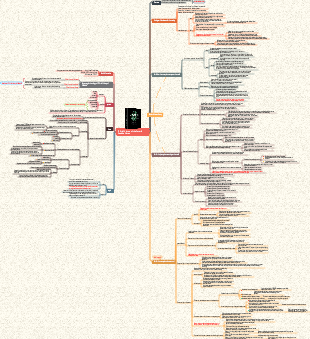
Avatar 3 centers on the Sully family, showcasing the internal rift caused by the sacrifice of their eldest son, and their alliance with other tribes on Pandora against the external conflict of the Ashbringers, who adhere to the philosophy of fire and are allied with humans. It explores the grand themes of family, faith, and survival.
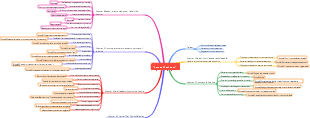
This article discusses the Easter eggs and homages in Zootopia 2 that you may have discovered. The main content includes: character and archetype Easter eggs, cinematic universe crossover Easter eggs, animal ecology and behavior references, symbol and metaphor Easter eggs, social satire and brand allusions, and emotional storylines and sequel foreshadowing.
[Zootopia Character Relationship Chart] The idealistic rabbit police officer Judy and the cynical fox conman Nick form a charmingly contrasting duo, rising from street hustlers to become Zootopia police officers!
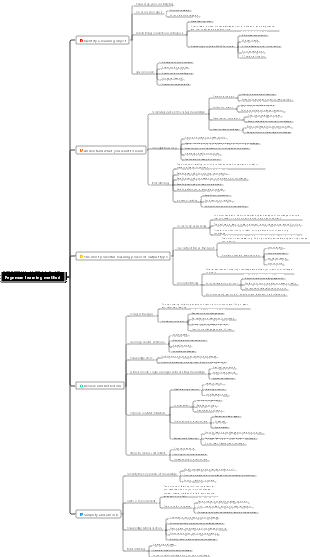
"Feynman Learning Method" Reading Notes
postscript
There is a rule about learning that we need to remember forever
Active learning is far more important than passive learning
Systematic learning is far more important than fragmented learning
Inward learning is far more important than outward learning
Professional learning is far more important than cross-border learning
A key principle that this book wants to express through the interpretation of Feynman's learning ideas is: don't expect knowledge to be acquired quickly.
You listen to entrepreneurship lectures, watch open classes at prestigious universities, participate in discussions on various high-end topics on Zhihu, know the entrepreneurial history of Internet tycoons by heart, and talk about various advanced ideas with everyone you meet.
But you work hard to squeeze into the subway every day
The educational principle of “teaching and mutual learning”
The best learning is always achieved in the process of output, not one-way input
First establish a learning goal, lock your direction, and then understand it seriously
Secondly, tell it to others in concise language, and compare it through constant retelling to achieve your own satisfaction.
You can imagine a simulated teaching scenario and imagine that you are teaching a person who is new to this concept or knowledge. How should you make him understand it quickly?
When you take this approach, you will become more aware of how much you understand the concept or knowledge, and where there are still ambiguities or misunderstandings. Go back to check, reflect and correct.
Finally, systematically simplify and organize the knowledge learned to achieve the purpose of absorption and internalization
In the process of using the Feynman learning method, we often feel stuck
This is common in general and difficult learning
When you get stuck in learning, will you give up temporarily as usual?
Feynman told us not to give up, but to understand some of the key points of getting stuck.
6. Simplify and absorb
Keywords: simplify
The ultimate goal of learning is to extract what we need and form our own knowledge system
Too much of a good thing can cause indigestion
Simplify knowledge
The first is to decompose the knowledge and find out the core things you need.
The second step is to organize and logically organize the remaining knowledge into a whole.
If you cannot organize a scientific concept into a logical, simple and easy-to-understand way, and can explain it in just a few sentences, it means that you have only a limited understanding of the concept and have not learned it well.
How to simplify the essentials of knowledge
First, turn on the “importance switch” of knowledge
Second, return knowledge from complexity to simplicity
No matter how many concepts and branches a piece of knowledge contains, it has an undeniable and crucial core.
How to absorb knowledge
First, acquire knowledge
We must effectively obtain knowledge from the outside, establish the direction of learning, formulate learning plans, and fully understand and judge which knowledge is critical to ourselves.
Second, simplify knowledge
That is to use necessary screening, sorting and other means to extract the skeleton and key points of knowledge, condense the essence of knowledge, improve content retention rate, and prepare for the absorption of knowledge.
Third, absorb knowledge
We need to keep those core knowledge in the brain for a long time, become a kind of long-term memory, and truly understand it, and explain it to others with ease, and implement the learning strategy of teaching instead of learning.
Fourth, transform knowledge
Effectively integrate with existing knowledge
Fifth, innovative knowledge
How to simplify knowledge in online learning
First, based on actual results
Check my learning results, what have I learned, what have I remembered, and what are the more important contents to me?
Second, for the purpose of practical application
Knowledge must be simplified and its main points and key parts must be combined with real-life practical applications.
Third, pay attention to content that can promote association
Fourth, avoid learning duplicate content on different platforms
Fifth, combine it with our current work
That is to say, our learning should be able to contribute knowledge and skills to help current work, help others, and improve knowledge together.
Sixth, pay attention to the growth of knowledge
Treat the knowledge learned with a growth attitude
Vertical expansion and refinement
"When you want to learn more about this field, the real difficulty has just begun. You must treat it as a treasure trove of deep knowledge, rather than a simple story that can be told in a few sentences."
Understanding new knowledge is not just about memorizing the basic principles, but also incorporating them into the existing knowledge system, fully grasping the inherent laws, and becoming an expert in this knowledge.
First, vertical expansion
All kinds of seemingly "useless" unrelated knowledge that we encounter in daily life can actually be connected in the end. They are related to each other, which is a bridge between knowledge.
Second, learning requires “green light thinking”
When we encounter new perspectives or different opinions in our studies, we must listen patiently, know how to self-reflect, and learn valuable information from them.
When it comes to issues of thoughts or opinions, you must know how to distinguish between what is "I" and what is "my idea"
Third, learning should be done “slowly”
Real and efficient learning must be the result of integrating knowledge
If you want to achieve such a goal, you must not be impatient, but get used to "taking slow for fast"
"Slow to be fast" means focusing on a learning object, learning it thoroughly and mastering it. Only with a deep understanding of its core knowledge can we apply it 100% and turn it into our own skills.
Fourth, improvement requires “deliberate practice”
Enhance our "cognitive horizons" and expand the "cognitive depth" of knowledge
That is to give up the research on the minutiae and strengthen the research on the essence of the problem and key areas.
Improve our cognitive horizons and cognitive depth through training
First, focus on studying the nature of the problem
Second, a lot of continuous practice
There is no shortcut for a person to become a top expert in a certain field. The only way is to have a deeper understanding of core skills.
Third, start with what you are interested in
In order to improve the efficiency of learning and explore the depth of knowledge, start from the fields or knowledge points that interest you, and use points to cover the area.
Dig deeply to internalize knowledge
Form your own knowledge system
Deep mining and deep learning knowledge
Extending and strengthening skills
forward-looking understanding of knowledge
Systematic reinforcement of knowledge
Internalizing knowledge: Feynman’s five important suggestions
Using notes to record core elements of knowledge
Comprehensively organize the knowledge learned
Structured induction and understanding of knowledge
Output and publish the knowledge you understand
Simplify, absorb and memorize knowledge
third retelling
three purposes of learning
The first is to explain the problem
The second is to solve the problem
The third is the problem of prediction
Knowledge is not just used to remove rocks from under your feet, or to help you understand the past, but to help you understand the future.
If you cannot establish your own original opinions, you cannot call it "100 points of learning"
Generate impactful new knowledge
Your yearning for growth in life is always the most important
You have to do everything possible to discover the best version of yourself, find the area that best inspires imagination and passion, and then devote yourself to it.
Develop a plan that matches your goals to create knowledge rather than just follow it.
Feynman Technique: The Principle of Simplification
Principle 1: Systematically explore the knowledge learned
Required knowledge
Target important knowledge
Targeted at core knowledge
Principle 2: Form your own knowledge system
become an expert in a field
Focused and targeted
Build your own knowledge system
5. Review and Reflection
Keywords: review
Through review and reflection, correct the unsatisfactory aspects of learning, discover gaps, and summarize the knowledge you have mastered in more concise language.
Doubt and exploration make us smarter
Doubt knowledge that confuses you
Explore the knowledge that is still unclear, and actively review and summarize, reflect and revise
Filling gaps and checking for leaks
After learning a piece of knowledge, you still cannot fully output it.
Solution
Recombine and output
Go back and study it yourself.
Reason for occurrence
There is a “blind dimension” to this knowledge (not learned)
Logic problem, I didn’t understand it
core method
Recheck the knowledge base (did you not learn anything)
Re-align data and facts to verify knowledge (to reality)
if correct
"Knowledge is correct", we once again strengthened our understanding of knowledge
if incorrect
Think about the reasons for the deviation
It is the lack of own knowledge that leads to deviations in understanding.
for correction strategy
It is a problem with the viewpoint and logic of original knowledge
Stay curious/sceptical
strategy for correction
You can only rationally evaluate your understanding ability, carefully check and make a "learning list", and first improve your knowledge reserve.
When you have a higher ability to understand knowledge and are good at finding the right sources of knowledge, the positive feedback of learning will increase.
Maintain a restless curiosity/doubt all conclusions
find gaps
Return to the essence of knowledge
No matter what kind of knowledge we learn, we can integrate it into our life scenes and turn it into our own power.
Only when we realize the progress and growth factors that knowledge can inject into life, and can bring about huge changes in our learning and thinking, can we truly fall in love with learning.
And develop good habits of in-depth thinking and dialectical analysis during study, otherwise your study will always be just a "surface browsing" and "mechanical memory"
Looking for counter-evidence
The process of finding counter-evidence is purposeful reflection
effect
Reflection can help us discover misunderstandings in knowledge itself
Reflection can help us generate new knowledge based on existing knowledge
“The knowledge gap between people does not come from their learning experience, age or even the number of experiments, but from the ability to reflect, summarize and sublimate knowledge.
Pay attention to negative evidence
First, contrary data
Second, logical loopholes
Third, outdated knowledge
We must keep up with the development of the times and give priority to learning the latest knowledge.
Fourth, opposing authoritative views
If there are different voices, we must study and analyze them carefully to see whether the questioning is strong and whether the logic is tenable.
Paying attention to the "negative evidence" of knowledge requires us to collect all the "necessary elements" for learning, not just positive information, but also sufficient negative information.
In this way, we can avoid being biased towards knowledge when learning.
You cannot blindly believe in a kind of knowledge, and you cannot be superstitious about a single source of knowledge.
Establish multi-angle analogy relationships with existing knowledge
First, from a scientific perspective
The scientific perspective has two meanings
First, the logic is rigorous, the data is correct, and the views are reasonable.
Second, it can withstand the most rigorous questioning when compared with other information and knowledge, and can withstand all kinds of scrutiny and screening under a magnifying glass.
Second, from a practical perspective
The practicality of knowledge is to be able to put it into practice, transforming boring theories and words in books into concrete results in reality.
No matter what knowledge we learn, the ultimate goal is to obtain some practical value, so that the knowledge can be helpful to our lives, work, emotions, and even our entire life.
Third, the system perspective
We should use a systematic thinking to treat learning and unfamiliar knowledge
"Content retention rate" determines the effectiveness of our learning
Learning is also the most important underlying ability for us to stand in this world.
Only when the "content retention rate" of learning reaches more than 90%, can it be regarded as truly high-quality learning.
Retention rate
How much learned knowledge can be converted into long-term memory?
How much content can you master substantively?
Only when the ratio is no less than 90% can it be called efficient learning.
Learning problems
Being impetuous in choosing knowledge
Behaving blindly during the learning process
Not good at learning management
No reflection of one’s own knowledge
Don’t pay attention to learning methods
How to improve the quality of learning
Clarify the direction of learning
career direction
Learning Content
Output ratio of time invested and resources invested
It depends on how much knowledge you have memorized, how much content you have understood, and how much you can integrate them into your actual life and work.
knowledge attribute
“Knowledge is not only the memory of civilization, nor the flag of the future, it is also a structure of thinking.
When you look at knowledge from the perspective of thinking structure, you have to realize that the process of learning is actually a transformation of our own thinking. It has smart ways and stupid ways.
to what extent
The first level: knowing and understanding, manifested by being able to correctly understand the meaning of knowledge
The second level: retelling and conveying, manifested by being able to retell it correctly and telling it to others.
The third level: practice and innovation, manifested by the ability to transform knowledge into action and then create new knowledge
Improve content retention rate
Review and reflection, through practical practice and innovation, through necessary review and reflection, re-learn knowledge
Organize knowledge and simplify it in a way that you like and are familiar with, which is convenient for memory and application
Integrate learned knowledge into your own knowledge system or generate a new knowledge system
Repeat "useful learning"
Identify useful knowledge
Knowledge that has the power to grow (that is decisive for our lives and careers, such as financial knowledge)
Focus on learning
Knowledge of modularity (general knowledge, e.g. first aid, swimming)
targeted learning
Resolutely refuse to learn fragmented knowledge
Repeat "useful learning"
How to identify useful knowledge
First, focus on learning knowledge that has the ability to grow
Second, targeted learning of modular knowledge
Third, resolutely refuse to learn fragmented knowledge
Pay attention to what is behind the knowledge
When reviewing knowledge, think about its principles and understand the structure and pillars behind it. This has a great or even decisive effect on improving content retention rate.
First, the principles of knowledge are more valuable to us than the knowledge itself
Second, exploring the things behind knowledge is also a very important thinking training process.
Third, it can simplify the knowledge system, make learning simple and direct, and save valuable time.
Fourth, mastering the principles of knowledge can help us establish a basic concept of the field we study
Fifth, it helps in application practice after learning
Feynman Technique: Review Principles
Problems encountered in learning
Excerpts of content that you have insufficient evidence, unclear explanations, unclear logic, and little understanding of, and then gradually compare the content with the data to sort it out clearly
Could my understanding and interpretation at this point be simpler and more straightforward? Is it easy to understand for "newbies" who have never been exposed to it?
Step One: Doubt and Explore
Ensure data and facts are accurate, precise and scientifically compiled
Maintain a strong curiosity about the unknown and doubt all conclusions, even if it is an authoritative conclusion
Explore the nature of knowledge and the issues behind it, rather than just memorizing the content of knowledge
Step 2: Find counter-evidence
Negative evidence plays an extremely important role and cannot be ignored.
Collect information from multiple sources on weak links, enhance understanding from multiple angles, and put forward your own opinions.
Pay attention to controversial opinions and obtain knowledge points that are more precious than gold from confusing controversies.
Step Three: Increase “Content Retention Rate”
Pursue the effectiveness of learning rather than the quantity of knowledge
Focus on useful learning, that is, repeatedly understanding "useful knowledge"
To increase content retention, we need to have “principle thinking”
Book information
[US]Richard Feynman
World-renowned Nobel Prize winner, genius physicist, father of nanotechnology, and founder of quantum electrodynamics
The reason why he has achieved world-renowned great achievements in many fields is because he has a unique learning method and is a well-deserved learning master.
author
Yin Hongxin
Graduated from the Foreign Languages College of the Chinese People's Liberation Army and is currently a lecturer at Jiaozuo Normal College. He has been engaged in English teaching until now.
Li Wei
Graduated from Zhengzhou University, Master of Engineering, Lecturer. Currently a teacher at Jiaozuo Normal College
Subtitle: Use output to force input
Publisher: Jiangsu Phoenix Literature and Art Publishing House
Publication year: 2021-3
Preface
The core of Feynman's learning method is
When you are ready to learn a new knowledge, you must stand in the position of a teacher and assume that you want to explain this knowledge to others.
Feynman said: "It would be best if a child of several years old could understand what you are talking about."
Learn the simple process
First, establish the goals you want to learn
Second, understand what you want to study
Third, use teaching instead of learning, and use output instead of input.
Fourth, review and reflect
Fifth, realize the simplification and absorption of knowledge
The purpose of learning is to output
What is emphasized in the book is that learning and application are integrated with each other. Learning that cannot be exported cannot be called learning.
First, the more familiar the concept, the more the brain likes it
Second, forcibly establishing connections between different concepts is also the brain’s specialty.
1. The nature of learning
Keywords: thinking
The Feynman Learning Method is a top way of thinking that can help us truly master a piece of knowledge because it reveals the nature of learning and thinking.
How difficult is it to master a piece of knowledge?
traditional learning methods
Focus on input---rote memorization
dogmatism
Whatever the teacher/book says is what it says
Standardized application
Apply mechanically
How do you quickly acquire the knowledge you need?
How to verify the validity of the knowledge learned? Are you clear about the problems with these knowledge points? How to be self-disciplined, make plans and manage time well
New era learning methods
Make effective connections with the real world
Use this knowledge to make yourself better today
Feynman learning method provides us with three distinctive abilities
First, foresight---judge future trends by interpreting the information transmitted to us by knowledge
Second, penetrating power---through Feynman analysis skills, you can see the essence of things from fragmented knowledge, quickly solve problems, and grasp the laws of things.
Third, wisdom---by condensing and replaying knowledge through output, absorbing the essence, making the knowledge available to me, matching it with the environment, and forming my own knowledge system.
Learning is fundamentally a competition of ways of thinking, not a competition of knowledge storage, nor a competition for degrees.
What is "Feynman Learning Method"
"Feynman Learning Method" is also called "Feynman Technique"
Four Keywords of Feynman Learning Method
Concept
Teach (teaching instead of learning)
Review
Simplify
Simple and efficient thinking mode
First, good thinking requires positive feedback
Second, output accelerates the maturity of thinking
Third, the Feynman learning method allows thinking to be quantified
direction
Lock in the main direction of thinking
induction
Establish the main logic of thinking
(output) validation
Verify the effect of thinking
feedback
Feedback correct and incorrect
simplify
Simplify complex thinking processes
absorb
Digest the results of thinking
2. Establish a learning object
Keywords: goal
Choosing the knowledge and skills we want to master is only the first step. We also need to find the necessity and importance of learning it, and strengthen this internal connection.
why we study
Learning itself is a very interesting thing
The prerequisite for learning a piece of knowledge well is to fully understand it, including its value that has yet to be developed.
(Learn to improve thinking skills) Pursue progress in four aspects
First, open thinking
Second, critical thinking
Third, logical thinking
Fourth, clear and concise expression
Focus on goals
Focus on goals and set goals
Think more clearly
Actions are more targeted
How to find the right direction
First, ask yourself some key questions
What is the most important thing to me
future direction
Focus on the moment
Second, turn “the most important thing” into your own direction
How to find true "interest"
Analyze whether it can match the existing knowledge system
If you can do it but don't do it, you will regret it for the rest of your life. This is your goal.
Make your goals the “most important thing” you have to do every day
Planning: Establishing “strong connections” with goals
Discover the “strong connection” between you and your target
First, demonstrate the necessity of learning this knowledge/doing this thing
Second, confirm the substantial connection between the plan and the goal
Is it possible that your goal is actually wrong?
The famous "SMART principle" provides a simple and clear judgment standard
S: (Specific) clear and specific
Goals must be clear and describable
M: (Measurable) measurable/quantifiable
Goals must be quantifiable and evaluable
A: (Achievable) Achievable by one’s own abilities
Goals must be within capabilities
R: (Rewarding) can produce a sense of satisfaction/achievement
The goal must have a positive meaning
T: (Time-bound) time-limited
Goals must have a deadline to be achieved
Is there a better direction: find your own comfort zone for learning
Learn comfort zone standards
The learning direction is in line with your own interests
The scope of abilities is in line with one’s own abilities
Plan a high-efficiency learning path
Learning is not just for memorizing something, but for us to establish our own effective thinking framework through learning, and apply knowledge into practice to solve practical problems in life and work.
Feynman Technique: Goal Principle
goal comprehensiveness principle
When setting goals, you must have an overall and holistic concept
goal focus principle
The goals set should be focused
The goals set must also be targeted
Goal Challenge Principle
Set goals that are challenging
Challenge = desire to learn
Set goals that can tap and stimulate your potential
The goals set cannot be artificially lowered in difficulty during the learning process.
Goal feasibility principle
The goals set must be realistic and feasible
The goals set must be consistent with our objective reality
The principle of target adjustability
The goals set must be adjustable to a certain extent
The goals set should leave room for implementation
3. Understand the knowledge we want to learn
Keywords: Systematization
Classify and compare the knowledge and concepts we want to learn, systematically understand these contents, and establish principles for screening and learning
Categorize and compare sources of knowledge
Systematize knowledge logically
Understand why you study
Have a pure vision
"I just want to master this knowledge, understand it, and then generate my own understanding. When I learn, I don't want to use this knowledge to create benefits for myself."
Have a wide enough field of view
People should try to maintain their innocence, because an innocent mentality can expand your horizons and make you willing and able to see more "possibilities" in this world.
Establish the most objective and scientific logic possible
Filter and retain the most reliable knowledge
Filter and extract knowledge
Methodology for screening knowledge (collecting information) (I want to find out the knowledge that matches my actual needs)
Criteria and processes for screening knowledge
Establish logic
Clarify the purpose of learning
Establish objective and scientific learning logic
collect information
Lock down sources of knowledge
Form a perfect knowledge framework
Classification comparison
Choose the knowledge you need
Reliable and important knowledge about violence
Identify “fake knowledge”
Block knowledge from uncertain sources
For knowledge whose sources are not professional and authoritative, we should treat them with a critical eye.
We must also learn to think independently and adopt cautiously when it comes to professional and authoritative sources.
Be careful with differentiated knowledge
Use comparative methods to select and distinguish knowledge
The purpose of comparing the sources of knowledge is to delete duplicate and unreliable information, increase credible channels for acquiring new knowledge, and ensure the quality of the knowledge you obtain.
While studying, please forget all the skills you have accumulated in the past
Experience is not a guiding light for learning. It returns to its essence and is just an inertial behavior pattern.
All our knowledge comes from "other people's ideas"
Since you have heard and learned things from others, you must have an attitude of vigilance and scrutiny
Identify "fake knowledge" and kick it out of your learning system. Don't waste any energy on it.
Develop thinking and process maps
An important step in systematizing knowledge
It is to deepen and consolidate what has been learned and what is about to be learned through reading notes and mind maps.
Horizontal expansion: “visualizing” knowledge
The first function of mind mapping is to direct our attention to the essential and most critical information and deepen our impression of knowledge.
You can first draw a concept map of a book you want to read, graphicalizing the theme, purpose and other elements to highlight the theories and viewpoints of the book.
Draw another structural diagram to reveal the relationship between the table of contents, chapters and concepts, and classify the different sections of the book to form a concise hierarchical structure that is conducive to targeted reading.
Draw a cause-and-effect diagram to list the causes and consequences of the ideas in the book, as well as the relationship between arguments and reasoning logic. This can provide you with a window for independent thinking.
Visualization of knowledge scenes
Visualization of knowledge relationships
Draw a “learning process”
Step one: short-term memory
Step Two: Mental Imagery
First, concise language expression
Second, written expressions can be visualized
Third, double coding
We need to combine text images with pictures (videos) to understand the knowledge we have learned
Fourth, long-term memory
The expression of written language is naturally fragmented.
How fast you understand and remember is how effective you are at learning knowledge.
benefit
Get the information you need quickly
Master methods of understanding and analyzing knowledge
Establish your own framework for thinking about problems
Create high-quality study notes
Be prepared for the output of knowledge
Principles of Reading and Memory
summary
The subject of the book or material
What is it about? What is its purpose?
author of book or information
Author’s qualifications and expertise
The structure of a book or document
Classification and sub-topics of different sections
Carry out reading and analysis
While reading, combine the three content-rich frameworks of the summary to fill in the topic ideas and key points, refine the main points, theoretical basis, and argumentation process of this knowledge, and write down your own questions.
Adopt methods that save time and effort as much as possible to read and memorize efficiently and enhance your understanding of knowledge
First, obtain useful information quickly
Second, learn how to find and analyze problems
Reading and memorizing are not a quantity game in the long run. The amount of knowledge we learn has always been a false proposition.
When you can obtain more useful information from less knowledge than others, your ability to understand and apply knowledge must be better.
first retelling
Retell what you have learned and understood so that the listener can understand it
Repeating it to yourself can help you
Build long-term memory
Deepen your understanding of knowledge
Learn more actively
associate knowledge
Get feedback on an issue
how to retell
The first stage: retelling based on impressions
Stage 2: Raising questions in the retelling
The third stage: add your own opinions in the retelling
Feynman Technique: Systematization Principle
induction
Identify reliable sources and classify knowledge
filter
Find the knowledge you need and eliminate “fake knowledge”
induction
Establish an analytical logic and form a mind map
Use tools to understand knowledge
First, level: classification and comparison
Second, divergence: mind map
Third, convergence: knowledge structure
4. Output is the most powerful learning power
Keywords: output
Set up a teaching scenario. When we want to output this knowledge, we will truly know how much we have mastered and discover what needs to be strengthened and deepened.
Teaching instead of learning
"Teaching instead of learning" is the core of Feynman's learning method
If you can't explain something simply to other people, you don't really understand it yet
Anyone can understand it
It doesn’t matter what you know. Only if you can understand it to anyone can it mean that you have truly learned the knowledge.
Concise and in-depth analysis
First, the language is concise and easy to understand
Second, it is precise and without ambiguity.
Third, speak with a certain depth
Fourth, add your own understanding
Strengthen cognition
While elaborating knowledge, we are also strengthening our understanding of knowledge, especially key contents.
Use "output" to force "input"
The "memory principle" of output
The most direct way to improve memory is to promote "conscious memory", strengthen the brain's first impression of information, and enable the brain to actively start the memory process.
Deepen the memory of knowledge
First, memorization - coding
Therefore, when memorizing information, the brain has an encoding step, which is to accurately identify the information, record the information, and select the content that should be memorized.
Second, keep - store
Third, reproduction - retrieval
Fourth, memory-consolidation
Scenario and thought simulation
Simulate narrator situations, such as giving speeches
Simulate interviewee situations, such as interviews
Simulate the teacher's thinking, such as giving lectures
Simulate the thinking of a doubter, such as a debate
We need to put the learning object into an application scenario and put ourselves into a real role that needs to express it, analyze it, and understand it.
The output is active learning
The output method of teaching instead of learning belongs to active learning. It refuses to wait to be favored by knowledge and actively conquers it. It does not want to be selected by knowledge and establishes a filter with its own standards for knowledge.
second retelling
The first retelling is to treat yourself as a listener, and the second retelling is to enter a real scene of imparting knowledge and explain your views on a certain piece of knowledge to others or even multiple people.
What is the part that interests me the most (goal)
What is my best way of telling stories (personal advantage)
What knowledge point do I most want to exchange with the other party (connection with the outside world)
Take advantage of breakout opportunities
First, “group discussion” is an efficient way of independent learning
Second, help you design a retelling outline and prepare some questions
Do the second retelling with a good list
Third, get relevant comments and objections from your listeners
Differences mean problems, and solving problems is gaining wisdom
Infuse your soul with knowledge
Knowledge without soul is like withered leaves on the roadside. It seems to have clear veins, but it has long lost its vitality.
First, reflect unique language skills
Express knowledge in your own words
Second, explain your interpretation of knowledge based on reality
Third, express your personal analysis and opinions
Feynman Technique: Output Principle
Scenario and thought simulation
Easy to understand language
Simplicity yet depth
Strengthen understanding of key knowledge
Use breakout sessions to get feedback