MindMap Gallery Principles of Western Economics
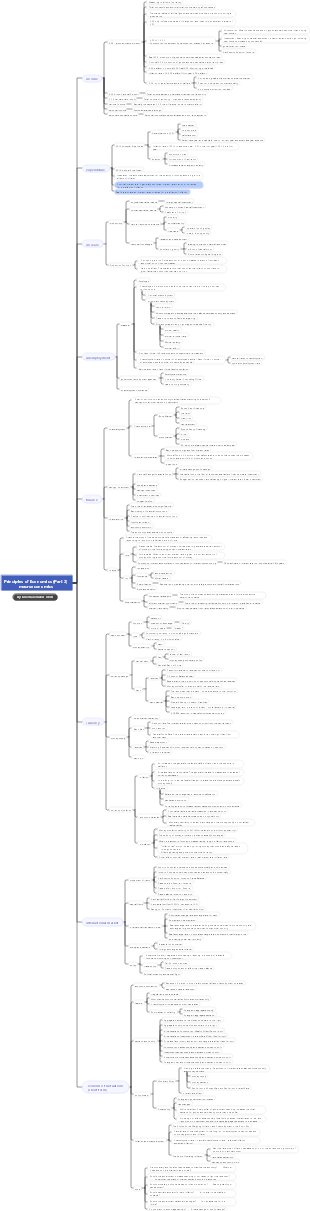
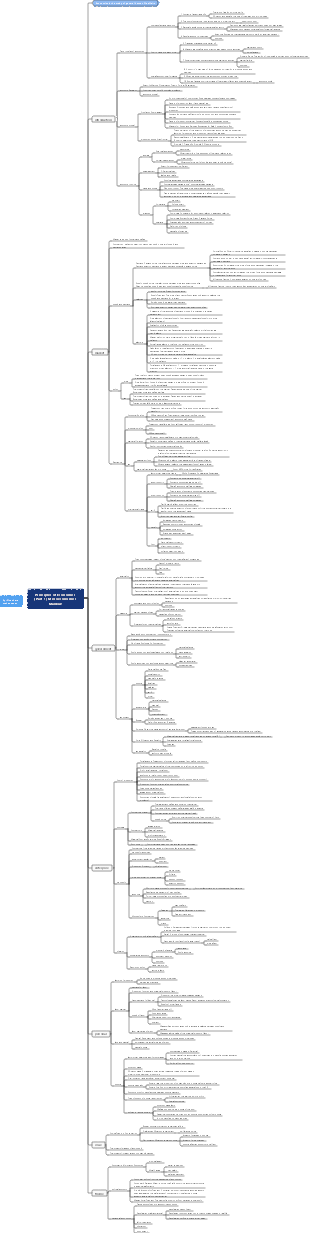
This is a mind map about the principles of Western economics. The main contents include Chapter 1: The Ten Principles of Economics, Chapter 2: Thinking Like an Economist, and Chapter 3: Interdependence and the Benefits of Trade.
Edited at 2022-08-29 15:16:34Avatar 3 centers on the Sully family, showcasing the internal rift caused by the sacrifice of their eldest son, and their alliance with other tribes on Pandora against the external conflict of the Ashbringers, who adhere to the philosophy of fire and are allied with humans. It explores the grand themes of family, faith, and survival.

This article discusses the Easter eggs and homages in Zootopia 2 that you may have discovered. The main content includes: character and archetype Easter eggs, cinematic universe crossover Easter eggs, animal ecology and behavior references, symbol and metaphor Easter eggs, social satire and brand allusions, and emotional storylines and sequel foreshadowing.
[Zootopia Character Relationship Chart] The idealistic rabbit police officer Judy and the cynical fox conman Nick form a charmingly contrasting duo, rising from street hustlers to become Zootopia police officers!
Avatar 3 centers on the Sully family, showcasing the internal rift caused by the sacrifice of their eldest son, and their alliance with other tribes on Pandora against the external conflict of the Ashbringers, who adhere to the philosophy of fire and are allied with humans. It explores the grand themes of family, faith, and survival.
This article discusses the Easter eggs and homages in Zootopia 2 that you may have discovered. The main content includes: character and archetype Easter eggs, cinematic universe crossover Easter eggs, animal ecology and behavior references, symbol and metaphor Easter eggs, social satire and brand allusions, and emotional storylines and sequel foreshadowing.
[Zootopia Character Relationship Chart] The idealistic rabbit police officer Judy and the cynical fox conman Nick form a charmingly contrasting duo, rising from street hustlers to become Zootopia police officers!
Principles of Western Economics
preface
Chapter 1 Ten Principles of Economics
Definition: Economics studies how society manages its scarce resources (scarcity means that the resources owned by society are limited)
Robbins' definition: Economics is the science that studies the choices humans make with limited resources.
1.1 How to make decisions
Principle 1: People face trade-offs
personal
society
Efficiency: society can get the most benefit from its scarce resources
Equality: distribute the above benefits equally to members of society
Principle 2: The opportunity cost of something is what is given up in order to obtain it (economic cost is not equal to accounting cost) = income from the opportunity given up
Principle 3: Rational people consider the marginal quantity (take the small to make the big)
Rational people: people who systematically and purposefully try their best to achieve their goals
Marginal change (change in derivative): a small incremental adjustment to an existing action plan
Rational people usually make decisions by comparing marginal benefit and marginal cost.
A person's willingness to pay for any good is based on the marginal benefit he would receive from adding one unit of that good.
Marginal benefit, in turn, depends on how much of the good a person already owns
A rational decision-maker will take an action if and only if the marginal benefit of an action is greater than the marginal cost.
Principle 4: People respond to incentives
Incentive: Something that causes a person to perform a certain behavior (such as the expectation of reward or punishment)
The impact of prices on consumer and producer behavior is critical to how a market economy allocates scarce resources
Policies change the costs or benefits people face, thereby changing people's behavior
When analyzing policies, consider not only direct effects but also indirect effects through incentives
1.2 How people influence each other
Principle 5: Trade can make everyone better off - specialize in activities they are good at - increase productivity (comparative advantage and detailed advantage)
Principle 6: Markets are often a good way to organize economic activity
Three basic questions:
What to produce, how much to produce
how to produce
Produced for whom
Market economy: An economy in which many businesses and households allocate resources through their decentralized decisions as they trade with each other in the market for goods and services.
Price mechanism (tool of the invisible hand): Prices adjust spontaneously to guide individual buyers and sellers to achieve a certain result, which in most cases will maximize the welfare of the entire society.
When the government prevents prices from adjusting spontaneously in response to supply and demand, it limits the ability of the invisible hand to coordinate the decisions of the millions of households and businesses that make up the economy.
Principle 7: Government can sometimes improve market outcomes
1 The role of the government: implement rules, maintain systems, and protect property rights (the ability of individuals to own and control scarce resources)
2 The invisible hand is powerful but not omnipotent. The government promotes efficiency or equality (making the cake bigger/re-dividing it)
Market failure: the inability of the market itself to allocate resources effectively
reason
Externality: the impact of a person's behavior on people or things around him (bystander welfare)
Market power: the ability of a single economic actor (or a small group of economic activities) to significantly influence market prices.
1.3 How the overall economy works
Principle 8: A country’s standard of living depends on its ability to produce goods and services
The indicator is GDP (the final result of the production activities of all resident units in a country or region within a certain period of time)
Productivity Productivity: the difference in the quantity of goods and services produced per unit of labor input
The relationship between productivity and living standards also has profound implications for public policy
Principle 9: Prices rise when the government prints too much money
Inflation: A monetary phenomenon in which the general price level in an economy rises
Principle 10: Society faces a short-term trade-off between inflation and unemployment
High inflation and high unemployment generally do not occur at the same time
short-term effects of currency injections
An increase in currency stimulates the overall level of social spending, thereby increasing the demand for goods and services
Increased demand causes businesses to raise prices over time, while encouraging the hiring of more workers to produce more goods and services
Hiring more workers means less unemployment
Business cycle business cycle: fluctuations in economic activities such as employment and production
1.4 Conclusion
Chapter 2 Think like an economist
2.1 Economists as scientists
The essence of science is the scientific method - calmly establishing and testing various theories about how the world works.
Build abstract models based on assumptions
2.1.1 Scientific Method: Observation, Theory and Further Observation
2.1.2 The role of assumptions
Simplify a complex world, thereby making it easier to explain the world
Determine the research environment based on the research questions
2.1.3 Economic model
High simplification of complex phenomena
Starting from assumptions
Usually composed of graphs and equations
Omitting a lot of details and greatly simplifying reality to reveal the core content and logic of the research problem
2.1.4 Circular-flow diagram model (circular-flow diagram)
Definition: An intuitive economic model that illustrates how money flows between households and businesses through markets
assumed:
two subjects
Household: owns the factors of production and consumes all goods and services produced by the enterprise
Enterprise: uses inputs such as labor, land and capital (buildings and machines) to produce goods and services (factors of production)
two markets
Goods and labor markets: households are buyers and businesses are sellers
Production factors market: households are sellers and enterprises are buyers
2.1.5 Production possibilities frontier model (PPF production possibilities frontier)
Definition: A graph showing various combinations of the quantity of products an economy can produce when the available production factors and production technology are given.
Points within the boundary: Achievable Inefficiency Some resources are not fully utilized
Point on the boundary: Efficiency can be achieved and all resources are fully utilized
Points outside the boundary: cannot be reached
change
subtopic
Production possibilities frontier and opportunity cost
Society faces trade-offs: moving along the production possibilities frontier means shifting resources from the production of one good to the production of another
The slope (the change in the ordinate when the abscissa moves one unit to the right) tells us the opportunity cost of one good as a measure of another good.
The steeper the image, the greater the opportunity cost; conversely, the slower the image, the smaller the opportunity cost.
Economic growth shifts the production possibilities frontier outward
shape
Depends on how opportunity costs change when one industry changes to another
Straight line: opportunity cost remains unchanged
Curve: Opportunity cost increases as quantity increases
Illustrates ideas such as trade-offs and opportunity costs, efficiency and inefficiency, unemployment, and economic growth.
2.1.6 Microeconomics and Macroeconomics
Microeconomics: the study of how households and businesses make decisions and how they interact with each other in markets
Macroeconomics: the study of overall economic phenomena, including economic fluctuations, inflation, unemployment, and economic growth
These two branches of economics are closely related but also different
2.2 Economists as policy advisors
2.2.1 Empirical analysis and normative analysis
Positive statements (Desciotive): As scientists, economists try to make statements about what the world is like.
Normative statements (Prescriptive): As policy advisors, economists try to make normative statements about what the world should be like.
Empirical statements can be unequivocally confirmed or falsified, but normative statements cannot
2.2.2 Economists in Washington
2.2.3 Why economists’ advice is not always adopted
2.3 Reasons for the divergence of opinions among economists
2.3.1 Differences in scientific judgment
2.3.2 Differences in values
2.3.3 Feeling and reality
2.4 Let’s go
appendix
single variable graph
Graph of two variables: coordinate system
Curve in coordinate system
slope
cause and effect
subtopic
Chapter 3 Interdependence and the Benefits of Trade
3.1 A modern economic prophecy
production possibilities
Specialization and trade
3.2 Comparative advantage: motivation for specialization
3.2.1 Absolute advantage
Absolute advantage: the ability of one producer to produce a good with fewer inputs than another producer
3.2.2 Opportunity cost and comparative advantage
Opportunity cost: What you have to give up in order to get something
Comparative advantage: One producer's ability to produce a good at a lower opportunity cost than another producer?
Two ways to measure item cost
3.2.3 Comparative advantage and trade
The benefits of specialization and trade are based on comparative advantage rather than absolute advantage. When everyone specializes in the production of goods in which they have a comparative advantage, the economy's total output increases. A larger economic pie can improve everyone's situation.
The benefits of trade come from comparative advantage
Trade benefits every country and the same applies to individual producers
price of trade
3.3 Application of comparative advantage
Should Tom Brady mow his own lawn?
Should the United States trade with other countries?
3.4 Conclusion
microscopic
Chapter 2 Market Operation
Chapter 4 Market Forces of Supply and Demand
4.1 Market and Competition
4.1.1 What is a market
The market is a group of buyers and sellers of a certain item or service (there are only three criteria for judgment)
4.1.2 What is competition?
Competitive Market: A market with so many buyers and sellers that each has a minimal impact on the market price
Two characteristics that perfect competition must possess
The items available for sale are exactly the same
There are so many buyers and sellers that no one buyer or seller can affect the market price
Buyers and sellers in a perfectly competitive market are called price takers
In some markets there is only one seller who determines the price and is called a monopolist.
The number of sellers and their pricing power are important indicators for judging the degree of market competition.
perfect competition - oligopoly - perfect monopoly
4.2 Requirements
4.2.1 Demand curve: relationship between price and quantity demanded
Demand for a good: The quantity of a good that buyers are willing and able to purchase
Theorem of Demand: When the price of an item increases, the demand for the item decreases when other conditions remain unchanged.
Demand schedule: A table showing the relationship between the price and quantity demanded of a good
Demand curve: A graph showing the relationship between the price of an item and the quantity demanded. It is generally downward sloping (a decreasing function).
4.2.2 Market demand and personal demand
Market demand is the sum of all individuals’ demands for a particular good or service
4.2.3 Shift of demand curve
Increase in demand:
Decrease in demand:
income
Price of related items
Hobby
expected
number of buyers
4.3 Supply
4.3.1 Supply curve: relationship between price and quantity supplied
Supply amount:
Supply theorem:
Supply table:
Supply curve:
4.3.2 Market supply and individual supply
4.3.3 Shift of supply curve
4.4 Combination of supply and demand
4.4.1 Equilibrium
Equilibrium: The state when the market price reaches a level that equals the quantity supplied and the quantity demanded.
Equilibrium price: the price that balances supply and demand
Equilibrium quantity: quantity supplied and quantity demanded at equilibrium price
Surplus: A state in which the quantity supplied is greater than the quantity demanded.
Shortage: A state in which the quantity demanded is greater than the quantity supplied.
Theorem of supply and demand: The price of any item will spontaneously adjust to balance the supply and demand of the item.
4.4.2 Three steps to analyze equilibrium changes
Determine which one to move or both
Determine the direction in which the curve moves
Use a supply and demand diagram to show how the above changes change equilibrium price and quantity.
4.5 Conclusion: How Price Allocates Resources
Chapter 5 Resilience and its Applications
5.1 Demand elasticity
5.1.1 Price elasticity of demand and its determinants
5.1.2 Calculation of price elasticity of demand
5.1.3 Midpoint Method: A Better Way to Calculate Percentage Change and Elasticity
5.1.4 Various demand curves
5.1.5 Total revenue and price elasticity of demand
5.2 Supply elasticity
5.2.1 Price elasticity of supply and its determinants
A measure of the response of the supply of a good to its price, measuring the price sensitivity of sellers
determining factors
The flexibility of sellers to change production volume: The easier it is for sellers to change production volume, the greater the price elasticity of supply.
Length of time: Long-term supply elasticity is generally greater than short-term supply elasticity
5.2.2 Calculation of price elasticity of supply
% change in supply / % change in price
5.2.3 Various supply curves (5)
5.3 Three factors of supply, demand and elasticity
5.3.1 Could good news for agriculture be bad news for farmers?
5.3.2 Why OPEC cannot maintain high oil prices
5.3.3 Does drug control increase or reduce drug crimes?
5.4 Conclusion
Chapter 6 Supply, Demand and Government Policy
6.1 Price control
6.1.1 How price caps affect market outcomes
6.1.2 How price floors affect market outcomes
6.1.3 Evaluation of Price Control 1
6.2 Taxation
6.2.1 How taxing sellers affects market outcomes
6.2.2 How taxing buyers affects market outcomes
6.2.3 Elasticity and tax incidence
6.3 Conclusion
Part 3 Market and Welfare
Chapter 7 Consumers, Producers and Market Efficiency
7.1 Consumer surplus
7.1.1 Willingness to pay
7.1.2 Use the demand curve to measure consumer surplus
7.1.3 How does price reduction increase consumer surplus?
7.1.4 What does consumer surplus measure?
7.2Producer surplus
7.2.1 Cost and sales willingness
7.2.2 Use the supply curve to measure producer surplus
7.2.3 How does rising prices increase producer surplus?
7.3 Market efficiency
7.3.1 Benevolent social planners
7.3.2 Evaluation of market equilibrium
Chapter 8 Application: The Cost of Taxation
8.1 Deadweight loss of taxation
8.1.1 How taxes affect market participants
8.1.2 Deadweight loss and benefits of trade
8.2 Factors determining deadweight loss
8.3 Deadweight loss and tax revenue when taxes change
8.4 Conclusion
Chapter 9 Application: International Trade
9.1 Factors determining trade
9.1.1 Equilibrium without trade
9.1.2 World prices and comparative advantage
9.2 Winners and losers from trade
9.2.1 Gains and losses of exporting countries
9.2.2 Gains and losses of the importing country
9.2.3 Impact of tariffs
9.2.4 Conclusions on trade policy
9.2.5 Other benefits of international trade
9.3 Various views on restricting trade
9.3.1 Job theory
9.3.2 National security theory
9.3.3 Infant industry theory
9.3.4 Unfair competition theory
9.3.5 Protection theory as a bargaining chip
9.4 Conclusion
Part 4 Public Sector Economics
Chapter 10 Externalities
10.1 Externalities and market inefficiencies
10.1.1 Welfare Economics: A Review
10.1.2 Negative externalities
10.1.3 Positive externalities
10.2 Public policy for externalities
10.2.1 Command and control measures: control
10.2.2 Market-based policies 1: Corrective taxes and subsidies
10.2.3 Market-based policy 2: tradable pollution permits
10.2.4 Criticisms of economic analysis of pollution
10.3 Private solutions to externalities
10.3.1 Types of private solutions
10.3.2 Coase Theorem
10.3.3 Why private workarounds don’t always work
10.4 Conclusion
Chapter 11 Public Goods and Public Resources
Chapter 12 Design of Tax System
Chapter 5 Corporate Behavior and Industrial Organization
Chapter 13 Production Costs
Chapter 14 Enterprises in Competitive Markets
Chapter 15 Monopoly
what is monopoly
Monopoly: A firm that is the sole seller of a product that has no close substitutes
A monopoly has market power, which is the ability to influence the market price of the products it sells. A competitive firm has no market power.
Monopoly originates from Greek and refers to a company
"Monopoly" originated from Mencius' "Must seek monopoly and wait for it, and use left and right to gain market profits" refers to manipulating trade from the high ground of the market. Later, it generally refers to monopoly and monopoly.
Ancient monopoly industries: tea, salt and iron, weapons manufacturing, money making
15.1 Why does monopoly (barriers to entry) occur (3)
Monopoly: A firm is the only seller of its product and there are no close substitutes for its product.
The basic reason for the emergence of monopoly is entry barriers
15.1.1 Monopoly resources
Monopoly resources: the key resources required for production are owned by a single enterprise
15.1.2 Monopolies created by the government
Government regulation (franchise/patent monopoly): The government gives a single enterprise the exclusive right to produce a certain good or service
15.1.3 Natural Monopoly
Production process: A certain enterprise can produce products at a lower cost than a large number of enterprises. When economies of scale exist, natural monopoly occurs.
15.2 How a monopolist makes production and pricing decisions
15.2.1 Monopoly and competition
Demand curves for competitive firms and monopolies
In a perfectly competitive market, the market demand curve slopes downward, but at market prices, the demand curve faced by a competitive firm is horizontal (passive bearer). The firm can increase the quantity of products instead of lowering prices, so it has a negative impact on the competitive firm MR (for ordinary manufacturers). Marginal revenue) = P
A monopoly is the only seller. It faces the demand curve of the entire market. In order to sell more products, the company must lower its price. Therefore, for a monopoly, MR≠P
15.2.2 Monopolist’s Profit
The monopoly's marginal revenue MR is very different from that of a competitive firm. When the monopolist increases the quantity it sells, there are two effects on total revenue (PxQ).
Product effect: As the quantity sold increases, Q increases, which may increase total revenue.
Price effect: As price decreases, P decreases, which may reduce total revenue.
15.2.3 Profit maximization
15.2.4 Monopolist’s Profits
Case Study Monopoly vs. Generic Drugs
15.3 Welfare costs of monopoly
15.3.1 Deadweight loss
15.3.2 Monopoly profits: Is it a social cost?
15.4 Price discrimination
15.4.1 A parable about pricing
15.4.2 The meaning of “pricing meaning”
15.4.3 Analysis of price discrimination
15.4.4 Examples of price discrimination
News Excerpt Price Discrimination in Higher Education
15.5 Public policy against monopolies
15.5.1 Use antitrust laws to enhance competition
15.5.2 Control
15.5.3 Public ownership
15.5.4 Failure to act
15.6 Conclusion: The universality of monopoly
Chapter 16 Monopolistic Competition
Chapter 17 Oligarchs
Chapter 6 Labor Market Economics
Chapter 18 Factors of Production Market
Chapter 19 Income and Discrimination
Chapter 20 Income Inequality and Poverty
Part 7 Topics for in-depth study
Chapter 21 Consumer Choice Theory
Chapter 22 Frontiers of Microeconomics
Macro
Part 8 Macroeconomic Data
Chapter 23 Measurement of a Country’s Income
Chapter 24 Measurement of Living Costs
Chapter 9 Real Economy in the Long Run
Chapter 25 Production and Growth
25.1 Economic growth of countries around the world
There are huge differences in economic growth and per capita GDP among countries around the world
Due to different economic growth rates, the income rankings of countries continue to change over time.
Developing countries are not destined to be poor forever, like Singapore
Developed countries may not always be developed and may be surpassed by countries that are small but have rapid economic growth.
Why some countries are richer than others
Why some countries are growing rapidly while others are in poverty traps
What policies can help improve economic growth and long-term living standards?
25.2 Productivity: role and determinants
25.2.1 Why productivity is so important
Production Function
Charts and equations describing the relationship between input and output Y=A times F (L, K, H, M)
F(···) is a function that represents how inputs are combined to produce output
A is technical level
A times F() Therefore, technological progress (A↑) will enable the economy to produce more output (Y) using a given combination of inputs.
The production function has the characteristic of constant returns to scale. If the quantity of all inputs increases by the same proportion, the output will also increase by the same proportion.
Doubling the quantity of all inputs will double the output 2Y = A times F (2L, 2K, 2H, 2N)
A 10% increase in the quantity of all inputs (the quantity of each input multiplied by 1.1) will also increase the output by 10% 1.1Y = A times F (1.1L, 1.1K, 1.1H, 1.1N)
Each input is multiplied by 1/L, and the output is also multiplied by 1/L.
This equation says that productivity (output per worker) depends on
Technical level (A) Material capital per capita Human capital per capita Natural resources per capita
productivity
Chapter 1 One of the Ten Principles A country’s standard of living depends on its ability to produce goods and services
This ability depends on productivity: the quantity of goods and services produced per unit of labor input
Y=real GDP=quantity of goods and services produced
L = quantity of labor
Therefore, productivity = Y/L (output per capita)
When a country's worker productivity is high, its real GDP and income will be high.
If productivity grows rapidly, living standards will also rise rapidly.
What determines productivity and its growth rate?
25.2.2 How productivity is determined
Physical capital per capita K/L
The stock of equipment and buildings used to produce goods and services is called [physical] capital (physical capital) and is represented by K
K/L=capital per capita
If ordinary workers have more capital (machines and equipment, etc.), then productivity will be higher, that is, an increase in K/L leads to an increase in Y/L
Human capital per capita H/L
Human capital: the knowledge and skills that workers acquire through education, training and experience
H/L refers to the human capital of ordinary workers
If ordinary workers have more human capital (knowledge, skills, etc.), productivity will be higher
In other words, an increase in H/L will lead to an increase in Y/L
Natural resources per capita N/L
Natural resources are inputs provided by nature for the production of goods and services, such as land, rivers, and mineral deposits.
Other conditions being equal, a country with more N can produce more Y. An increase in N/L will lead to an increase in Y/L.
Some countries are rich because they have abundant natural resources (Saudi Arabia)
But a country does not need to have large amounts of natural resources to make itself wealthy (Japan imports natural resources)
Technical knowledgeA
technical knowledge: society's understanding of the best ways to produce goods and services
Technological progress means more than just faster computers, clearer TVs, or smaller cell phones.
It means all advanced knowledge that can increase productivity (allowing society to get more output from existing resources)
Technical knowledge refers to society’s understanding of how to produce goods and services
Human capital arises from the efforts people make to acquire this knowledge
are important for productivity
25.3 Economic growth and public policy
25.3.1 Savings and investments
We can increase capital through investment to increase productivity
Because resources are scarce, using more resources to produce capital requires using less resources to produce goods and services currently consumed.
Lower consumption = increase savings
Increased savings finance the production of investment goods
Therefore, there is a trade-off between current and future consumption
25.3.2 Diminishing returns and catch-up effect
Governments can implement policies to increase savings and investment
Increased K will improve productivity and living standards
But due to diminishing returns on capital, this rapid growth is only short-term.
As the capital stock increases, the output obtained from an additional unit of capital decreases
From 1960 to 1990, the U.S. and South Korea devoted similar shares of GDP to investment, but South Korea's economic growth rate was >6% while the U.S.'s was only 2%
Explanation: catch-up effect. In 1960, South Korea's K/L was much smaller than that of the United States, so South Korea grew faster.
25.3.3 Investment from abroad
To increase K/L, and thereby productivity, wages, and living standards, governments can encourage
Foreign direct investment: Capital investment (such as a factory) owned and operated by a foreign entity
Foreign Portfolio Investment: Investments financed in foreign currency but operated by domestic residents
A portion of the proceeds from these investments flows back to the country that provided the funds
For poor countries that do not have enough savings to finance investment projects, investment from abroad can be very beneficial.
Investment from abroad is also a way for poor countries to learn from rich countries in developing and applying advanced technologies.
25.3.4 Education
The government can improve productivity by developing education – investment in human capital (H)
Public School, College Subsidized Loans
Education plays an important role: in the United States, school education increases people’s wages by an average of about 10% per year.
But investment in human capital also has a trade-off between now and the future: studying for one year in school requires sacrificing one year’s salary now in exchange for higher wages later.
25.3.5 Health and Nutrition
Spending on making a population healthier is an investment in human capital – healthier workers are more productive
In countries with extreme nutritional deficiencies, increasing caloric intake increases worker productivity:
From 1962 to 1995, a period of rapid economic growth in South Korea, calorie consumption increased by 44%
Nobel Laureate Robert Fogel: 30% of Britain's economic growth from 1790 to 1980 was due to improved nutrition
25.3.6 Property rights and political stability
Review: Markets are generally a good way to organize economic activity. The price mechanism allocates resources most efficiently.
This requires respect for property rights, which refer to people’s ability to exercise rights over the resources they own
In many underdeveloped countries, the judicial system does not work well
Contracts are difficult to enforce
Fraud and corruption often go unpunished
In some countries, companies must bribe government officials to obtain licenses
Political instability (such as frequent coups) makes it questionable whether property rights will be protected in the future
If people fear that their assets will be stolen by criminals or confiscated by corrupt governments, investment, including overseas investment, will decrease and the economy will run less efficiently, leading to lower living standards.
Economic stability, efficiency, and healthy growth require an effective judicial system, a stable constitution, and loyal government officials
25.3.7 Free trade
Inward-looking policies (e.g., tariffs, restrictions on foreign investment) aimed at improving domestic living standards by avoiding transactions with the rest of the world
Outward-looking policies (such as removing restrictions on trade or foreign investment) promote integration of the world economy
Trade makes everyone better
Trade has a similar effect to inventing new technologies—it increases productivity and living standards
Countries that implement inward-looking policies generally fail to promote economic growth, such as Argentina in the 20th century.
Countries that implement export-oriented policies are usually successful, such as South Korea, Singapore and Taiwan after 1960
25.3.8 Research and Development
Technological progress is one of the main reasons for long-term improvements in living standards
One reason is that knowledge is a public good: ideas can be shared freely, thereby increasing productivity
Policies to promote technological progress
patent law
Tax incentives & direct funding
Funding for university basic research
25.3.9 Population growth
Population growth affects living standards in three different ways
leading to stress on natural resources
Two hundred years ago, Malthus argued that a growing population would always limit society's ability to feed itself. "Malthusian Trap"
The world's population has increased sixfold since then, and if Malthus is correct, living standards should have declined. But in fact, living standards have greatly improved
Malthus failed to take into account technological progress and increases in productivity
Diluted the capital stock
More people = more labor force L = lower K/L = lower productivity and living standards
The same goes for human capital: rapid population growth = more children = heavier burden on education system
In countries with high population growth, educational achievement tends to be low
Many developing countries have formulated policies to control population growth.
Family planning, contraceptive education, improving women’s education and increasing the opportunity cost of having children
Promoted technological progress
more population
More scientists inventors engineers
More to discover
Faster technological progress and economic growth
Michael Kramer's Evidence
The growth rate of the world economy increases with the growth of world population
Economic growth in densely populated areas is faster than in sparsely populated areas
25.4 Conclusion: The importance of long-term growth
determinants of productivity
K/L, physical capital per capita
H/L, human capital per capita
N/L, natural resources per capita
A.Technical knowledge
policies to improve productivity
Encourage savings and investment, increase K/L
Encourage foreign investment and increase K/L
Provide public education, increase H/L
policies to improve productivity
Patent fees or subsidies increase by A
Control population growth and increase K/L
Do natural resources limit economic growth?
Some believe that population growth depletes the Earth's non-renewable resources and therefore limits improvements in living standards
But technological advances often provide ways to circumvent these limitations
Hybrid cars use less gasoline
Increased insulation in a home reduces the amount of energy needed to keep it warm or cool
As natural resources become increasingly scarce, their market prices will continue to rise, giving people incentives to use them sparingly and to find substitutes.
In the long run, productivity determines living standards
Policies that affect the determinants of productivity affect the living standards of the next generation
One of the determining factors is savings and investment
In the next chapter we will learn how saving and investment are determined and how policy affects saving and investment
Chapter 26 Savings, Investment and the Financial System
Chapter 27 Basic Tools of Finance
Chapter 28 Unemployment
Part 10 Money and Prices in the Long Run
Chapter 29 Monetary System
Chapter 30 Monetary Growth and Inflation
Chapter 11 Macroeconomics of an Open Economy
Chapter 31 Macroeconomics of an Open Economy: Basic Concepts
Chapter 32 Macroeconomic Theory of Open Economy
Chapter 12 Short-term Economic Fluctuations
Chapter 33 Aggregate Demand and Aggregate Supply
Chapter 34 The impact of monetary policy and fiscal policy on aggregate demand
Chapter 35 The short-run trade-off between inflation and unemployment
Chapter Thirteen Final Thoughts
Chapter 36 Six Controversial Issues in Macroeconomic Policy
TR total revenue MR marginal revenue AR average revenue AP total output MP average output
Basic Incoterms
Exports: items produced domestically and sold abroad
Export: selling domestically produced goods abroad
Imported goods: items produced abroad and sold domestically
Import: Buying products produced in other countries