MindMap Gallery Principles of Economics (Micro Macro)
This is a mind map about the principles of economics (micro and macro). The main content includes microeconomics and macroeconomics.
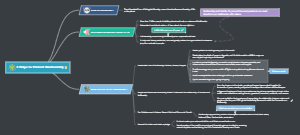
Edited at 2022-10-29 16:36:57Avatar 3 centers on the Sully family, showcasing the internal rift caused by the sacrifice of their eldest son, and their alliance with other tribes on Pandora against the external conflict of the Ashbringers, who adhere to the philosophy of fire and are allied with humans. It explores the grand themes of family, faith, and survival.
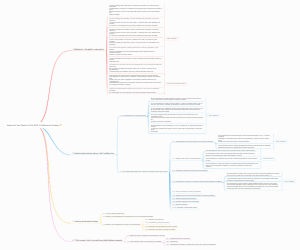
This article discusses the Easter eggs and homages in Zootopia 2 that you may have discovered. The main content includes: character and archetype Easter eggs, cinematic universe crossover Easter eggs, animal ecology and behavior references, symbol and metaphor Easter eggs, social satire and brand allusions, and emotional storylines and sequel foreshadowing.
[Zootopia Character Relationship Chart] The idealistic rabbit police officer Judy and the cynical fox conman Nick form a charmingly contrasting duo, rising from street hustlers to become Zootopia police officers!
Avatar 3 centers on the Sully family, showcasing the internal rift caused by the sacrifice of their eldest son, and their alliance with other tribes on Pandora against the external conflict of the Ashbringers, who adhere to the philosophy of fire and are allied with humans. It explores the grand themes of family, faith, and survival.
This article discusses the Easter eggs and homages in Zootopia 2 that you may have discovered. The main content includes: character and archetype Easter eggs, cinematic universe crossover Easter eggs, animal ecology and behavior references, symbol and metaphor Easter eggs, social satire and brand allusions, and emotional storylines and sequel foreshadowing.
[Zootopia Character Relationship Chart] The idealistic rabbit police officer Judy and the cynical fox conman Nick form a charmingly contrasting duo, rising from street hustlers to become Zootopia police officers!
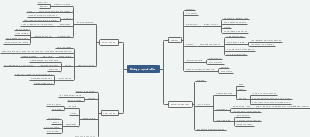
Principles of Economics (Mankiw)
Microeconomics
capital
discounted value
PDV=FV/(1 r)^t
supply of capital
rate of return
interest rate
family savings funds
Habit
cultural form
employer
capital needs
corporate financing
Retained earnings (profit)
The main source of funds for actual investment in long-established businesses
Want to borrow money from the bank
Borrow money from individuals or organizations, such as funds or investment companies
denomination
interest rate
the term
Bankruptcy or receivership risk
securities
company stock
personal wealth accumulation
personal investment
rate of return
compound interest
long term planning
risk
Diversification and diversification
tax burden
fluidity
Convert investments into cash
real estate
financial investment
stock
bonds
Bank Account
Malkiel sleep restlessness scale
sleep peacefully
Bank Account
Monetary Fund
certificate of deposit
occasional nightmare
Diversified Payroll Bond Portfolio
Determine the rate of return in advance
Inflation and market interest rates
Tossing and turning
Blue Chip Stock Portfolio
Well-known company stocks
Better than bond portfolio returns
tax saving
Nightmares again and again
real estate investment
Long-term, ten-year period, relatively low risk
Short-term, monthly or yearly unit, relatively high risk
Definitely insomnia
precious metal investment
Volatile fluctuations
Stable savings and the sooner you save money, the better
monopoly
Businessman seeking profit
High-volume, low-cost innovative products
Price gouging, quality issues, contamination, fraud
enterprise
sole proprietorship
partnership
company
competition type
perfect competition
Price reflects production costs
Monopolistic Competition
High short-term profits
oligopolistic competition
Have most or all of the turnover in a specific market
monopoly
patent
law
National economy and people's livelihood industries
natural monopoly
Antitrust
Herfindahl-Hirsch Index (HHI)
The lower the index, the higher the market competition.
merger
restricted business administration
cartel
exclusive deal
Bundle sales
predatory pricing
labor force
Output determines income
differential treatment
Influencing factors
culture
economic systems
Skill
experience
Supply and demand
Labor remuneration (experience labor value)
Employees: Preferred Benefits
Employer: equilibrium wage = total cost of compensation
union
Increase workforce productivity
Raise union wages
minimum treatment
Minimum wage 20%, wages for low-skilled workers -40%
alternative plan
skills training program
Subsidizing employers who hire low-skilled workers
Direct tax cuts or subsidies for low-skilled workers
High degree of division of labor
Warehouse Management Economics
commodity
substitution effect and income effect
Demand and quantity demanded
Demand: the relationship between price and quantity demanded, [curve]
Quantity demanded: the relationship between a specific price and a specific quantity, [point]
supply and quantity supplied
Supply: the relationship between price and quantity supplied, [curve]
Supply quantity: the relationship between a specific price and a specific quantity, [point]
demand fluctuations equilibrium point Affect supply
technology, factor prices
price controls
price ceiling
Supply exceeds demand
price floor
oversupply
PS: Soviet Union
shortage of supplies
black market
overproduction
cover costs
budget cost
opportunity cost
elasticity
Elasticity of demand: percentage change in quantity demanded / percentage change in price
<1. Demand is inelastic
Increased production costs are passed on to consumers
=1. Single demand elasticity
>1. Demand is elastic
easily replaceable
Costs can only be passed on to consumers to a small extent
Elasticity of supply: percentage change in quantity supplied / percentage change in price
<1. Supply is inelastic
=1. Single supply elasticity
>1. Supply is elastic
short term
Demand and supply are inelastic
Prices skyrocketed
long
Demand and supply are elastic
prices become stable
macroeconomics
macroeconomic policy
Target
Economic Growth
Full employment
price stability
Balance of Payments
Architecture
Aggregate supply and aggregate demand model
Main tools
Fiscal policy
government taxes and spending
Government budget and budget deficit
Ricardian Equivalence Theorem
crowding out effect
crowding in effect
Social Welfare
voluntary financial policy
real time reaction
balanced financial policy
Too late
increase trade surplus
Monetary Policy
central bank policy
quasi-principal rate
rediscount rate
open market operations
Buy and sell bonds
Bonds are not money
Quantitative easing
Central bank loans to financial market investors
central bank purchases long-term bonds
GDP
GDP=consumption investment government expenditure export-import
GDP per capita
Automatically adjust for population differences in different countries and at different times
Societies with higher GDP per capita
luxury accessories
medical education
living environment
Real CDP
GDP inflation
economic recession
GDP decline continues for more than six months
cyclical unemployment
potential GDP
full employment GDP
cyclical unemployment rate=0
Three major drivers of productivity
Increase in physical capital
Increase in human capital
Technology upgrading
inflation
Changes in the average price level
alternatives
new technology
CPI
inflation measure
hyperinflation
Definition: Inflation rate exceeds 20% in a month
example
20th Century
1920s
Germany
80's
Argentina
Israel
Bolivia
21st century
Zimbabwe
deflation
Definition: Negative inflation rate
Real interest rate = nominal interest rate - inflation rate
Banks are unable and unwilling to take on new loans
Macroeconomic demand decline, economic recession
Monetary policy is difficult to operate
trade surplus
Essence: lending money to foreign countries
current account balance
Definition: A single statistical value that describes the most comprehensive outline of a country's trade balance
Commodity trading
international services
International Investment
unilateral transfer
such as foreign aid
trade deficit
When money flows overseas and does not come back in the form of goods or services, it means it flows back into the country in the form of financial investment.
Trade protectionism
National Savings and Investment Identity
The total supply of financial capital must equal the total demand for financial capital
financial capital supply
primary source
Domestic funds savings
inflow of foreign funds
financial capital needs
Investment demand for domestic physical capital
government borrowing
aggregate supply and aggregate demand
Say's law
Supply creates its own demand
neoclassical economist
BUG: Recession
Keynes's Law
Demand creates its own supply
BUG: Social production is restricted by the quantity of labor, physical capital, available technology, and the market structure and economic system that combines these production factors.
Aggregate demand passive factors
Investment is influenced by “animal instinct”
consumer sentiment
Wage rigidity and price rigidity lead to surplus and unemployment
The economy is unstable both at the beginning and towards the end of another recession
Support the government’s proactive macroeconomic policies
Look at demand in the short term and supply in the long term
Phillips Curve
Popular in the United States in the 1950s and 1960s
Reflects the trade-off between inflation rate and unemployment rate
Failure in the United States from the 1970s to the 1990s
Inflation and unemployment almost reached double digits in the 1970s
In the 1980s, both declined simultaneously
In the 1990s, both were lower than those in the 1980s
currency
Function definition
medium of exchange
value savings
unit of account
government statistician definition
M1
Currency (coins, banknotes), travelers checks and personal checking accounts
Currency accounts for about half
M2
M1 Savings Account (Bank Current Deposit)
Currency accounts for about 1/10
money market funds
Safe investments (treasury bonds, currency funds, etc.)
Small time deposit
Economic Globalization
protectionism
import quota
tariff
Industrial subsidies
General Agreement on Tariffs and Trade 1947
World Trade Organization 1955
Foreign exchange market
exchange rate
Purchasing Power Evaluation Exchange Rate (PPP Exchange Rate)
control exchange rate
contractionary monetary policy
Buy and sell local currency directly
fixed exchange rate
Balance of payments imbalances and financial stress
Floating exchange rate
Too strong: Huge trade deficit
Too weak: large trade surplus
Foam