 Wondershare EdrawMind
MindMap Gallery Macroeconomics and the 20 Spirits Professor Zhang Yinjie
- 28
Macroeconomics and the 20 Spirits Professor Zhang Yinjie
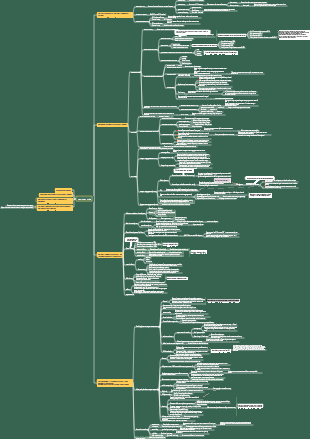
This is a mind map by Professor Zhang Yinjie about macroeconomics and the 20 major spirits. It summarizes the macroeconomic fluctuation cycle, industry development cycle, business life cycle, Interpretation of the Twenty Great Spirits, etc.
Edited at 2024-01-15 09:49:45
- bacteria
This is a mind map about bacteria, and its main contents include: overview, morphology, types, structure, reproduction, distribution, application, and expansion. The summary is comprehensive and meticulous, suitable as review materials.
- Plant asexual reproduction
This is a mind map about plant asexual reproduction, and its main contents include: concept, spore reproduction, vegetative reproduction, tissue culture, and buds. The summary is comprehensive and meticulous, suitable as review materials.
- Reproductive development of animals
This is a mind map about the reproductive development of animals, and its main contents include: insects, frogs, birds, sexual reproduction, and asexual reproduction. The summary is comprehensive and meticulous, suitable as review materials.
Macroeconomics and the 20 Spirits Professor Zhang Yinjie
- bacteria
This is a mind map about bacteria, and its main contents include: overview, morphology, types, structure, reproduction, distribution, application, and expansion. The summary is comprehensive and meticulous, suitable as review materials.
- Plant asexual reproduction
This is a mind map about plant asexual reproduction, and its main contents include: concept, spore reproduction, vegetative reproduction, tissue culture, and buds. The summary is comprehensive and meticulous, suitable as review materials.
- Reproductive development of animals
This is a mind map about the reproductive development of animals, and its main contents include: insects, frogs, birds, sexual reproduction, and asexual reproduction. The summary is comprehensive and meticulous, suitable as review materials.
- Recommended to you
- Outline

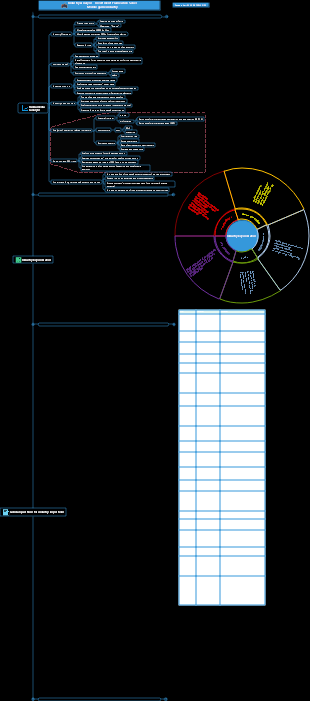
Macroeconomics and the 20 Spirits Professor Zhang Yinjie
Macroeconomic fluctuation cycle
boom, recession, depression, recovery
Any economy or any enterprise lives in three cycles
Macroeconomic cycle analysis
Kitchin cycle
inventory investment
3-4 years
Jugra cycle
Equipment investment
8-10 years
Kuznets cycle
real estate investment
15-25 years
Compo cycle
technological revolution
40-60 years
first wave
steam engine age
1783-1842
steam engine
second wave
internal combustion engine era
1842-1892
railway
third wave
electrified fossil
1892-1948
car
fourth wave
nuclear energy age
1948-1991
nuclear energy age
fifth wave
nano life
1991-2045
IT2.0 era
1991-2005
The first 15 years of prosperity
2002-2015
followed by a 10-year recession
2015-2025
10 years of depression
2025-2045
recovery period
China’s Four Economic Recessions
1981
year 1991
1998
year 2010
Work hard on the enterprise life cycle
50% industry
30% macro cycle
20% strategy
Macroeconomic Situation Analysis
Methods of analyzing problems in economics
Assumptions, logical reasoning, conclusions
Three-stage approach to economics
The government does not need to intervene in the economy; the government needs to intervene in the economy
Prerequisites for the Troika Theory of Aggregate Demand
Consumption
invest
exit
Prerequisites for an industry to become a pillar industry
Negative feedback is the real economy
Positive feedback is a virtual economy
2. Theory has its own boundaries
Theory has its own boundaries, and the mark of theory is the boundary
Look at data in the short term and trends in the long term
Don’t argue without premises;
Don’t make inferences without evidence;
Don’t predict without data;
No trade-offs, no decisions
Characteristics of economic analysis methods (thinking)
perspective
Analyze short-term data
Overheated economy
Coal, electricity and oil transportation, more than 5%
Economy is normal
recovery and prosperity
5% error
economic recession
Aggregate supply is greater than aggregate demand
economic depression
long lasting economic recession
datum points and frames of reference
analyzing tool
price increase rate
The reasonable range of price increase rate is 1%-3%
Demand pull, cost push, currency over-issuance and external input
economic growth rate
China’s GDP growth rate is around 5.5%
unemployment rate
When the unemployment rate is between 4% and 5%, the economy is normal; when it is above 5%, it is a recession; when it is below 4%, it is an overheating economy.
Frictional unemployment, structural unemployment and cyclical unemployment
Frictional unemployment is short-term, structural unemployment is long-term
Stabilize employment, finance, foreign trade, foreign investment, investment, and expectations.
Ensure employment of residents, basic livelihood, market entities, food and energy, industrial and supply chains, and grassroots operations.
import and export
Usually, during the period of economic contraction and recession, export pressure increases and import demand decreases; while during the period of economic prosperity and emission expansion, demand is strong, and both imports and exports continue to expand. Economic boom periods sometimes show a surplus, and sometimes the surplus decreases or the deficit increases. This mainly depends on whether imports are less than exports or imports are greater than exports.
Electricity consumption and rail freight
Electricity consumption growth rate
Growth rate of electricity consumption in society
Rail freight volume growth rate
in conclusion
The above five major indicators are usually called primary indicators. If the conclusions drawn by the five primary indicators are consistent, there will generally be no big problems. If the conclusions drawn by the five primary indicators are inconsistent, secondary indicators need to be used. to verify
Important secondary indicators
Scale of social financing, PMI (Manufacturing Purchasing Managers Index), Consumer Confidence Index (CCI), fiscal revenue, value-added rate of industrial enterprises, cumulative growth rate of urban fixed asset investment, total retail sales of consumer goods, highway container truck traffic, Coastal port cargo throughput, newly started commercial housing area, factory idle rate, logistics industry prosperity index (LPI), main business income and total profit growth rate, etc.
MO
cash in circulation
M1
chivalrous money supply
M2
broad money supply
From the perspective of capital supply and demand, the social financing scale represents the asset side of the entire financial system, expressing the capital demand of the entire real economy. M2 represents the liability side of the entire financial system, expressing the capital supply of the entire real economy. The social financing scale is larger than M2 year-on-year. Year-on-year, it shows that the supply of funds exceeds demand. If this difference continues to rise, there will naturally be an upward trend in pulling the price of funds.
my country's monetary policy follows the two principles of "serving the real economy" and "matching economic growth"
PMI
China's manufacturing purchasing index PMI50% is the boom and bust line
Indicators reflecting changes in consumer demand
Reflects the consumption of goods by residents and groups
The total retail sales of social consumer goods
monthly
Reflects the sum of the consumption of goods and services by urban and rural residents
Per capita consumption expenditure
quarter
Expenditure method GDP accounting reflects total consumption
final consumption rate
quarter
Two yardsticks for measuring the economy
structure
Represents economic quality and efficiency
total amount
Reflects the quantity and size of the economy
Public analysis of the economic situation and long-term trends
Trend thinking
Let’s look at economic fundamentals first
Good economic fundamentals are the guarantee for the safe operation of the economy
Four major indicators
price stability
Full employment
Economic Growth
Balance of Payments
due to major factors
Consumption
savings
invest
Net exports
four balance sheets
financial balance sheet
financial liabilities sheet
Enterprise Responsibility Form
family responsibility chart
business fundamentals
One is the average responsibility rate of the company in the past five years
The second is the company’s average cash flow over the past five years.
The third is the average operating income of the company in the past five years
Fourth, the company’s net assets during periodic adjustments
The fifth is the average of the company’s total dividends in the past five years.
my country's economy is facing triple pressure
Expectations weaken
Three distributions and tax reform
The concept of preventing the disorderly expansion of capital raises concerns about cracking down on capital (maintenance and appreciation of wealth)
People are worried about whether China will enter a stage of continued outbreak of financial risks and new regulations on asset management
demand contraction
Coronavirus and epidemic prevention policies trigger demand contraction
Real estate shrinks
Investment began to decline in March last year
supply shock
China is at the middle and lower end of the world industrial chain
Sino-US relations have deteriorated sharply, and the United States has suppressed China's advantageous manufacturing industry
Commodity prices rise, Chinese companies cannot absorb it
endogenous factors
Several policies with contractionary effects
Dual Carbon Raid Anti-monopoly, disorderly expansion of capital National security regulations on information Education and training performance New employment forms Social security Tightening of real estate supply
external factors
U.S. interest rate hikes and world economic turmoil
Financial turmoil and economic recession are occurring in the United States. Interest rate hikes and balance sheet reductions will have an impact on the real economy. Inflation will lead to shrinking demand.
The dollar does not necessarily weaken
Commodities themselves are likely to experience some degree of correction
Quanqiuhua will not stop, but the industrial chain will adjust
Globalization will not stop, but it will adjust
The second half of globalization: “regional globalization”
Opportunities and challenges for Chinese enterprises
There is still potential for long-term development
New energy and various industries related to new energy
The potential of digital economy and platform economy is further unleashed, and digital technology assists the development of manufacturing industry
The process of urbanization will continue
Unify the city
Consumption is one of the important factors that start the economy
China's current situation
Excess capacity, total supply is greater than total demand
Investment is sluggish due to expectations
Weak consumption
Endogenous consumption VS independent consumption
Endogenous consumption depends on one’s income
Independent consumption has nothing to do with one’s income
Developing a unified market is a matter of institutional reform
Summarize
Analyze the economic situation
Be clear about which are short-term effects and which are long-term trends. Avoid treating speed issues as structural issues, quantity issues as quality issues, periodic issues as trend issues, local issues as general issues, phenomena as the essence, and partial generalizations. , misjudged the economic situation. The economy has cycles, industries have cycles, currencies have cycles, policies have cycles, globalization has cycles, and investor sentiment also has cycles, but cyclical problems or periodic problems will not change the general trend or economic development. Nature.
Industry development cycle
Emerge, grow, mature, decline or metamorphose
Industry development cycle analysis
50% industry decision 50% business management
The industry focuses on five aspects
A look at the business model Second, look at the competitive landscape Three looks at the industry space Fourth, look at industry thresholds Five looks at future development trends
7 elements of industry trends
1. Is the scale large enough? 2. Where are the driving force, growth point and decline turning point? 3. Changes in upstream and downstream production methods and production efficiency 4. Concentration, market integration 5. Have the needs changed, and can new needs be met quickly? 6. Have there been any changes in the consumer groups? Adjust the corporate brand strategy. 7. Can the successful detection methods and strategies of benchmark companies be replicated?
How to judge whether there are investment opportunities in an industry
Does it conform to the development direction of science and technology and the world trend of green and low carbon?
Is it in line with the upgrading of consumption structure? Is there any demand in the future?
Is it in line with the direction encouraged by the policy?
Big is worse than strong, strong is worse than excellent Addition to enterprise growth (getting bigger) When a company matures, it needs to be subtracted (refined). Business success does multiplication and division (Multiplication becomes stronger, division becomes better)
Two prerequisites for the emergence of a new economic cycle (economic prosperity)
major structural adjustments
Tertiary industries, within the secondary industry, within the tertiary industry, the troika structure, the structure of the virtual economy and the real economy, regional structure and urban-rural structure, etc.
Breakthrough in Economic System Reform
Achieve market clearing of potential problems
The second is to find new growth points and new growth poles
Industry integration and increased market concentration have indeed brought improvements, but they are not enough to support a new growth cycle. The sustainable growth driver is innovation, especially the innovation of private enterprises.
The second basic feature of economic methods: benchmark point and reference system
A benchmark refers to a standard economic principle, formula, graph, or model that leads to a desired outcome, such as efficient allocation of resources, etc. The benchmark points of economics reveal the laws of economic development. They are summaries and generalizations of the laws in people's economic life for many years, and are described in concise terms.
4P rules
product
PRDUCT
price
PRICE
channel
PLACE
Promotion
PROMOTION
4C rules
consumer
CONSUMER
cost
COST
convenient
CONVENIENCE
communicate
COMMUNICATION
The first law of financial management
Profit is silver, cash flow is gold
The first law of competitive strategy is high differentiation, low cost, and specialization
overall strategy
Diversification and specialization
competitive strategy
High differentiation, low cost, specialization
functional strategy
Financial strategy, marketing strategy, R&D strategy....
visionary strategy
Transformation innovation strategy and scenario planning strategy
The relationship between taxes and tax rates
Love curve
In accordance with economic laws, tax reduction policies implemented by countries with high tax burdens will greatly stimulate the economy directly.
Unemployment rate and inflation rate change in opposite directions
Phillips Curve
The Phillips Curve represents the substitution relationship between unemployment and inflation. It can be used to illustrate the negative relationship between unemployment rate changes and inflation during the business cycle
Generally speaking, when the inflation rate is high and the unemployment rate is low, it indicates that the economy is in a prosperous stage.
Demand exceeds supply
mass consumption
niche consumption
Personalized consumption
Characteristics of enterprises in different eras
Number of successful companies
Small
Popular era
middle
The era of niche
big
The era of personalization
Successful business size
Small
The era of personalization
middle
The era of niche
big
Popular era
Summarize
Changes in the market environment are inevitable
Any changes are regular and precursory
Once you find the rules, you can rise to the level of science
Answers to scientific questions can be found
A lighthouse that shines on people
Common sense, rules, underlying logic
Anything that economics proves impossible must not be feasible in reality
Whatever economics says is feasible, may not be feasible in your business
Anything that happens repeatedly must have a pattern
Wherever there are widespread problems, there must be institutional reasons
Basic characteristics of economic methods
Four aspects
Comparative analysis of costs and benefits
There is no free lunch
Comparative analysis of costs and benefits tells you the choice, that is, whether to do it or not to do it
opportunity cost analysis
You can't have your cake and eat it too
If the opportunity cost is less than the benefit brought by your choice, then you made the right choice. If the opportunity cost is greater than the benefit brought by your choice, then you made the wrong choice.
financial cost, accounting cost, opportunity cost
Internalization Analysis of Externalities
The wool comes from the sheep
Internalize as much as possible
The essence of internalization of externalities is that economic entities transform the social costs and social benefits they generate into private costs and private benefits. Let private costs equal private benefits and business costs equal business benefits.
Profit from positive externalities at no cost
Negative externality: no profit but cost
marginal or average cost
Do more things that provide carbon dioxide in the snow, and do less things that add icing on the cake.
Marginal analysis or uniform analysis tells us what is more beneficial when adding a little bit, and how much is appropriate, that is, everything is uniform, and it should be done in moderation.
The short board theory is the specific application of the marginal analysis method or the uniform horizontal analysis method in management. There is a short board principle in modern management, that is, the capacity of the barrel depends on the shortest board, not the longest board.
There are two assumptions in the short board theory. One is that short board creates constraints, and the other is that in a closed system, resources cannot be integrated in a simple way, and individual enterprises must make up for their own shortcomings.
In an open system, it may not be a short board theory, but a long board theory. The so-called long board refers to the core resources of different enterprises. The long board theory is to integrate the core resources of different entities to form a larger barrel with more water.
Sunk costs
Refers to investments that have been made and cannot be recovered
Sunk costs determine how people view the past, marginal costs determine how people treat the present, and social costs determine how people view the future.
Analyze the future and look at opportunity costs
Analysis now looks at marginal cost
Analyze the past and look at sunk costs
The four-two-four system means that 40 people are at the resource and R&D level, 4 costs are at the sales and after-sales service level, and 20 people are at the operation management and production level. Enterprises of different natures have different system configurations.
business life cycle
Entrepreneurship period, development period, maturity period, decline/delay period
Enterprise development life cycle analysis
The second curve of enterprise development is not a retreat after the first curve encounters problems, but is incubated when the first curve is mature and there is spare time. Long-termism, the company's strategic lock-in trend is extended, and the second curve is Development provides the possibility for enterprise development and innovation
Porter's Five Forces Model
Strategists need to understand the entire industry information, which is obviously difficult to do in reality.
There is only competition and no cooperation between the same industry. However, there are various cooperative relationships between enterprises, which are not necessarily life-or-death competition.
The size of the industry is fixed
The top companies are growing crazily, the tail companies are declining rapidly, and the waist companies are powerful, with conditions and opportunities to counterattack.
The stock market becomes bigger and stronger
Find structured opportunities
Do a good job in capacity building
Enterprise transformation needs
cognitive iteration
Core technology reserves
organizational change
Product Innovation
credit cost
It is instinct to stand in the present and look at the future, and it is a skill to stand in the future and look at the present. Using what will definitely happen tomorrow, we can infer what is to be done today. We must learn to look at the inside from the outside, look at the present from the future, and learn to "express from the top down, think from the bottom up, summarize vertically, and classify and group horizontally."
Enterprises are pro-cyclical, and the government is counter-cyclical and inter-cyclical.
SWOT analysis model
growth type
Brand, talent customers
More business
competition, failure, cost
Turnaround type
Subtopic 1
Defensive
No industry talents, lack of management experience, and insufficient energy
Seize the general trend and seize the opportunity
Seize the general trend
Macro
Economic cycle, international, domestic
mesocosm
Industry growth and growth cycle
microscopic
Market Competition and Industrial Chain Control
catch the moment
Investment direction depends on industry
Investment timing depends on the cycle
Investment profits depend on the market
The theme of the times has changed from peace and development to governance and development
Entrepreneurs need more eyes to see the world
Look at trends and find direction
Target a group of people
Look at the market and look for opportunities
Cut out a scene
Look at peers and look for gaps
Solve a pain point
Look at the users and find the positioning
create a value
Look at policies and look for opportunities
Tell a good story and spread the word well
Summarize
Follow the trend
The future trend
cyclical trend
overall situation
Borrow strength
Industrial power
The power of capital
Government power
Three good enterprises
Climb the mountain of science and technology
Entering the digital blue ocean
Dancing with Capital
Be a three-good enterprise
good character
Good product
good organization
Macroeconomic Cycle and Enterprise Response
recovery
Add factory equipment
Implement long-term leasing
Build inventory
Introduce new products
increase labor force
Prosperity
Expansion of factory equipment
Continue to build inventory
increase price
Carry out marketing planning
increase labor force
decline
stop expansion
Sell excess equipment
Discontinuation of unfavorable products
Stop long-term purchases
reduce inventory
stop employee
depression
Establish investment criteria
maintain market share
Reduce overhead costs
give up secondary interests
reduce inventory
Lay off employees
The government can be both reversible and trans-cyclical
Firstly, the focus is different
Secondly, the specific goals are different
Thirdly, policy tools are different
Fourth aspect, policy implementation methods are different
VUCA
VUCA talks about how to face changes in the external environment, and corporate management to continuously adjust their organization, processes, management and strategies to adapt to new needs.
The days of taking bonuses, suffering, and taking risks are gone forever.
BANI
It means that enterprises solve their own problems from within and win the future through disruptive innovation management.
A person's most powerful ability is antifragility?
Long board thinking
to demonstrate strengths
Expand the boundaries of capabilities
Barbell strategy, prevent risks and prepare for rainy days
Lifelong learning, never satisfied,
corporate beacon
Common sense, rules, underlying logic
Anything you do without underlying logic is right, and anything without top-level design is wrong.
Interpretation of the Twenty Great Spirits
Reminiscing about the past, great achievements have been made
Three major events in ten years
First, we celebrate the 100th anniversary of the founding of the Communist Party of China
Second, socialism with characteristics enters a new era
The third is to complete the historical task of alleviating poverty and building a moderately prosperous society in an all-round way, and realize the first centenary goal
China's economy over the past decade
Economic Growth
Achievements in the financial industry
Urbanization rate
Number of people insured by basic medical insurance and average life expectancy
Development of market entities and private enterprises
Development of import and export of goods trade
Great achievements have been made in environmental protection and ecological balance
The economic structure is more coordinated
The current task of reviewing is arduous
Show a bright future
The future development prospects and goals of China’s economy
To comprehensively build a modern and powerful socialist country in two steps, we will basically realize socialist modernization from 2020 to 2035, and from 2035 to the middle of this century, we will build our country into a prosperous, strong, democratic, civilized, harmonious and beautiful modern socialist country.
The 20th National Congress guides the future economic development
Achieve high-quality economic development
A general requirement is that the economy shifts from a stage of rapid growth to a stage of high-quality development.
High-quality development is the primary task of comprehensively building a modern socialist country. Development is the party’s top priority in governing and rejuvenating the country
The 19th National Congress proposed: four-point collaboration: real economy, technological innovation, modern finance, and human resources
Indicators reflecting the quality of economic development
Improve total factor productivity (TFP)
The most important thing to improve economic quality is to improve economic efficiency and effectiveness
Labor productivity
TFP
Total factor productivity continues to decline
Why has labor productivity increased rapidly over the years, while total factor productivity has declined significantly?
Sources of total factor productivity growth
Industrial digital transformation--Industrial Internet
New infrastructure required for re-industrialization
Great Power Industry
More thorough reform and opening up will bring about improvements in resource allocation efficiency
Reasonable economic structure
There are some signs of long-term trends in the industrial structure and the decline and growth of the shipment structure among emerging industries. The growth of traditional industrial clusters represented by heavy chemical industry is slowing down, and the growth of traditional industrial clusters represented by high-end manufacturing and modern service industries is slowing down. Emerging industrial clusters are growing rapidly.
From a low-income country to a middle-to-high-income country, with people as the center of income and the improvement of people's welfare as the goal
While continuing to promote supply-side structural reform, we will also carry out demand-side reform.
demand side short term
Investment (Main)
Consumption
Net exports
GDP
capital
labor
TFP
skill improved
System Innovation
Structural optimization
Supply-side structural reform
Supply-side structural reform
Industrial chain
Core industries
Support industries
Auxiliary industries
Radiation industry
Value Chain
R&D
manufacture
Marketing services
supply chain
raw material
manufacture
Distribution
retail
scope of finance
It is to manage money for those who have money and to finance those who have no money.
Three keywords of finance
credit, leverage, risk
Four words for investment and financing
Financial investment, management and exit
Set up traffic lights for the capital market and strengthen effective supervision of capital
We cannot ignore the concept of uniformity, which misleads managers. When it comes to the importance of details, they say that details determine success or failure. It seems that key elements are not important. When it comes to KPI (OKR), they think that all indicators should be quantified. It seems that all indicators can be Quantification, when it comes to long tail theory, it seems that key customers are not important. When it comes to blue ocean strategy, it seems that every enterprise has the ability to open up new markets, while mature markets are not important. These specious management concepts, Strictly speaking, they are not scientific theories because they lack strict assumptions and logical derivation, and lack clear boundary conditions.
The smile curve and the pain curve, the 80/20 rule and the long tail theory, the life cycle and the second curve, the barrel principle and the long board effect coexist.
Note: Blue ocean is usually characterized by high demand, low competition, low requirements, and small investment. On the contrary, red ocean is stimulated by competition and supply exceeds demand.