 Wondershare EdrawMind
MindMap Gallery Principles of Macroeconomics
- 147
- 1
Principles of Macroeconomics
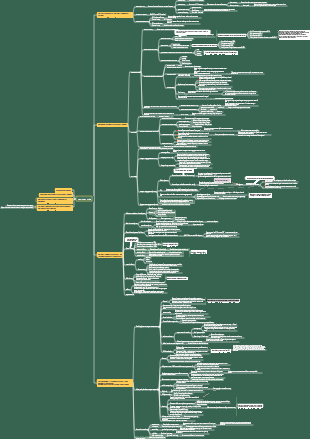
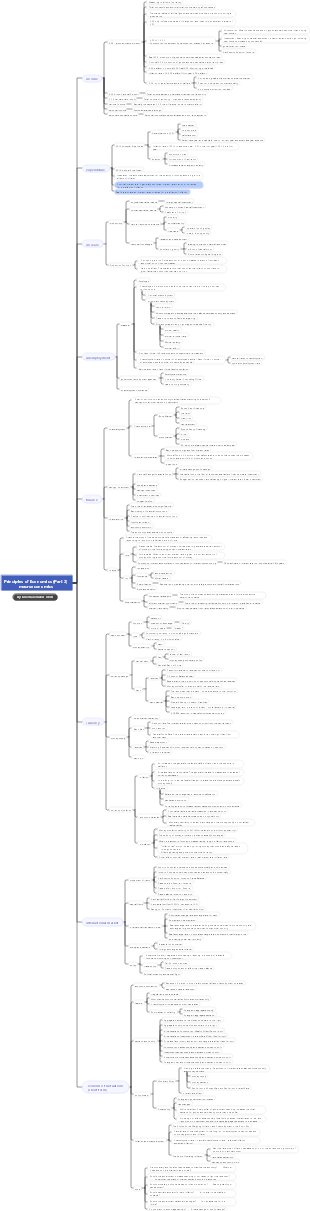
This is a mind map about the principles of macroeconomics. The main contents include 23-Measurement of national income and expenditure, 24 Measurement of living expenses, 25 Production and growth, etc.
Edited at 2022-08-29 17:57:00
- New Employee First - week Onboarding Plan
Mappa mentale per il piano di inserimento dei nuovi dipendenti nella prima settimana. Strutturata per giorni: Giorno 1 – benvenuto, configurazione strumenti, presentazione team. Secondo giorno – formazione su policy aziendali e obiettivi del ruolo. Terzo giorno – affiancamento e primi task guidati. Il quarto giorno – riunioni con dipartimenti chiave e feedback intermedio. Il quinto giorno – revisione settimanale, definizione obiettivi a breve termine e integrazione culturale.
- Analisi del campo di allenamento inglese
Mappa mentale per l’analisi della formazione francese ai Mondiali 2026. Punti chiave: attacco stellare guidato da Mbappé, con triplice minaccia (profondità, taglio, sponda). Criticità: centrocampo poco creativo – la costruzione offensiva dipende dagli attaccanti che arretrano. Difesa solida (Upamecano, Saliba, Koundé). Portiere Maignan. Variabili: gestione infortuni e condizione fisica dei big. Ideale per scout, giornalisti e tifosi.
- Analisi della lineup francese
Mappa mentale per l’analisi della formazione francese ai Mondiali 2026. Punti chiave: attacco stellare guidato da Mbappé, con triplice minaccia (profondità, taglio, sponda). Criticità: centrocampo poco creativo – la costruzione offensiva dipende dagli attaccanti che arretrano. Difesa solida (Upamecano, Saliba, Koundé). Portiere Maignan. Variabili: gestione infortuni e condizione fisica dei big. Ideale per scout, giornalisti e tifosi.
Principles of Macroeconomics
- New Employee First - week Onboarding Plan
Mappa mentale per il piano di inserimento dei nuovi dipendenti nella prima settimana. Strutturata per giorni: Giorno 1 – benvenuto, configurazione strumenti, presentazione team. Secondo giorno – formazione su policy aziendali e obiettivi del ruolo. Terzo giorno – affiancamento e primi task guidati. Il quarto giorno – riunioni con dipartimenti chiave e feedback intermedio. Il quinto giorno – revisione settimanale, definizione obiettivi a breve termine e integrazione culturale.
- Analisi del campo di allenamento inglese
Mappa mentale per l’analisi della formazione francese ai Mondiali 2026. Punti chiave: attacco stellare guidato da Mbappé, con triplice minaccia (profondità, taglio, sponda). Criticità: centrocampo poco creativo – la costruzione offensiva dipende dagli attaccanti che arretrano. Difesa solida (Upamecano, Saliba, Koundé). Portiere Maignan. Variabili: gestione infortuni e condizione fisica dei big. Ideale per scout, giornalisti e tifosi.
- Analisi della lineup francese
Mappa mentale per l’analisi della formazione francese ai Mondiali 2026. Punti chiave: attacco stellare guidato da Mbappé, con triplice minaccia (profondità, taglio, sponda). Criticità: centrocampo poco creativo – la costruzione offensiva dipende dagli attaccanti che arretrano. Difesa solida (Upamecano, Saliba, Koundé). Portiere Maignan. Variabili: gestione infortuni e condizione fisica dei big. Ideale per scout, giornalisti e tifosi.
- Recommended to you
- Outline
Principles of Macroeconomics
23Measurement of a country’s balance of payments
Economic Income and Expenditures
The total income of everyone in the economy and the total spending on the economy’s output of goods and services
In an economy as a whole, income equals expenditure
Every transaction has buyers and sellers, and transactions contribute equally to income and expenses.
Measurement of Gross Domestic Product GDP
Concept: The market value of all final goods and services produced in a country during a given period.
at a given period
within a country
Regardless of the nationality of the producer
produced
currently produced
all
Everything legally sold on the market
Includes the market value of housing services provided by the housing stock
It does not include illegally produced things, production and consumption produced within the family, and things that have not entered the market.
finally
The value of intermediate goods is already included in the value of final goods
Goods and Services
Including tangible goods and intangible services
Market value
Used market price
A measure of both the total income earned in the economy and the total spending on the economy's output of goods and services
GDP is the money earned domestically by citizens and non-citizens of the country
GNP Gross National Product: The amount of money a country’s citizens earn at home and abroad
Components of GDP(Y)
Y=C I G NX
C consumption
Household expenditures on goods and services other than buying a new home
Iinvest
The purchase of items used to produce more goods and services in the future. Is the sum of capital equipment, inventory, and building purchases
Buildings include spending on new housing
GGovernment purchase
Government consumption expenditure and total investment
Social security and unemployment insurance are “transfer payments”
NX import and export
Export-Import
Foreign purchases of domestically produced goods minus domestic purchases of foreign goods
Real GDP vs Nominal GDP
GDP deflator
Nominal GDP/Real GDP times 100
Reflect the prices of goods and services
A measure of the price level
Measures the current price level relative to base year prices
Changes in the overall price level
Inflation rate for two years = (GDP deflator for the second year - GDP deflator for the first year) / GDP deflator for the first year
real GDP
Production of goods and services valued at current prices
Measure of real GDP: Economists want to measure the total quantity of goods and services produced independent of changes in their prices
Real GDP per capita shows differences in living standards across countries
A measure of both the value of all final goods and services produced in a given period and the total income (adjusted for inflation) of everyone in the economy
Nominal GDP
Production of goods and services valued at constant prices
A good measure of economic well-being?
good indicator
High GDP helps us live a good life and measures the things that make life meaningful
GDP does not directly measure all the things that make life meaningful, but it does measure our ability to live the many investments that make a meaningful life.
bad indicator
Not a perfect measure of welfare: misses leisure, value of activities outside the market (household production), environmental quality, income distribution
In most cases, GDP is a good indicator of economic well-being
It accurately measures growth and decline across the economy, but is a crude tool for describing social conditions.
24Measurement of cost of living
CPI consumer price index
concept
A measure of the total cost of goods and services purchased by the average consumer
PPI producer price index
A measure of the cost of a basket of goods and services purchased by a business
CPI = price of a basket of goods and services in the current year/price of a basket in the base year multiplied by 100
Inflation rate in the second year = (CPI in the second year - CPI in the first year)/CPI in the first year multiplied by 100%
Issues in Measuring Cost of Living
substitution bias
Consumers tend to substitute items that become cheaper
Introduction of new items
More choices, reducing the cost of maintaining the same level of economic well-being
Unmeasurable changes in quality
The difference between GDP deflator and CPI
The GDP deflator reflects the price of all goods and services produced domestically, and the CPI reflects the price of all goods and services purchased by consumers.
The GDP deflator compares the price of goods and services produced in the current period with the price of the same goods and services in the base year, and the CPI compares the price of a fixed basket of goods and services with the price of a basket of goods and services in the base year.
Correcting economic variables for the impact of inflation
Purpose: Compare dollar figures for different periods
Quantity of US dollars today = Quantity of US dollars in year T * (price level today/price level in year T)
indexation
The automatic adjustment of the quantity of money to take account of the effects of inflation by law or contract
COLA Cost of Living Allowance: Many long-term contracts between businesses and unions have provisions for wages to be partially or fully indexed according to the Consumer Price Index. COLA automatically increases wages when the Consumer Price Index rises
real interest rate vs nominal interest rate
We should not be concerned with the quantity of money per se, but only with what we can buy with that money
Real interest rate: an interest rate corrected for the effects of inflation
Nominal interest rate: A generally published interest rate that is not corrected for the effects of inflation. The interest rate that measures changes in the U.S. dollar
Real interest rate = nominal interest rate - inflation rate
25Production and Growth
productivity
concept:
Amount of goods and services produced by a worker per hour/goods and services produced per unit of labor input
importance
Key determinants of living standards
Productivity growth is a key factor in improving living standards
Determinants (per capita)
material capital
Stock of equipment and buildings used to produce goods and services
Capital is an input into the production process
It is also the output of past production processes.
human capital
The knowledge and skills workers acquire through education, training and experience
Includes skills acquired in early childhood education, primary school, secondary school, university and vocational training for the adult workforce
Consumption of resources to transfer understanding of technical knowledge to the workforce
natural resources
Inputs provided by nature that are used in the production of goods and services, both renewable and non-renewable
Are natural resources a limit to growth?
Technological advancement, resource recovery, development of alternative fuels
Scarcity is reflected in market prices
Short-term natural resource prices fluctuate significantly
Long-term natural resource price stability (adjusted for headline inflation)
Our ability to conserve natural resources is growing faster than supplies are shrinking
technical knowledge
Society's best knowledge of the ways in which goods and services are produced, including both public and private knowledge
Refers to society’s understanding of how the world works
Factors of production: inputs used for goods and services: labor, capital, etc. The main characteristic of capital is a produced factor of production. All have opportunity costs
economic growth and public policy
A society's standard of living depends on its ability to produce goods and services
Savings and Investments
Resource scarcity - less resources used to produce current goods and services - more resource investment and production of capital - future improvements in goods and services - future productivity improvements
Growth caused by capital accumulation requires society to sacrifice current consumption of goods and services in order to enjoy more consumption in the future
Social investment goes into capital – saving increases, consumption decreases
Increase in savings in a country - Less resources to produce consumer goods - More resources used to produce capital goods - Increase in capital stock - Increase in productivity and faster GDP growth
Diminishing returns and catch-up effects
As the amount of input increases, the return from each additional unit of input decreases.
The main meaning of diminishing returns of capital is the catch-up effect
Countries that start poor tend to grow faster than countries that start rich
The high growth caused by an increase in the savings rate is temporary due to diminishing returns. In the long run, an increase in the savings rate will cause an increase in productivity and income levels, but not an increase in the growth rates of these variables.
investment from abroad
Foreign Direct Investment
Capital investment owned and operated by a foreign entity
foreign portfolio investment
Financing in foreign currencies and operated by domestic residents
World BankWB
Encourage the inflow of capital into poor countries, obtain funds from advanced countries, issue loans to less developed countries, and provide advice on how to use funds effectively.
International Monetary FundIMF
Establishment of World War II: Economic downturns often cause political unrest, international tensions, and military conflicts. Therefore, every country should care about and promote the economic prosperity of all countries in the world
educate
The wage gap between educated and uneducated workers is large
Human capital brings positive externalities
Educated workers generate new ideas about how to better produce goods and services, which is the external benefit of education.
Justify massive subsidies for investment in human capital in the form of public education
One problem faced by some poor countries is brain drain
Health and Nutrition
Healthier workers are more productive
An important factor in long-term economic growth is improved health through better nutrition
virtuous circle
Policies that lead to faster economic growth improve people's health, which in turn boosts economic growth
Food aid programs increase the probability and duration of armed conflict in recipient countries. It is more prominent in countries with few roads and serious ethnic divisions.
property rights and political stability
Property rights refer to people’s ability to exercise rights over the resources they own
A prerequisite for the price system to work is respect for property rights in the economy
An important role played by courts in the market economy is to enforce the protection of property rights
One threat to property rights is political instability
Economic prosperity depends on political prosperity
free trade
inward-looking policy
Some of the world's poorest countries attempt to achieve economic growth through inward-looking policies
The aim is to increase domestic productivity and living standards by avoiding transactions with other countries
Support the infant industry theory
outward-looking policy
International trading of goods and services promotes economic growth and improves the economic welfare of a country's citizens
Countries and regions that implement export-oriented policies have high economic growth rates
The amount of trade a country has with other countries depends not only on government policies but also on geography
research and development
Knowledge is a public good
The government encourages companies to engage in research and development through tax cuts and encourages research through the patent system.
population growth
means there are more workers producing goods and services
means more people consume goods and services
leading to stress on natural resources
Malthus believed that a growing population would always limit society's ability to feed itself, with the result that humans would be doomed to live in perpetual poverty.
Growth in human creativity offsets the impact of population growth
Diluted the capital stock
A reduction in the amount of capital allocated causes a reduction in productivity and GDP per capita
Policies that promote equal treatment of women
Promoted technological progress
26Savings, Investments and the Financial System
financial system
A set of institutions in an economy that causes one person's savings to match another person's investments/allows the economy's scarce resources to flow from savers to borrowers
People who collaboratively decide on savings and investments
The mechanism behind the identity
Financial Institutions
Financial market
Concept: An institution through which people who want to save can provide funds directly to those who want to borrow
Bond Market
bonds
A document stipulating that a borrower is responsible for a debt owed to a bondholder. A ratio that specifies the maturity date (the time it takes for a loan to be repaid) and the interest that will be paid periodically until the loan matures.
Bond buyers give money to the company in exchange for the company's promise of interest on the bond and eventual repayment of the amount borrowed (principal)
Features
the term
The length of time a bond takes to mature
The interest rate on a bond depends on its maturity
Classification
perpetual bond
Pay interest forever, but never repay the principal
long term bonds
short term bonds
Long-term bonds are riskier than short-term bonds, and long-term bonds pay higher interest rates than short-term bonds.
credit risk
The possibility that a borrower will be unable to make certain interest or principal payments
This failure to pay is called arrears
Government bonds tend to pay low interest rates, and financially unstable companies raise capital by issuing junk bonds, which pay extremely high interest rates.
tax treatment
Interest on most bonds is taxable income
municipal bonds
Bond owners pay no income tax on interest income
Government bonds pay lower interest rates than corporations
stock market
stock
Claim on partial ownership of a business
Stock prices are determined by supply and demand for company shares
Demand for a stock and its price reflect expectations about the company's future profitability
stock index
The calculated average of a group of stock prices
Stock price: is determined by the supply and demand of the stock
dividend
P/E price-to-earnings ratio
Equity financing: selling stocks to raise funds; bond financing: selling bonds to raise funds. Stocks and bonds are financial securities
financial intermediaries
A financial institution through which savers can indirectly provide funds to borrowers
bank
Collect deposits from people who want to save and use these deposits to make loans to people who want to borrow
Allows people to write checks against their savings and use debit cards to facilitate the purchase of goods and services
Role: Bridging deposits and loans; creating a medium of exchange
Mutual Fund
An institution that sells shares to the public and uses the proceeds to purchase a portfolio of stocks and bonds
advantage
spread risk
Enable people with little money to diversify their investments
Skills of a Professional Money Manager
Give ordinary people access to the services of professional money managers
index fund
Buy all stocks based on a given stock index
Costs are kept down by doing very little buying and selling and not paying professional money managers
Focus on similarities rather than differences when analyzing the macroeconomic role of financial systems: putting the resources of savers into the hands of borrowers
financial crisis manifestations
Asset prices drop significantly
financial institution bankruptcy
Confidence in financial institutions declines
Insufficient credit
economic downturn
vicious circle
Savings and Investments in National Income Accounts
Important Identities
Y=C I G NX
Y=C I G
In a closed economy, imports and exports are zero
A closed economy is an economy that does not interact with other economies
An open economy is about trading with other economies in the world
Y-C-G=I
Subtract C and G from both sides at the same time
Y-C-G is called National Savings S
The total income remaining in an economy after spending on consumption and government purchases
S=I
S replaces Y-C-G
Saving equals investing
S=Y-C=G / S=(Y-T-C) (T-G)
Suppose T represents the amount the government receives from households in the form of taxes minus the amount it returns to households in the form of transfer payments
Private Savings (Y-T-C)
The income a household has left after paying taxes and consumption
Public Savings (T-G)
Tax revenue left over after the government has paid its expenditures
Budget surplus (T>G)
The balance between tax revenue and government expenditure
Budget deficit (T<G)
Government spending is greater than tax revenue, and the tax revenue shortfall caused by government spending
The role of the financial system
meaning
invest
The purchase of new capital such as equipment or buildings
For the economy as a whole, savings must equal investment
A person's income is greater than his consumption - increases national savings
Financial institutions make it possible for individuals to have unequal savings and investments by allowing one person's savings to become another person's investment.
loanable funds market
supply and demand model
supply
From those who have extra income and want to save and lend, either directly or indirectly
need
From households and businesses wishing to borrow money to invest
Savings are the source of supply of loanable funds, and investment is the source of demand for loanable funds.
Interest rate on the vertical axis, loanable funds on the horizontal axis
Interest rate below equilibrium - supply of loanable funds is less than demand - shortage of loanable funds - lenders increase the interest rate they charge
High interest rates encourage savings - increase the supply of loanable funds - discourage investment - reduce demand
Interest rate is the price of a loan
Represents the amount of money that the borrower will pay for the loan and the amount of money that the lender will receive from savings.
As interest rates rise, the supply of loanable funds increases
Interest rate adjustment is a balance between supply and demand
is the nominal interest rate - the monetary return on saving versus the monetary return on borrowing. Real interest rates more accurately reflect the true return on savings and the true cost of borrowing
Equilibrium is interpreted as the real interest rate
policy
savings incentives
Low savings rate partly attributed to tax laws that discourage saving
change tax laws
Savings incentives increase the supply of loanable funds
investment incentives
investment tax relief
Increase in demand for loanable funds - increase in interest rates - increase in savings
Government Budget Deficits and Surpluses
The government finances its budget deficit by borrowing in the bond market. The accumulation of past government borrowings is called government debt.
Balanced government budget: government spending is greater than tax revenue
Budget deficit P90
Public saving is negative - national saving decreases - supply of loanable funds decreases - S shifts to the left
Decrease in national savings - Increase in interest rates - Decrease in investment - Decrease in economic growth rate
When the government borrows to finance its budget deficit, it crowds out private borrowers who want to finance
Crowding out: reduction in investment caused by government borrowing
Why budget deficits affect S
The government borrows money from the private sector by selling bonds to finance the budget deficit
Why does increasing government borrowing change S and increasing private investment change structure D?
Loanable funds refer to the flow of resources available to finance private investment, so government budget deficits reduce the supply of loanable funds
If loanable funds are defined as resource flows from private saving, then government budget deficits increase demand
Budget deficits raise interest rates, crowding out income borrowers who rely on financial markets to finance private investment projects
Budget surpluses increase the supply of loanable funds, lower interest rates, and stimulate investment
History of U.S. Debt
28unemployed
Confirmation of unemployment
Classification
natural rate of unemployment
Refers to the amount of unemployment that exists in the economy under normal circumstances/refers to the unemployment rate when the total supply and total demand are in equilibrium, without the interference of monetary factors, allowing the spontaneous supply and demand forces of the labor market and commodity market to work. "Normal unemployment rate"
cyclical unemployment rate
Refers to the unemployment rate fluctuating around the natural rate of unemployment year by year. It is related to the short-term rise and fall of economic activity/is unemployment caused by insufficient short-term demand, that is, the deviation of the unemployment rate from the natural rate of unemployment.
unemployment measurement
How to measure unemployment
Classification
16 years and over
Employed
Including people who are paid to work, people who work in their own businesses and are paid, people who work in family businesses but are not paid, people who work full-time and part-time, and people who are not working now and no longer have their jobs due to special reasons.
Unemployed
This includes people who are able to work and have tried hard to find a job within four weeks but have not found one, and people who have been laid off and are waiting to be recalled to work.
labor force
non labor force
People who are not employed and unemployed, such as full-time students, houseworkers and retired people
formula
Labor force = Number of employed persons Number of unemployed persons
Unemployment rate = number of unemployed/labor force *100%
Unemployment rate: The percentage of the labor force that is unemployed, fluctuating around the normal rate of unemployment
An imperfect indicator of a country's overall economic welfare level
Labor force participation rate = labor force/adult population*100%
Labor force participation rate: labor force as a percentage of adult population
Adult population=employed, unemployed, non-labor force
Changes in male and female labor force participation rates
women rising
New technology reduces chores
Birth control reduces the number of children
changes in social attitudes
male decline
Going to school longer
Retire earlier and live longer
More child care at home
Reasons for incorrect measurement:
Official unemployment rate is a useful but imperfect measure
In reality, it is difficult to distinguish between the unemployed and those outside the labor force
Some people who report being unemployed actually make no effort to find a job.
Make yourself eligible for financial subsidies provided to the unemployed
Gray jobs to avoid paying taxes
Most unemployment is short-term, and most unemployment observed at any given time period is long-term
workers who have lost confidence
Want to work but have given up looking for one
marginal worker
People who are neither employed nor unable to find a job
Entry and exit from the labor market are extremely common
Unemployment time
Most unemployment in the economy is caused by a small number of people who have been out of work for a long time
Why are there always people who are unemployed?
The unemployment rate never falls to zero and always fluctuates around the natural rate of unemployment
frictional unemployment
Unemployment caused by the time it takes for workers to find jobs that best suit their hobbies and skills
Shorter duration of unemployment
Looking for a job – the matching problem
structural unemployment
Unemployment caused by the number of jobs available in some labor markets being insufficient to provide a job for everyone who wants to work
Labor supply exceeds demand
longer duration of unemployment
Three reasons for higher than equilibrium wages: minimum wage laws, wages, efficiency wages
Four reasons for unemployment
Look for work
concept
The process of workers finding suitable jobs after their hobbies and skills have been established
reason
Workers have different hobbies and skills
Different nature of work
information asymmetry
Why frictional unemployment is inevitable
Frictional unemployment is usually the result of changes in labor demand among different firms
Because the economy is always in flux; some businesses create jobs and some businesses lose jobs
Department transfer
Changes in demand composition among industries or regions
public policy
internet
Helps to make finding a job easier and reduce frictional unemployment
Government-run employment structures publish information about job vacancies
public training program
Make it easy for workers in declining industries to move to growing industries
unemployment insurance
A government program that provides workers with partial income protection when they lose their jobs
Payments for unemployed people who have been laid off because their previous employer no longer needs their skills
Reduces job search effort and increases unemployment
End in half a year or one year
Improves an economy's ability to match each worker to the job for which he or she is best suited
minimum wage laws
Wage on the vertical axis, labor force on the horizontal axis
When forcing wages above the equilibrium level of supply and demand, it increases the quantity of labor supplied and reduces the quantity of labor demanded.
Surplus labor - unemployment
There are other reasons why wages are above equilibrium: unions and efficiency wages
Unlimited wages that adjust the balance between supply and demand
Important for the least skilled and least experienced workers in the workforce, as they may be paid less than the legal minimum wage
Trade unions and collective bargaining
The Economics of Trade Unions
A workers' association that negotiates wages, benefits and working conditions with employers
A cartel (a form of monopoly organization)
A group of sellers acting together in the hope of exerting common market power
The wages of workers who participate are 10%-20% higher than those who do not participate
When wages are higher than the equilibrium level, labor supply increases and labor demand decreases, leading to unemployment.
Unions influence the natural rate of unemployment through their influence on insiders and outsiders
outsider
Waiting for the opportunity to become an insider Work for a non-unionized company
The role of trade unions depends in part on the laws that guide union organizing and collective bargaining
debate
supporter
Necessary for unions to counter the market power of businesses that employ workers; to help businesses respond effectively to workers’ interests
Opponent
It is a cartel... Unemployment reduces wages in other economic sectors, and the resulting labor allocation is both inefficient (the high wages of unions reduce employment in unionized enterprises below the level of efficient competition) , and it is unfair (some workers benefit at the expense of other workers)
collective bargaining
The fault of the union and the enterprise in agreeing on employment conditions
strike
The union organizes workers to withdraw from the enterprise/refers to the behavior of workers collectively stopping work in order to realize certain interest demands or express protest, divided into economic and political strikes
Reduced production, sales, profits
Can prevent companies from lowering wages when there is an oversupply of workers
efficiency wage theory
efficiency wage
A wage that firms pay above the equilibrium level to increase worker productivity
Business operations will be more efficient
There is no need for business restrictions
worker health
High wages - nutritious diet - healthier, more productive
worker turnover rate
How often workers leave depends on the set of incentives they face, including benefits to leave and benefits to stay.
Because companies have costs to hire and train workers
Worker quality
Pay high wages - Attract better workers to apply - Improve the quality of workers
worker effort
High wages - Desire to keep jobs - Give workers incentives to put in their best effort
29Currency system
currency
source
barter
Exchange one item or service for another to get what they need. A transaction requires both parties to
meaning
A set of assets in an economy that people often use to buy goods and services from one another
three functions
medium of exchange
What the buyer gives to the seller when purchasing and providing services
sales unit
A standard used to express prices and record debt
store of value
Something used to transform current purchasing power into future purchasing power
fluidity
The ease with which an asset can be converted into a medium of exchange in an economy
Currency is the most liquid asset, but it is far from perfect as a store of value. When prices rise, the value of money decreases
type
commodity currency
Currency in the form of commodities with intrinsic value eg: gold, cigarettes
legal tender
Currency that has no intrinsic value and is used as currency determined by government decree
money in economy
money stock
The amount of money circulating in the economy
currency
Paper currency banknotes and coins held by the public
Much currency is held by foreigners; by drug dealers, tax evaders, and other criminals
demand deposit
A bank account balance that depositors can withdraw at any time by writing a check
money quantity
Credit cards are not currency
Because a credit card is not a payment method but a deferred payment method; unlike a debit card, a debit card does not allow users to deferred payment for purchases.
M0
Cash in circulation refers to the sum of cash on hand in various units outside the banking system and cash held by residents.
M1
Money supply in a narrow sense, that is, M0, enterprise demand deposits, government agencies, organizations and military deposits, rural deposits, individual credit card deposits
Reflects the actual purchasing power in the economy
M2
Broad money supply, that is, M1 time deposits (savings deposits of urban and rural residents, deposits with a fixed nature in corporate deposits, trust deposits, other deposits)
Not only reflects actual purchasing power but also potential purchasing power.
M1 is growing fast - consumption and terminal markets are active - inflation; M2 is growing fast - investment and the middle market are active - asset bubbles
federal reserve system
Federal Reserve: Central Bank of the United States
Central Bank: An institution designed to regulate the banking system and regulate the amount of money in the economy
Fed
origin
Created in 1913, it is governed by the Board of Governors, which has seven governors appointed by the president and confirmed by the Senate to 14-year terms - giving them independence from short-term political pressures in setting monetary policy. The most important of the 7 directors is the chairman - who appoints Federal Reserve officials and presides over board meetings; the presidents of regional banks are selected by the board of directors of each bank, and board members generally come from local banks and business circles.
The Chairman is appointed by the President and confirmed by Congress every four years,
Work
Regulate banks and ensure the proper functioning of the banking system
Monitor bank financial conditions and act as lender of last resort
Controlling the amount of money available in the economy is called money supply. Decision makers make monetary policy based on money supply decisions.
tool
Open market operations, bank loans, statutory reserves, interest on reserves
Federal Open Market Committee FOMC
Composed of 7 governors of the Federal Reserve and 5 of the 12 regional bank presidents
The FOMC meets every six weeks to consider changes in monetary policy.
FOMC increases money supply; Fed open market purchases
Banks and money supply
Bank actions affect the amount of demand deposits in the economy
Reserves: deposits received by banks but not lent out
Mandated Reserves: The minimum level of reserves that banks must hold as set by the Federal Reserve
Increase means banks have to hold more reserves - less loanable funds - reserve ratio increases - money multiplier decreases - money supply decreases
Excess reserves: banks can hold more reserves than the legal minimum
One Hundred Percent Reserve Bank: All deposits are held as reserves - the bank cannot influence the money supply. No loans, no money creation
Fractional reserve banking system - bank creativity currency: a banking system that only uses part of the deposits as reserves
Reserve ratio: The proportion of total deposits that a bank holds as reserves
Lowering the reserve requirement: lowering reserves - stimulating the economy - leaving more money in the bank.
The credit expansion behind commercial banks making money - when the number of M2 is large, but at the same time there is an economic downturn - the bank collapses - the central bank comes out to control the bank's credit expansion and ensure the normal operation of the bank
A reserve plan is set up - handed over to the central bank in a certain proportion
money multiplier
The amount of money generated by banks using 1 dollar of reserves
Is the reciprocal of the reserve ratio = 1/R
How much money banks create depends on the reserve ratio
The higher the reserve ratio - the less money banks lend - the smaller the money multiplier
bank capital
The resources bank owners devote to the institution
Banks use financial resources to generate profits for their owners in various ways - making loans, holding reserves, buying stocks and bonds
lever
Leverage ratio: the ratio of a bank’s total assets to its capital
Add borrowed currency to existing funds for investment
Small changes in asset value cause large changes in capital value
capital requirements
Minimum bank capital determined by government regulations
credit crisis
Capital shortage causes banks to reduce lending - causing severe reduction in economic activity
Tools used by the Federal Reserve to control currency
impact reserves
open market operations
Federal Reserve Buys and sells U.S. government bonds
Buy bonds from the public - dollars in public hands - increase the money supply
The Fed sells bonds to the public - gets dollars from the public - reduces the money supply
Discount (interest rate cut)
Fed makes loans to banks
More reserves - more money created
Discount rate: The interest rate at which the Federal Reserve makes loans to banks
High discount rate - reduced reserves - reduced money supply
People and Banks
rediscount
Commercial banks take the discounted bills to the central bank for discounting
Rediscount rate: the interest rate based on which interest is deducted
Interest rate cut - rediscount rate falls - bank loans increase - money supply increases - real business loans increase - economy gets better - rediscount rate rises
Stimulate the real economy when the overall economy is not doing well
Banks and Banks
short term auction tools
The Fed determines the amount of funds it wants to lend to banks - identifies qualified banks - and auctions off the funds to be lent - to the highest bidder. i.e. to banks that have acceptable collateral and are willing to pay the highest interest rate
The more money the Fed provides - the bigger the reserves - the bigger the money supply
Fed determines borrowing amount - competitive auction among banks competing for bids
Affect reserve ratio
Mandated Reserves: The minimum level of reserves that banks must hold as set by the Federal Reserve
Increase means banks have to hold more reserves - less loanable funds - reserve ratio increases - money multiplier decreases - money supply decreases
Pay interest on reserves
When banks hold reserves on deposit with the Fed, the Fed pays banks interest on those deposits
The higher the reserves - the more reserves banks choose to reserve - an increase in the reserve rate increases the reserve ratio - reduces the money multiplier - reduces the money supply
control money supply
imprecise
Fractional reserve banking created a large money supply
The Fed cannot control the amount of money households choose to hold in bank deposits. The more money households hold on deposit - the more bank reserves - the more money the banking system creates
The Fed cannot control how much banks choose to lend
bank run
Depositors suspected that the bank was bankrupt and rushed to the bank to withdraw their deposits
It is a problem caused by the fractional reserve banking system. Since the bank can only hold part of the loan in the form of reserves, it is impossible to meet the withdrawal requirements of all depositors. Even if the bank is solvent (assets exceed liabilities), it does not have enough of cash.
A run occurs when a bank is forced to close until its loans are repaid or until a lender of last resort (such as the Federal Reserve) provides it with the currency its depositors need.
federal funds rate
The interest rate when a bank makes an overnight loan to another bank
Substitutes for the rediscount rate
Lenders: have excess reserves; borrowers: need reserves
30Money Growth and Inflation
Preface
Inflation: an increase in the overall price level
Inflation rate
CPI in the second year - CPI in the first year/CPI in the first year *100%
GDP deflator for the second year - GDP deflator for the first year / GDP deflator for the first year *100%
Money supply growth determines
Hyperinflation: extremely high inflation rate
Deflation: Most prices are falling
classical inflation theory
Explain the long-run determinants of the price level and inflation rate
Price level and monetary value
Inflation is about the value of money. P is the price of goods and services measured in money, 1/P is the value of money measured in terms of goods and services
When the general price level rises, the value of money falls
Money supply, demand and equilibrium
The supply and demand for money determines the value of money
Money demand reflects the amount of wealth people want to hold in the form of liquidity. The average price level in the economy is the most important variable.
The price level rises - the value of money falls - the demand for money increases
Money supply increases - price level rises - currency value falls
The slope of the money supply curve = the growth rate of the quantity of money; the slope of the price level curve = the inflation rate
The greater the slope - the greater the money growth rate or inflation rate
In the long run, the price level will adjust to the equilibrium level. Prices are above the equilibrium level, prices fall - supply and demand balance
The impact of currency injections
quantity theory of money
quantity equation
M*V=P*Y
Price level rises - output rises/money velocity falls
Money velocity: the speed at which money changes hands
V=(P*Y)/M
P: price level (GDP deflator); Y: output (real GDP); M: money quantity
Has been relatively stable
V is stable - M changes - the nominal output value (P*Y) changes in the same proportion
Y is mainly determined by factor supply (labor, material, human capital, natural resources) and production technology
When Y remains unchanged, inflation rate = money growth rate
Y increases, inflation rate < money growth rate
Central bank increases money supply - high inflation rate
Economic growth - Growth in the number of transactions - Growth in the amount of money required - Inflation
adjustment process
Money injection - excess supply - price level rise - increase in money demand - pay for more money - new equilibrium
classical dichotomy
The theoretical distinction between nominal variables (measured in monetary units) and real variables (measured in physical units)
Real variables: relative prices, real wages (adjusted for inflation), real interest rates (adjusted for inflation), real GDP (a measure of the total amount of goods and services produced)
monetary neutrality
The view that changes in the money supply do not affect real variables
Increase in money growth rate = increase in inflation rate
inflation tax
revenue raised by a government through the creation of money
Government prints currency - price level rises - currency depreciates
A tax levied on everyone who holds currency
Cut government spending - end of inflation
Fisher effect
The one-for-one adjustment of nominal interest rates to inflation
Government increases money growth - long run - higher inflation and higher nominal interest rates
Nominal interest rates are adjusted for expected inflation
Nominal interest rate = real interest rate inflation rate
The nominal interest rate is determined by loanable funds
inflation cost
fallacy
Prices rise - consumers pay more - producers get more - inflation itself does not reduce people's real purchasing power
1 leather shoes cost
Reduce the cost of currency holdings
Resources wasted when inflation encourages people to reduce their currency holdings
2 menu cost
cost of changing price
Inflation increases menu costs borne by businesses
3 Relative price changes and improper allocation of resources
Because prices only change once in a period, the change in relative prices caused by inflation is greater than without inflation.
Because the market economy relies on relative prices to allocate scarce resources. When inflation distorts relative prices, consumer policies are also distorted, and the market cannot allocate resources to their best uses.
4 Tax distortions caused by inflation
Almost all taxes distort incentives
Inflation increases the tax burden on income earned through savings
Inflation discourages saving because capital gains are expanded - increasing tax burden
Capital Gains: Profit from selling an asset for more than the purchase price
The solution: tax indexation
amend tax laws
High inflation inhibits saving - inhibiting the economy's long-term growth rate
5Confusion and inconvenience
Money is the measure of economic transactions
Increase money supply - inflation - erode the real value of the unit of account
Inflation inhibits the role of financial markets in allocating savings in the economy into different types of investments
6. The special costs of unanticipated inflation: arbitrary wealth redistribution
Unanticipated inflation redistributes wealth among people in a way that has nothing to do with either value or need
Unanticipated price changes distribute wealth among debtors and creditors
Hyperinflation makes debtors richer at the expense of big banks by reducing the real value of their debts
Deflation to the detriment of debtors makes big banks richer by increasing the real value of debt
Inflation encourages lending and benefits debtors; deflation benefits creditors
Inflation is bad, deflation can be worse
Friedman's rule
Deflation reduces nominal interest rates, which causes the cost of holding money to fall. The shoe-leather cost of holding money is minimized as nominal interest rates approach zero, which in turn requires deflation to equal the real interest rate
Small, predictable deflation may be desirable
Deflation often occurs suddenly and often as a result of widespread macroeconomic difficulties. Deflation - falling prices - reduced demand for goods and services in the economy - reduced aggregate demand - falling incomes and increased unemployment.
Although monetary policy is neutral in the long run, it has important effects on real variables in the short run.
33Aggregate supply and aggregate demand
Preface
Recession: A period in which real GDP and other measures of income fall, incomes fall and unemployment rises more slowly as the economy produces fewer goods and services/Real income falls and the number of unemployed increases
Corporate sales and profits decline
A leftward shift of the AD and AS curves will cause recession, but will not move the LAS curve.
depression: severe recession
Three key facts about economic fluctuations
1Economic fluctuations are irregular and unpredictable
Fluctuations in the economy are called business cycles.
2 Most macroeconomic variables fluctuate simultaneously
Real GDP is a variable that monitors short- and medium-term changes in the economy and is the most comprehensive measure of economic activity. A measure of both the value of all final goods and services produced in a given period and the total income (adjusted for inflation) of everyone in the economy
3 Unemployment increases as output decreases
Two causes of economic fluctuations
Aggregate demand moves
Expected price level to fall - wages to fall - costs to fall - supply to increase
Policymakers who influence aggregate demand can potentially mitigate adverse effects on output
aggregate supply shifts
stagflation
A period when output decreases and prices increase
Movements in aggregate supply can cause stagflation—recession (reduced output) and inflation (increased prices)
The short-term aggregate supply curve moves to the left - output decreases and prices rise - time passes - wages, prices, and feelings adjust - shifts to the right - the price level and output return to their original levels
Rising oil prices - rising costs, reduced supply
According to the sticky wage theory: the nominal wages at point A are the same as those at point B, and the nominal wages at point C are higher than those at point A; the real wages at point B are lower than those at point A, and the real wages at point AC are the same.
Use aggregate demand and aggregate supply to describe long-term growth and inflation
technology
Technological progress increases an economy's ability to produce goods and services. This increase in output is reflected in a rightward shift of the long-run aggregate supply curve.
Monetary Policy
The Fed increases the money supply and the aggregate demand curve shifts to the right
Long-term trends are the result of the superposition of short-term fluctuations. Short-term fluctuations in output and price levels are seen as departures from the long-term trends in continued output growth and inflation
Continued growth in output and continued inflation
short term economic fluctuations
Assumptions of Classical Economics
classical dichotomy
Money didn't matter in the classical world because changes were nominal and what people really cared about didn't change. Classical view "money is a veil" because nominal variables are the first thing we see since economic variables are usually expressed in monetary units, however, it is the real variables and the economic forces that determine them that are important
monetary neutrality
Classical macroeconomic theory: changes in the money supply affect nominal variables but not real variables
The reality of short-term fluctuations
Most economists believe that classical theory describes the world in the long run, but not in the short run
When looking at year-to-year economic changes, the assumption of monetary neutrality no longer applies.
In the short run, real variables are highly correlated with nominal variables
Changes in the money supply can temporarily shift real GDP away from the long-run trend
Aggregate demand and aggregate supply model AD-AS model
Used to explain the impact of short-term fluctuations in economic activity around its long-term trend; abandons the classical dichotomy and monetary neutrality, and explores how real variables (output) and nominal variables (price levels) interact with each other.
two variables
Real variable: output – the output of goods and services in the economy as measured by real GDP
Nominal variable: price index - the overall price level measured by the CPI or GDP deflator
By focusing on the relationship between these two variables, we depart from the classical assumption of studying real and nominal variables separately
aggregate demand curve
A curve showing the quantities of goods and services that households, businesses, governments, and foreign customers want to buy at each price level.
The government adopts expansionary fiscal policy (expansion of government spending) or monetary policy - the aggregate demand curve shifts to the upper right
Reflects the change in national income or equilibrium expenditure level caused by a certain change in the price level
When the slope of the IS curve remains unchanged, the steeper the LM curve, the greater the change in income due to LM movement - the flatter the AD curve.
The slope of the LM curve remains unchanged - the flatter the IS curve (that is, the more sensitive investment demand is to changes in interest rates or the greater the marginal propensity to consume) - the greater the change in income when the LM curve moves - the flatter AD
aggregate supply curve
A curve showing the quantity of goods and services that firms choose to produce and sell at each price level.
Micro: market supply and demand - shifting resources from one market to another, horizontal axis - real GDP; vertical axis - price; macro: aggregate supply and demand - measuring the total amount of goods and services produced by all enterprises in all markets
Completely different from the demand and supply model of the market
The behavior of buyers and sellers depends on their ability to transfer resources from one market to another
This is not possible for the entire economy measuring all output in all markets
Propose a macroeconomic theory that explains the direction of the curve
The national income determination model combines aggregate demand and aggregate supply to analyze the determination and changes of national income and price levels.
aggregate demand curve
The quantity of all goods and services demanded in the economy at any given price level;
Why does it tilt to the lower right?
That is, why changes in the price level cause the demand for goods and services to move in the opposite direction?
Sloping downward to the right - All other things being equal, a decrease in the general price level in the economy increases the quantity of goods and services demanded
Y=C I G NX; Assume that government spending is fixed by policy
Wealth EffectC
Lower price level - increases real value of money - consumers become wealthier - encourages more spending = greater demand for goods and services
Interest rate effectI
Households: low price level - less money needed to make purchases - increased investment - reduced money holdings - lower interest rates - stimulated consumer spending - increased demand for goods and services
Businesses: low interest rates - easy borrowing - increased business investment - increased demand for goods and services
Exchange rate effectNX
The U.S. price level fell - U.S. interest rates fell - the real value of the U.S. dollar fell in the foreign exchange market - the U.S. dollar depreciated - stimulated U.S. net exports - increased demand for goods and services
Assume the money supply is fixed
Falling price levels increase demand: consumers become richer - stimulating demand for consumer goods; interest rates fall - increasing demand for investment goods; currency depreciation - stimulating demand for net exports
Why does the demand curve shift?
caused by changes in consumption
At a given price level, events that increase consumer spending (tax cuts, stock market booms) shift the curve to the right; events that reduce consumer spending (taxes, stock market downturns) shift the curve to the left.
Caused by investment changes
At a given price level, events that increase business investment (optimism about the future, a decrease in interest rates due to an increase in the money supply) - shift to the right
caused by government purchases
Increases in government spending on goods and services (increased spending on defense or highway construction) - shift to the right
caused by net exports
When the price level is given - events that increase spending on net exports (speculation that the exchange rate will fall due to foreign economic prosperity) - shift to the right
aggregate supply curve
The total amount of goods and services produced and sold by a firm at any given price level;
Why long term vertical
In the long run, an economy's production of goods and services (real GDP) depends on its supply of labor, capital, and natural resources, and the technology available to convert these factors of production into goods and services.
The price level is not the long-term determinant of real GDP; in the long run, the economy's labor, capital, natural resources, and technology determine the total supply of goods and services, and no matter how the price level changes, the supply is the same
The vertical long-run aggregate supply curve is a graphical representation of the classical dichotomy and monetary neutrality
In the long run, a reasonable assumption is that wages and prices are flexible, and people will not be confused by relative prices. In the long run, the price level = expected level, and the AS curve is vertical.
Why does it move in the long run?
Natural level of output: The level of production of goods and services that an economy achieves in the long run when unemployment is at its normal rate.
The natural rate of output is the level of production that the economy tends to achieve in the long run. It is sometimes called potential output or full employment output. It represents the amount of goods and services produced by the economy in the long run. Any change in the economy that changes the growth rate of asset output will change the long-term supply curve. move
Caused by labor changes
Increase in number of workers - increase in supply - shift to the right
migrant
minimum wage laws
Caused by changes in capital
Increase in capital stock - Increase in productivity - Increase in supply - Right
caused by changes in natural resources
New mineral discoveries/imports of important natural resources - increased supply - right
Caused by changes in technical knowledge
Advances in technological knowledge/opening up international trade - right
economic power
eg: population and productivity
Why does the short term tilt upward to the right?
In the short run, rising price levels in the economy increase supply
sticky wage theory
Short-term aggregate supply slopes upward to the right because nominal wages adjust slowly to economic changes/work is "sticky" in the short term
Unanticipated low price levels temporarily increase real wages - firms hire fewer workers and reduce output
To some extent, the slow adjustment of nominal wages is due to the long-term contracts signed by workers and enterprises to fix nominal wages. It may also be due to the slow change of social norms and concepts of justice that affect wage determination.
Economic recession, because the price level falls, real wages are too high, companies hire less people - nominal wages adjust - real wages fall - companies hire more people - long-term equilibrium
The price level is greater than expected: corporate income increases - output increases - supply increases - profits increase - labor costs remain unchanged - more workers are hired
Increase production
The price level is smaller than expected: profits fall - labor costs remain unchanged - fewer workers are hired - companies reduce supply - over time - labor contracts expire - negotiations - workers may accept lower wages, prices fall - employment and production remain lower than in the long run level
A low price level increases real wages - reduces workers - reduces output
In short, the short-term upward trend is because nominal wages are determined based on expected prices. When the actual price level turns out to be different from expectations, nominal wages do not respond.
sticky price theory
The prices of some goods and services also adjust slowly to changes in economic conditions because of menu costs
Low price level - companies charge goods prices higher than reasonable levels - suppress sales - reduce production
Low price level - lower production and service price lag - reduced sales - reduced production and employment
eg; if the company can quickly adjust the price, and price stickiness is the only reason for the short-term upward slope, then the price is completely elastic at this time - vertical; the price cannot be fully adjusted - horizontally
illusion theory
Changes in the general price level can temporarily mislead suppliers about what is happening in the individual markets in which they sell their products.
Lower price level - firms believe their relative prices have fallen - suppliers reduce the supply of goods and services
Supply of output = natural output level a (actual price level - expected price level) Y = Yn a (P- PE)
The emphasis is likely to be a temporary problem and over time nominal wages and structures will become less sticky and the illusion about relative prices will be corrected.
When the actual price level deviates from people's expected price level, short-term output deviates from the natural output level
Why does it move in the short term?
Consider all the variables that shift the long-run aggregate supply curve
labor, capital, natural resources, technology
Caused by expected changes in the price level
The price level is expected to fall and shift to the right
Use aggregate demand and aggregate supply to describe long-term growth and inflation
skill improved
increase money supply
34The impact of monetary policy and fiscal policy on aggregate demand
Monetary Policy
Why the demand curve slopes downward to the right
wealth effect
The price level falls - the real value of money held by households increases - stimulates consumption - increases the demand for goods and services
interest rate effect
Price level falls - reduces money holdings - lends - interest rates fall - stimulates investment - increases demand
the most important
exchange rate effect
Fall in price level - Fall in interest rates - Increase in foreign investment - Depreciation of currency in the foreign exchange market - Fall in prices of domestic goods - Increase in net export expenditures - Increase in demand for goods and services
A higher price level increases the demand for money - causing higher interest rates - reducing the quantity of goods and services demanded
The aggregate demand curve slopes downward to the right
A higher price level increases the demand for money
Higher demand for money causes higher interest rates
Higher interest rates reduce the quantity of goods and services demanded
liquidity preference theory
money market equilibrium
Keynes's theory holds that interest rate adjustments balance money supply and money demand. Assume that the expected inflation rate remains unchanged.
Changes in the quantity demanded of goods and services at a given price level shift the aggregate demand curve
Explain an important principle: monetary policy can be described both in terms of money supply and interest rates.
Explain how supply and demand for real money balances determine interest rates
The aggregate demand curve slopes downward to the right
Higher prices increase money demand
Increased demand for money leads to higher interest rates
For a fixed money supply, in order to balance money supply and demand, interest rates must rise.
Higher interest rates reduce demand for goods and services
money supply
Currency is controlled by the central bank, which changes the money supply through open market operations, reserve ratios, and discount rates.
It is assumed that the central bank directly controls the money supply, that is, the money supply in the economy is fixed at the level set by the central bank, so the money supply does not depend on economic variables, especially interest rates.
money demand
Money is the most liquid asset. The liquidity of money explains the demand for money because money can be used to purchase goods and services.
Prices rise - Currency depreciates - More money is exchanged for a good or service - People choose to hold more money - Money demand MD increases - Interest rates rise - Investment falls - GDP falls
Interest rate is the opportunity cost of holding money. Rising interest rates increase the cost of holding money and reduce the demand for money
Money Market and Aggregate Demand
A reduction in the money supply causes higher interest rates, which reduces the demand for goods and services
changes in money supply
The money supply increases - the curve shifts to the right - the money demand curve does not move - for equilibrium - interest rates fall - borrowing costs and savings income decrease - investment increases; savings decrease - GDP increases
Increase in money supply - decrease in interest rates - increase in demand for goods and services at a given price level - shift of the aggregate demand curve to the right
The role of interest rate targets in Fed policy
Federal savings set targets through the federal funds rate, the interest rate banks charge each other on short-term loans.
Reason: Money supply is difficult to measure very accurately; money demand fluctuates all the time. Target the federal funds rate and adjust the daily changes in money demand by adjusting the corresponding money supply.
To lower the federal funds rate - buy government bonds - money supply increases - equilibrium interest rate decreases
expansionary monetary policy
Increase the money supply to expand demand, lower interest rates, make households save less, and stimulate business and household consumption and investment spending.
Fiscal policy
concept
Determination of government spending and tax levels by government policymakers
Changes in government purchases
When policymakers change the money supply or tax levels, AD moves indirectly by affecting the spending decisions of businesses or households; when they change the purchase of goods and services, it directly affects
multiplier effect
The additional change in aggregate demand caused when expansionary fiscal policy increases income and thus consumer spending
That is, one dollar of government spending can increase the demand for goods and services by more than one dollar.
Applicable to changes in any component of GDP; small changes will eventually have a larger impact on aggregate demand, and thus on the production of goods and services in the economy
Shows how much the economy can amplify the impact of changes in spending
Investment acceleration number: positive feedback from investment demand. Higher government demand stimulates higher demand for investment products
Expenditure multiplier formula: Multiplier=1/(1-MPC)
Marginal consumption tilt MPC: the proportion of additional household income used for consumption rather than saving
The larger the MPC - the greater the response of consumption to changes in income - the greater the multiplier
crowding out effect
A decrease in aggregate demand caused when expansionary fiscal policy causes interest rates to rise, thereby reducing investment spending
tax changes
The magnitude of changes in aggregate demand is also affected by the multiplier effect and the crowding-out effect.
Government tax cuts or government purchases increase - stimulate consumer spending - income and profits increase - stimulate consumer spending - multiplier effect
Because high income leads to high consumption
The greater the marginal propensity to consume, the greater the multiplier
Multiplier=1/1-MPC
Higher income leads to higher money demand - higher interest rates - reduced investment spending - crowding out effect
The central bank keeps the money supply constant and allows interest rates to adjust - there is a crowding-out effect
Other important factors: Households' feelings about whether tax changes are permanent or temporary
Expect tax cuts to be durable - economy strengthens - more spending
Tax cuts expected to be temporary - small increase in spending
Active fiscal policy means
Change the level of government purchasing
When total expenditure is insufficient and unemployment increases, the government expands demand for goods and services, increases purchasing levels, and suppresses recession.
Change the level of government transfer payments
When total expenditure is insufficient and unemployment continues to increase, the government must increase social welfare expenses and increase the level of transfer payments.
change tax rate
Total spending is insufficient and the government cuts taxes when unemployment increases, leaving some disposable income for the public
Use policies to stabilize the economy
Support active stabilization policy theory
The government increases taxes - aggregate demand decreases - short-term suppression of production and employment - central bank increases money supply - monetary expansion - interest rates fall - investment increases - expands aggregate demand
Oppose active monetary stabilization theory
The impact of policies on the economy has a considerable time lag, and the central bank should not try to make fine adjustments to the economy.
automatic stabilizer
Fiscal policy changes that stimulate aggregate demand when the economy enters a recession without policymakers taking any intentional action
Automatic changes in government taxes
Automatically adjust tax system
Economic recession - reduction in tax revenue - stimulation of aggregate demand - reduction in economic volatility
Automatic changes in government spending
Automatic increases and decreases in fiscal transfer payments
Recession - Workers laid off - Income subsidies increased - Employment maintained - Aggregate demand stimulated
Agricultural product price maintenance system
Recession - Tax revenue decreases - Government spending increases - Government budget moves towards deficit
The time lag in policy implementation makes policy less effective as a short-term stabilization tool.
35The short-run trade-off between inflation and unemployment
Phillips Curve
concept
A curve representing the short-run trade-off between inflation and unemployment. Inflation rate on the vertical axis, unemployment rate on the horizontal axis
In the short run, aggregate demand rises - output rises - prices rise - inflation rises - unemployment falls
origin
In 1958, Phillips explained that years with low unemployment tend to have high inflation, because low unemployment is related to high demand, and high demand brings upward pressure on wages and prices. (Inflation is measured based on nominal wages rather than prices.)
aggregate demand, aggregate supply
The Phillips Curve illustrates that the combination of inflation and unemployment that occurs in the short term is due to the movement of aggregate demand causing the economy to move along the short-term aggregate supply curve.
In the short term, an increase in aggregate demand for goods and services causes an increase in output and an increase in the overall price level. More output leads to more employment and lower unemployment
Changes in aggregate demand cause inflation and unemployment to move in opposite directions in the short run
The Phillips curve provides policymakers with a menu of inflation and unemployment combinations
Curve Shift: Expected Effects
long run phillips curve
There is no trade-off between inflation and unemployment in the long run. Growth in the money supply determines the inflation rate, and regardless of the inflation rate, the unemployment rate tends to the natural rate of unemployment - vertical
In the long run, unemployment does not depend on money growth and inflation. This means that monetary policy only affects nominal variables (price level and inflation rate) and does not affect real variables (output and unemployment)
Actual inflation = expected inflation, unemployment = natural unemployment rate
Expanding aggregate demand faster will cause higher inflation and no reduction in unemployment
The essence is an expression of the classical idea of monetary neutrality.
Policy changes that reduce the natural rate of unemployment shift the long-run Phillips curve to the left
short run phillips curve
Unemployment rate = natural unemployment rate - a (actual inflation - expected inflation)
This means that there is no stable short-run Phillips curve, and each short-run curve reflects a specific expected inflation rate. When expected inflation changes, the short-run curve shifts.
A natural experiment of the natural rate hypothesis
The view that unemployment will eventually return to its normal or natural rate, regardless of the rate of inflation
Expected inflation is an important variable in explaining why the trade-off between inflation and unemployment exists in the short run but not in the long run. The speed at which the short-run trade-off disappears depends on how quickly people adjust their inflation expectations.
Curve Shift: Supply Shock
Events that directly change the costs and prices of enterprises, shifting the aggregate supply curve in the economy, and thereby shifting the Phillips curve
Increase in cost - decrease in the quantity of goods and services supplied at a given price level - supply curve shifts to the left - decrease in output - rise in price level - stagflation - decrease in employment - increase in unemployment
Expected inflation measures how much people expect the general price level to change
In the short run, the Fed treats expected inflation as certain, the money supply changes, and the aggregate demand curve shifts
Reduce the cost of inflation
Sacrifice rate
The percentage point of annual output lost during a one percentage point reduction in inflation.
The Fed reduces the growth rate of the money supply - tightens aggregate demand - businesses produce fewer goods and services - increases unemployment
A (natural unemployment rate and high inflation rate) Tightening policy moves the economy downward along the short-run Phillips curve B (high unemployment rate and low inflation rate) expected inflation decline (people accept low price levels, business costs falls, output rises, unemployment falls) - the curve shifts left to C (natural unemployment rate, low inflation rate)
For a country to reduce inflation, it must endure a period of high unemployment and low output.
Sargent: In fact, in the most extreme cases, the sacrifice rate can be zero
The government has made credible commitments to low-inflation policies
People's rationality caused them to immediately lower their inflation expectations
The short-term curve shifts downward - the economy soon has low inflation without paying the price of temporarily high unemployment and low output
For every percentage point reduction in inflation, 5% of output must be sacrificed each year
Rational expectations and the possibility of priceless disinflation
rational expectations
The theory that when people predict the future, they can make full use of all the information they have, including information about government policy
When economic policy changes, people adjust their inflation expectations accordingly
Volcker's anti-inflation
at the expense of high unemployment
The cost of disinflation depends on how quickly inflation expectations fall
Some economists believe that credible low-inflation commitments can reduce the costs of disinflation by causing rapid adjustments in expectations.
Greenspan Era
The Phillips Curve During the Financial Crisis