MindMap Gallery a kite chaser
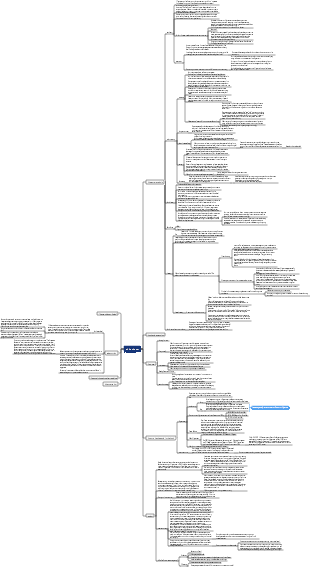
"The Kite Runner", the novel tells the story of Amir from the first-person perspective. This article summarizes the author's introduction, content introduction, creative background, and character introduction in detail.
Edited at 2022-05-04 19:47:43This Valentine's Day brand marketing handbook provides businesses with five practical models, covering everything from creating offline experiences to driving online engagement. Whether you're a shopping mall, restaurant, or online brand, you'll find a suitable strategy: each model includes clear objectives and industry-specific guidelines, helping brands transform traffic into real sales and lasting emotional connections during this romantic season.

This Valentine's Day map illustrates love through 30 romantic possibilities, from the vintage charm of "handwritten love letters" to the urban landscape of "rooftop sunsets," from the tactile experience of a "pottery workshop" to the leisurely moments of "wine tasting at a vineyard"—offering a unique sense of occasion for every couple. Whether it's cozy, experiential, or luxurious, love always finds the most fitting expression. May you all find the perfect atmosphere for your love story.
The ice hockey schedule for the Milano Cortina 2026 Winter Olympics, featuring preliminary rounds, quarterfinals, and medal matches for both men's and women's tournaments from February 5–22. All game times are listed in Eastern Standard Time (EST).
This Valentine's Day brand marketing handbook provides businesses with five practical models, covering everything from creating offline experiences to driving online engagement. Whether you're a shopping mall, restaurant, or online brand, you'll find a suitable strategy: each model includes clear objectives and industry-specific guidelines, helping brands transform traffic into real sales and lasting emotional connections during this romantic season.
This Valentine's Day map illustrates love through 30 romantic possibilities, from the vintage charm of "handwritten love letters" to the urban landscape of "rooftop sunsets," from the tactile experience of a "pottery workshop" to the leisurely moments of "wine tasting at a vineyard"—offering a unique sense of occasion for every couple. Whether it's cozy, experiential, or luxurious, love always finds the most fitting expression. May you all find the perfect atmosphere for your love story.
The ice hockey schedule for the Milano Cortina 2026 Winter Olympics, featuring preliminary rounds, quarterfinals, and medal matches for both men's and women's tournaments from February 5–22. All game times are listed in Eastern Standard Time (EST).
a kite chaser
About the Author
Khaled Hosseini was born in Kabul, the capital of Afghanistan, in 1965. He later moved to the United States with his father. Hosseini graduated from the Department of Medicine at the University of California, San Diego and now lives in California. "Determined to wipe away the dust that has covered the faces of ordinary people in Afghanistan and show the throbbing of the soul behind it to the world." "The Kite Runner" is his first novel. Due to its vivid characters and shocking and touching storyline, it received great acclaim after its publication. It won various newcomer awards and jumped to the top bestseller lists in the United States. "The Kite Runner" "The Kite Man" has been adapted into a movie by DreamWorks. He is also the author of A Thousand Splendid Suns (2007) and And the Mountains Echoed (2013). The works have sold more than 40 million copies worldwide. In 2006, due to the huge international influence of his works, Hosseini won the United Nations Humanitarian Award and was invited to serve as the Goodwill Ambassador of the United Nations High Commissioner for Refugees.
brief introduction
The novel tells Amir's story from the first-person perspective. Amir was born in Kabul in 1963 to a wealthy family in a wealthy neighborhood. His father was an upright Pashtun, the son of a judge and a successful carpet merchant. Amir's servant Ali's son Hassan is a Hazara. Amir and Hassan are good playmates. Hassan is a very loyal, upright person who only cares about Master Amir. The two often play and play games together. Amir is an excellent "kite fighter", that is, he is good at using his own kite to cut the strings of other people's kites; Hassan is also an outstanding "kite chaser" because the Afghan tradition is to catch the fallen kite after the string is cut. owned by people. Dad loves both children very much, but thinks Amir is too timid. When the two children fight, Hassan always takes the lead. Amir showed his talent for writing, but his father did not value him. Dad's friend Rahim Khan became Amir's confidant. In 1973, Mohammad Daoud Khan and others launched a coup to overthrow the monarchy and establish a republic in Afghanistan.
Creative background
His days in Kabul with his brother were like those of Amir and Hassan: spending most of the summer at school. In the winter, I fly kites and watch John Wayne movies in the cinema. The plot in the book that is most similar to his experience is the days in the United States, where Amir and his father worked hard to create a new life. Like Amir, he is an immigrant from Afghanistan. His family's house in Wazir Akbar Khan was huge and they would hold huge parties there; they also went to Paghman for picnics. He has very fond memories of his childhood life
Character introduction
Amir A character with a complicated image. When he was playing with Hassan, he encouraged Hassan to use a slingshot to shoot walnuts at the neighbor's dog, throw stones at the goat and other pranks. After being discovered, Hassan was always the one to bear the burden and took it for granted. Although he is a child, Amir also has hierarchical and religious national concepts. "I never thought that I was friends with Hassan." "I am a Pashtun, he is a Hazara, and I am a Sunni." Pai, he is a Shia", so after making fun of Hassan or playing tricks on him, despite feeling guilty, he still gets self-justification and self-forgiveness. Even after the kite fighting competition, Amir saw the scene where Hassan was raped by Assef to protect the kite that Hassan had caught, and ran away cowardly. And what's going on in Amir's mind is: He's just a Hazara, isn't he? However, the desire for father's love, the desire for superiority, and self-preservation in the face of evil forces cannot be generally said to be the evil of human nature. Amir only shows the true colors of human nature. What's more, he has been haunted by the shadow of guilt and self-blame for half his life since then. When facing his past mistakes, his spiritual guilt and torture have made him more than half way on the road to atonement, and his substantive act of atonement (returning to the country to rescue Hassan's son Sohrab) has made a great contribution. make up for it. So Amir has transformed from a selfish and cowardly child into an upright, brave and responsible man.
Hassan "For you, thousands of times." Hassan's words moved many people. This was a child's confession of loyalty to another child. For Amir, Hassan was willing to do thousands of things. The first name Hassan called after he was born was "Amir", which means that he regards Amir as the most important person in his life. He is willing to do anything for Amir. Hassan has been sacrificing for Amir all his life, embodying the unchanging loyalty and integrity from a child to a man. It can be said to be a character image. He embodies the kindness of human nature, but it has nothing to do with ethnicity, religion, class, etc. He is a Hazara, a Shia, and a slave of a rich family. He has no money, status, and no opportunity to receive culture. But he Hard-working, brave, loyal and upright, he possesses all the qualities of a naked primitive individual.
dad Amir's father is also Hassan's father. He can be said to combine the personalities of Amir and Hassan. He said that theft is the root of all sins, but he gave birth to Hassan with Ali's wife and stole Ali's loyalty. He concealed the truth from Amir. He hid Hassan and stole Hassan. The fatherly love and social recognition that should have been received. Rahim Khan said: "When evil deeds lead to good deeds, that is true redemption." So Amir's father has been doing good deeds throughout his life, building orphanages, helping others, praying for atonement for his sins, and at the same time receiving The respect and love of others. The indifference and disgust shown by Amir's father towards Amir is because he saw in Amir his cowardly and deceitful side, which to some extent expresses his disgust and regret for the bad qualities in his own character. Hassan's bravery, loyalty, integrity and selflessness are his own strengths that he admires and is proud of. So it can be said that the two sons Amir and Hassan each represent two sides of his character. Overall, his redemption was successful.
Assef The main villain of the novel. His father is Afghan and his mother is German. He believed in Nazism and advocated the superiority of Pashtuns over Hazaras. As a teenager, he became a neighborhood bully, whom Amir considered a "sociopath." Assef committed many evil deeds when he was young. He bullied Amir and Hassan, raped Hassan in revenge for Amir, and later gave Amir a copy of Adolf Hitler's autobiography as a birthday gift. As an adult, he joined the Taliban and became its leader. He imprisoned Hassan's son Sohrab and sexually abused him.
Ali Baba's Hazara servant, who is believed to be Hassan's father. When he was young, his parents died in a traffic accident, and he was adopted by his father's father. Ali had suffered from polio before, and his right leg was disabled as a result. As a result, he was often bullied and tortured by local children. He eventually hit a landmine and died in Hazarajat.
Rahim Khan Dad's loyal friend and business partner, and Amir's life mentor. He encouraged young Amir to pursue a literary career. Later, when he was seriously ill, he persuaded Amir, who had settled in the United States, to return to Pakistan, tell him the truth about Hassan's life experience, and let him rescue Hassan's son Sohrab, and finally passed away peacefully.
Soraya Amir's wife, the daughter of a general also from Afghanistan. Because of his willful behavior when he was young, he was unable to have children after marriage, but Amir did not dislike it. The kind-hearted Soraya encouraged her husband to redeem his past mistakes and redeem himself, and offered to adopt Sohrab (the son of Amir's brother Hassan).